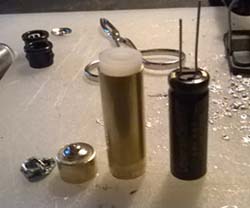
 Lithium ion supercapacitors. No, not lithium ion batteries, and yes, they’re a real thing. While they’re astonishingly expensive per Farad, they are extremely small and used as the first line of defense in some seriously expensive heavy-duty UPS installations. Here’s a Kickstarter using these supercaps to replace the common AA, C, and D cell batteries. Even better, they can be recharged in seconds.
For each size battery, the caps used actually have a slightly higher energy density than a similarly sized dollar store battery. By adding a little bit of circuitry to drop the 3.8 Volts out of the cap down to the 1.5 V you expect from a battery, this supercap becomes a very expensive rechargeable battery, but one that can be recharged in seconds.
This is one of those crowdfunding campaigns we really like: an interesting tool, but something we just can’t figure out what the use case would be. These lithium ion supercaps are too expensive to be practical in anything we would build (save for a Gauss pistol), but the tech is just too cool to ignore. If you have a use case for these caps in mind, please leave a note in the comments.

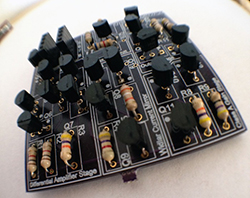 By now we’ve all seen the ‘Three Fives’ kit from Evil Mad Scientist, a very large clone of the 555 timer built from individual transistors and resistors. You can do a lot more in the analog world with discrete parts, and