Plastic On The Mind: Assessing The Risks From Micro- And Nanoplastics

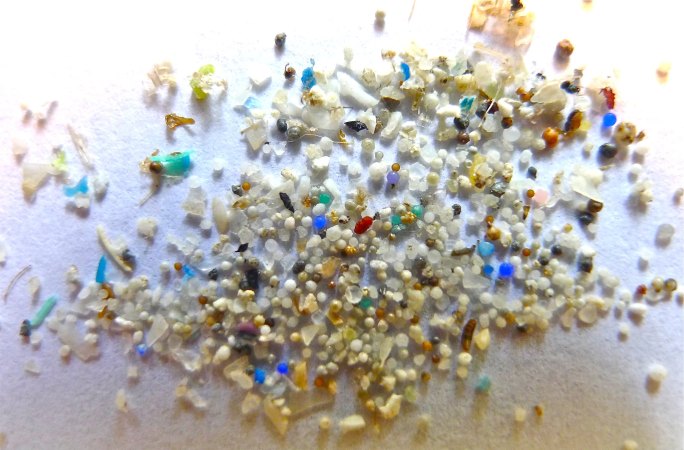
Perhaps one of the clearest indications of the Anthropocene may be the presence of plastic. Starting with the commercialization of Bakelite in 1907 by Leo Baekeland, plastics have taken the world by storm. Courtesy of being easy to mold into any imaginable shape along with a wide range of properties that depend on the exact polymer used, it’s hard to imagine modern-day society without plastics.

Yet as the saying goes, there never is a free lunch. In the case of plastics it would appear that the exact same properties that make them so desirable also risk them becoming a hazard to not just our environment, but also to ourselves. With plastics degrading mostly into ever smaller pieces once released into the environment, they eventually become small enough to hitch a ride from our food into our bloodstream and from there into our organs, including our brain as evidenced by a recent study.

Multiple studies have indicated that this bioaccumulation of plastics might be harmful, raising the question about how to mitigate and prevent both the ingestion of microplastics as well as producing them in the first place.

Continue reading “Plastic On The Mind: Assessing The Risks From Micro- And Nanoplastics” →

The Science Behind Making Buildings Comfortably Non-Combustible

Although the most fire-resistant building is likely a windowless, concrete bunker, this tends to be not the vibe that most home owners go for. This is why over the years construction of buildings in areas prone to bush- and wildfires – i.e. an uncontrolled fire in an area with combustible vegetation – has adapted to find a happy medium between a building that you’d enjoy living in and a building that will not instantly combust the moment an ember from a nearby wildfire gently touches down upon any part of it.

To achieve this feat, the primary means include keeping said combustible vegetation and similar away from the building, and to make the house as resistant to ember attacks as possible. That this approach is effective has been demonstrated over the course of multiple wildfires in California during the past years, whereby houses constructed more recently with these features had a much higher chance of making it through the event unscathed.

Naturally, the devil is in the details, which is why for example the Australian standard for construction in bushfire-prone areas (AS 3959, last updated in 2018, 2009 version PDF) is rather extensive and heavy on details, including multiple Bushfire Attack Level (BAL) ratings that define risk areas and legally required mitigation measures. So what does it take exactly to survive a firestorm bearing down on your abode?

Continue reading “The Science Behind Making Buildings Comfortably Non-Combustible” →

How Do We Deal With Microplastics In The Ocean?

Like the lead paint and asbestos of decades past, microplastics are the new awful contaminant that we really ought to do something about. They’re particularly abundant in the aquatic environment, and that’s not a good thing. While we’ve all seen heartbreaking photos of beaches strewn with water bottles and fishing nets, it’s the invisible threat that keeps environmentalists up at night. We’re talking about microplastics – those tiny fragments that are quietly infiltrating every corner of our oceans.

We’ve dumped billions of tons of plastic waste into our environment, and all that waste breaks down into increasingly smaller particles that never truly disappear. Now, scientists are turning to an unexpected solution to clean up this pollution with the aid of seashells and plants.

Continue reading “How Do We Deal With Microplastics In The Ocean?” →

A Closer Look At The Tanmatsu

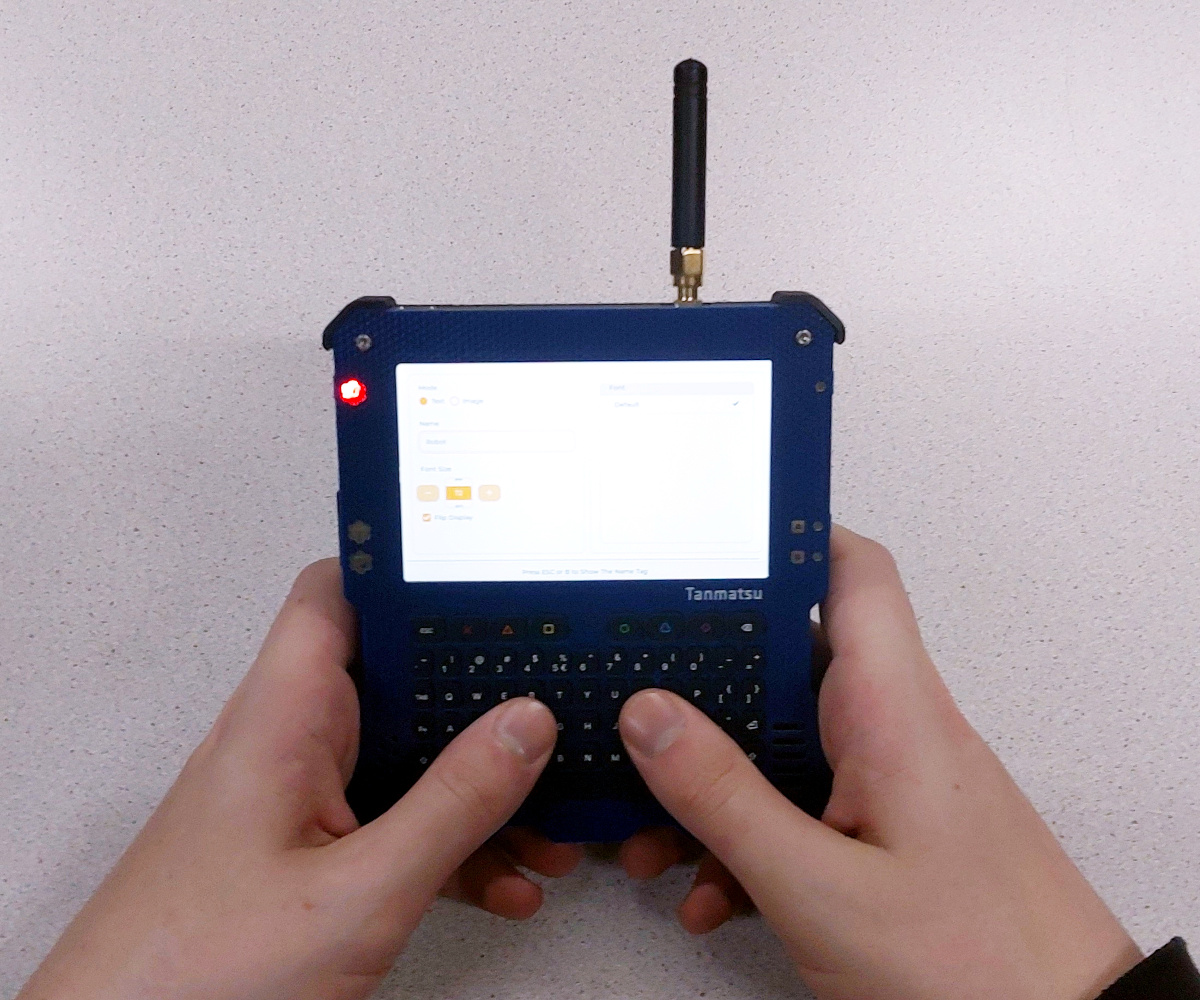
A few weeks ago we brought you news of a new palmtop computer for hackers, powered by the new Espressif ESP32-P4 application processor. The Tanmatsu (Japanese for “Terminal”) is a compact handheld device with a QWERTY keyboard and an 800×480 DSI display, and while it currently exists at the final prototype stage there is a pre-order page upon which you can reserve an early production model for yourself. We’ve been lucky enough to be invited to give one a close-up inspection, so it was time to hot-foot it on the train to a Dutch hackerspace in order to bring you a preview.

A Little History, And First Impressions

The Tanmatsu, held in both hands.
Recesses in the case fit well against the hands.

Before looking at the device, it’s time for a little history. The Tanmatsu has its origin in badge.team, the Netherlands-based group that has produced so many European event badges over the years, and it was destined to eventually become the badge for the upcoming WHY2025 hacker camp. As sometimes happens in any community there has been a significant difference of opinion between the event orga and the badge.team folks that it’s inappropriate to go into here, so now it exists as a standalone project. It’s destined to be open-source in its entirety including hardware and software (and we will hold them to that, never fear), but because of the events surrounding its conception the full repositories will be not be made public until some time late in the summer.

Picking the Tanmatsu up and holding it, it’s a rectangular slab a bit larger and thicker than a CD case with that QWERTY keyboard and display on its front face, an array of ports including an SMA socket for a LoRA antenna on its sides, and an expansion connector on its rear. It has a sandwich construction, with a PCB front face, a 3D printed spacer, the PCB itself, and a 3D printed back cover all held together with a set of screws. The recesses on its bottom edge and the lower halves of the sides locate neatly with fingers and thumbs when it’s held in two hands for two-thumb typing. The keyboard is a silicone moulding as is common on this type of device, and while the keys are quite small it was not difficult to type on it. The display meanwhile feels of much higher quality than the SPI parts previously seen on badges. Continue reading “A Closer Look At The Tanmatsu” →

2024: As The Hardware World Turns

With 2024 now officially in the history books, it’s time to take our traditional look back and reflect on some of the top trends and stories from the past twelve months as viewed from the unique perspective Hackaday affords us. Thanks to the constant stream of tips and updates we receive from the community, we’ve got a better than average view of what’s on the mind of hardware hackers, engineers, and hobbyists.

This symbiotic relationship is something we take great pride in, which is why we also use this time of year to remind the readers just how much we appreciate them. We know it sounds line a line, but we really couldn’t do it without you. So whether you’ve just started reading in 2024 or been with us for years, everyone here at Hackaday thanks you for being part of something special. We’re keenly aware of how fortunate we are to still be running a successful blog in the era of YouTube and TikTok, and that’s all because people like you keep coming back. If you keep reading it, we’ll keep writing it.

So let’s take a trip down memory lane and go over just a handful of the stories that kept us talking in 2024. Did we miss your favorite? Feel free to share with the class in the comments.

Continue reading “2024: As The Hardware World Turns” →

Release Your Inner Ansel Adams With The Shitty Camera Challenge

Social media microblogging has brought us many annoying things, but some of the good things that have come to us through its seductive scrolling are those ad-hoc interest based communities which congregate around a hashtag. There’s one which has entranced me over the past few years which I’d like to share with you; the Shitty Camera Challenge. The premise is simple: take photographs with a shitty camera, and share them online. The promise meanwhile is to free photography from kit acquisition, and instead celebrate the cheap, the awful, the weird, and the wonderful in persuading these photographic nonentities to deliver beautiful pictures.

Where’s The Hack In Taking A Photo?

Of course, we can already hear you asking where the hack is in taking a photo. And you’d be right, because any fool can buy a disposable camera and press the shutter a few times. But from a hardware hacker perspective this exposes the true art of camera hacking, because not all shitty cameras can produce pictures without some work.

The #ShittyCameraChallenge has a list of cameras likely to be considered shitty enough, they include disposables, focus free cameras, instant cameras, and the cheap plastic cameras such as Lomo or Holga. But also on the list are models which use dead film formats, and less capable digital cameras. It’s a very subjective definition, and thus in our field everything from a Game Boy camera or a Raspberry Pi camera module to a home-made medium format camera could be considered shitty. Ans since even the ready-made shitty cameras are usually cheap and unloved second-hand, there’s a whole field of camera repair and hacking that opens up. Finally, here’s a photography competition that’s fairly and squarely on the bench of Hackaday readers. Continue reading “Release Your Inner Ansel Adams With The Shitty Camera Challenge” →

The Battle Over Vanishing Spray

We talk a lot about patent disputes in today’s high-tech world. Whether it’s Wi-Fi, 3D printing, or progress bars, patent disputes can quickly become big money—for lawyers and litigants alike.

Where we see less of this, typically, is the world of sports. And yet, a recent football innovation has seen plenty of conflict in this very area. This is the controversial story of vanishing spray.

Patently Absurd

Vanishing spray has quickly become a common sight on the belts of professional referees. Credit: Balkan Photos, CC BY-SA 2.0

You might have played football (soccer) as a child, and if that’s the case, you probably don’t remember vanishing spray as a key part of the sport. Indeed, it’s a relatively modern innovation, which came into play in international matches from 2013. The spray allowed referees to mark a line with a sort of disappearing foam, which could then be used to enforce the 10-yard distance between opposing players and the ball during a free kick.

The product is a fairly simple aerosol—the cans contain water, butane, a surfactant, vegetable oil, and some other minor constituents. When the aerosol nozzle is pressed, the liquified butane expands into a gas, creating a foam with the water and surfactant content. This creates an obvious white line that then disappears in just a few minutes.

The spray was created by Brazilian inventor Heine Allemagne in 2000, and was originally given the name Spuni.  He filed a patent in 2000, which was then granted in 2002. It was being used in professional games by 2001, and quickly adopted in the mainstream Brazilian professional competition.

The future looked bright for Allemagne and his invention, with the Brazilian meeting with FIFA in 2012 to explore its use at the highest level of international football. In 2013, FIFA adopted the use of the vanishing spray for the Club World Cup. It appeared again in the 2014 World Cup, and many competitions since. By this time, it had been renamed “9.15 Fair Play,” referring to the metric equivalent of the 10-yard (9.15 meter) distance for free kicks.

After its first use by FIFA, the use of vanishing spray quickly spread to other professional competitions, making its first appearance in the Premier League in 2014. Credit: Egghead06, CC BY-SA 4.0

The controversy came later. Allemagne would go on to publicly claim that the global sporting body had refused to pay him the agreed price for his patent. He would go on to tell the press he’d knocked back an initial offer of $500,000, with FIFA later agreeing to pay $40 million for the invention. Only, the organization never actually paid up, and started encouraging the manufacture of copycat products from other manufacturers. In 2017, the matter went to court, with a Brazilian ruling acknowledging Allemagne’s patent. It also ordered FIFA to stop using the spray, or else face the risk of fines. However, as is often the way, FIFA repeatedly attempted to appeal the decision, raising questions about the validity of Allemagne’s patent.

The case has languished in the legal system for years since. In 2020, one court found against Allemagne, stating he hadn’t proven that FIFA had infringed his products or that he had suffered any real damages. By 2022, that had been overturned on appeal to a higher court, which found that FIFA had to pay material damages for their use of vanishing spray, and for the loss of profits suffered by Allemagne. The latest development occurred earlier this year, with the Superior Court of Justice ruling that FIFA must compensate Allemagne for his invention. In May, CNN reported that he expected to receive $40 million as a result of the case, with all five ministers on the Superior Court ruling in his favor.

Ultimately, vanishing spray is yet another case of authorities implementing ever-greater control over the world of football. It’s also another sad case of an inventor having to fight to receive their due compensation for an innovative idea. What seems like an open-and-shut case nevertheless took years to untangle in the courts. It’s a shame, because what should be a simple and tidy addition to the world of football has become a mess of litigation that cost time, money, and a great deal of strife. It was ever thus.

Featured Image: Вячеслав Евдокимов, CC BY-SA 3.0