The Final Days Of The Fire Lookouts

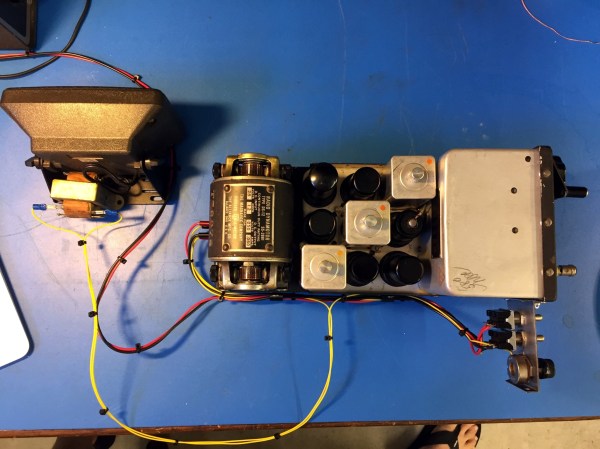
For more than a century, the United States Forest Service has employed men and women to monitor vast swaths of wilderness from isolated lookout towers. Armed with little more than a pair of binoculars and a map, these lookouts served as an early warning system for combating wildfires. Eventually the towers would be equipped with radios, and later still a cellular or satellite connection to the Internet, but beyond that the job of fire lookout has changed little since the 1900s.

Like the lighthouse keepers of old, there’s a certain romance surrounding the fire lookouts. Sitting alone in their tower, the majority of their time is spent looking at a horizon they’ve memorized over years or even decades, carefully watching for the slightest whiff of smoke. The isolation has been a prison for some, and a paradise for others. Author Jack Kerouac spent the summer of 1956 in a lookout tower on Desolation Peak in Washington state, an experience which he wrote about in several works including Desolation Angels.

But slowly, in a change completely imperceptible to the public, the era of the fire lookouts has been drawing to a close. As technology improves, the idea of perching a human on top of a tall tower for months on end seems increasingly archaic. Many are staunchly opposed to the idea of automation replacing human workers, but in the case of the fire lookouts, it’s difficult to argue against it. Computer vision offers an unwavering eye that can detect even the smallest column of smoke amongst acres of woodland, while drones equipped with GPS can pinpoint its location and make on-site assessments without risk to human life.

At one point, the United States Forest Service operated more than 5,000 permanent fire lookout towers, but today that number has dwindled into the hundreds. As this niche job fades even farther into obscurity, let’s take a look at the fire lookout’s most famous tool, and the modern technology poised to replace it.

Continue reading “The Final Days Of The Fire Lookouts”

Latest Dose Of Hardware Talks Headed To Supercon

The tickets have sold out even as the list of incredible speakers grows. Today we bring you the third dose of talks you’ll see at the Hackaday Superconference in November — whether you were lucky enough to grab a ticket, or will be watching the livestream, these eight will be speaking on topics from algorithmically-augmented live music performance to the hardware that captures the real world for display in VR and from leveraging the power of lookup tables to harnessing our engineering talent in a way that truly enriches humanity.

If you missed the two speaker announcements that have already come out, go back and take a look at those as well as the workshops being held during Supercon.

The Talks (Part Three of Many)


  • Mitch Altman

    The Pros and Cons of Tech. Can We Design Tech that Serves Humanity

    Technology is truly awesome! It is also a lot of fun. With the tools we, as humans, have made through the eons, we’ve become top-dog on our planet. But, at a great cost. It is mostly accepted that we have only 5 years to reverse climate change. How long till we no longer have any privacy. We have little time for anything but work because of all of our addictive and alienating “time-saving” devices we voluntarily choose to have in our lives. People report being less happy each decade. Soon, only 2% of the world’s wealth will be concentrated in only 0.1% of the population. The military uses anything and everything we create to spy, destroy, and kill for profit. This is not a pretty picture. What can we do? Is it possible to create technology to improve our lives? In this inspirational talk I will use personal experience to explore aspects of this important discussion.


  • Sara Adkins

    Creating with the Machine: Algorithmic Composition for Live Performances

    In a live concert setting, the movement and energy of performers add an important emotional element to the audience’s listening experience. Computer-generated music can achieve unique sounds and precise technique not possible by human musicians, yet it can feel alienating and impersonal due to a lack of human connection and spontaneity. “Creating with the Machine” is a set of compositions that combine algorithmic and traditional methods of music composition into live performances to explore how interactive generative algorithms can influence creativity in musical improvisation, and create a compelling listening experience for the audience. In this talk, I will introduce techniques for creating a meaningful data representation of a musician’s performance, and methods for using this input data to control a closed loop algorithmic composition.


  • Kate Morris

    Beyond Blinky – Developing Retro-Games for PCB Badgess

    So, you’ve done some badge coding, maybe using Arduino, and are looking for the next step to write interactive games using a TFT screen and some buttons and sensors? Using the open-source for the Lunar Lander badge (built for DEF CON 27) I will explain how we created the framework and how you can adapt it to write your own games for this badge or for your own conference badge. We’ll step through the process for developing a new game, and discuss some of the challenges we had in creating the Lunar Lander game.


  • Dave Young

    Scrounging, Sipping, and Seeing Power

    Powering low power and ultra-low power systems is more about system design than circuit design. Selecting the right power source, using the power effectively, and then validating that the power numbers are as expected is critical at an early stage since changes may trigger a system redesign (or product failure). I will review some of the typical design decisions to make, some general back-of-the-envelope figures, and some techniques on how to plan the power use and validate a prototype. We’ll discuss questions like: How can I decide if I should be on a primary battery, solar, or kinetic energy system? How can I estimate the total usable energy from a solar panel given real-world conditions? Do I need MPPT? And how can I estimate my total energy consumption?


  • Ruth Grace Wong

    How to become a manufacturing engineer in your spare time

    It’s one thing to prototype something for yourself, and entirely another to productionize a product for manufacturing. This talk is about my quest to become a manufacturing engineer. In the summer of 2016, I decided that I would do software at scale at my full time job, and hardware and objects at scale in my spare time. Since then, I’ve worked on many personal projects to get the intuitive physical feel for how things are made while documenting what I’ve learned, started writing about manufacturing for Supplyframe Hardware allowing me to tour factories and interview manufacturers, and started working part-time as a manufacturing engineer.


  • Kim Pimmel

    Beyond the Rectangle: Building Cameras for the Immersive Future

    Ever since the earliest days of photography, we’ve tried to capture and play back the world around us. Today, immersive technologies like AR and VR are pushing beyond the 2D image, seeking to replicate more and more of the human experience. This is driving growth in new imaging, sensory, and display technologies.

  • Learn about some cameras I’ve made, trends in camera technology, and how building the Matrix is hard.

  • Scott Shawcroft

    Supercharge Your Hardware (Old and New) with CircuitPython

    CircuitPython makes programming hardware easier than ever by bringing the popular Python language to modern, inexpensive 32-bit microcontrollers. This doesn’t need to be limited to modern hardware though. By pairing a modern microcontroller running CircuitPython and a vintage computer, such as a GameBoy or Yamaha piano keyboard, you can unlock the unique characteristics of these vintage devices. In this talk, you’ll learn the basics of how CircuitPython makes coding easy, how it works under the hood, and how to extend CircuitPython with C. As an example, we’ll supercharge a Nintendo’s GameBoy with CircuitPython. By the end of the talk, you’ll be able to supercharge your own hardware project with CircuitPython.


  • Charles Lohr

    Accomplishing the Impossible with LUTs.

  • I’ve done some very bizarre and extreme things with microcontrollers over the last several years. From bit-banging (Tx and Rx) Ethernet on an ATtiny85 broadcasting video from an ESP8266 GPIO pin to writing USB stacks for chips that don’t have them, the most insane and counter-intuitive projects that have been successes have all had one thing in common. At the heart of the project is one or more lookup tables (LUTs). In computer science classes, we study algorithms like Dynamic Programming and we hear about LUTs, but we rarely discuss the true power of this game-changing tool. In this talk I will explore how to reform complicated problems in such a way to do processing faster and on smaller processors than you ever thought possible.


See You at Supercon!

We’re so excited to see everyone at Supercon this year. As mentioned above, tickets are sold out so if something comes up and you can’t make it, please request a ticket refund so we can make your spot available to people on the waitlist.

What Will We Do With The Turbine Blades?

As the global climate emergency continues to loom over human civilization, feverish work is underway around the world to find technical and political solutions to the problem. Much has been gained in recent years, but as global emissions continue to increase, there remains much left to do to stave off the most catastrophic effects of climate change.

Renewable energy has led the charge, allowing humanity to continue to enjoy the wonders of electricity with a reduced environmental impact. The future looks promising, with renewable sources becoming cheaper than traditional fossil fuel energy plants in many cases, both in the US and abroad. At the same time, the rise of renewable technologies has brought new and varied challenges to the fore, which must be dealt with in kind. Take wind energy, for instance. Continue reading “What Will We Do With The Turbine Blades?”

Europeans Now Have The Right To Repair – And That Means The Rest Of Us Probably Will Too

As anyone who has been faced with a recently-manufactured household appliance that has broken will know, sometimes they can be surprisingly difficult to fix. In many cases it is not in the interests of manufacturers keen to sell more products to make a device that lasts significantly longer than its warranty period, to design it with dismantling or repairability in mind, or to make spare parts available to extend its life. As hardware hackers we do our best with home-made replacement components, hot glue, and cable ties, but all too often another appliance that should have plenty of life in it heads for the dump.

Czech waste management workers dismantle scrap washing machines. Tormale [CC BY-SA 3.0].
If we are at a loss to fix a domestic appliance then the general public are doubly so, and the resulting mountain of electrical waste is enough of a problem that the European Union is introducing new rules governing their repairability. The new law mandates that certain classes of household appliances and other devices for sale within the EU’s jurisdiction must have a guaranteed period of replacement part availability and that they must be designed such that they can be worked upon with standard tools. These special classes include washing machines, dishwashers, refrigerators, televisions, and more.

Let’s dig into the ramifications of this decision which will likely affect markets beyond the EU and hopefully lead to a supply of available parts useful for repair and beyond.

Continue reading “Europeans Now Have The Right To Repair – And That Means The Rest Of Us Probably Will Too”

The Long History Of Fast Reactors And The Promise Of A Closed Fuel Cycle

The discovery of nuclear fission in the 1930s brought with it first the threat of nuclear annihilation by nuclear weapons in the 1940s, followed by the promise of clean, plentiful power in the 1950s courtesy of nuclear power plants. These would replace other types of thermal plants with one that would produce no exhaust gases, no fly ash and require only occasional refueling using uranium and other fissile fuels that can be found practically everywhere.

The equipment with which nuclear fission was experimentally proven in 1938.

As nuclear reactors popped up ever faster during the 1950s and 1960s, the worry about running out of uranium fuel became ever more present, which led to increased R&D in so-called fast reactors, which in the fast-breeder reactor (FBR) configuration can use uranium fuel significantly more efficiently by using fast neutrons to change (‘breed’) 238U into 239Pu, which can then be mixed with uranium fuel to create (MOX) fuel for slow-neutron reactors, allowing not 1% but up to 60% of the energy in uranium to be used in a once-through cycle.

The boom in uranium supplies discovered during the 1970s mostly put a stop to these R&D efforts, with some nations like France still going through its Rapsodie, Phénix and SuperPhénix designs until recently finally canceling the Generation IV ASTRID demonstrator design after years of trying to get the project off the ground.

This is not the end of fast reactors, however. In this article we’ll look at how these marvels of engineering work and the various fast reactor types in use and under development by nations like Russia, China and India.

Continue reading “The Long History Of Fast Reactors And The Promise Of A Closed Fuel Cycle”

Better Battery Management Through Chemistry

The lead-acid rechargeable battery is a not-quite-modern marvel. Super reliable and easy to use, charging it is just a matter of applying a fixed voltage to it and waiting a while; eventually the battery is charged and stays topped off, and that’s it. Their ease is countered by their size, weight, energy density, and toxic materials.

The lithium battery is the new hotness, but their high energy density means a pretty small package that can get very angry and dangerous when mishandled. Academics have been searching for safer batteries, better charge management systems, and longer lasting battery formulations that can be recharged thousands of times, and a recent publication is generating a lot of excitement about it.

Consider the requirements for a battery cell in an electric car:

  • High energy density (Lots of power stored in a small size)
  • Quick charge ability
  • High discharge ability
  • MANY recharge cycles
  • Low self-discharge
  • Safe

Lithium ion batteries are the best option we have right now, but there are a variety of Li-ion chemistries, and depending on the expected use and balancing and charging, different chemistries can be optimized for different performance characteristics. There’s no perfect battery yet, and conflicting requirements mean that the battery market will likely always have some options.

Continue reading “Better Battery Management Through Chemistry”

More Supercon Talks Taking The Hardware World By Storm

You’re going to love the talks at the Hackaday Superconference this November. The ultimate hardware conference is all about hardware creation. The ten speakers below join the talks we announced last week and that’s still not even half of what you’ll see on the stages of Supercon. Add to that the superb workshops we announced early this week and you begin to ask yourself just how much awesome can really fit into a single weekend. Well, it’s three full days and we’d recommend arriving the day before for the unofficial festivities too!

Of course, you’ll need a ticket to ride. At the time of writing there were some available (we’ve left the teens and are headed for single digits), but no guarantee there will be any left when this article is published. We’ll be maintaining a waiting list though, so if you’re sitting on a ticket you just can’t use, please return it so someone else can take your spot.

Enough delay, let’s see what talks await us at 2019 Supercon!

The Talks (Part Two of Many)


  • Shelley Green

    Pressure connections: crimping isn’t as simple as you thought.

    Crimping is generally defined as the joining of two conductors by mechanical forces. At first, the process appears to be rather simple. However, deeper investigations reveal complex dynamics that operate at macroscopic, microscopic, and nanoscales. I will cover the basic theory for pressure connections, examine the role of mechanical properties for both conductivity and tensile strength, look at oxides and surface films, and consider the design challenges for tooling, testing, and validation of crimp quality.


  • Mike Harrison

    Everything I’ve Learnt About LEDs.

    LEDs are not all created alike. I will cover a wide range of practical techniques involved in using LEDs, in particular in the context of large-scale installations, hower much of it will be equally applicable to smaller projects. Topics include suitable LED types, drive circuitry, dimming techniques, gamma correction. There will be live demonstrations illustrating many of the areas covered.


  • Kerry Scharfglass

    Basic Device Security for Basic Needs

    It feels like every day we hear about an unbelievable new security vulnerability that allows an attacker to spy on your dog through a connected light bulb or program your toaster oven remotely. Some of these are quite elaborate, requiring researchers years to track down. But others are total no-brainers; “why didn’t the manufacturer just do X!”. In our IoT-ified world device security is more important than ever, but not every hardware product needs to be secured like an ATM inside a missile. I will discuss basic design practices and implementation tricks which are easy to incorporate into your product and provide a solid baseline of security against casual adversaries.


  • Sophy Wong

    Made With Machines: 3D Printing & Laser Cutting for Wearable Electronics

    Building tech for the human body is tricky! Whether it’s a fitness tracker or a costume, making hardware comfortable and durable enough to wear is a fascinating design challenge. I like to tackle this challenge with the help of machines! In this talk, I’ll share my recent projects that use 3D printing and laser cutting to create wearable tech with precision and high impact. I’ll talk about the design process and build techniques for using 3D printing and laser cutting to create custom parts that are comfortable and perfect for wearables.


  • Jen Costillo

    The Future is Us: Why the Open Source And Hobbyist Community Will Drive Hi-Tech Consumer Products

    Where did we the OSHW and hobbyist community come from and what have we accomplished? The truth is we are driving modern consumer electronics industry. From prototyping, to tools to media and training, we have changed it all. I’ll talk about the reasons why, our impact and our future, as well as how to avoid becoming what the older industry is: obsolete.


  • Timothy Ansell

    Xilinx Series 7 FPGAs Now Have a Fully Open Source Toolchain!

    You should be super excited about FPGAs and how they allow open source projects to do hardware development. In this talk I will cover a basic introduction into what an FPGA is and can do, what an FPGA toolchain is, and how much things sucked when the only option was to use proprietary toolchains. The SymbiFlow project changed this and I’ll discuss what is currently supported including a demo of Linux on a RISC-V core with a cheap Xilinx FPGA development board.


  • Chris Gammell

    Gaining RF Knowledge: An Analog Engineer Dives into RF Circuits

    Starting my engineering career working on low level analog measurement, anything above 1kHz kind of felt like “high frequency”. This is very obviously not the case. I’ll go over the journey of discovering and rediscovering higher frequency techniques and squaring them with the low level measurement basics that I learned at the beginning my career. This will include a discussion of Maxwell’s equations and some of the assumptions that we make when we’re working on different types of circuits. You will find this information useful in the context of RF calculations around cellular, WiFi, Bluetooth and other commonly available communication methods.


  • Shanni Prutchi and Jeff Wood

    Adventures in Building Secure Networks from Blockchain Transactions

    In our talk, we will show how we designed and built a message authentication system operating on ADANA (Automated Detection of Anomalous Network Activity) and Hyperledger (a “smart contract” form of Blockchain) all hosted on just two servers that were no longer being used by Rowan College at Burlington County. The system was built using Docker, syslog-ng, Hyperledger Fabric and Composer, and a beta version of Splunk. This system is accessible by nodes wired into the network which interact with the hyperledger through a web browser. We’ll present the infrastructure of the network, details of the hyperledger, an explanation of all the tools used by the system, a walkthrough of how the system works, reflections on the particular challenges of this project, and what we see in the future of this technology.


  • John McMaster

    Replicating a Secure Telephone Key

    The STU-III secure telephone was originally developed by the NSA for defense use in the 1980’s but also saw use in unclassified commercial products like the Motorola Sectel 9600\. However, they require difficult to find electromechanical keys. I will describe the process of creating a compatible key for the Sectel 9600 by reverse engineering the mechanical and electrical design and subsequently fabricating it. Along the way I’ll discuss low volume manufacturing issues and strategies to overcome.


We Want You!

Don’t miss out. One weekend as one of so many amazing people will inspire you and recharge your creative batteries for the coming year of hardware hacking. See you at Supercon!