Spot welders are used in the fabrication of automobiles, PC cases, power supplies, microwave ovens, electrical junction boxes, Faraday cages, and various electronics. A spot welder is used because it produces a highly defined point of contact weld. The materials are welded without excessive heating, so working pieces are handled easily. The weld is also highly controlled and repeatable. In this how-to we cover the basics of a spot welder, and then show you how to build one from a microwave oven transformer.
Featured3141 Articles
Longform articles, the best of what the Hackaday writing crew has to offer.
How-To: Web Server On A Business Card (Part 2)
This mini web server is slightly smaller than a business card. There are a lot of tiny one-board servers out there, but this is probably the smallest you can etch and solder at home. Unlike many embedded web servers, files are stored on a PC-readable SD card, not in a difficult-to-write EEPROM. Read on for the web server design, or catch up on PIC 24F basics in the previous article: Web server on a business card (part 1).
Continue reading “How-To: Web Server On A Business Card (Part 2)”
How-To: Web Server On A Business Card (Part 1)

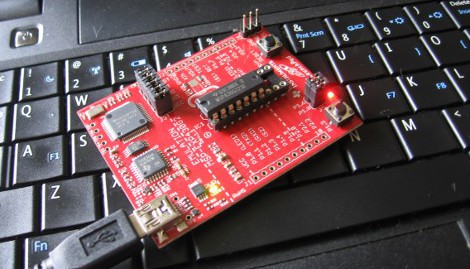
For years, Microchip PIC microcontrollers dominated; PIC16F84 hacks and projects are everywhere. The 8-bit 16F and 18F lines are supported by several coding environments and easy-to-build serial port programmers. Microchip’s 16-bit PIC24F is cheaper, faster, and easier to work with, but largely absent from hacks and projects.
We recently used a Microchip PIC24F microcontroller in a mini web server project, but didn’t find many introductory references to link to. In this article we’ll cover some PIC 24F basics: support circuitry and programming options. We’ll also talk about our favorite features, and how we figured them out. Our next article will outline a web server on a business card based on the PIC 24F.
Continue reading “How-To: Web Server On A Business Card (Part 1)”
How-To: Make An RGB Combination Door Lock (Part 2)

In part 1 we showed you how to build your own prototype RGB keypad. Today we’ll show off some new ideas we worked on to create the project and turn it from prototype to fully functional battle station er door lock.
Continue reading “How-To: Make An RGB Combination Door Lock (Part 2)”
How-To: Make An RGB Combination Door Lock (Part 1)

Part 2 can be found here
Putting a custom designed electronic lock on your space seems like a geek right of passage. For our latest workspace, we decided to skip the boring numbered keypad and build a custom RGB backlit keypad powered by an Arduino. Instead of typing in numbers, your password is a unique set of colors. In today’s How-To, we’ll show you how to build your own and give you the code to make it all work.
Continue reading “How-To: Make An RGB Combination Door Lock (Part 1)”