FLOSS Weekly Episode 850: One ROM To Rule Them All

This week Jonathan and Aaron chat with Piers Finlayson about One ROM! Why does the retro-computing world need a solution for replacement ROMs? How difficult was it to squeeze a MCU and layout into the original ROM footprint? And what’s next for the project? Listen to find out!

Continue reading “FLOSS Weekly Episode 850: One ROM To Rule Them All”

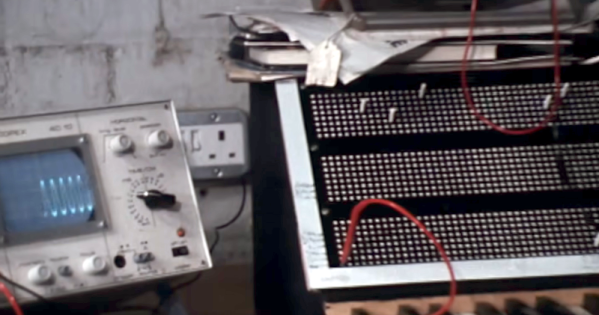
Ask Hackaday: Why Is TTL 5 Volts?

The familiar five volts standard from back in the TTL days always struck me as odd. Back when I was just a poor kid trying to cobble together my first circuits from the Forrest Mims Engineer’s Notebook, TTL was always a problem. That narrow 4.75 V to 5.25 V spec for Vcc was hard to hit, thanks to being too poor to buy or build a dedicated 5 V power supply. Yes, I could have wired up four 1.5 V dry cells and used a series diode to drop it down into range, but that was awkward and went through batteries pretty fast once you got past more than a few chips.

As a hobbyist, the five volt TTL standard always seemed a little capricious, but I strongly suspected there had to be a solid reason behind it. To get some insights into the engineering rationale, I did what anyone living in the future would do: I asked ChatGPT. My question was simple: “How did five volts become the standard voltage for TTL logic chips?” And while overall the answers were plausible, like every other time I use the chatbot, they left me wanting more.

Continue reading “Ask Hackaday: Why Is TTL 5 Volts?”

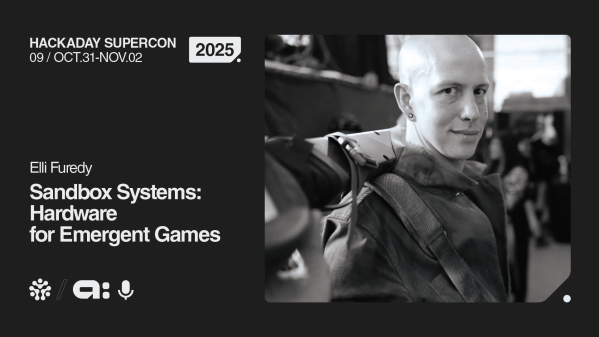
2025 Hackaday Supercon: More Wonderful Speakers

Supercon is just around the corner, and we’re absolutely thrilled to announce the second half of our slate! Supercon will sell out so get your tickets now before it’s too late. If you’re on the fence, we hope this pushes you over the line. And if it doesn’t, stay tuned — we’ve still got to tell you everything about the badge and the fantastic keynote speaker lineup.

(What? More than one keynote speaker? Unheard of!)

And as if that weren’t enough, there’s delicious food, great live music, hot soldering irons, and an absolutely fantastic crowd of the Hackaday faithful, and hopefully a bunch of new folks too. If you’re a Supercon fan, we’re looking forward to seeing you again, and if it’s your first time, we’ll be sure to make you feel welcome. Continue reading “2025 Hackaday Supercon: More Wonderful Speakers”

Know Audio: Distortion Part Two

It’s been a while since the last installment in our Know Audio series, in which we investigated distortion as it applies to Hi-Fi audio. Now it’s time to return with part two of our look at distortion, and attempt some real-world distortion measurements on the bench.

Last time, we examined distortion from a theoretical perspective, as the introduction of unwanted harmonics as a result of non-linearities in the signal path. Sometimes that’s a desired result, as with a guitar pedal, but in a Hi-Fi system where the intention is to reproduce as faithfully as possible a piece of music from a recording, the aim is to make any signal path components as linear as possible. When we measure the distortion, usually expressed as THD, for Total Harmonic Distortion, of a piece of equipment we are measuring the ratio of those unwanted harmonics in the output to the frequencies we want,  and the resulting figure is commonly expressed in dB, or as a percentage. Continue reading “Know Audio: Distortion Part Two”

Hackaday Links Column Banner

Hackaday Links: October 5, 2025

What the Flock? It’s probably just some quirk of The Almighty Algorithm, but ever since we featured a story on Flock’s crime-fighting drones last week, we’ve been flooded with other stories about the company, some of which aren’t very flattering. The first thing that we were pushed was this handy interactive map of the company’s network of automatic license plate readers. We had no idea how extensive the network was, and while our location is relatively free from these devices, at least ones operated on behalf of state, county, or local law enforcement, we did learn to our dismay that our local Lowe’s saw fit to install three of these cameras on the entrances to their parking lot. Not wishing to have our coming and goings documented, we’ll be taking our home improvement dollars elsewhere for now.

Continue reading “Hackaday Links: October 5, 2025”

How Do The Normal People Survive?

It was one of those weeks last week at Hackaday’s home office. My mother-in-law handed me her favorite power bank and said “it’s not charging”. She had every expectation that I’ll open it up, desolder the weary pouch inside, scrounge a LiPo out of some corner of the basement, and have it back up and running before the weekend. And of course that’s what happened, although maybe it looks a little worse for wear because it was hard to open the sealed case without excessive force. Sorry about that!

Then on the weekend, I finally got fed up with the decomposing foam on the face seal on my FPV goggles. It was leaking light all over the place. Of course I could have bought a new seal, but then I’d have to wait a week or so for delivery. So I pulled the velcro backing off, tossed it in the bed scanner, pulled the image up in Inkscape, converted it to Gcode, and cut out a couple seals out of EVA foam on the laser. Not only are they essentially indestructible, but I was able to customize them a little bit, and the fit is now better than ever.

And then, one of our neighbors bought a new garage door fob, flipped the DIP switches into the right configuration, and couldn’t figure out why it wouldn’t open the garage door. Knock knock knock. Using the tried-and-true RF probe that everyone with a scope probe has sitting around, namely hooking the ground pin to the tip and putting the radio device in the loop, it was clear that the sense of the DIP switches was inverted from what it said in the instructions. That was a fun little puzzle.

It was the garage door opener that triggered me to think about how normal people would handle any of these situations. “How do the normies even get by?” were the exact words that went through my head. And let’s face it: we’re not entirely normal. Normal people don’t have a soldering setup just sitting around ready to get hot 24/7, or a scope to diagnose a garage door RF transmitter at the drop of a hat. But these things seem to happen to me all the time. How do the normal people survive? Maybe they all know someone with a scope?

I take it as my service to the world to be “that guy” for most of our friends and family, and I pretty much do it without complaint. “With great power” and all that. My wife is just about as gracious when she’s stuck debugging a parent’s Windows setup, so I’m not saying I’m the only saint in the world, either. Surely you have similar stories.

But last week it made me reflect on how good we’ve got it, and that does make me want to pay it forward a little bit. If you’re one of the people who can, try to help out those who can’t.

Hackaday Podcast Episode 340: The Best Programming Language, Space Surgery, And Hacking Two 3D Printers Into One

Elliot Williams and Al Williams got together to share their favorite hacks of the week with you. If you listen in, you’ll hear exciting news about the upcoming SuperCon and the rare occurrence of Al winning the What’s That Sound game.

For hacks, the guys talk about the IEEE’s take on the “best” programming languages of 2025 and how they think AI is going to fundamentally transform the job of a programmer. On a lighter note, there’s an industrial robot who retired to bartending, a minimal drum machine, a high-powered laser, and a Fortran flight simulator reborn with Unity 3D.

In the “can’t miss” category, you’ll learn how not to switch Linux distributions and what to expect when you need surgery while on your next mission to outer space.

There’s lots more. Want to follow along? Check out the links below. As always, tell us what you think about this episode in the comments!

Or download in DRM-free MP3 playable even over 56K modems.

Continue reading “Hackaday Podcast Episode 340: The Best Programming Language, Space Surgery, And Hacking Two 3D Printers Into One”