Saintcon Badge Is An Enigma No More

Through the weekend Twitter has been a-titter with news coming out of Saintcon, the annual security conference in Provo, Utah. Now that the weekend is over we can finally get our hands on full hardware and software sources for the curvy, LED-covered badge we’ve been salivating over and a write up by its creators [compukidmike] and [bashNinja]. Let’s dive in and see what’s waiting!

Design

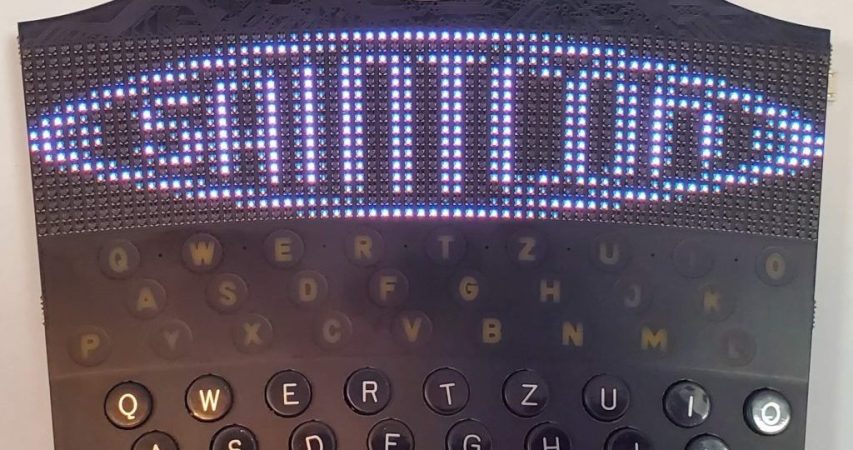
This year’s badge is designed to represent a single tooth on a single rotor of an Enigma machine. The full function of an Enigma machine is quite complex, but an individual device has three rotors with 26 teeth each (one for each letter) as well as a keypad for input and a character display to show each enciphered letter. For reference, the back of the badge has a handy diagram of a badge’s place in the Enigma system.

Reminiscent of the WWII device which the badge design recalls, each unit includes a full QWERTZ keyboard (with labeled keys!) and RGB “lampboard” for individual character output, but unlike the original there’s also a curved 16 x 64 RGB LED display made from those beguiling little ~1mm x 1mm LEDs. All in, the device includes 1051 LEDs! Combined with the unusually non-rectilinear shape of the badge and the Enigma-style Saintcon logo it makes for an attractive, cohesive look.

Continue reading “Saintcon Badge Is An Enigma No More”

Retrotechtacular: The Speaking Clock Goes Silent

It used to be that time was a lot more relative than it is today. With smartphones synced to GPS and network providers’ clocks, we all pretty much have access to an authoritative current time, giving few of us today the wiggle room to explain a tardy arrival at work to an impatient boss by saying our watch is running slow.

Even when that excuse was plausible, it was a bit weak, since almost every telephone system had some sort of time service. The correct time was but a phone call away, announced at first by live operators then later by machines called speaking clocks. Most of these services had been phased out long ago, but one, the speaking clock service in Australia, sounded for the last time at the end of September.

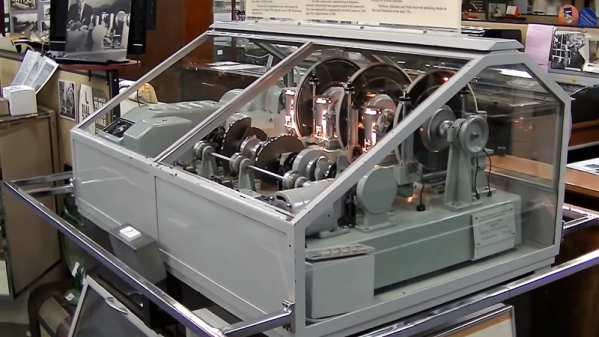
While the decommissioned machine was just another beige box living in a telco rack, the speaking clocks that preceded it were wonderfully complex electromechanical devices, and perfect fodder for a Retrotechtacular deep-dive. Here’s a look at the Australian speaking clock known as “George” and why speaking clocks were once the highest of technology.

Continue reading “Retrotechtacular: The Speaking Clock Goes Silent”

Josephine Peary, First Lady Of The Arctic

In the late nineteenth century, there was only one Earthly frontier left to discover: the North Pole. Many men had died or gone insane trying to reach 90°N, which, unlike the solidly continental South Pole, hides within a shifting polar sea.

One of history’s most driven Pole-seekers, Robert Peary, shocked the world when he announced that his wife Josephine would accompany him on his expedition to Greenland. The world responded, saying that she, a Washington socialite with no specialized training, had absolutely no business going there. But if it weren’t for Jo’s contributions, Robert would probably have never made it to the Pole, or even out of Greenland. Sewing and cooking skills may not seem like much, but they are vital for surviving in the Arctic climate. She also hunted, and managed the group’s Inuit employees.

Josephine Peary was more than just the woman behind the man. An Arctic explorer in her own right, she spent three winters and eight summers on the harsh and unforgiving frontier. Back at home, her Arctic accounts painted a picture of a frozen and far-off world that most could only wonder about. Jo’s writing career brought in expedition money for her husband, which sometimes turned into bailout money.

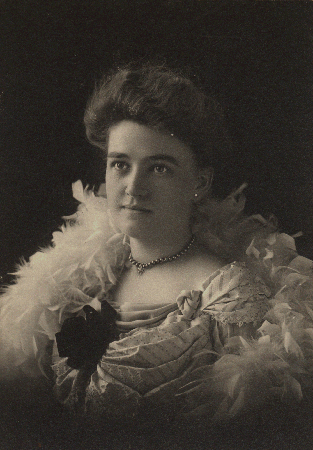
Josephine Peary, DC debutante. Image via Bowdoin College

Woman About Washington

Josephine Cecilia Diebitsch was born May 22nd, 1863 to German immigrant parents who encouraged her to explore the world. Her father, Hermann, was a linguist at the Smithsonian Institute. Because of his position, the Diebitsch family rubbed elbows with much of high society. Though Jo was raised to be a Victorian lady and upheld those values, she had progressive ideas about what women could do with themselves in addition to being wives and mothers.
Continue reading “Josephine Peary, First Lady Of The Arctic”

The Basics Of Persistence Of Vision Projects

Persistence of Vision (POV) is a curious part of the human visual system. It’s the effect by which the perception of an image lingers after light has stopped entering the eye. It’s why a spinning propeller appears as a disc, and why a burning sparkler appears to leave a trail in the air. It’s also commonly used as a display technology, where a series of flashing LEDs can be used to create messages that appear to float in the air. POV displays are a popular microcontroller project, and today, we’ll explore the basic techniques and skills required in such builds.

Continue reading “The Basics Of Persistence Of Vision Projects”

The Young Engineers Guide To Career Planning

It’s often said that engineers aren’t born, they’re made. Or more accurately, taught, tested, and accredited by universities. If you’re in high school, you’re probably starting to think about potential career paths and may be considering an engineering degree. A lot of work goes into a good college application, and it might seem like the hardest part is getting in. However, if your end goal is to get yourself a great engineering job at the end of your studies, it pays to have your head up from day 1!

I Just Need A Degree, Right?

Back in my freshman days, there was a saying that was popular on campus, particularly with those studying STEM topics. “Ps get degrees.” Your college’s grading system might use different letters, but the basic gist was that a pass mark was all that was required to get your piece of paper at the end of your four years. While this is technically true, it’s only really a useful ethos if your aim is to simply get a degree. If your goal is to use that degree to score yourself a plum job in your field, it would be unwise to follow this credo.

This attitude will net you plenty of wonderful memories at the bar, but it will dent your chances of landing a solid job upon graduation. All in moderation!

The reality of the modern job market is that it’s highly competitive. Recruiters can receive hundreds of applications for a single job, meaning the vast majority of applicants don’t even make it to the interview stage. To trim down the pile, various criteria are used to pick out the ideal candidates. An easy way to do this is to sort by grades. Having a low GPA can therefore see your application relegated to the trashcan, before you even get a chance to impress anyone with your carefully honed skills. Continue reading “The Young Engineers Guide To Career Planning”

SatNOGS Update Hack Chat

Join us on Wednesday, October 30 at noon Pacific for the SatNOGS Update Hack Chat with Pierros Papadeas and the SatNOGS team!

Ever since the early days of the Space Race, people have been fascinated with satellites. And rightly so; the artificial moons we’ve sent into orbit are engineering marvels, built to do a difficult job while withstanding an incredibly harsh environment. But while most people are content to just know that satellites are up there providing weather forecasts and digital television, some of us want a little more.

Enter SatNOGS. Since winning the very first Hackaday Prize in 2014, SatNOGS has grown into exactly what Pierros Papadeas and the rest of the team envisioned: a globe-spanning network of open-source satellite ground stations, feeding continuous observations into an open, accessible database. With extensive documentation and an active community, SatNOGS has helped hundreds of users build ground stations with steerable antennas and get them connected. The network tracks hundreds of Low-Earth Orbit (LEO) satellites each day, including increasingly popular low-cost Cubesats.

Join us as the SatNOGS crew stops by the Hack Chat to give us an update on their efforts over the last few years. We’ll discuss how winning the Hackaday Prize changed SatNOGS, how the constellation of satellites has changed and how SatNOGS is dealing with it, and what it takes to build a global network and the community that makes it work.

join-hack-chatOur Hack Chats are live community events in the Hackaday.io Hack Chat group messaging. This week we’ll be sitting down on Wednesday, October 30 at 12:00 PM Pacific time. If time zones have got you down, we have a handy time zone converter.

Click that speech bubble to the right, and you’ll be taken directly to the Hack Chat group on Hackaday.io. You don’t have to wait until Wednesday; join whenever you want and you can see what the community is talking about.

Hackaday Links Column Banner

Hackaday Links: October 27, 2019

A year ago, we wrote about the discovery of treasure trove of original documentation from the development of the MOS 6502 by Jennifer Holdt-Winograd, daughter of the late Terry Holdt, the original program manager on the project. Now, Ms. Winograd has created a website to celebrate the 6502 and the team that built it. There’s an excellent introductory video with a few faces you might recognize, nostalgia galore with period photographs that show the improbable styles of the time, and of course the complete collection of lab notes, memos, and even resumes of the team members. If there were a microchip hall of fame – and there is – the 6502 would be a first-round pick, and it’s great to see the history from this time so lovingly preserved.

Speaking of the 6502, did you ever wonder what the pin labeled SO was for? Sure, the data sheets all say pin 38 of the original 40-pin DIP was the “Set Overflow” pin, an active low that set the overflow bit in the Processor Status Register. But Rod Orgill, one of the original design engineers on the 6502, told a different story: that “SO” was the initials of his beloved dog Sam Orgill. The story may be apocryphal, but it’s a Good Doggo story, so we don’t care.

You may recall a story we ran not too long ago about the shortage of plutonium-238 to power the radioisotope thermoelectric generators (RTGs) for deep-space missions. The Cold War-era stockpiles of Pu-238 were running out, but Oak Ridge National Laboratory scientists and engineers came up with a way to improve production. Now there’s a video showing off the new automated process from the Periodic Videos series, hosted by the improbably coiffed Sir Martyn Poliakoff. It’s fascinating stuff, especially seeing workers separated from the plutonium by hot-cells with windows that are 4-1/2 feet (1.4 meters) thick.

Dave Murray, better known as YouTube’s “The 8-Bit Guy”, can neither confirm nor deny the degree to which he participated in the golden age of phone phreaking. But this video of his phreaking presentation at the Portland Retro Gaming Expo reveals a lot of suspiciously detailed knowledge about the topic. The talk starts at 4:15 or so and is a nice summary of blue boxes, DTMF hacks, war dialing, and all the ways we curious kids may or may not have kept our idle hands busy before the Interwebz came along.

Do you enjoy a puzzle? We sure do, and one was just laid before us by a tipster who prefers to stay anonymous, but for whom we can vouch as a solid member of the hacker community. So no malfeasance will befall you by checking out the first clue, a somewhat creepy found footage-esque video with freaky sound effects, whirling clocks, and a masked figure reading off strings of numbers in a synthesized voice. Apparently, these clues will let you into a companion website. We worked on it for a bit and have a few ideas about how to crack this code, but we don’t want to give anything away. Or more likely, mislead anyone.

And finally, if there’s a better way to celebrate the Spooky Season than to model predictions on how humanity would fare against a vampire uprising, we can’t think of one. Dominik Czernia developed the Vampire Apocalypse Calculator to help you decide when and if to panic in the face of an uprising of the undead metabolically ambiguous. It supports several models of vampiric transmission, taken from the canons of popular genres from literature, film, and television. The Stoker-King model makes it highly likely that vampires would replace humans in short order, while the Harris-Meyer-Kostova model of sexy, young vampires is humanity’s best bet except for having to live alongside sparkly, lovesick vampires. Sadly, the calculator is silent on the Whedon model, but you can set up your own parameters to model a world with Buffy-type slayers at your leisure. Or even model the universe of The Walking Dead to see if it’s plausible that humans are still alive 3599 days into the zombie outbreak.