Controlling Real Objects Using Minecraft

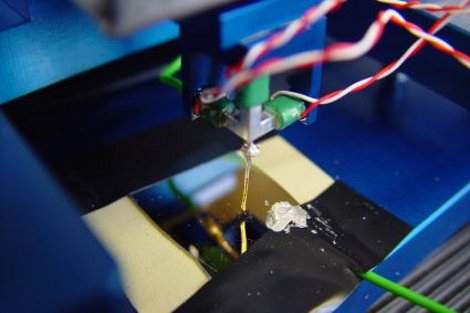
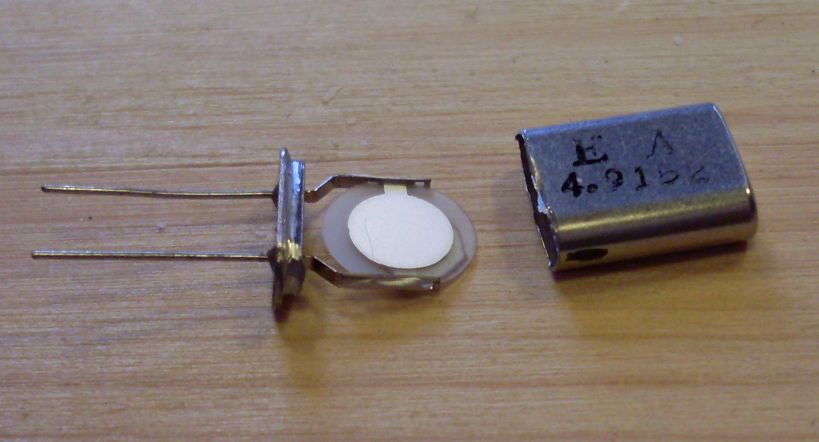
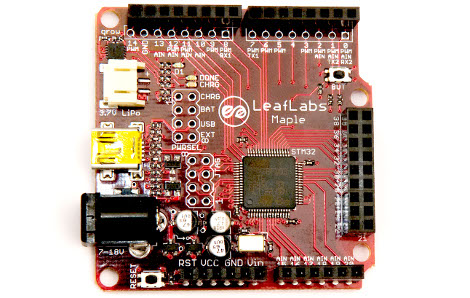
Most augmented reality takes images of the real world and superimposes virtual data on top of them. [Michael Winston Dales] went a different direction, using the virtual world of Minecraft to control objects in the physical world. In the video after the break you can see him use switches that he built inside the game to turn the LEDs pictured above on and off. You’ll also notice that in-game sign instructing a player to stand in one spot to Tweet. Since Minecraft is written in Java there are some mods that allow you to hook onto in-game events. [Michael] does just that, triggering his own scripts to send data to an Arduino, or use a Twitter API. Now this something that should be used with the Minecraft ALU. It takes the sandbox method of gaming to a new place, doesn’t it?

Continue reading “Controlling Real Objects Using Minecraft”

Calc Is High-tech For 1970’s Homebrew

Just one look at that banner image and you’ve got to be thinking “that’s old”! This 1970’s era home made calculator used a 4-function calculator IC that was quite advanced for its time. The only problem is that the chip couldn’t do anything other than calcuations, which left it up to the maker of this dinosaur to get the display and keypad working. Circuit boards were made by drawing on copper clad with resist marker. These controlled the VFD digits for the IC’s output and also fed it the user inputs.

[Thanks Brian]

Custom Made Industrial Hookah

Since their invention in the 1500s, Hookahs have always been a way for craftsmen to show off skills by creating ornate, elaborate, and functional pieces of art. This still holds true today, as easily seen above. Found on the Hookah subreddit, this pipe was pieced together by recycling an old vodka bottle, as well decorating and re-purposing a number of plumbing items. Some finishing touches such as LEDs and gears to the base, as well as a set of turn-valves to the hose plugs give this hookah a very distinctive look.

As always, we at Hackaday do not recommend or promote smoking, no matter what goes into the bowl of the hookah. However, whether you smoke or not, the final product is worth appreciating. Be sure to check out the higher resolution pictures after the break.

Continue reading “Custom Made Industrial Hookah”

German Engineering Produces An Overcomplicated Scarecrow

This electronic scarecrow keeps the birds away and makes your neighbors hate you at the same time. That’s because its way too loud, even if the next house is far away. The conrad.de folks that brought us the climbing bike storage device are at it again, putting together car audio and strings of lights as part of the bird-shoo-ing technology. In the video after the break you’ll see that they’re using a PIR motion sensor to switch power to an automotive amp and head unit. The speakers, strings of lights, and spinning doo-dads are all hidden under a black cape. When an unsuspecting bird tries to feast on the crops, the scarecrow unfolds its arm Dracula-style and raises a ruckus. We don’t expect to see this at a local farm, but maybe for next Halloween?

Continue reading “German Engineering Produces An Overcomplicated Scarecrow”

Home Brew Coffee Machine

There are already a lot of different ways to brew up a decent coffee at home, from the humble saucepan to the elegant vacuum flask. In an office environment the choice of coffee-making technique can have a major impact on workplace harmony—how can people be expected to work happily when the kitchen is filthy with grounds and the coffee is always stale? “Someone have mercy,” [Christian Finger] lamented, “and boil a pot of fresh.”

In the end he took extreme measures, building a machine that grinds whole beans, measures out a dose, brews a cup and self-cleans. He used all sorts of odds and ends to put the thing together, detailed in his long and hilarious build log (english translation—and check out the dude’s sweet ride). Refer to his shockwave animation for a summary of the intended operation.

The end result is an extremely impressive Goldbergian contraption—download the video from the build log. It is pretty noisy and probably energy- and water-hungry, but that wouldn’t stop us from using it every day, if given the chance. Hell, this here could form a major part of your next breakfast machine.

We’re sure that there is further potential in this, because to get the really freshest possible cup of coffee you’d want to roast the coffee beans just before grinding them. Then you’d be well on your way towards something else entirely: a delicious breakfast machine.

Copper-clad Enclosures

Building a great looking box for your projects can be a challenge. [Ken] boils down his process of building enclosures out of copper clad (PDF) circuit board material into an illustrated guide in case you want to try this for yourself. Why would you want to use PC board? The fiberglass substrate makes for a strong and lightweight material. Also, [Ken] is a ham radio operator and the copper coating acts as an electrical shield for delicate components inside.

As you can see above he uses solder to tack the pieces together. There’s some important considerations that go along with this method. First, he cuts the pieces just a bit oversized and then sands them flat and square before assembly. Next, he uses some 20 gauge wire as a shim between a ninety-degree joint and a right angle jig. This shim compensates for the shrinking that occurs as the solder cools, making sure the joint gets pulled to a right angle. He even solders nuts in place so that screws can be used to attach the case cover to the chassis.

Yesterday we saw toner transfer used to make labels on an ABS case. If you make your enclosure out of copper clad, using toner transfer for panel labels will be a snap!

Tuesday Two-Fer: Battery Cases And ABS Lettering

These are both interesting, unrelated, and can’t quite stand on their own so we threw them into one post.

On the left you see the product of using toner transfer on ABS plastic. [Bogdan] tried this out as a way to make front panels for his enclosures. It really shouldn’t work very well because ABS has a lower melting point than toner does. But it seems that it takes a while for the ABS to heat up. If you’re quick, ironing for about 10 seconds, you can get the toner to stick to the plastic and then soak the paper off, leaving your printed design looking nice and clean.

To the right you see a printed battery case. [Nikolaus Gradwohl] ran across the same problem we’ve face many times: how to attach batteries to your projects? We’ve duct-taped them together, used the blister packs they’re sold in, Dremeled them out of thrift-store toys and just about every other thing you can imagine. He decided to make them easy to manufacture with a 3D-printer. This is accomplished with an OpenSCAD file he wrote. Plug in the size and number of batteries and a printable package will be automatically generated.