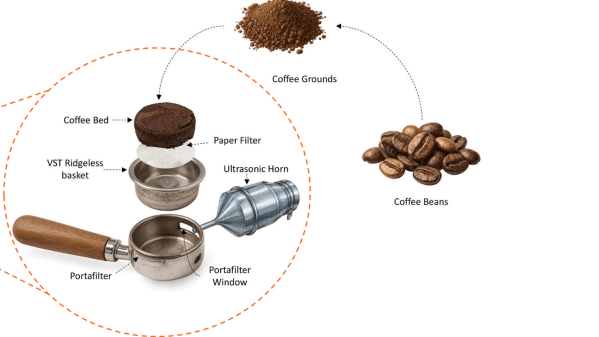
An AI-generated diagram of the coffee-making process is shown. A filter holds a basket of coffee grounds, which are contained in a paper filter. An ultrasonic transducer vibrates the basket.

Brewing Espresso With Ultrasonic Assistance

There are as almost as many kinds of coffee as there are of coffee drinkers, with each method for preparing the beverage appealing to a different kind of palate: moka pots, filter coffee, pour-over coffee, French presses, cold brews, espresso, and more produce their own unique flavours by extracting different compounds from the grounds to different degrees. Now, a new method has joined the throng: ultrasonic-assisted extraction, which can produce even an espresso at room temperature.

Espresso is normally made by forcing hot water through tightly-packed, finely-ground coffee beans, quickly producing a concentrated extraction. Its one of the hardest kinds of coffee to consistently make well, since the outcome is influenced by everything from grind size and packing density to temperature, pressure, and more. Ultrasonic agitation helps here by creating cavitation bubbles, which form shock waves as they collapse, breaking open the bean structure and producing small, strong jets of water. The experimental apparatus was built into a modified espresso machine. An ultrasonic transducer delivers vibrations to the basket containing the room-temperature slurry of coffee grounds for two or three minutes.

To quantify the results, the researchers analysed total dissolved solids, extraction yield, pH, colour, volatile components, and caffeine and chlorogenic acid contents. By varying ultrasonic power and grind size, the extraction yield and dissolved solids could be adjusted to closely match traditional espresso or cold-brew coffee. The other metrics had no significant differences, and a survey of 100 coffee drinkers found no preference between this and traditional espresso. When the drinkers tried the cold-brew coffees, they preferred the version made with ultrasonic assistance. The experiment succeeded in its goal of reducing energy consumption: the ultrasonic-assisted coffee took about a quarter as much energy to make.

If you still prefer a more traditional approach, we’ve covered some beautiful espresso machines before, including one made out of motorcycle engine parts.
An Espresso Machine For The DIY Crowd

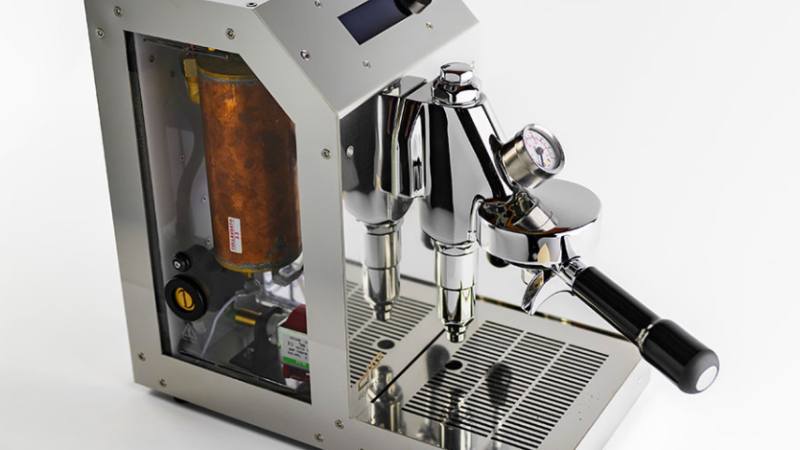
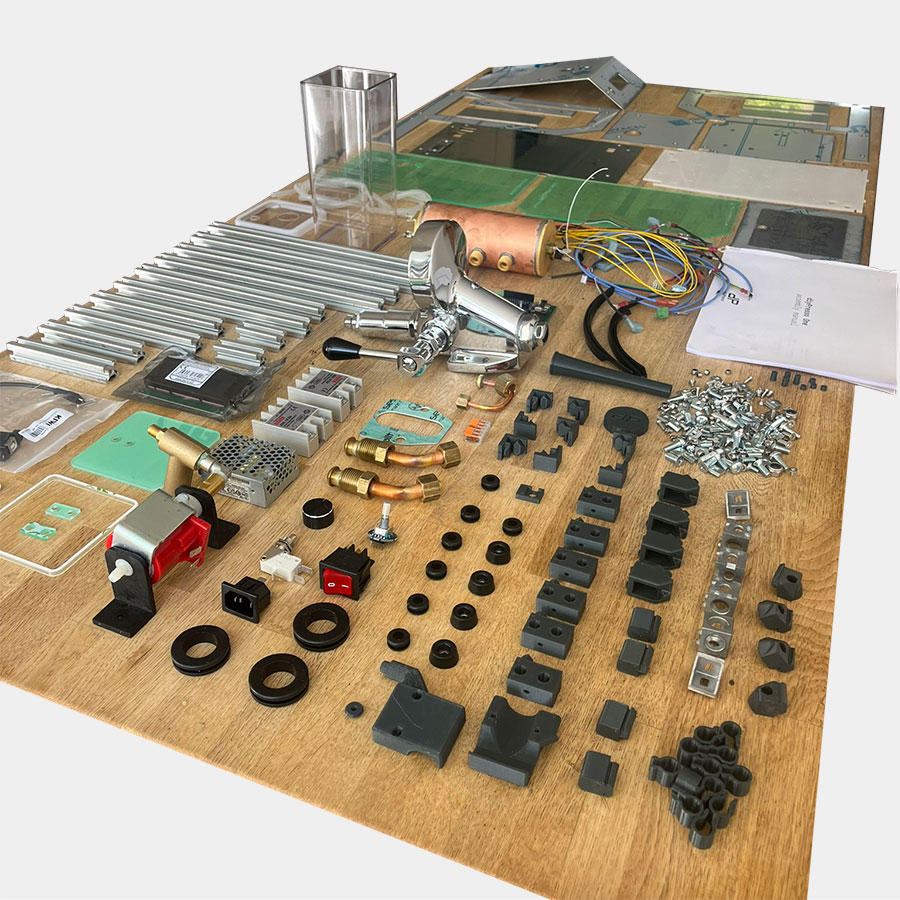
Want to build your own espresso machine, complete with open-source software to drive it? The diyPresso might be right up your alley.

diyPresso parts, laid out and ready for assembly.

It might not be the cheapest road to obtaining an espresso machine, but it’s probably the most economical way to turn high-quality components (including a custom-designed boiler) and sensors into a machine of a proven design.

Coffee and the machines that turn it into a delicious beverage are fertile ground for the type of folk who like to measure, modify, and optimize. We’ve seen DIY roasters, grinders, and even a manual lever espresso machine. There are also many efforts at modifying existing machines with improved software-driven controls but this is the first time we’ve seen such a focused effort at bringing the DIY angle to a ground-up espresso machine specifically offered as a kit.

Curious to know more? Browse the assembly manual or take a peek at the software’s GitHub repository. You might feel some ideas start to flow for your next coffee hack.

Smart Coffee Replaces Espresso Machine Controller With Arduino, Sensors

A common hacker upgrade to an espresso machine is to improve stability and performance with a better temperature controller, but [Schematix]’s Smart Coffee project doesn’t stop there. It entirely replaces the machine’s controller and provides an optional array of improvements for a variety of single-boiler machines (which is most of them).

Smart Coffee isn’t free, it costs 16 NZD (about 10 USD) but there is a free demo version. There is no official support, but there are wiring guides and sources aplenty from which to purchase the various optional parts. It runs on an Arduino MEGA 2560 PRO (or similar microcontroller) and supports a wide array of additional hardware including pressure transducer, water level sensor, flow meter, OLED display, and more.

Modification of one’s espresso machine is a rewarding endeavor, but the Smart Coffee project provides a way for one to get straight to the hacking and function modifying, instead of figuring out the wiring hardware interfacing from scratch.

We’ve seen [Schematix]’s work before with a DIY induction heater which showed off thoughtful design, and it’s clear he takes his coffee at least as seriously. Check out the highly comprehensive overview and installation video for Smart Coffee, embedded just below the page break.

Continue reading “Smart Coffee Replaces Espresso Machine Controller With Arduino, Sensors”

Enjoy An Open-Source Espresso

One of the core principles of the open-source movement is that anyone who wants to build on a piece of work, in whatever way they want, is easily able to. With source code freely available, the original project can be expanded upon, modified, updated, or simply looked at and used as inspiration. Usually we think about this in the realm of software freedom, but hardware is an important component as well. And not just electronics hardware, either. [Norm] demonstrates this espresso machine which was built on these open-source foundations.

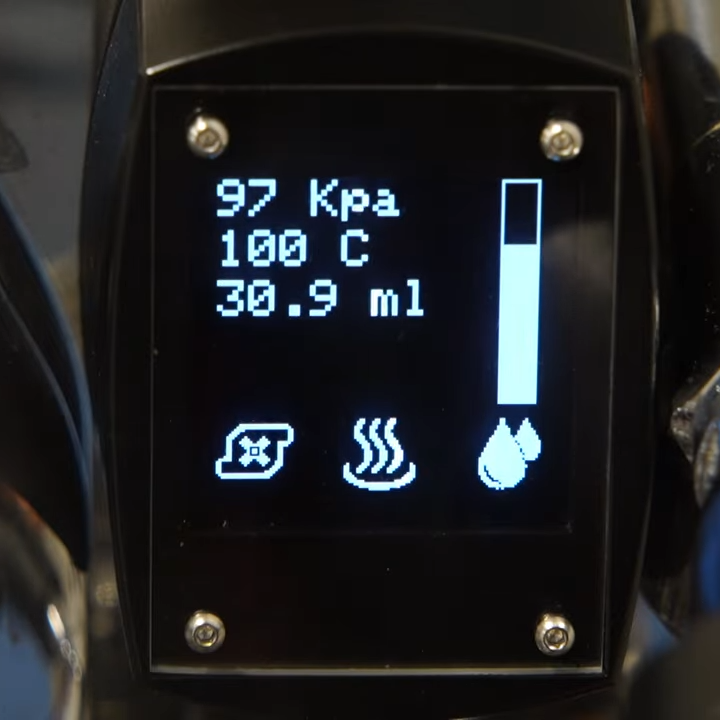
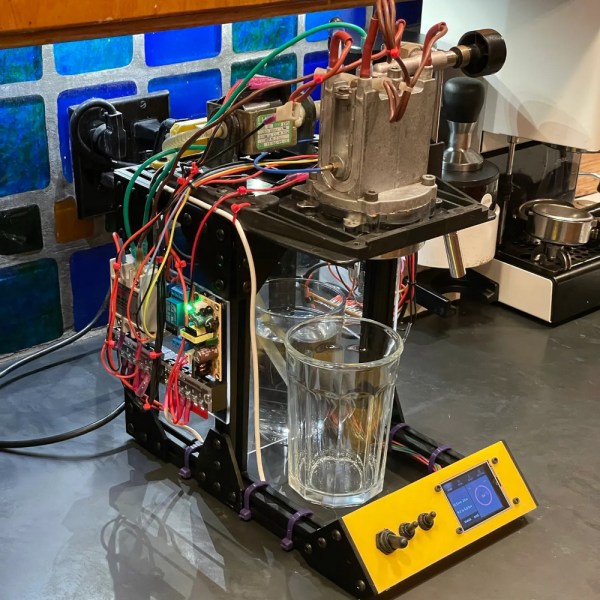
The project takes some inspiration from the open-source Gaggiuino project, which was another build that modified an entry-level espresso maker with finer control over temperature and pressure. [Norm] was not willing to sacrifice his espresso machine for this cause, though, which is how this machine with its cobbled-together hardware came to be. An older machine with some worn parts was sacrificed to the coffee gods instead, making use of its pumps, boiler, and a few other bits of hardware especially from the hydraulics system. The software control is built around the Gaggiuino project, and includes a custom control board for user interface.

Right now the coffee maker does indeed work, but [Norm] hopes to make some improvements to the device including adding an enclosure of some sort, both to prevent accidental contact with the boiler and to give it a sleek, professional look. We kind of like it the way it is, while acknowledging that it isn’t quite ready for commercial production like this. It has a similar industrial feel as this espresso machine we featured a few years ago that is made out of old engine components.

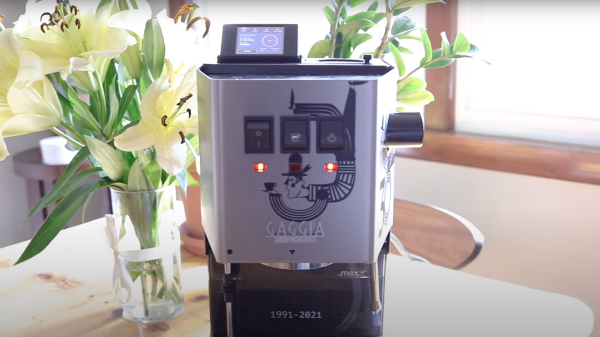
A Gaggia classic espresso machine with an LCD screen attached to the top, sitting on a table with vase of yellow lily flowers to its left and sunlight coming in from a window from the right.

Homebrew Espresso Maker Modding With Gaggiuino

For those that don’t know, Gaggia is a company that produces a line of affordable “entry-level” espresso coffee makers that offer good quality consumer espresso machines at reasonable prices. The entry level machines don’t offer fine grained control over temperature, pressure and steam which is where the Gaggiuino project comes in.

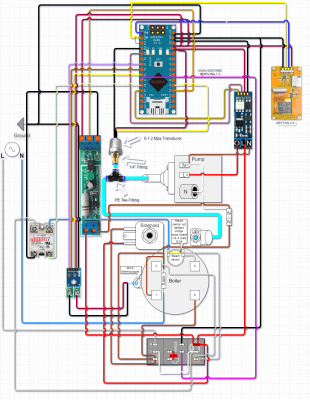
A schematic of the Gagguino project

The Gaggiuino project is an “after market” modification of many espresso makers, such as the Gaggia classic and Gaggia classic pro. The main additions are a MAX6675 thermocouple module paired with a K-Type thermocouple sensor for closed loop control over the temperature. Options for adding an AC dimmer module that attaches to the pump motor and a 0 Mpa to 1.2 Mpa ranged XDB401 pressure sensor, installed in line between the pump and the boiler, provide further closed loop control over the pressure and flow profiling.

Load cells can be attached to the drip tray to allow for feedback about the pour weight with a Nextion 2.4″ LCD touchscreen provides the user interface for profile selection and other interactivity. The project offers a “base” modification using an Arduino Nano as the microcontroller, in line with its namesake, but has an option for an STM32 Blackpill module that can provide more functionality beyond the scope of the Nano.

The Gaggiuino project is open source with code and extensive documentation available on GitHub. There is also a Discord community for those wanting help with their build or that have the inclination to share their passion for DIY espresso modding with the Gaggiuino. Espresso machine hacks are a favorite of ours and we’ve featured many projects on espresso machine builds and mods ranging from PID control of classic espresso makers to beautifully minimal closed loop homebrew espresso machines.

Continue reading “Homebrew Espresso Maker Modding With Gaggiuino”

Using Statistics Instead Of Sensors

Statistics often gets a bad rap in mathematics circles for being less than concrete at best, and being downright misleading at worst. While these sentiments might ring true for things like political polling, it hides the fact that statistical methods can be put to good use in engineering systems with fantastic results. [Mark Smith], for example, has been working on an espresso machine which can make the perfect shot of coffee, and turned to one of the tools in the statistics toolbox in order to solve a problem rather than adding another sensor to his complex coffee-brewing machine.

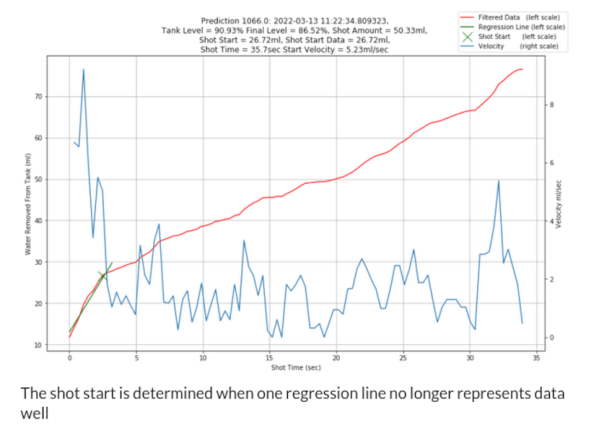
To make espresso, steam is generated which is then forced through finely ground coffee. [Mark] found that his espresso machine was often pouring too much or too little coffee, and in order to improve his machine’s accuracy in this area he turned to the linear regression parameter R2, also known as the coefficient of determination. By using a machine learning algorithm tuned to this value, which assesses predictable variation in a data set, a computer can more easily tell when the coffee begins pouring out of the portafilter and into the espresso cup based on the pressure and water flow in the machine itself rather than using some other input such as the weight of the cup.

We have seen in the past how seriously [Mark] takes his coffee-making, and this is another step in a series of improvements he has made to his equipment. In this iteration, he has additionally produced a simulation in JupyterLab to better assist him in modeling the system and making even more accurate predictions. It’s quite a bit more effort than adding sensors, but since his espresso machine already included quite a bit of computing power it’s not too big a leap for him to make.

Extreme Espresso, Part 2: An Inductive Water Level Sensor

[Mark Smith] must really, really like his coffee, at least judging by how much effort he’s put into tricking out his espresso machine.

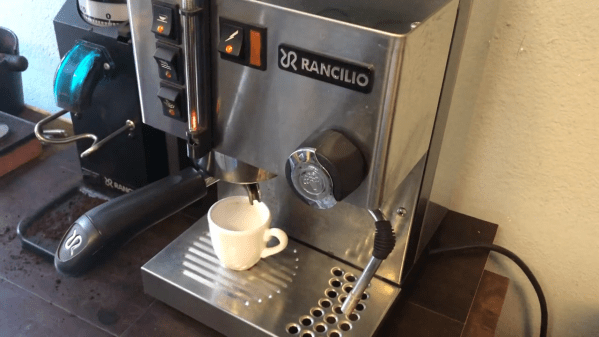
This inductive water tank sensor is part of a series of innovations [Mark] has added to his high-end Rancilio Silvia machine — we assume there are those that would quibble with that characterization, but 800 bucks is a lot to spend for a coffee maker in our books. We recently featured a host of mods he made to the machine as part of the “Espresso Connect” project, which includes a cool Nixie tube bar graph to indicate the water level in the machine. That display is driven by this sensor, the details of which [Mark] has now shared. The sensor straddles the wall of the 1.7-liter water tank, so no penetrations are needed. Inside the tanks is a track that guides a copper and PETG float that’s sealed with food-safe epoxy resin.

Directly adjacent to the float track on the outside of the tank is a long PCB with a couple of long, sinuous traces. These connect to an LX3302A inductive sensor IC, which reads the position of the copper slug inside the float. That simplifies the process greatly; [Mark] goes into great detail about the design and calibration of the sensor board, as well as hooking it into the Raspberry Pi Zero that lies at the heart of “Espresso Connect’. Altogether, the mods make for a precisely measured dose of espresso, as seen in the video below.

We’d say this was maybe a bit far to go for the perfect cup of coffee, but we sure respect the effort. And we think this inductive sensor method has a lot of non-caffeinated applications that probably bear exploration.

Continue reading “Extreme Espresso, Part 2: An Inductive Water Level Sensor”