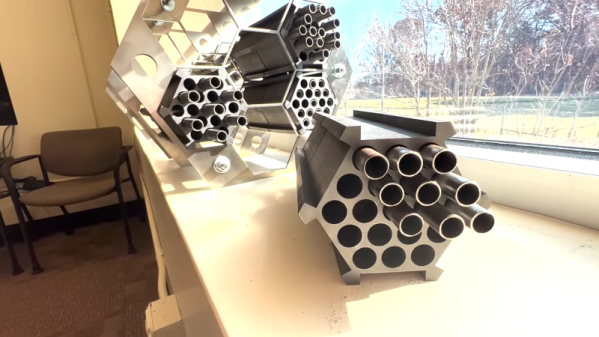
[Power Engineering] took a trip to the Westinghouse facility that provides maintenance for nuclear reactors. The research division there has a new microreactor called eVinci and — according to the company — it is a disruptor. Technically, the device is a heat pipe-based passive cooling design that can generate 5 MW of electricity or 13 MW of heat from a 15 MW heater core. You can see a video about the device below.
The company says its initial targets are remote areas like mines that usually depend on diesel generators. Hundreds of passive heat pipes inside a graphite core which contains TRISO (tristructural isotropic) fuel pellets. The heat pipes allow efficient transfer of thermal energy with no pumps.
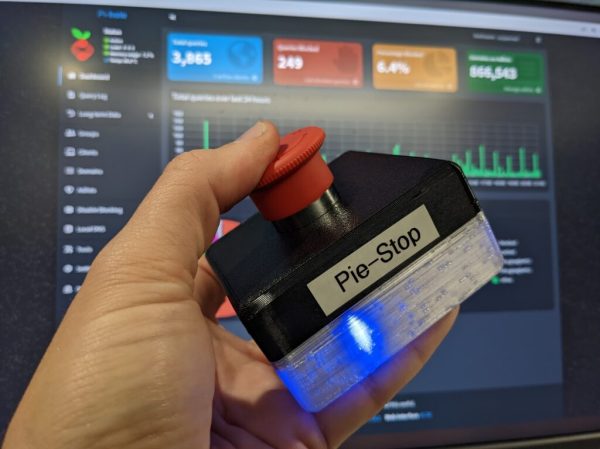
The war on Internet ads rages on, as the arms race between ad blockers and ad creators continues to escalate. To make a modern Internet experience even remotely palatable, plenty of people are turning to DNS-level filters to stop the ads from coming into the network at all. This solution isn’t without its collateral damage though, as the black lists available sometimes filter out something that should have made it to the user. For those emergencies, [Kristopher] created the Pie Stop, a physical button to enact a temporary passthrough on his Pi-Hole.
While [Kristopher] is capable of recognizing a problem and creating the appropriate white list for any of these incidents, others in his household do not find this task as straighforward. When he isn’t around to fix the problems, this emergency stop can be pressed by anyone to temporarily halt the DNS filtering and allow all traffic to pass through the network. It’s based on the ESP-01S, a smaller ESP8266 board with only two GPIO pins. When pressed, it sends a custom command to the Pi-Hole to disable the ad blocking. A battery inside the case allows it to be placed conveniently anywhere near anyone who might need it.
With this button deployed, network snafus can be effectively prevented even with the most aggressive of DNS-level ad blocking. If you haven’t thought about deploying one of these on your own network, they’re hard to live without once you see how powerful they are. Take a look at this one which also catches spam.
It always fascinates us that every single thing that is made had to be designed by someone. Even something as simple as a bag and box that holds cereal. Someone had to work out the dimensions, the materials, the printing on it, and assign it a UPC code. Those people aren’t always engineers, but someone has to think it out no matter how mundane it is before it can be made. But what about the terms we use to express things? Someone has to work those out, too. In the case of metric prefixes like kilo, mega, and pico, it is apparently the General Conference on Weights and Measures that recently had its 27th session. As a result of that, we have four more metric prefixes to learn: ronna, quetta, ronto, and quecto.
Apparently, the new prefixes are to accommodate “big data” which is rapidly producing more data than there are atoms in the Universe. There were actually proposed earlier in a slightly different form but accepted at the conference. Apparently quecca is too close to a Portuguese swear word. So what do these actually mean? A QB (quettabyte) would be 1030 bytes while an RB (ronnabyte) is only 1027. So 1 QB would be 1,000,000 yottabytes (YB) the previous top of the scale.
There are places that you can go in person, but for everything else, there’s FPV. Whether you’re flying race quads, diving the depths in a yellow submarine, or simply roving the surface of the land, we want to see your builds. If it’s remote controlled, and you feel like you’re in the pilot’s seat, it’s FPV.
When you say “first person view” many of you will instinctively follow up with “flight” or “drone”. But given the ease of adding a camera and remote control to almost any vehicle, there’s no reason to only fly the FPV skies. (Of course, we want to see your crazy quadcopter builds too.)
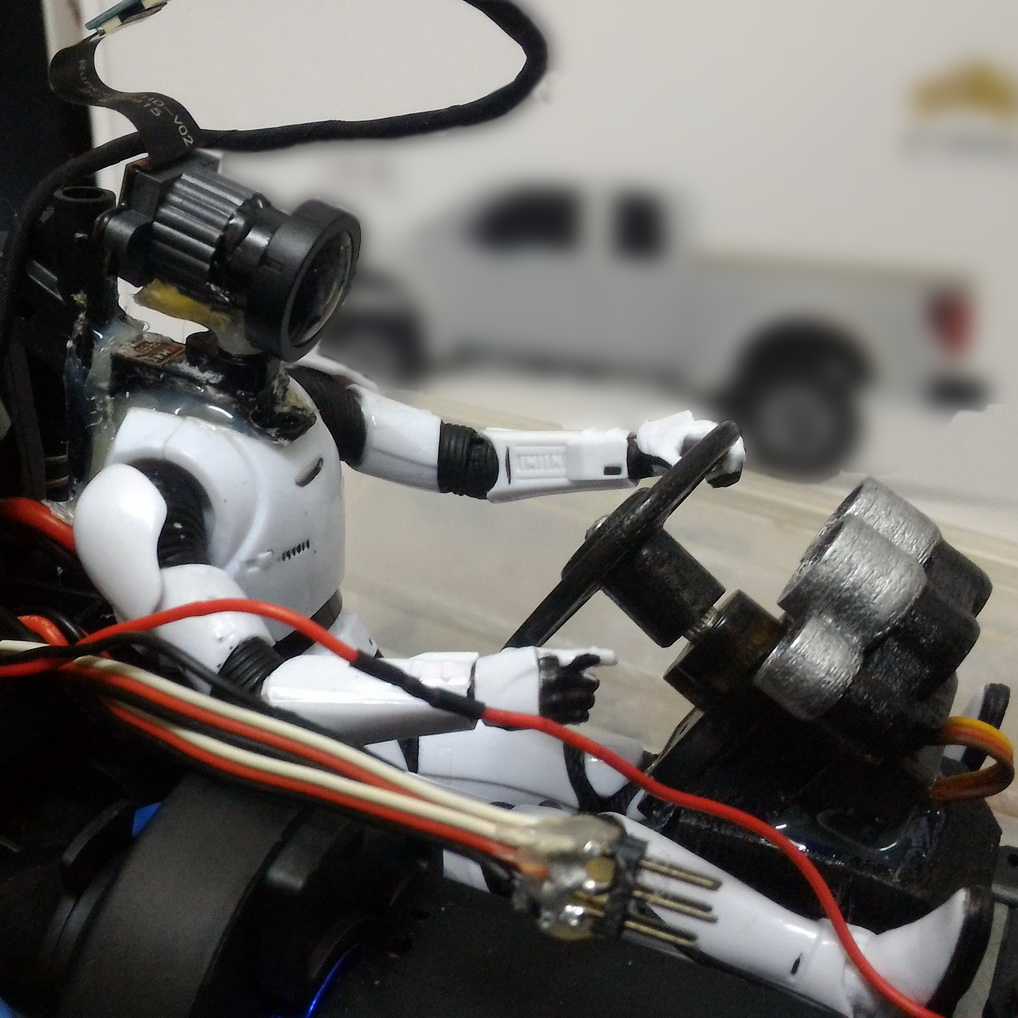
This contest isn’t exclusively about the vehicles either. If you’re working on the tech that makes FPV possible, we want you to enter. For instance, this simple quad/drone tracker will help keep your video feed running and your mind on flying. This cockpit will make the immersion more complete. And nobody likes the jello-cam effect that excess vibration can cause, so we’d like to see camera hacks as well.
And of course, your quads. Is your FPV quad too fast, too light, or does it fly too far? Show us. The contest starts now and runs until Jan 3, 2023, and there are three $150 shopping sprees courtesy of Digi-Key on the line. Get hacking!
On November 14th of this year, the FDA cleared the path for Upside Foods to sell its cell-culture-based chicken products within the US. This is the first product of its kind to be cleared for commercial sale within the Americas, with only Singapore having previously cleared a similar product for sale, back in December of 2020. This latter product comes courtesy of another California start-up called Eat Just.
Since that initial approval in Singapore, Eat Just has begun to set up a 2,800 square meter (~30,000 square feet) production facility in Singapore that is scheduled to begin producing thousands of kilograms of slaughter-free meat starting in the first quarter of 2023. This would make it the top-runner in the cultured meat industry, which to this point has seen dozens of start-ups, but precious few actual products for sale.
With CEO Josh Tetrick of Eat Just projecting price equality between their cultured meat and meat from animals by 2030, could the FDA’s approval herald the dawn of slaughter-free meat? There are obviously still hurdles, but as we’ll see, the idea is not nearly as far-fetched as one might think.
There were news stories afoot this week with somewhat breathless headlines that suggested a medical breakthrough was at hand: “In a 1st, two people receive transfusions of lab-grown blood cells.” A headline like that certainly catches the eye, especially as the holidays approach and the inevitable calls for increased blood donations that always seem to happen this time of year as the supply gets pinched. Does a headline like that mean that someone is working on completely artificial blood?
As always with this sort of thing, the answer is a mixed bag. Yes, a team in the UK has transfused two patients with a small amount of lab-grown red blood cells, and it’s the first time that particular procedure has been performed. But while the headline is technically correct, the amount transfused was very small, so the day when lab-grown whole blood transfusions replace donated blood isn’t exactly here yet. But the details of what was done and why it was attempted are the really interesting part here, and it’s worth a deep dive because it does potentially point the way to a future where totally synthetic blood may be a real thing.