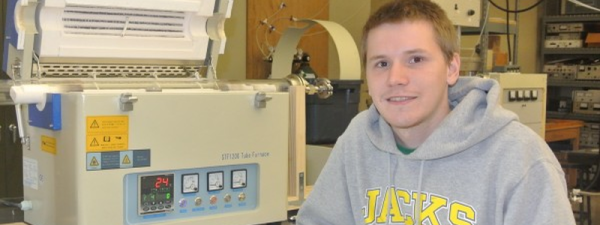
When you think of South Dakota you generally think of Mount Rushmore and, maybe, nuclear missiles. However, [Simeon Gilbert] will make you think of semiconductors. [Simeon], a student at South Dakota State University, won first place at the annual Sigma Xi national conference because of his work on a novel magnetic semiconductor.
The material, developed in collaboration with researchers from the nano-magnetic group at the University of Nebraska-Lincoln, is a mix of cobalt, iron, chromium, and aluminum. However, some of the aluminum is replaced with silicon. Before the replacement, the material maintained its magnetic properties at temperatures up to 450F. With the silicon standing in for some of the aluminum atoms, the working temperature is nearly 1,000F.
The U.S. Department of Energy’s National Nuclear Security Administration (NNSA) and its three national labs this week announced they have reached an agreement for an open-source Fortran front-end for Higher Performance Computing (HPC). The agreement is with IBM? Microsoft? Google? Nope, the agreement is with NVIDIA, a company known for making graphics cards for gamers.
The heart of a graphics card is the graphics processor unit (GPU) which is an extremely powerful computing engine. It’s actually got more raw horsepower than the computer CPU, although not as much as many claim. A number of years ago NVIDIA branched into providing compiler toolsets for their GPUs. The obvious goal is to drive sales. NVIDIA will use as a starting point their existing Fortran compiler and integrate it with the existing LLVM compiler infrastructure. That Fortran, it just keeps chugging along.
You can try out GPU programming on your Raspberry Pi. Yup! Even it has one, a Broadcom. Just follow the directions from Raspberry Pi Playground. You’re going to get your hands dirty with assembly language so this is not for the faint hearted. One of the big challenges with GPUs is exchanging data with them which gets into DMA processing. You could also take a look at [Pete Warden’s] work on using the Pi’s GPU.
Still wondering about the performance of CPU vs GPU? Here’s Adam Savage taking a look…
Companies have cash to spend and costs to cut. This latest deal is expected to save $150 Million in annual costs.
Fairchild has a long and storied history in the semiconductor industry, with the first integrated circuit produced in a Fairchild lab in Palo Alto. [Bob Widlar] made Fairchild his home until famously leaving for National Semiconductor in 1965. Somewhat ironically, Fairchild Semiconductor was bought by National Semiconductor in 1987.
ON Semiconductor’s history is not nearly as interesting, being spun off of Motorola’s semiconductor business in 1999. Although ON’s main line of business was discrete components, ON also has a catalog of quite a few power management ICs.
Unfortunately, because ON Semi bought Fairchild and not the other way around, we’re stuck with what is probably the worst logo in the entire semiconductor industry: drop-shadowed balls are so mid-90s!
Eyedriveomatic are the Grand Prize winners of the 2015 Hackaday Prize. The winners were just announced on stage at the Hackaday Superconference, and awarded by the prize Judges. Eyedriveomatic is a non-invasive method of adding eye-control to powered wheelchairs. Many times these wheelchairs are rented and permanent alterations cannot be made. This inexpensive and easily adaptable hardware has the power to improve life for those who need more options for controlling powered wheelchairs.
We will be publishing more information about this year’s winners in the coming week. The full standings are listed below. Please check out all of the 2015 Hackaday Prize Finalist and the Best Product Finalists.
A few months ago, the Internet resounded with news that the FCC would ban open source router firmware. This threat came from proposed rules to devices operating in the U-NII bands – 5GHz WiFi, basically. These rules would have required all devices operating in this band to prevent modification to the radio inside these devices. Thanks to the highly integrated architecture of these devices, Systems-on-Chips, and other cost cutting measures from router manufacturers, the fear was these regulations would ultimately prevent modifications to these devices. It’s a legitimate argument, and a number of the keepers of the Open Source flame aired their concerns on the matter.
Now, the FCC has decided to clear the air on firmware upgrades to wireless routers. There was a fair bit of confusion in the original document, given the wording, “how [its] device is protected from ‘flashing’ and the installation of third-party firmware such as DD-WRT.” This appeared to mandate wholesale blocking of Open Source firmware on devices, with no suggestion as to how manufacturers would accomplish this impossible task.
[Julias Knapp], chief of the FCC’s Office of Engineering and Technology has since clarified the Commission’s position. In response to the deluge of comments to the FCC’s Notice of Proposed Rulemaking, the phrase, ‘protected from flashing… Open Source firmware” has been removed from the upcoming regulation. There’s new, narrow wording (PDF) in this version that better completes the Commission’s goal of stopping overpowered radios without encroching on the Open Source firmware scene. The people spoke, and the FCC listened — democracy at work.
With the rising popularity and increasing availability of 3D printers, it was inevitable that someone would start looking into the potential environmental impact presented by them. And now we have two researchers from the University of California Riverside sounding the alarm that certain plastics are toxic to zebrafish embryos (abstract only; full paper behind a paywall).
As is often the case with science, this discovery was serendipitous. Graduate student [Shirin Mesbah Oskui] was using 3D printed tools to study zebrafish embryos, a widely used model organism in developmental biology, but she found the tools were killing her critters. She investigated further and found that prints from both a Stratasys Dimension Elite FDM printer and from a Formlabs Form 1+ stereolithography printer were “measurably toxic” to developing zebrafish embryos. The resin-based SLA printed parts were far worse for the fish than the fused ABS prints – 100% of embryos exposed to the Form 1+ prints were dead within seven days, and the few that survived that long showed developmental abnormalities before they died. Interestingly, the paper also describes a UV-curing process that reduces the toxicity of the SLA prints, which the university is patenting.
Of course what’s toxic to zebrafish is not necessarily a problem for school kids, as the video below seems to intimate. Still, this is an interesting paper that points to an area that clearly needs more investigation.
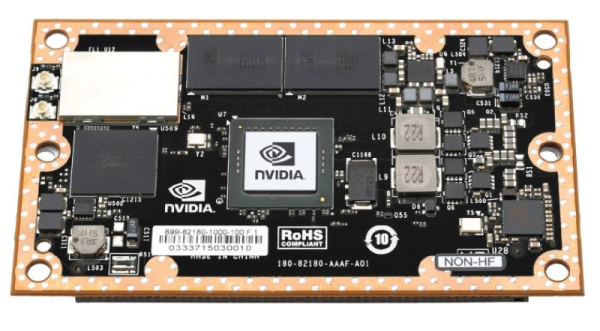
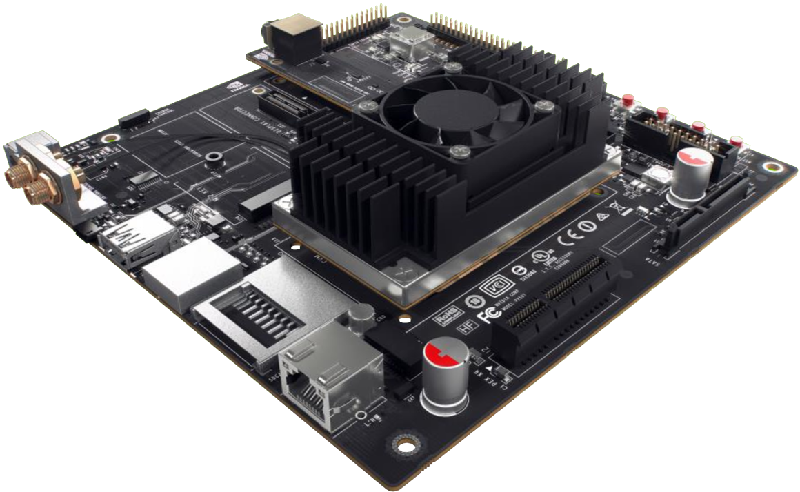
Today, Nvidia announced their latest platform for advanced technology in autonomous machines. They’re calling it the Jetson TX1, and it puts modern GPU hardware in a small and power efficient module. Why would anyone want GPUs in an embedded format? It’s not about frames per second; instead, Nvidia is focusing on high performance computing tasks – specifically computer vision and classification – in a platform that uses under 10 Watts.
For the last several years, tiny credit card sized ARM computers have flooded the market. While these Raspberry Pis, BeagleBones, and router-based dev boards are great for running Linux, they’re not exactly very powerful. x86 boards also exist, but again, these are lowly Atoms and other Intel embedded processors. These aren’t the boards you want for computationally heavy tasks. There simply aren’t many options out there for high performance computing on low-power hardware.
The Jetson TX1 and Developer Kit. Image Credit: Nvidia
Tiny ARM computers the size of a credit card have served us all well for general computing tasks, and this leads to the obvious question – what is the purpose of putting so much horsepower on such a small board. The answer, at least according to Nvidia, is drones, autonomous vehicles, and image classification.
Image classification is one of the most computationally intense tasks out there, but for autonomous robots, there’s no other way to tell the difference between a cyclist and a mailbox. To do this on an embedded platform, you either need to bring a powerful general purpose CPU that sucks down 60 or so Watts, or build a smaller, more efficient GPU-based solution that sips a meager 10 Watts.