Hackaday Terms Of Use (aka: The Lawyers Are Coming!)

they-laywers-are-coming

Hackaday has posted Terms of Use and Privacy Policy documents which you should read. These can also be accessed through the Policies Page which is linked in the footer. We’ve edited this post to take up less room since it will be sticky for a few days. Original text and updates after the jump.

Continue reading “Hackaday Terms Of Use (aka: The Lawyers Are Coming!)”

Hackaday Visits The Clark Magnet High School

school

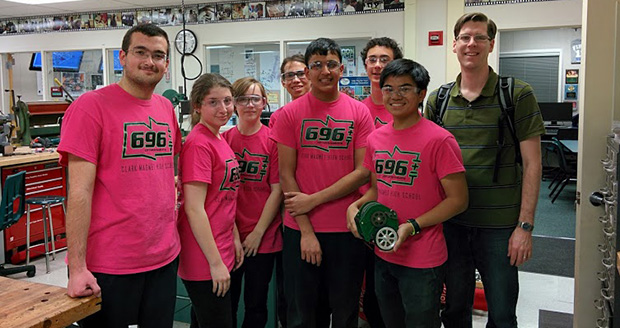
Thought Hackaday’s trip to LA was all about hackerspaces, parties, and rummaging through piles of awesome junk? Nope. We’re also tasked with some community outreach that brought us to the Clark Magnet High School in Glendale, CA.

This isn’t your usual high school. Each year, it accepts around 300 new freshmen (grade 9) from the other high schools in the Glendale district. Selection is done through a lottery system, ensuring it’s not just the kids “on the good side of the tracks” or whose parents are active in the PTA that are selected; about 52% of the students at Clark can be classified as at or below the poverty line.

The curriculum? Instead of stopping at the classical comprehensive high school education, the students at Clark Magnet are focused primarily on the STEM fields. They’re also the home base for Team 696, a FIRST robotics team that has done very well in robotics competitions. A few mentors from JPL and IBM help the students out on their projects, and the head of Clark’s engineering program, [David Black], as well as the principal, were once students themselves.

As far as their engineering program goes, they have a very impressive setup; their workshop features a Haas minimll with a 10-tool carousel, a huge CNC wood router, more than one 3D printer, a small woodshop, a CAD classroom – in short, enough tools to make just about anything. Because Clark Magnet is in sunny California, they’ve been able to get a few grants and build a 358kW peak solar array behind the football field. It’s enough to keep the lights on, and the electric bill down, allowing them to hire an additional teacher or two.

In addition to an impressive engineering/shop class, there’s also an audio and video production suite filled with Mac Pros, cameras, mixing boards and 96 Terabytes of storage. It’s not an exaggeration to say this high school is better equipped than some colleges.

Clark also does some other very interesting stuff outside of class; they’ve launched and recovered high altitude balloons, traveled to elementary schools to play with Lego robots, and some students also have impressive home-built projects they bring in to tinker with. We saw a homebrew quadcopter and a very awesome Mecanum wheel robot that we expect to see in the Hackaday tip line shortly.

Despite how awesome the Clark engineering department is, and how capable the students are, they’ve said the FIRST robotics team has been getting a lot of flak from the rest of the maker community. Apparently some people see an amazing engineering program as a waste of resources. From our short time at Clark, we think nothing could be further from the truth. These students are quickly becoming experts at CAD design and CNC operations. They’re competent embedded programmers and well on their way to becoming awesome engineers. Students who don’t want to build a robot or program firmware get involved in project planning, marketing, and all the rest of the business that goes into running a initiative of this size. It’s a truly awesome program, and I have to say I’m a little bit jealous I didn’t graduate from Clark.

Gallery of pics and two videos below: going over the workshops at Clark and a robot project. Our fanboyism for Clark also demands we link to the (very small and very resonable) Kickstarter the FIRST robotics team is using for their 2014 budget.

Continue reading “Hackaday Visits The Clark Magnet High School”

The Gathering: Huge Success!

In case you haven’t heard, Hackaday put on a little shindig in downtown LA this past Tuesday. It was awesome.

And we had a few very awesome visitors: [Eliot], senior editor of Hackaday for the first five years made a showing, as did former co-editor [Jack Buffington]. Eminent LA-area hackers came out, including [charliex] of Null Space Labs, the guys from Deezmaker, and the long-haired hippie who can be found in a few NASA videos for the Curiosity rover.

Aside from the free drinks and the awesome people, there was some really cool tech on display. The mezzanine of the bar had a laser graffiti rig, and everyone who came received a super collectible NFC card that allowed them to vote on what Hackaday is doing for our next main event (the quadcopter option won but the vote was non-binding so we’ll keep you updated).

On a personal note, this was one of the few times I’ve interacted with Hackaday readers without the use of a keyboard. You guys are awesome. Thanks for coming out, and if you have any pics from the party, post a link to an album in the comments, or share your stories with us on Twitter via #HaDLAGoogle+, and/or Facebook.

Pics below. These were taken by [Edward de la Torre]

Continue reading “The Gathering: Huge Success!”

Body Of A Trinket, Soul Of A Digispark

TrinketDigispark

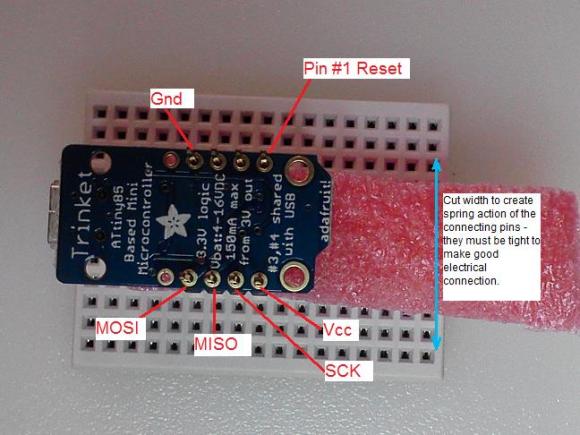
Adafruit’s Trinket and digiStump’s Digispark board are rather close cousins. Both use an ATtiny85 microcontroller, both have USB functionality, and both play nice with the Arduino IDE. [Ray] is a fan of both boards, but he likes the Trinket hardware a bit better. He also prefers the Digispark libraries and ecosystem. As such, he did the only logical thing: he turned his Trinket into a Digispark. Step 1 was to get rid of that pesky reset button. Trinket uses Pin 1/PB5 for reset, while Digispark retains it as an I/O pin. [Ray] removed and gutted the reset button, but elected to leave its metal shell on the board.

The next step was where things can get a bit dicey: flashing the Trinket with the Digispark firmware and fuses. [Ray] is quick to note that once flashed to Digispark firmware, the Trinket can’t restore itself back to stock. A high voltage programmer (aka device programmer) will be needed. The flashing process itself is quite a bit easier than a standard Trinket firmware flash. [Ray] uses the firmware upload tool from the Micronucleus project. Micronucleus has a 60 second polling period, which any Trinket veteran will tell you is a wonderful thing. No more pressing the button and hoping you start the download before everything times out! Once the Trinket is running Digispark firmware, it’s now open to a whole new set of libraries and software.

Please Release Your Unused Tickets

LA2014-109x180

The Gathering is next Tuesday and we are starting to get excited about it! There is a waiting list of people who would like a ticket. If you registered for a ticket that you will not be able to to use, please log in and cancel it.

Cancelling your unused ticket will automatically free up a ticket for someone on the waiting list. Cancellation instructions are below. We want to pack the house and making sure no ticket goes unused is important.

Still want to attend? It’s not too late. Add yourself to the waiting list.

Continue reading “Please Release Your Unused Tickets”

Developed On Hackaday: We Have Pixels!

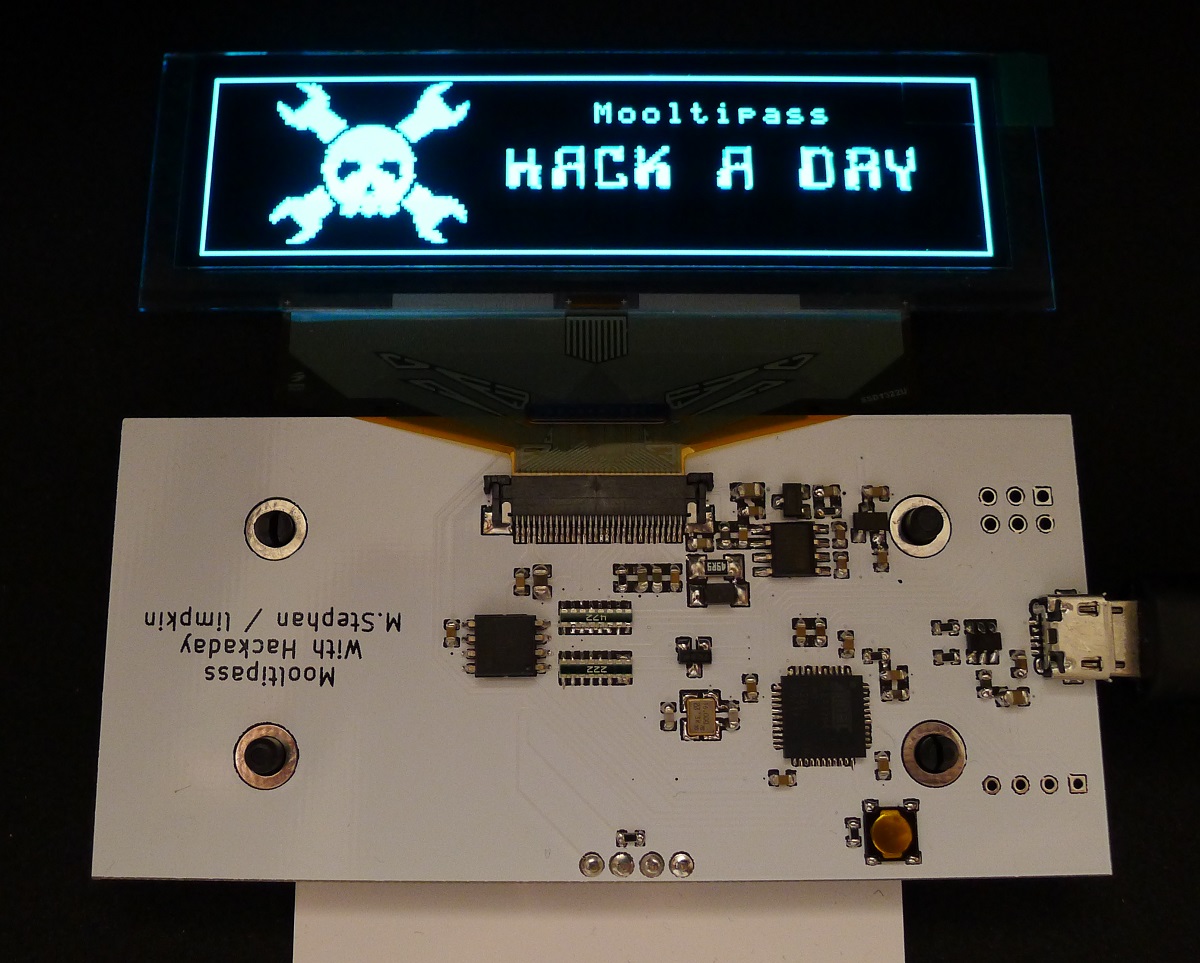
It has been a while since we kept you informed about the current state of the Mooltipass project. Well, several days ago we finally received the PCBs we got produced at Seeedstudio. Keep in mind that this first version (shown in the picture above) is only meant to check that the chosen components can suit our needs while our mechanical contributors work on their designs. Moreover, we may add empty footprints for our readers that may want to hack the device.

After a few hours of soldering and a few days of coding, we finally got a basic firmware running. The OLED screen is easily readable and has an amazing contrast (the picture doesn’t do it justice). So far we checked all basic functionalities of the on-board components and it’ll still take a few days/weeks to be certain that we can settle with them. We are therefore starting to ship a few platforms to the firmware developers that want to work on the core functions of the Mooltipass. So if you’re an experienced C developer and have some spare time, you may get onboard by contacting me at mathieu[at]hackaday[dot]com or by joining the Mooltipass Google Group.

In a few days we will publish the designs that our mechanical guys came up with and we’ll ask you to let us know which ones are your favorites. Depending on how things will go, we may produce PCBs for several of them to select our final design based on user experience and ease of use. We look forward to hearing your feedback in the comments section below!