San Francisco Sues To Keep Autonomous Cars Out Of The City

Although the arrival of self-driving cars and taxis in particular seems to be eternally ‘just around the corner’ for most of us, in an increasing number of places around the world they’re already operational, with Waymo being quite prevalent in the US. Yet despite approval by the relevant authorities, the city of San Francisco has opted to sue the state commission that approved Google’s Waymo and GM’s Cruise. Their goal? To banish these services from the streets of SF, ideally forever.

Whether they will succeed in this seems highly doubtful. Although Cruise has lost its license to operate in California after a recent fatal accident, Waymo’s track record is actually quite good. Using public information sources, there’s a case to be made that Waymo cars are significantly safer to be in or around than those driven by human operators. When contrasted with Cruise’s troubled performance, it would seem that the problem with self-driving cars isn’t so much the technology as it is the safety culture of the company around it.

Yet despite Waymo’s better-than-humans safety record, it is regarded as a ‘nuisance’, leading some to sabotage the cars. The more reasonable take would seem to be that although technology is not mature yet, it has the overwhelming advantage over human drivers that it never drives distracted or intoxicated, and can be deterministically improved and tweaked across all cars based on experiences.

These considerations have been taken into account by the state commission that has approved Waymo operating in SF, which is why legal experts note that SF case’s chances are very slim based on the available evidence.

So Long And Thanks For All The Flights: Ingenuity Permanently Grounded After 72 Flights

Just a few hours ago, NASA dropped some devastating news: Ingenuity will fly no more. Three years after dropping from the belly of the Perseverance rover and after 72 flights through the thin Martian atmosphere, the little helicopter that could now can’t, after having sustained damage to one or more of its rotors during its final landing.

Shadow of Ingenuity‘s rotor blade, showing damage suffered during a rough landing.

NASA’s terminal diagnosis of Ingenuity comes from a photo from one of the helicopter’s cameras, which shows a chunk missing from the tip of one of its rotors, likely caused by a rough landing after transiting a flat, sandy area that may have confused the aircraft’s navigational cameras.

While this is anything but good news, it’s not at all unexpected and in a way long overdue. Ingenuity was designed for a primary mission of just five flights, which it accomplished all the way back in May of 2021. There was heavy speculation at the time that Ingenuity might not even do that; we can recall one of the team members suggesting the odds were that Ingenuity’s tenure as the first controlled powered flying machine on another world would end as twisted wreckage in the newest, smallest crater on Mars.

But happily, Ingenuity proved the oddsmakers — and possibly those wishing to temper expectations — spectacularly wrong. In fact, by the fourth flight, it was clear that Ingenuity was in it for the long haul, enough so that NASA redefined its mission to “operational demonstration” and gave it another 30 sols of flight time. This gave the team the flight time needed to prove the helicopter’s worth as a scout for Perseverance and not just a distracting sideshow from the primary mission of searching for signs of ancient life on Mars.

Continue reading “So Long And Thanks For All The Flights: Ingenuity Permanently Grounded After 72 Flights”

Bus Pirate 5 Now Shipping

It’s happened to all of us at one time or another. There’s some component sitting on the bench, say an I2C sensor, a new display, or maybe a flash chip, and you want to poke around with it. So you get out the breadboard, wire it to a microcontroller, write some code, flash it…you get the idea. Frankly, it’s all kind of a hassle. Which is why [Ian Lesnet] created the Bus Pirate: a USB multi-tool designed to get you up and running with a new piece of hardware as quickly as possible.

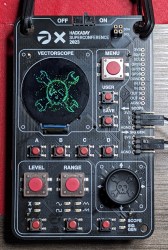
Now, after years of development, the Bus Pirate 5 is available for purchase. Completely redesigned to take advantage of the impressive I/O capabilities of the RP2040, the new Bus Pirate also features a 240 x 320 IPS LCD that can show real-time voltage data and pin assignments. But despite the new display, and the bevy of RGB LEDs lurking under the injection molded enclosure, the primary interface for the device remains the VT100 terminal interface — now with the addition of a color status bar running along the bottom.

Continue reading “Bus Pirate 5 Now Shipping”

The NSA’s Furby Artificial Intelligence Scare: FOIA Documents Provide Insight

For those of us who were paying a modicum of attention to the part of the news around 1999 which did not involve the imminent demise of humanity due to the Y2K issue, a certain toy called a ‘Furby’ was making the headlines. In addition to driving parents batty, it also gave everyone’s favorite US three-letter agency a scare, with it being accused of being both a spying tool and equipped with an advanced artificial intelligence chip. Courtesy of a recent Freedom of Information Act (FOIA) request we now have the low-down on what had the NSA all atwitter.

In a Twitter thread (Nitter) user [dakotathekat] announced the release, which finally answered many questions about the NSA’s on-premises ban of Furbys (or Furbees if you’re Swedish). The impression one gets is that this ‘Furby ban’ was primarily instated out of an abundance of caution, as unauthorized recording devices of any kind are strictly forbidden on NSA premises. With nobody at the NSA apparently interested in doing a teardown of a Furby to ascertain its internals, and the careful balance between allowing children’s toys on NSA grounds versus the risk of a ‘Furbygate’, a ban seemed the easy way out. Similarly, the FAA saw fit to also make people turn their Furbys off like all other electronic devices.

The original Furby toys did not have anything more complex inside of them than a 6502-derived MCU and a Ti TSP50C04 IC for speech synthesis duties, with the supposed ‘learning’ process using a hardcoded vocabulary that gradually replaced its default gibberish with English or another target language.

DB Cooper Case Could Close Soon Thanks To Particle Evidence

It’s one of the strangest unsolved cases, and even though the FBI closed their investigation back in 2016, this may be the year it cracks wide open. On November 24, 1971, Dan Cooper, who would become known as DB Cooper due to a mistake by the media, skyjacked a Boeing 727 — Northwest Orient Airlines Flight 305 — headed from Portland to Seattle.

During the flight, mild-mannered Cooper coolly notified a flight attendant sitting behind him via neatly-handwritten note that he had a bomb in his briefcase. His demands were a sum of $200,000 (about $1.5 M today) and four parachutes once they got to Seattle. Upon landing, Cooper released the passengers and demanded that the plane be refueled and pointed toward Mexico City with him and most of the original crew aboard. But around 30 minutes into the flight, Cooper opened the plane’s aft staircase and vanished, parachuting into the night sky.

In the investigation that followed, the FBI recovered Cooper’s clip-on tie, tie clip, and two of the four parachutes. While it’s unclear why Cooper would have left the tie behind, it has become the biggest source of evidence for identifying him. New evidence shows that a previously unidentified particle on the tie has been identified as “titanium smeared with stainless steel”.

Continue reading “DB Cooper Case Could Close Soon Thanks To Particle Evidence”

Bell Labs Is Leaving The Building

If you ever had the occasion to visit Bell Labs at Murray Hill, New Jersey, or any of the nearby satellite sites, but you didn’t work there, you were probably envious. For one thing, some of the most brilliant people in the world worked there. Plus, there is the weight of history — Bell Labs had a hand in ten Nobel prizes, five Turing awards, 22 IEEE Medals of Honor, and over 20,000 patents, including several that have literally changed the world. They developed, among other things, the transistor, Unix, and a host of other high-tech inventions. Of course, Bell Labs hasn’t been Bell for a while — Nokia now owns it. And Nokia has plans to move the headquarters lab from its historic Murray Hill campus to nearby New Brunswick. (That’s New Jersey, not Canada.)

If your friends aren’t impressed by Nobels, it is worth mentioning the lab has also won five Emmy awards, a Grammy, and an Academy award. Not bad for a bunch of engineers and scientists. Nokia bought Alcatel-Lucent, who had wound up with Bell Labs after the phone company was split up and AT&T spun off Lucent.

Continue reading “Bell Labs Is Leaving The Building”

Haier Europe Eases Off On Legal Threat And Seeks Dialogue

After initially sending a cease and desist order to [Andre Basche] – the developer of a Haier hOn plugin for Home Assistant – Haier Europe’s head of Brand and IoT has now penned a much more amicable response, seeking to enter into dialogue in search of a solution for both parties.

This latest development is detailed both in the ongoing GitHub issue, as well as the Takedown FAQ and Timeline document that [Andre] created to keep track of everything that’s going on since we last checked in on the situation. As things stand, there is hope that Haier Europe may relent, especially as the company’s US division has shown no inclinations to join in on the original C&D.

In the confusion following the initial C&D announcement demanding the take-down of [Andre]’s hOn-related repositories, it was not clear to many which Haier was involved. As it turns out, Haier Europe as a separately legal entity apparently decided to go on this course alone, with Haier US distancing themselves from the issue. In that same Reddit thread it’s noted that GE Appliances (part of Haier US) has had a local API available for years. This makes Haier Europe the odd one out, even as they’re attempting some damage control now.

Amidst this whirlwind of developments, we hope that Haier Europe can indeed reach an amicable solution with the community, whether it’s continued API usage, or the development of a local API.