How To Design Your Gears

[Dustyn Roberts] takes us through the process of designing gears for a specific application. Using Inkscape and Ponoko.com [Dustyn] takes us from equation to physical gear. While there is a plugin for Inkscape that allows you to basically drag and drop gears, this writeup will take you through the math to get exactly what you need. Those laser cut wooden gears are pretty cool looking too.

Parallax RFID Reader For Ten Bucks

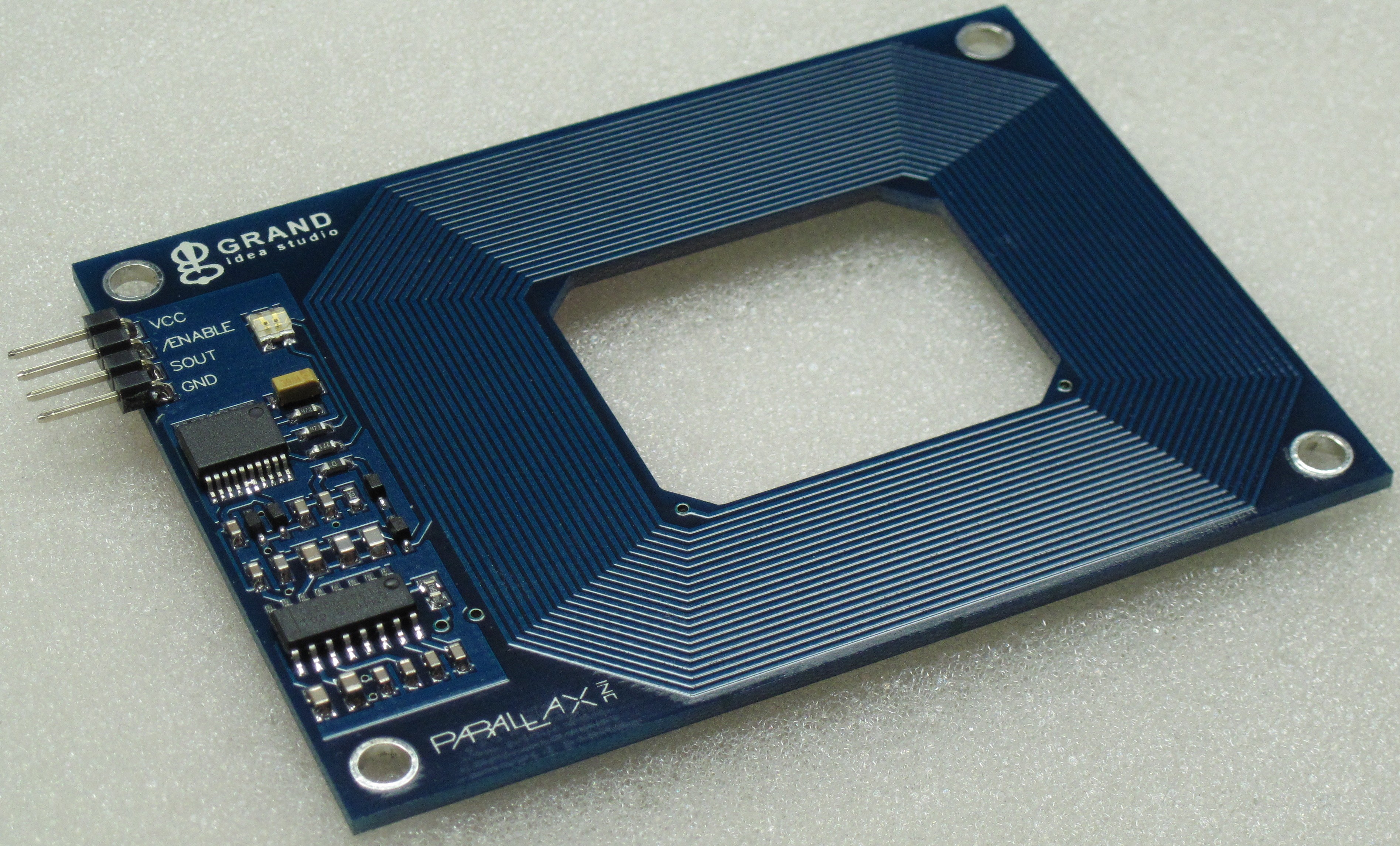
We  received a tip about Radio Shack putting Parallax’s RFID reader on clearance for around $10. The only reference we could find that indicated Radio Shack sold the reader was a review page. The reader originally sold for around $50 in the stores, so getting it for $10 made it worth a curiosity trip to a local Radio Shack. The store we visited did not have the reader marked down in the drawer, but it rang up for $9.97. It is too bad that the reader was so expensive in the first place, otherwise Radio Shack might still be selling them at full price. This is by no means a promotion, we just though we would share the information in case you were interested in getting one yourself. If Radio Shack is out, you could always build your own reader.

The reader we purchased only came with one tag, perhaps that is why the they have been on clearance. Hooked up to an FTDI USB to serial cable, it would repeatedly send out the tag’s number whenever it was in range. We tried an HID-labeled card and a tag of the kind that can be found in books and DVD cases. Neither worked with the reader, but we’ll keep looking.

Thanks to [bluewraith] for the tip.

DB9 Form Factor USB-RS232 Replacement

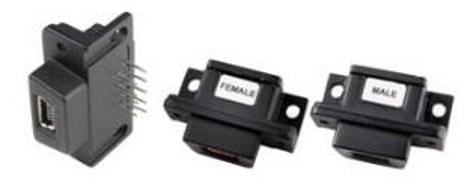
If you’re attached to that favorite DB-9 interfaced device you should look into this part. FTDI is selling a USB-RS232 adapter as a replacement for DB-9 connectors. They come with USB male or female connections depending on the application and have the same serial footprint and pinout to which you’re accustomed. Using converter cables is just fine but this simplicity requires a few minutes of desoldering, rather than redesigning, etching, and populating a board in order to give that older design built-in USB connectivity.

[Thanks Juan]

Parts: ChronoDot RTC Module (DS3231)

ChronoDot

Macetech’s ChronoDot is a Real Time Clock module for projects requiring highly accurate time keeping and measurement. The ChronoDot uses the DS3231 chip, which features a TCXO to compensate for variations in temperature which affect normal oscillators, like the ones in most microcontrollers. The DS3231 uses simple I2C commands and registers for storing and retrieving time, but also features a variable output that goes all the way down to 1.000 hz for low power, interrupt style timekeeping applications. With the provided watch battery, the ChronoDot can keep time in idle mode for up to 8 years.

Normally the ChronoDot comes mostly assembled, requiring you to only solder on the watch battery. However, due to a manufacturing mistake, Macetech is selling a version with the header pins on the wrong side they call the ChronoDoh. This module is currently nearly half off the regular price of $14.99, which makes it a great low cost addition to a project. Macetech has sent us a couple of these modules to demonstrate how functional they still are.

Continue reading “Parts: ChronoDot RTC Module (DS3231)”

Online Chip Reference Trims The Fat

partsdb

Quick: which pins are used for I2C on an ATmega168 microcontroller?

If you’re a true alpha geek you probably already know the answer. For the rest of us, ChipDB is the greatest thing since the resistor color code cheat sheet. It’s an online database of component pinouts: common Atmel microcontrollers, the peripheral ICs sold by SparkFun, and most of the 4000, 7400 and LMxxx series parts.

The streamlined interface, reminiscent of Google, returns just the essential information much quicker than rummaging through PDF datasheets (which can also be downloaded there if you need them). And the output, being based on simple text and CSS, renders quite well on any device, even a dinky smartphone screen.

Site developer [Matt Sarnoff] summarizes and calls upon the hacking community to help expand the database:

“The goal of my site isn’t to be some comprehensive database like Octopart; just a quick reference for the chips most commonly used by hobbyists. However, entries still have to be copied in manually. If anyone’s interested in adding their favorite chips, they can request a free account and use the (very primitive at this point) part editor. Submissions are currently moderated, since this is an alpha-stage project.”


Parts: Unboxing The Bus Pirate

bp-unbox-3

For months we’ve used our Bus Pirate universal serial interface tool to demonstrate electronics parts, so it’s only appropriate that the Bus Pirate get it’s own parts post. We recently had a Bus Pirate preorder, and today we received the pre-production Bus Pirate prototype from Seeed Studio. This prototype was mailed just a few days before preorder 1 started to ship, so those packages should start arriving any day.

Follow along as we unbox the prototype Bus Pirate, and connect it to a debugger to determine the PIC24FJ64GA002-I/SO revision that shipped with this board. Use this post to share your own Bus Pirate unboxing experience. Pictures and discussion after the break.

Continue reading “Parts: Unboxing The Bus Pirate”

Parts: 4×20 VFD Character Display (NA204SD02)

futuba-serial

Futaba makes vacuum florescent character displays that can be used as a drop-in replacement for common character LCDs. VFDs have a wider viewing angle, and generally look cooler.

Futaba’s character displays can be interfaced using the standard 8-bit or 4-bit parallel LCD interface, or a simple two-wire protocol. The protocol type is set by resistors on the back of the display, so it’s not particularly easy to change without a hot-air rework station. Today we’ll demonstrate a serially-interfaced VFD using the Bus Pirate.

Continue reading “Parts: 4×20 VFD Character Display (NA204SD02)”