Binding of the Rab5(GTP) to EEA1 triggers a transition of the EEA1 molecule from a rigid, extended state to a more flexible, collapsed state. (Credit: Anupam Singh et al., 2023)

Not Just ATP: Two-Component Molecular Motor Using GTPase Cycle Demonstrates Mechanotransduction

For most of us who haven’t entirely slept through biology classes, it’s probably no secret that ATP (adenosine triphosphate) is the compound which provides the energy needed for us to move our muscles and for our body to maintain and repair itself, yet less know is guanosine triphosphate (GTP). Up till now GTP was thought to be not used for mechanical action like molecular motors, but recent research by Anupam Singh and colleagues in Nature Physics (press release) has shown that two GTPase hydrolase enzymes (Rab5 and EEA1) function effectively as a reversible molecular motor.

Although much of the heavy lifting in the body has shifted to use ATP with ATPases such as myosin and kinesin, GTPases have retained their functional roles in mostly signal transduction (acting as switches or timers), a tethered EEA1 enzyme performs mechanical force when a Rab5 enzyme (in its activated, GTP state) binds to it. Within e.g. a cell this can pull membranes and other structures together. Most importantly, the researchers found that no external influence was necessary for the inactive (GDP) Rab5 enzyme to separate and EEA1 to revert back to its original state, completing a full cycle.

This discovery not only gives us another intriguing glimpse into the inner workings of biological systems, but also increases our understanding of how these molecular motors work, opening intriguing possibilities for constructing our own synthetic structures such as protein engines, where mechanical movement is needed on scales which require such molecular motors.

(Heading image: Binding of the Rab5(GTP) to EEA1 triggers a transition of the EEA1 molecule from a rigid, extended state to a more flexible, collapsed state. (Credit: Anupam Singh et al., 2023) )

Human DNA Is Everywhere: A Boon For Science, While Terrifying Others

Environmental DNA sampling is nothing new. Rather than having to spot or catch an animal, instead the DNA from the traces they leave can be sampled, giving clues about their genetic diversity, their lineage (e.g. via mitochondrial DNA) and the population’s health. What caught University of Florida (UoF) researchers by surprise while they were using environmental DNA sampling to study endangered sea turtles, was just how much human DNA they found in their samples. This led them to perform a study on the human DNA they sampled in this way, with intriguing implications.

Ever since genetic sequencing became possible there have been many breakthroughs that have made it more precise, cheaper and more versatile. The argument by these UoF researchers in their paper in Nature Ecology & Evolution is that although there is a lot of potential in sampling human environmental DNA (eDNA) to study populations much like is done today already with wastewater sampling, only more universally. This could have great benefits in studying human populations much how we monitor other animal species already using their eDNA and similar materials that are discarded every day as a part of normal biological function. Continue reading “Human DNA Is Everywhere: A Boon For Science, While Terrifying Others”

Microbubbles And Ultrasound: Getting Drugs Through The Blood-Brain Barrier

The brain is a rather important organ, and as such, nature has gone to great lengths to protect it. The skull provides physical protection against knocks and bumps, but there’s a lesser-known defense mechanism at work too: the blood-brain barrier. It’s responsible for keeping all the nasty stuff – like bacteria, viruses, and weird chemicals – from messing up your head.

The blood-brain barrier effectively acts as a filter between the body’s circulatory system and the brain. However, it also frustrates efforts to deliver drugs directly to the brain for treating conditions like brain tumors. Now, scientists have developed a new technique that may allow critical life saving drugs to get through the barrier with the help of ultrasound technology. 

Continue reading “Microbubbles And Ultrasound: Getting Drugs Through The Blood-Brain Barrier”

Two Stage Refrigerator Is Chill

Every time we check in with [Hyperspace Pirate] he’s trying to make things cold. Really cold. His recent two-part video shows a propane vapor compression system that can go down to -37° C as well as a two-stage system using homemade ethylene that can get to -83° C. He’s trying to get to -100°, so he’s close, and we have no doubt he’ll get there.

The video explains that using two different refrigerants makes the design more practical. At the low temperatures involved, you have to deal with compressor oil freezing. There is a lot of theory required to design an efficient cooler and a lot of know-how required to make gas-tight connections with all the different materials involved.

Using propane in both stages did provide a little additional cooling. But using ethylene in the second stage didn’t work as expected. There were two issues to work through. Part of it was the average temperature of the system, and also, the homemade ethylene needed purification. The ethylene purification setup was almost as complex as the main system and also reminded us, for some reason, of the movie Darkstar. It didn’t work as well as he wanted, which means we have to wait for part two to see it all actually working.

We’ve seen this same guy make dry ice. He’s also tried to make liquid nitrogen, too.

Continue reading “Two Stage Refrigerator Is Chill”

Astronaut Tracy Caldwell in the International Space Station. (Credit: NASA)

Making The Case For All-Female Exploration Missions To Mars And Beyond

A recent study in Nature Scientific Reports by Jonathan P. R. Scott and colleagues makes the case for sending exclusively all-female crews on long-duration missions. The reasoning here is simple: women have significant less body mass, with in the US the 50th percentile for women being 59.2 kg and 81.8 kg for men. This directly translates into a low total energy expenditure (TEE), along with a lower need for everything from food to water to oxygen. On a long-duration mission, this could conceivably save a lot of resources, thus increasing the likelihood of success.

With this in mind, it does raise the question of why female astronauts aren’t more commonly seen throughout Western space history, with Sally Ride being the first US astronaut to fly in 1983. This happened decades after the first female Soviet cosmonaut, when Valentina Tereshkova made history in 1963 on Vostok 6, followed by Svetlana Savitskaya in 1982 and again in 1984, when she became the first woman to perform a spacewalk.

With women becoming an increasingly more common sight in space, it does bear looking at what blocked Western women for so long, despite efforts to change this. It all starts with the unofficial parallel female astronaut selection program of the 1950s.

Continue reading “Making The Case For All-Female Exploration Missions To Mars And Beyond”

Artemis II Laser Communications

Artemis II Will Phone Home From The Moon Using Laser Beams

[NASA] Astronauts will be testing the Orion Artemis II Optical Communications System (O2O) to transmit live, 4K ultra-high-definition video back to Earth from the Moon. The system will also support communication of images, voice, control channels, and enhanced science data.

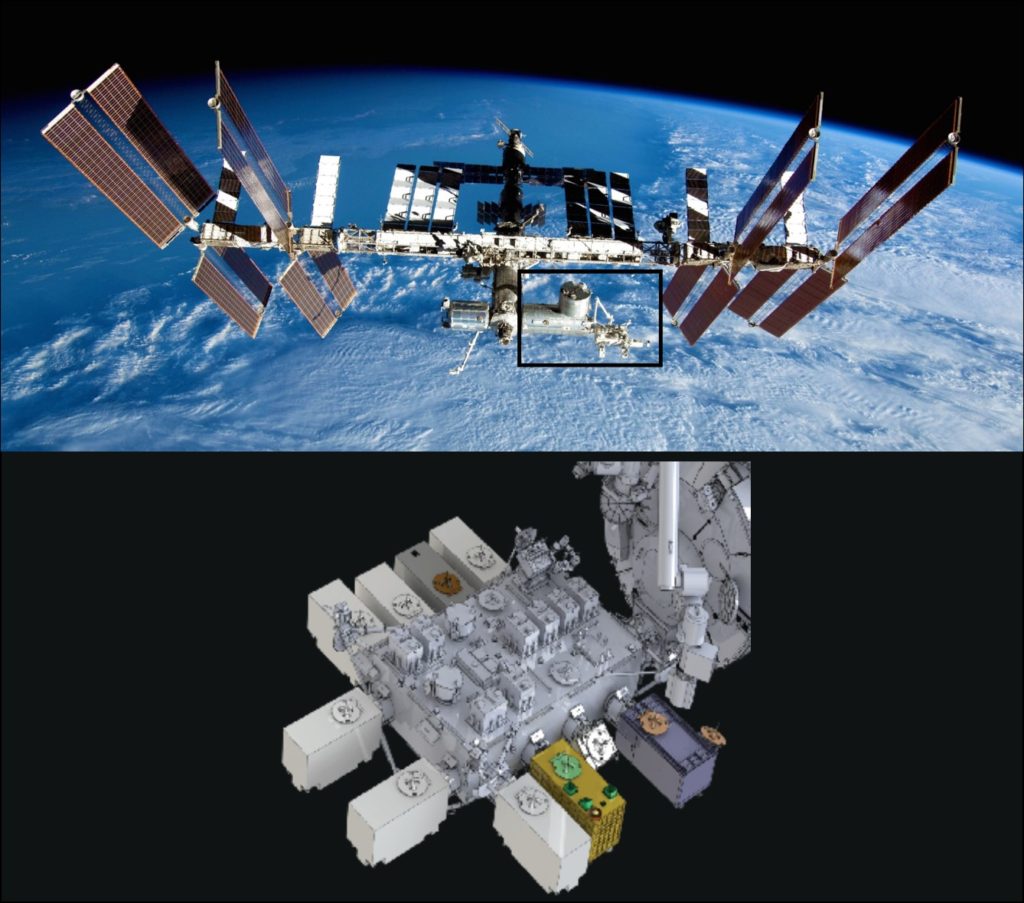
Aboard Orion, the space terminal includes an optical module, a modem, and a control system.  The optical module features a four inch telescope on a dual gimbal mount. The modem modulates digital information onto laser beams for transmission back to Earth, and demodulates data from laser beams recieved from Earth. The control system interfaces with avionic systems aboard Orin to control and point the communications telescope.

On Earth, facilities including the Jet Propulsion Laboratory and the White Sands Complex will maintain high-bandwidth optical communication links with Orion. Information received from Orion will be relayed to mission operations, scientists, and researchers.

NASA’s Laser Communications Relay Demonstration (LCRD) showcases the benefits of optical communications.  Traditionally, missions relied upon radio communication, but improved technology will better serve space missions that generate and collect ever-increasing quantities of data. Optical communication solutions can provide 10 to 100 times the bandwidth of radio frequency systems. Other improvements may include increased link distances, higher efficiency, reduced interference, improved security, and reductions in size and weight. Our Brief History of Optical Communication outlines many of these advantages.

Continue reading “Artemis II Will Phone Home From The Moon Using Laser Beams”

Remembering Virginia Norwood, Mother Of NASA’s Landsat Success

Virginia T. Norwood passed away earlier this year at the age of 96, and NASA’s farewell to this influential pioneer is a worth a read. Virginia was a brilliant physicist and engineer, and among her other accomplishments, we have her to thank for the ongoing success of the Landsat program, which continues to this day.

The goal of the program was to image land from space for the purpose of resource management. Landsat 1 launched with a Multispectral Scanner System (MSS) that Norwood designed to fulfill this task. Multispectral imaging was being done from aircraft at the time, but capturing this data from space — not to mention deciding which wavelengths to capture — and getting it back down to Earth required solving a whole lot of new and difficult problems.

Continue reading “Remembering Virginia Norwood, Mother Of NASA’s Landsat Success”