Makita Battery Pack Repair

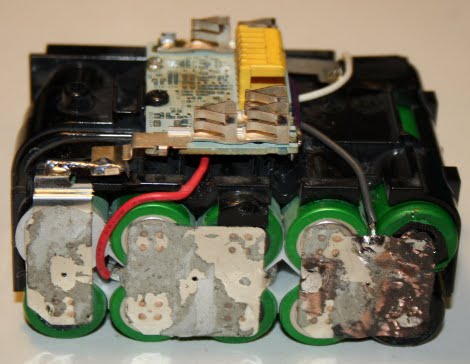
[Rob] grew tired of his Makita power tool battery packs dying so he figured out how to repair them himself. The video after the break walks us through the process which starts by cracking open the case. Inside there is a controller board and a battery of ten cells. [Rob] has pinpointed these battery failures to just the first cell, which is confirmed by measuring the cell voltages with a multimeter. The first cell in the demonstration battery reads zero volts and needs to be replaced. For some reason he’s got heck of a lot of these cells on hand, at the end of the video he shows off a massive block of them that provides one half of a kilowatt-hour of power.

To complete the resurrection he removed the control circuitry from the integrated PCB. It seems that the microcontroller on the battery’s PCB monitors it and bricks them when it thinks the life of the unit has ended. By hacking a charger he can now balance-charge the altered battery packs and get more use out of them before they hit the landfill.

Continue reading “Makita Battery Pack Repair”

Freerunner With Android, New Case, Battery

[Dennis] got snowed in after the biggest storm in the history of the state hit. Like any good hacker he didn’t let the time go to waste. He decided to dig out his Neo Freerunner to give it a decent battery and a new OS.

The original battery for the Freerunner has a controller board integrated into the package. [Dennis] pulled out the board and attached it to a portable DVD player battery. After running it through a discharge cycle with another hack of his, the board learned the new battery capacity. The larger battery plus a fast-charger from SparkFun required a larger case. He made it happen by combining a 2.5″ HDD case with the original body courtesy of some JB weld. The final portion of the hack was to load up Android which is as simple as untarring the package onto an SD card.

It’s a bit big, but the battery will last and he’s got an open platform. Nice work!

Remote Uses No Batteries

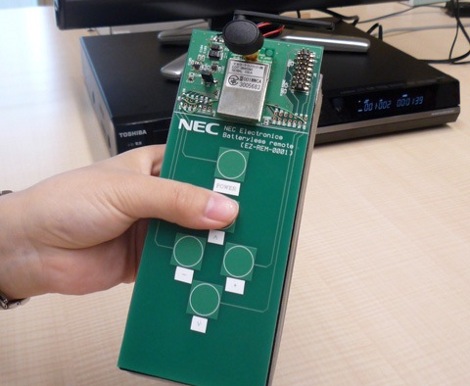
How often do you change the batteries in your television remote control?  Yeah, basically never. But that’s a tribute to how efficient the device is and not a reason to overlook this development. NEC is showing off a remote control that uses no batteries. Power is generated using the piezo effect that occurs when a button is pushed. That is to say, when a crystal is compressed it emits a tiny bit of electricity which is harnessed and used to power this device. This is the same principle that is used in the electricity producing sidewalks tested in Japan.

It’s pretty phenomenal that they can run the device using this method. Right now there’s only a handful of buttons but we’re sure there’ll be advances in the technology. There’s a ton of use for this if it can be miniaturized. It is using radio frequency instead of infrared, making it a useful development in wireless doorbells, garage door openers, key-less entry fobs for your car, and many more applications.

[Thanks das_coach]

Laptop Running On A Sealed Lead Acid Battery

steupup_box

[Viktor’s] laptop needed a new battery; he had the trade off between carrying around a cheap but heavy sealed lead acid (SLA) battery, or buying an expensive but light Li-Ion battery. Figuring his old laptop was pretty heavy already, and having an unused SLA available, re-purposing it for his laptop wouldn’t be too much of a hassle. Using a boost converter he built out of a custom dip MAX668, he is able to output the necessary 5 amps required. An MC 34161 voltage monitor chip is planned for future revisions, but he’s currently running it just fine. Check out some of his other cool hacks on Karosium.

Related: MSI Wind extended battery

Battery Desulfator

mini-d

Hack a Day favorite [Mikey Sklar] is back with a new project. Mini-D is a battery desulfator. If a 12V lead-acid battery sits with a voltage below 12.3V, sulfur crystals will begin to form on the lead plates. This crystal growth increases the internal resistance and eventually makes the battery unusable. A battery desulfator sends high frequency pulses through the battery to create a resonance that will break up the crystals. On a 60lb automotive battery, it will take approximately three weeks to completely desulfate. You can find schematics plus a dozen lines of code for the ATmega169 on his site. Embedded below is a video where he explains the device and other techniques like load testing.

Continue reading “Battery Desulfator”

Unique Li-Ion Battery Tester

battery

[moris_zen] found himself with a hand full of Li-Ion batteries and no good way to see what their capacities were. He built a this unique tester really quick to get the job done. He’s using off the shelf components and a cheap pocket watch which he bought in Taiwan for $1. You hook the circuit up to your battery, click the button and the watch starts working. When it stops, you multiply that number by .38 to get your amp/hour results. Sure, he could have just used a counter, but this is an interesting approach. All he needs to do now is make a nice container to hide all of the circuitry. How could he change the circuit to make the end multiplication unnecessary?

Googles Servers Revealed

googleservermedium

We’ve often wondered what kind of hardware the giant of the internet, Google, used to handle it’s data. They’ve recently revealed what their main workhorses are. It’s a custom motherboard made by Gigabyte with two processors, and eight RAM slots. The main point of interest on these is the fact that each server and piece of network equipment has it’s own battery backup. This may add a little money in the initial cost of the unit, but apparently it is a much more efficient way of handling power. Be sure to click over to the site and check out the shipping container setup that they use. Each container has 1,160 servers. They aren’t the only ones using this method. Microsoft has adopted it for their newer facilities and Sun has done some extensive testing on how these portable facilities handle earthquakes. You can see the quake test after the break.

Continue reading “Googles Servers Revealed”