Vehicle Information Display Hacks

We’ve had a few folks send us info about their vehicle display hacks after seeing [Will O’Brien’s] motorcycle computer a few days ago.

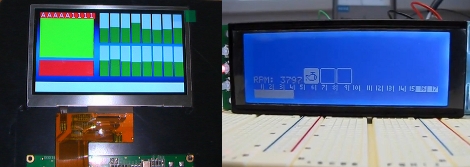
On the left we have a display for an electric vehicle. [S1axter] is using a 4.3″ TFT screen to display charge information for each battery cell in the car. An ATmega88 collects the data and sends it to a breakout board with an LCD controller on it.

To the right is a display from a Formula Student project. a Matrix Orbital GLK19264-7T-1U LCD display provides a lot of real estate for displaying data. Right now [Alan] is still in the early prototyping stages, but the video after the break demonstrates the RPM readout using a function generator. It’s not shown in the video, but he tells us that he’s since tried it out with the engine and has a PIC 16f877 reading temperate data from the electronic control transmission sensors in addition to the RPM data.

Correction: Thanks to [j] for correcting our mistake. This is a Formula Student car.

Continue reading “Vehicle Information Display Hacks”

IPad Teardown

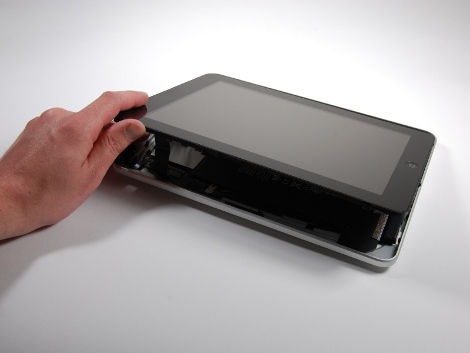
Its been quite a while since we’ve featured something from iFixit. But when we saw they had torn apart the next greatest Apple product, the iPadreleased today, and how everyone on our team loves it, we thought why not also let our user base enjoy the destruction informative teardown as well.

In both the original and the FCC teardown, we see some awesome features and tricks Apple implemented. Most notably the two separate 3.75V lithium polymer cells, not soldered to the motherboard, allowing users to easily replace the battery if need be. However, in the opposite respect, more components than ever are being epoxied to the board, making the iPad much more rugged.

We’re left wondering, with everyone able to see the beautiful insides, does it change anyone’s mind on getting an iPad? Or would you rather make your own?

Electric-assist Bicycle Uses LiFePO4 Batteries

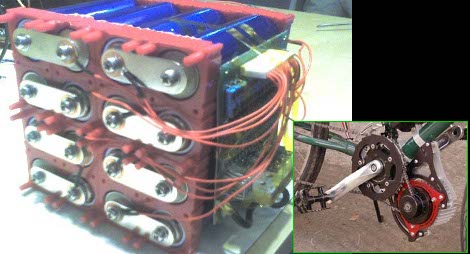
This bicycle add-on uses an electric motor to help you out. This way the motor takes advantage of the gearing normally available to the cyclist. What interests us most about the system is the DIY battery work they’re doing. The cells are using Lithium Iron Phosphate technology. The li-ion cells you’re used to seeing in consumer electronics are actually Lithium Cobalt Oxide. The Iron Phosphate flavor offers longer overall lifespan, better operation between charges over that life, and improved cold-weather performance.  The drawbacks include a 20-cycle break-in period and an affinity for trickle-charging versus faster charging methods.

The 48V cell seen above will provide 30-40 miles of travel between charges. We feel that getting the power plant out of our vehicles is an important step toward energy overhaul but it can only happen if the battery technology makes it possible. Then again, perhaps we’re barking up the wrong tree and should have placed our bets on compressed air.

[Thanks Tom]

Portable Squeezebox With Serial

The Squeezbox media streaming systems are compact Linux WiFi enabled radios that let you stream your collection anywhere,so long as you have an AC or USB outlet nearby. But [Achim Sack] wanted to stream his collection from anywhere with no wires attached (translation). Some poking and prodding revealed a connector actually designed for a battery and serial, but no commercially available battery yet.

The system requires a temperature sensor and if you want serial, a USB converter, but overall a simple process that could be done in an afternoon. Giving your box ~10 hour of life and even fits inside of a back compartment.

[Thanks Thomas]

Converting A Miata To All-electric

[Henry Herndon] converted a Mazda Miata to an all-electric vehicle. There’s a ton of great information in his archives, as well as a round-up video that we’ve embedded after the break. It’s interesting to see him implement two different types of Nalgene bottles as coolant reservoirs. The polycarbonate on the first shattered on him but the soft plastic replacement seems to have done the trick. The batteries add a lot of weight to the vehicle and he ends up refitting the suspension to compensate. [Henry] registered the vehicle with the state and now has a street legal EV of his own design.

Also worth a look is his post covering the 2009 Wayland Invitational. There as a large collection of electric vehicle conversions at the get together.

Continue reading “Converting A Miata To All-electric”

Battery Holder Reuses Blister Pack

In need of a portable power supply, [Alastair] threw some batteries into an Altoids tin. The problem was he didn’t have a holder for these size A23 cells. Inspiration struck and he realized the blister pack they came in fits them snuggly and just needs some conductors to complete the circuit. He pulled some battery contacts from a broken CD player. Using foam-based double-stick tape he added some spring to the contacts and came up with a perfectly sized holder that works wonderfully.

We’ve tried making battery packs by wrapping the entire thing in clods of duct tape. This looks like it works a lot better and there’s still room to fit the batteries and a switch inside of this minty enclosure.