Nintendo DSi Teardown

dsiteardown

Now that the Nintendo DSi has been officially released in the US, the team at iFixit has worked their magic. That magic being: completely disassembling it. They found the new 840mAh battery to be much smaller than the DS Lite’s 1000mAh. The device features two cameras, but both are a paltry 0.3megapixels. They note that this is the first Nintendo device that they’ve taken apart that didn’t require a tri-wing screwdriver.

Many more DSi compatible flash carts are available now than our initial report in December, so you can pick up a Nintendo DSi for homebrew without worry.

[via iFixit blog]

Solar Batteries

solarbatt

[Knut Karlsen] put together a prototype set of solar rechargeable batteries. He always seemed to have batteries laying around on his worktable and figured they might as well be charging. The flexible solar cells were given to him by researchers at the IFE and are rated at 1.8V. He used superglue to secure them to the C cells. A silver conductive pen plus flat wires from a Canon lens connect the solar cells to the battery terminals. The batteries just trickle charge for now, but he’s going to try to build cells with built in charge controllers in the future.

Desulfator In An Altoids Tin

desulfator

If you’ve ever let a car sit for a period of time and returned to find that the battery was mysteriously “dead”, you were probably experiencing a sulfate crystal build up. Often, people just buy a new battery and plop it in, but that isn’t absolutely necessary. [Kmpres] takes us through the process of building a desulfator. A desulfator works by putting high voltage pulses into the battery forcing the sulfate crystals to dissolve back into the electrolyte. From what [Kmpres] says, you can find “bad” batteries in all kinds of places, use the desulfator on them and have perfectly fine batteries when you’re done. You may recall doing something similar with a disposable camera.

Micro Battery Assembled By Virus


MIT researchers have used a viral assembly method to create a battery at half the size of a human cell. They’ve successfully developed the anode and electrolyte, leaving only the cathode unfinished. each electrode is only 4 micrometers in diameter.

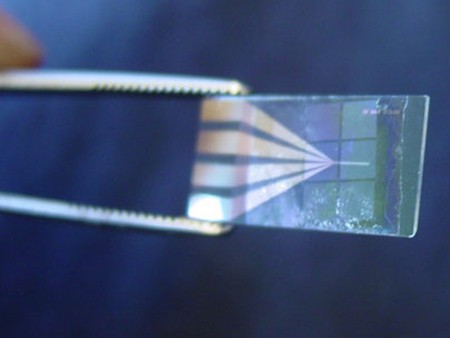
The construction process involves taking a rubbery base and creating a pattern of tiny posts through lithography. Then they add different layers of polymers that act as an electrolyte. Finally the virus preferentially self-assembles on top of the polymer creating the anode. Pictured above is a test plate. The battery itself is too small to be seen.

[via BoingBoing]

MSI Wind Extended Battery


[The Tech Guy] shows us how he added cells to an MSI Wind’s battery. This hack is extremely simple but it may be difficult to get the battery back into your laptop. Also, we’re not too sure how stable it is, and you can definitely forget about taking this thing through an airport. It would be really nice to start seeing people fabricate custom enclosures. Until then, this hack is best reserved for people completely desperate for extended battery life.

[via hypatiadotca]

Maximize The IPhone 3G’s Battery Life


Gizmodo has posted a guide for extending the battery life of your shiny new iPhone 3G. Apple is notorious for pushing products with unimpressive battery life, and the new iPhone is no different. The battery isn’t user-replaceable, which means you can’t keep a spare, and the energy needs of the 3G chipset adds to the problem. Apple provides some useful tips on maximizing battery life for your iPhone. The tips include common sense advice that applies to nearly all electronic devices – turning down the brightness on your LCD screen, turning off radios not in use like Bluetooth, WiFi, GPS, and 3G, and setting Auto-lock to a minute or less will keep your devices running smoothly for longer.

We like to carry an extra USB battery like this one; you can also make your own like this one with an Altoids tin.

LED Battery Level Indicator

[Kc7fys] came up with a this simple battery level indicator. It uses a single LED to display a battery’s voltage; if the voltage exceeds 12V, it glows green. If it is below 11V, the LED glows red. Anything in between generates an orange glow. The meter is built around an LM358 chip per this schematic, but his actual build looks pretty sloppy because of the dead-bug assembly (check out NASA’s pretty version). Nonetheless, it works, so clean it up and build one if you want to put it (or your batteries) to the test.