Gravity Bike

This bicycle has no pedals and really nothing that resembles a seat. It’s not so much a way to get around as it’s a way to get down. Down from the mountain, and down low to the pavement. This is a gravity bike built by the guys at S.I.N. Cycles.

The frame is a long triangle which stretches the wheel base to make room for the rider. After getting the layout just right and welding the frame together they added the rather unorthodox building step of pouring molten lead into the hollow frame tube. This bike is used to descend a mountain road with the force of gravity, so the extra weight will help pull it just a bit faster. There’s one thing you’ll want to make sure is working before you climb aboard — the single front brake which you’ll need when coming into the curves. Check out some ride footage on this thing in the video after the break.

Continue reading “Gravity Bike”

Personal Energy Orb Prevents Your Life From Being Swallowed By The Internets

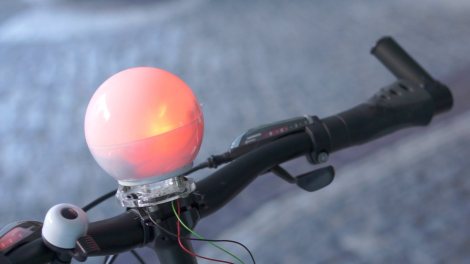
We love the Internet, but we are definitely guilty of losing track of the time we spend traipsing around our virtual haunts. This project will not only remind you to get out and exercise, it will cripple your digital experience if you don’t heed its colorful warning.

[Janko Hofmann] calls it the Personal Energy Orb. It’s really just an Arduino and an RGB LED. But as with most creations, the idea is what makes it great. The orb has a dock next to your computer. It tracks how much time you spend online, changing colors as you rack up the hours. If you don’t heed the warning signs of overuse it will even start to slow down your mouse cursor. But never fear. Full functionality can be restored by topping off your personal energy. As you can see above, there’s also a docking station on [Janko’s] bicycle. The orb monitors your mileage, moving out of the red zone so that your computer will be unencumbered the next time you sit down for a long session of flash games. Don’t miss his video presentation embedded after the break.

Continue reading “Personal Energy Orb Prevents Your Life From Being Swallowed By The Internets”

Motorizing This Trycicle

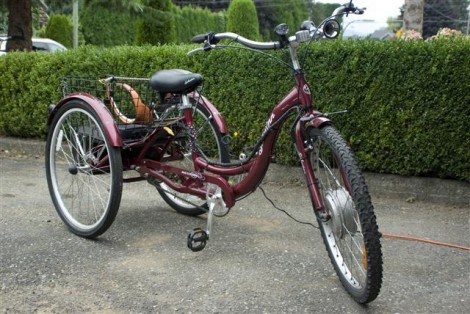
[Kaj] wanted to help out an aging family member by building them an electric tricycle during international Hack Day back on August 11th. He mixed in some reused parts with some new ones and ended up with bike that lets the rider troll other cyclists. Apparently when serious riders see an older man on a trike gaining on them they pedal like mad to make sure they don’t suffer the embarrassment of being passed. But there’s enough power and range to overtake the strongest of non-powered competitors.

Many of the parts came from a non-functional electric bike sold on Craig’s List. [Kaj] reports that the bike was trashed, but the motor system was mostly salvageable. He replace the batteries and charger and hooked up the motor to the rear axle. The initial install placed everything but the motor in the basket behind the rider. The weight and placement made the thing unstable when cornering. The solution was to house the batteries in a tool box and strap it below the basket. The lower center of gravity makes sure the trike is easy to handle, and now there’s still room in the basket for your groceries.

This would make a perfect platform for some road messages printed in water.

Washing Machines That Do It Without Electricity

Those of us living in the first world take clean clothes for granted. Throw them in the washing machine, transfer to the dryer after 45 minutes, and you won’t smell for another two weeks or so. But for people living in areas without electricity, clean clothes are a huge amount of work. Hand washing a family’s clothes is estimated at 6 hours per day, three to five days per week. Here’s a post that looks at some of the different human-powered washing machines out there.

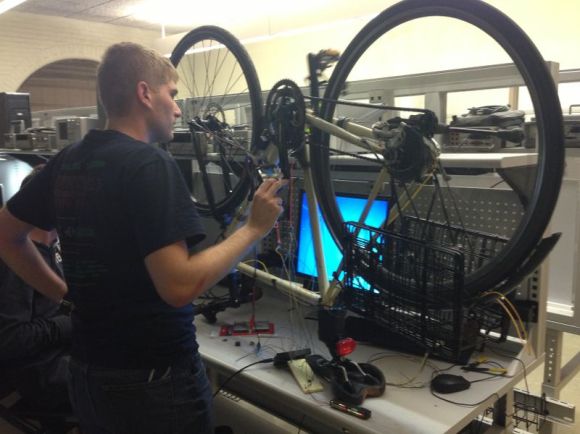
We’ve built our own human-powered machine before using a five-gallon bucket with a hole in the lit to receive the handle of a toilet plunger which acts as an agitator. But that pales in comparison to some of the machines seen here. The concept we like the most is shown above. It’s an MIT project being used at an orphanage in Peru. The bicycle lets you easily power the spinning basket inside of the drum. The rear derailleur has been mounted on the axle so that the rider has a wider range of gears when spinning heavy loads. Take a look at the post linked above to see all of the offering, but we’ve also embedded video of two of them after the break.

If you were looking for a washing-machine powered bike instead of a bike-powered washing machine you’ll want to head on over to this post.

Continue reading “Washing Machines That Do It Without Electricity”

POV Bike Wheels With The MSP430

Being an intern a Texas Instruments isn’t all fun and games, but from [George], [Valerie], and [Ryan]’s TI intern design project, it sure looks like it. They built a persistence of vision display for a bicycle using the ever popular MSP430 Launchpad board.

The team of interns created a POV display by combining the power of the TI Launchpad with a row of 32 RGB LEDs soldered onto a booster pack. Once the whole circuit is fastened securely to the bike wheel, a hall effect sensor mounted to the bike frame allows the MSP430 to detect how fast it is going. From there, it’s just a matter of flashing LEDs at the right time to create a stationary display inside a rotating wheel.

Although the display will theoretically work with just one Launchpad/Booster pack combo, the team decided to use three of these circuits, totaling 96 LEDs per wheel, to create a really nice RGB display. The video (available after the break) shows a little bit of flicker but this is an artifact of the camera. In real life, the POV bike wheel display is simply stunning.

Continue reading “POV Bike Wheels With The MSP430”

Bamboo Bike

Reddit user [tkgarrett101] recently did away with expensive exotic materials for his bike frame and opted for a somewhat less processed form of natural building material, bamboo! The bike consists of a regular metal bike frame with a majority of the structural beams cut and replaced with bamboo poles. The bamboo is fit snug first with some expanding gorilla glue then tied in place with  hemp string and fiberglass resin. Instead of running cables along the frame the bike has coaster breaks brakes and a two speed hub, this also preserves the simplistic look of the whole ensemble. [tkgarrett101] says his bike is not so cheap, the overall parts cost was around 800 bucks (USD)! Plus it weighs a whole lot for a fixed gear. Plus the alignment is a bit off on the seat post. Either way this thing would surely turn some heads!

Too rich for your blood? Check out this cardboard bike, or if that green isn’t bright enough for you how about some glowbars for night visibility.

via Reddit

Bike Made From Cardboard Is Too Cheap To Steal

If you’ve ever had to replace a bicycle, [Izhar Gafni] is your man. He created a bicycle made completely out of cardboard that is strong enough to support the largest riders and costs about the same as combo meal at McDonald’s.

[Izhar]’s bikes are made from varying thicknesses of cardboard, the thickest sheet being about an inch wide. After cutting and gluing these pieces of cardboard together, [Izhar] submerges them in resin and brushes on a little paint creating an incredibly strong, very light, and unbelievably inexpensive bike.

[Izhar] says the cost of production is about $10 per bike and estimates it could be sold for $60 to $90, cheaper than even the most inexpensive metal bike. If you’ve ever had a bike stolen, you know the sting of having to replace your main means of transportation. [Izhar] says his bike is so cheap thieves wouldn’t even bother taking it off your hands.

You can check out the awesome video of [Izhar] making a cardboard bike after the break.

Continue reading “Bike Made From Cardboard Is Too Cheap To Steal”