Restoring A Commodore PET 3032 In Rough Condition

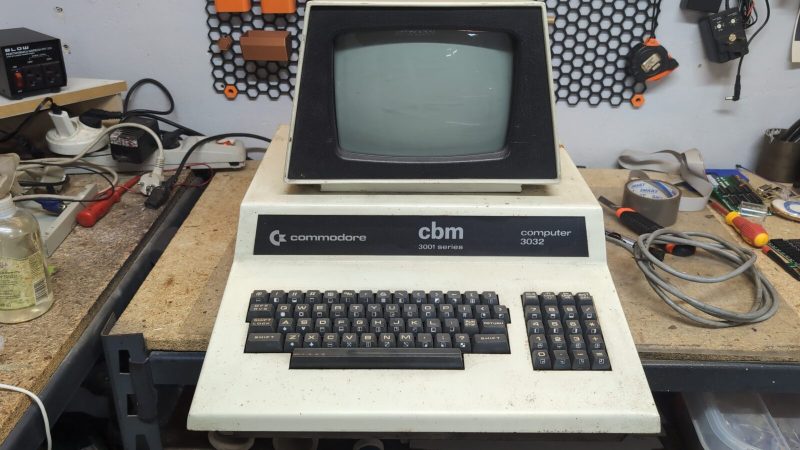
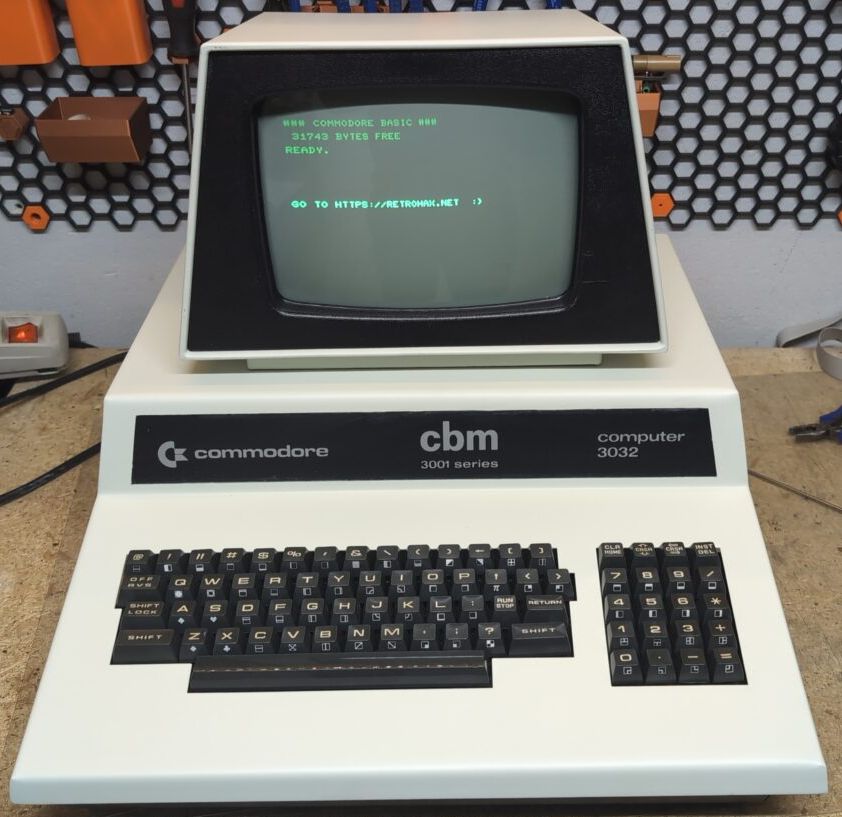
The restored PET/CBM 3032. (Credit: Drygol, retrohax.net)

The Commodore CBM 3032 is a successor to the original Commodore PET 2001, yet due a conflicting trademark issue with Philips these first European PETs were called ‘CBM’ instead. Hence the labeling on the CBM 3032 that [Drygol] had in for a restoration, which would have been produced somewhere between 1979 and the cessation of its manufacturing a few years later. This former machine of the University of Szcezecin in Poland had languished in a basement until a local demoscene group came across it and wanted to use it, after a restoration.

Although at first glance from just the front it didn’t look too shabby, problems were apparent from just a walkaround, including rusty and buckled paneling, showing that the time spent in storage had not done it any favors. Internally there was decades worth of dust, along with a dodgy potentiometer, cold joints and some PCB-level bodges that may or may not have been there from the factory.

The main case was disassembled by drilling out the rivets to gain full access to every nook and cranny, allowing for a good cleaning and repainting prior to putting in fresh rivets. On the PCB side of things, a potentiometer and an LM340KC-12 linear regulator in a TO-3 package had to be replaced, after which the system managed to boot reliably once in every three attempts.

Fixing this took basically cleaning all contacts and IC sockets, as well as refurbishing the keyboard, with corrosion and the occasional broken trace causing a lot of grief. Ultimately the system was restored and ready to be put into demoscene service.
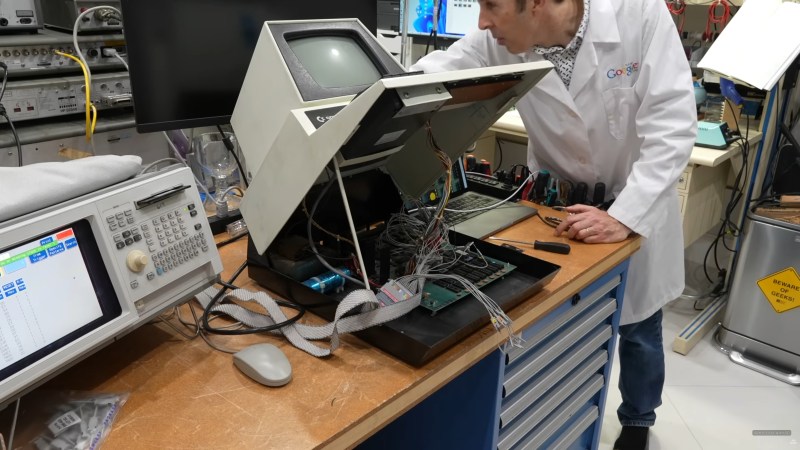
 

Ken Shirriff working on the Commodore PET

This 8-Bit Commodore PET Was Hard To Fix

Over on [Ken Shirriff]’s blog is a tricky Commodore PET repair: tracking down 6 1/2 bad chips. WARNING: contains 8-bit assembly code.

The Trinity of 1977 which started the personal computer revolution were the Apple II, the Commodore PET, and the TRS-80. In this project it’s a failing Commodore PET which is being restored.

Continue reading “This 8-Bit Commodore PET Was Hard To Fix”

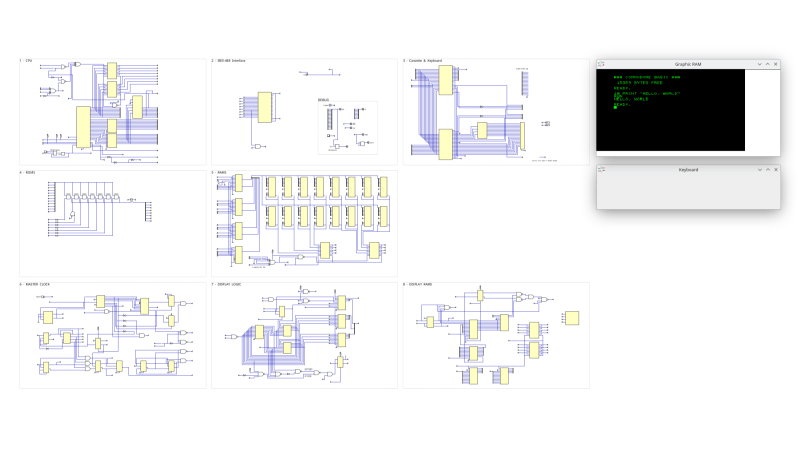
A view of the schematics for each major component.

Simulating The Commodore PET

Over on his blog our hacker [cpt_tom] shows us how to simulate the hardware for a Commodore PET. Two of them in fact, one with static RAM and the other with dynamic RAM.

This project is serious business. The simulation environment used is Digital. Digital is a digital logic designer and circuit simulator designed for educational purposes. It’s a Java program that runs under the JVM. It deals in .dig files which are XML files that represent the details of the simulated hardware components. You don’t need to write the XML files by hand, there is a GUI for that. Continue reading “Simulating The Commodore PET”

A Tricky Commodore PET Repair And A Lesson About Assumptions

The PET opened, showing the motherboard. (Credit: Ken Shirriff)

An unavoidable part of old home computer systems and kin like the Commodore PET is that due to the age of their components they will develop issues that go far beyond what was covered in the official repair manual, not to mention require unconventional repairs. A case in point is the 2001 series Commodore PET that [Ken Shirriff] recently repaired.

The initial diagnosis was quite straightforward: it did turn on, but only displayed random symbols on the CRT, so obviously the ICs weren’t entirely happy, but at least the power supply and the basic display routines seemed to be more or less functional. Surely this meant that only a few bad ICs and maybe a few capacitors had to be replaced, and everything would be fully functional again.

Initially two bad MOS MPS6540 ROM chips had to be replaced with 2716 EPROMs using an adapter, but this did not fix the original symptom. After a logic analyzer session three bad RAM ICs were identified, which mostly fixed the display issue, aside from a quaint 2×2 checkerboard pattern and completely bizarre behavior upon running BASIC programs.

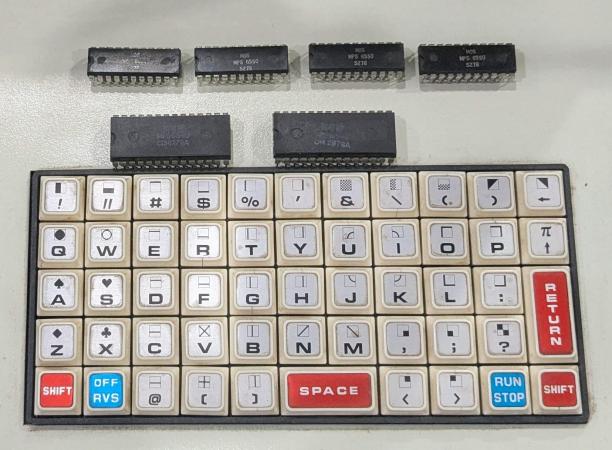
Using the logic analyzer capture the 6502 MPU was identified as writing to the wrong addresses. Ironically, this turned out to be due to a wrong byte in one of the replacement 2716 EPROMs as the used programmer wasn’t quite capable of hitting the right programming voltage. Using a better programmer fixed this, but on the next boot another RAM IC turned out to have failed, upping the total of failed silicon to four RAM & two ROM ICs, as pictured above, and teaching the important lesson to test replacement ROMs before you stick them into a system.

This Rohde & Schwarz Computer Is A Commodore PET

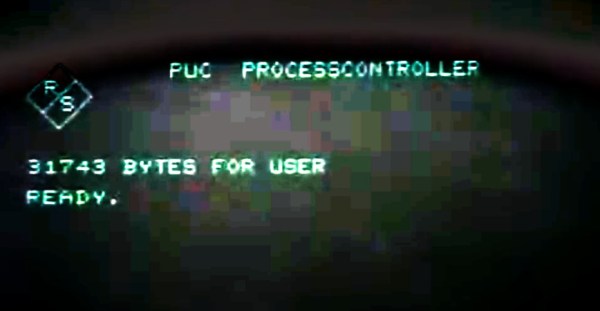
The IEE-488 or GPIB bus for controlling instruments by computer has existed now for many decades. It’s often implemented over USB or Ethernet here in 2023, but the familiar connector can still be found on the backs of pricey instruments. In the earlier days of GPIB when a powerhouse Linux laptop was decades away, what computer did the would-be GPIB user reach for? If they were a Rohde and Schwarz customer in the late 1970s the chances are it would have been the R&S PUC process controller, an 8-bit microcomputer that under its smart exterior turns out to be an enhanced Commodore PET. [NatureAndTech] has one for teardown, and you can see it in the video below the break.

Readers with long memories will remember that the PET had an IE-488 bus on a card edge connector, and it’s possible that’s why R&S took it as the basis for their machine. But this isn’t merely a PET in a fancy box, instead it’s a fully new PET-compatible computer, and it has some interesting features. There’s more memory than the original, a set of disk drives, and an expansion bus complete with a high-res graphics card allowing pixel graphics rather than text. Surprisingly though it has a BASIC interpreter it’s a hardware clone of the PET only, the ROM is unique to Rohde & Schwarz.

We think this machine is probably rare enough that we’re unlikely to see one in the flesh, but it’s been a fascinating thing to examine. You can join in with the video below the break, or you can look at the PET’s impact on a more recent scene.

Continue reading “This Rohde & Schwarz Computer Is A Commodore PET”

Hackaday Prize 2022: A Functional Commodore PET Tribute

The C64 may be the best-selling computer of all time, but Commodore made several machines before that, too. [Mjnurney] always loved the Commodore PET, and set about building some new machines in the PET’s unique all-in-one form factor.

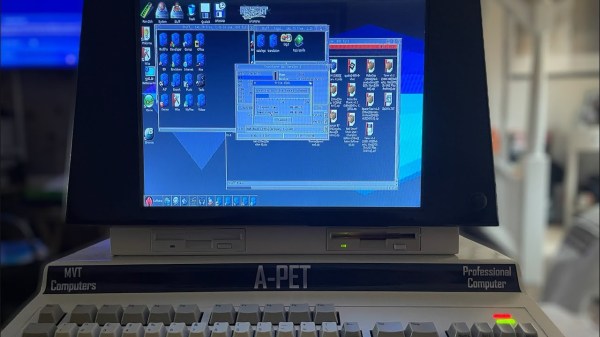
The case design started with measurements taken from an original Commodore PET, of which [Mjnurney] has three. Then, it was modified and extended to make room for a proper keyboard. The case also mounts a 14″ IPS display, two 15W speakers, and a gas strut enabling the case to be propped open for easy maintenance. It’s actually made out of real sheet metal, too!

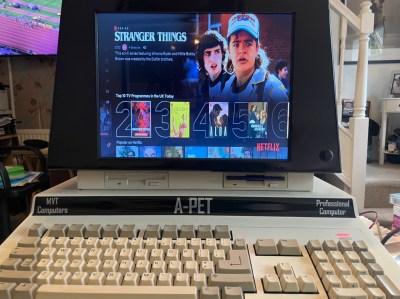
The primary version mounts an Amiga 500 inside, including its classic keyboard. However, [Mjnurney] has developed a PC version, too. Both look great, and it’s wild to see Netflix displayed on a machine that looks more at home in 1977. Perhaps most of all, though, we love the dual floppy drives just below the screen.

Throwback cases pay tribute to some of our favorite machines. The tiny ones are perhaps the cutest of all.

Continue reading “Hackaday Prize 2022: A Functional Commodore PET Tribute”

Pet Docking Station Was Two Decades In The Making

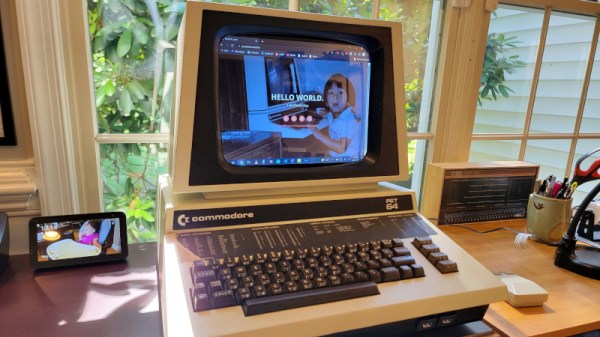
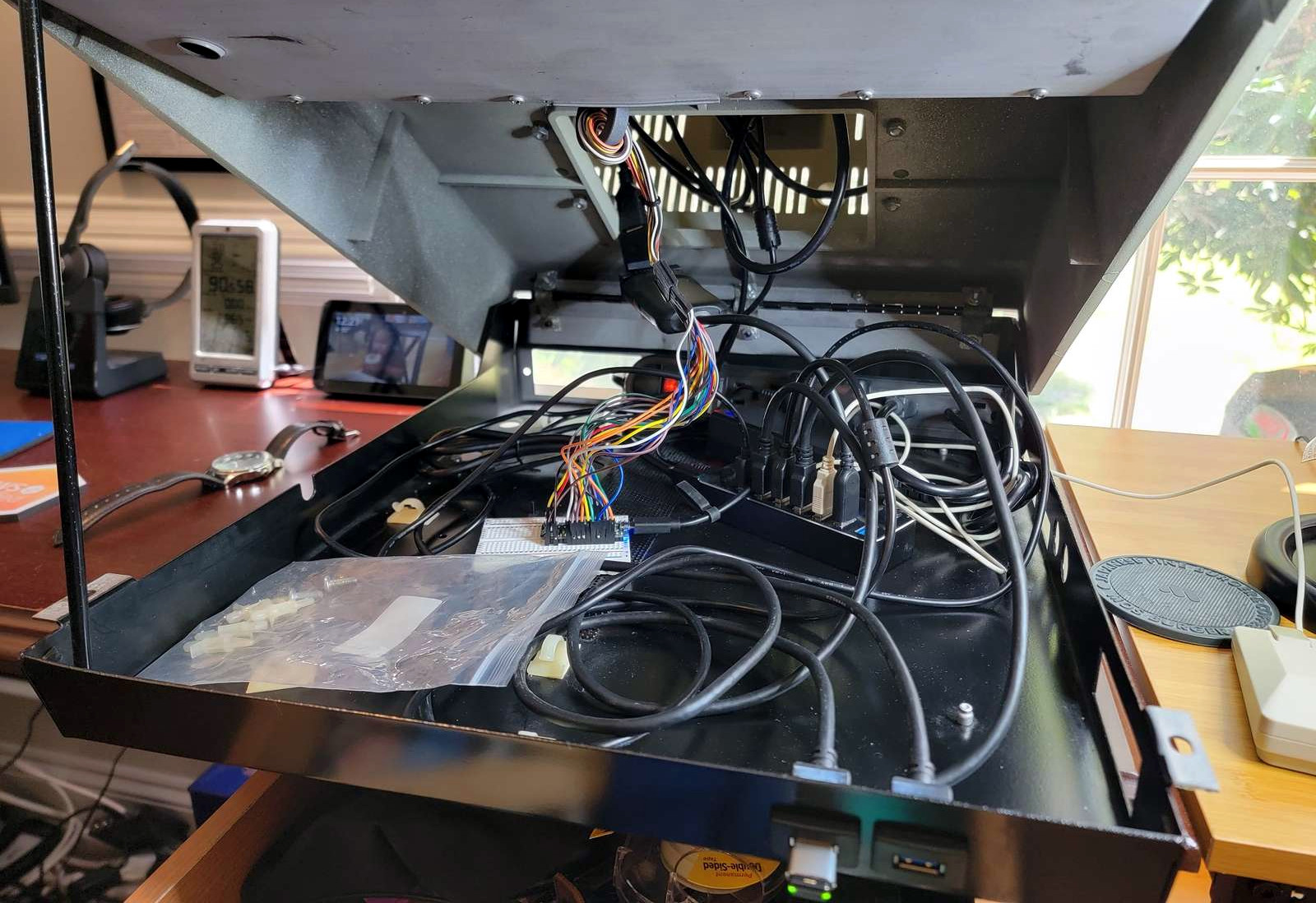
There are some projects which once might have been entirely appropriate, but which now seem sacrilegious. [Dave Luna]’s PC docking station in a Commodore Pet 64 case might at first sight seem to be one of them, but there’s a little more to it than gutting a cherished retrocomputer.

A much younger [Dave] had a dead Pet 64, and because over two decades ago such a thing was considered junk, set about converting it to a PC case. In the way of all ambitious projects it stalled, so here in 2022 he was starting with the metal case and keyboard of a Pet 64 rather than the full computer.

Into the case went a small color TFT monitor, a USB3 hub, a DisplayLink adapter, and and an Arduino Micro doing the job of USB-ifying the Commodore keyboard. The result is a pretty cool docking station, but one which he admits isn’t as nice to use as he’d like. Viewed through rose tinted glasses any PET was an amazing machine in its day, but a slightly lackluster keyboard and a tiny screen don’t quite have the same allure in a world of 4K monitors. Still, we’d have one on our desk.

The Pet appears in quite a few projects that have made it to these pages, for example showing YouTube videos.

Continue reading “Pet Docking Station Was Two Decades In The Making”