FlowIO Takes Top Honors In The 2021 Hackaday Prize

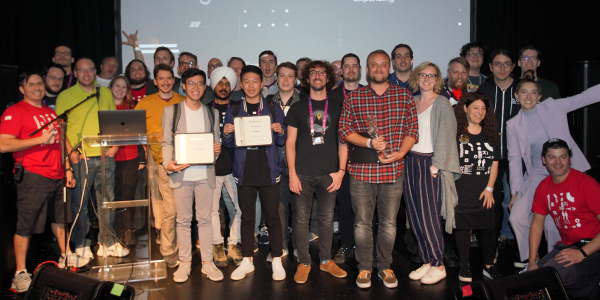
FlowIO Platform, a modular pneumatics controller for soft robotics and smart material projects, took home Grand Prize honors at the 2021 Hackaday Prize. Aside from the prestige of coming out on top of hundreds of projects and bragging rights for winning the biggest hardware design challenge on Earth, the prize carries an award of $25,000 and a Supplyframe DesignLab residency to continue project development. Four other top winners were also announced at the Hackaday Remoticon virtual conference on Saturday evening.

In a year full of challenges, this year’s Hackaday Prize laid down yet another gauntlet: to “Rethink, Refresh, and Rebuild.” We asked everyone to take a good hard look at the systems and processes that make the world work — or in some cases, not work — and reimagine them from a fresh perspective. Are there better ways to do things? What would you come up with if you started from a blank piece of paper? How can you support and engage the next generation of engineers, and inspire them to take up the torch? And what would you come up with if you just let your imagination run wild?

And boy, did you deliver! With almost 500 entries, this year’s judges had quite a task in front of them. Each of the five challenges — Refresh Displays, Rethink Work-From-Home Life, Reimagine Supportive Tech, Redefine Robots, and Reactivate Wildcard — had ten finalists, which formed the pool of entries for the overall prize. And here’s what they came up with.

Continue reading “FlowIO Takes Top Honors In The 2021 Hackaday Prize”

The BYTE Is The Grand Prize Winner Of The 2020 Hackaday Prize

The BYTE, an open-source mouth-actuated input device for people with physical challenges has just been named the Grand Prize winner of the 2020 Hackaday Prize. The award for claiming the top place and title of “Best All Around” in this global engineering initiative is $50,000. Five other top winners and four honorable mentions were also named during this evening’s Hackaday Prize Ceremony, held during the Hackaday Remoticon virtual conference.

This year’s Hackaday Prize focused on challenges put forth by four non-profit partners who have first hand knowledge of the problems that need solving as they work to accomplish their missions. These organizations are Conservation X Labs, United Cerebral Palsy Los Angeles, CalEarth, and Field Ready. Join us below for more on the grand prize winner and to see the Best in Category and Honorable Mention winners from each non-profit challenge, as well as the Best Wildcard project.

Over $200,000 in cash prizes have been distributed as part of this year’s initiative where hundreds of hardware hackers, makers, and artists competed to build a better future. Continue reading “The BYTE Is The Grand Prize Winner Of The 2020 Hackaday Prize”

FieldKit Is The Grand Prize Winner Of The 2019 Hackaday Prize

FieldKit, an open-source, modular sensor system for conducting research in harsh environments has just been named the Grand Prize winner of the 2019 Hackaday Prize. The award for claiming the top place and title of “Best Product” in this nine-month global engineering initiative is $125,000. Five other top winners and five honorable mentions were also named during this evening’s Hackaday Prize Ceremony, held during the Hackaday Superconference in Pasadena, California.

This year’s Hackaday Prize focused on product development. From one good idea and a working prototype, entrants were encouraged to iterate on their UX, industrial design, ergonomics, software, and mechanical plans as they worked toward a product that is both manufacturable and meets the needs of the user it has been designed for. Out of twenty finalists, the top eleven are covered below. Over $200,000 in cash prizes have been distributed as part of this year’s initiative where thousands of hardware hackers, makers, and artists compete to build a better future. Continue reading “FieldKit Is The Grand Prize Winner Of The 2019 Hackaday Prize”

An Interview With Alex Williams, Grand Prize Winner

Alex Williams pulled off an incredible engineering project. He developed an Autonomous Underwater Vehicle (AUV) which uses a buoyancy engine rather than propellers as its propulsion mechanism and made the entire project Open Source and Open Hardware.

The design aims to make extended duration missions a possibility by using very little power to move the vessel. What’s as remarkable as the project itself is that Alex made a goal for himself to document the project to the level that it is fully reproducible. His success in both of these areas is what makes the Open Source Underwater Glider the perfect Grand Prize winner for the 2017 Hackaday Prize.

We got to sit down with Alex the morning after he won to talk about the project and the path he took to get here.

Continue reading “An Interview With Alex Williams, Grand Prize Winner”

Dtto Explorer Modular Robot Wins 2016 Hackaday Prize

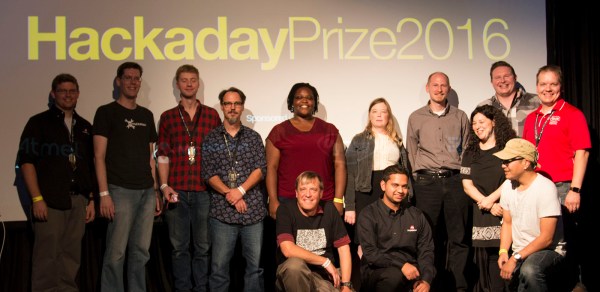
Dtto, a modular robot designed with search and rescue in mind, has just been named the winner of the 2016 Hackaday Prize. In addition to the prestige of the award, Dtto will receive the grand prize of $150,000 and a residency at the Supplyframe Design Lab in Pasadena, CA.

This year’s Hackaday Prize saw over 1,000 entries during five challenge rounds which asked people to Build Something that Matters. Let’s take a look at the projects that won the top five prizes. They exemplify the five challenge themes: Assistive Technologies, Automation, Citizen Scientist, Anything Goes, and Design Your Concept. dtto-main-image-cropped

Dtto — Explorer Modular Robot

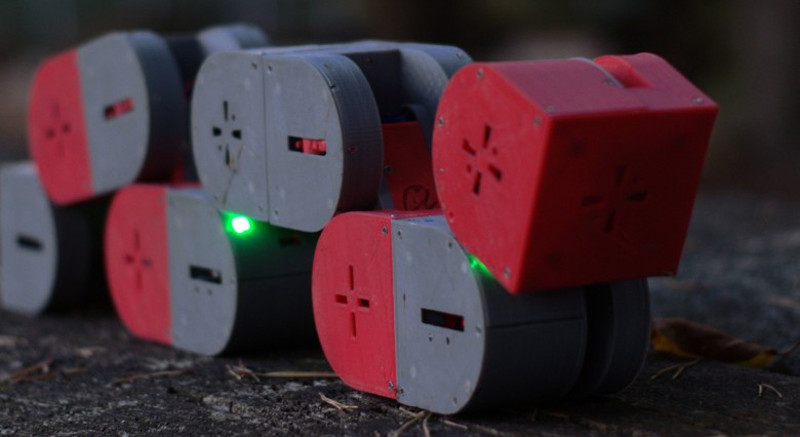
Grand Prize Winner ($150,000 and a residency at the Supplyframe Design Lab): Dtto is modular robot built with 3D printed parts, servo motors, magnets, and readily available electronics. Each module consists of two boxes, rounded on one side, connected by a bar. The modules can join with each other in many different orientations using the attraction of the magnets. Sections can separate themselves using servo motors.

Dtto is groundbreaking in its ability to make modular robots experimentation available to roboticists and hobbyists everywhere by sidestepping what has traditionally been a high-cost undertaking. While it’s easy to dismiss this concept, the multitude of different mechanisms built from modules during testing drives home the power of the system.

Continue reading “Dtto Explorer Modular Robot Wins 2016 Hackaday Prize”

The Gaze-Controlled Wheelchair That Won The Hackaday Prize

The 2015 Hackaday Prize challenged people to build something that matters. Specifically, to solve a problem faced by a lot of people and to make the solution as open as possible. If the average hacker can build it, it puts the power to vastly improve someone’s life in their hands. This is a perfect example of how powerful Open Design can be.

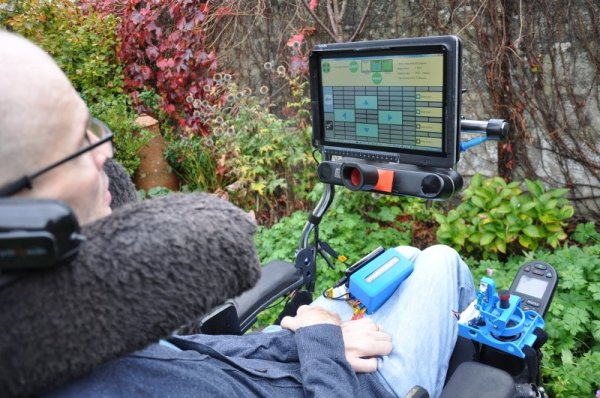
Patrick Joyce, Steve Evans, and David Hopkinson, developed a way to control an electric wheelchair using eye movements. The project, called Eyedrivomatic, is a set of non-invasive hardware modules that connect the wheelchair joystick with existing Eyegaze technology.

You’re probably already familiar with Eyegaze, which allows people suffering from diseases like MND/ALS to speak through a computer using nothing but their eyes. Eyedrivomatic extends this gaze control to drive a wheelchair. The catch is that the wheelchair’s user may not actually own the chair, and so permanent modifications cannot be made.

Thus Eyedrivomatic connects a wheelchair to the existing Eyegaze hardware without permanently altering either. This has never been done before, and the high level to which the team executed this project netted them the Grand Prize of the 2015 Hackaday Prize. The team will receive their choice of a Trip into Space or $196,883.

Check out their acceptance video, then join us after the break to learn what went into this amazing undertaking.

Continue reading “The Gaze-Controlled Wheelchair That Won The Hackaday Prize”