The 80s Called: They Say This DIY Phone Is, Like, Totally Rad

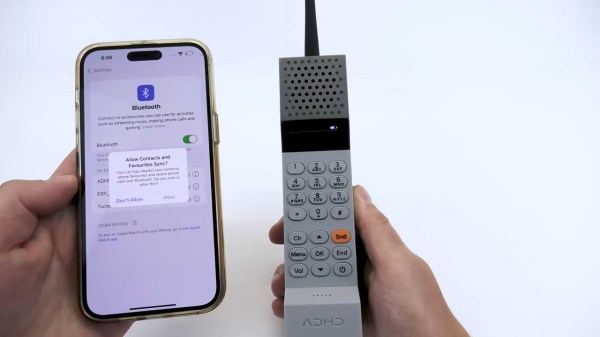
Like more than a few of us , [Kevin Noki] is sick of being pulled out of flow state by that annoyingly addictive black rectangle we all carry around. His solution was to build a phone to escape his phone, in a YouTube video we embedded down below. We’d say that phone is straight out of the 1980s, except it’s not quite a phone. It would perhaps be more accurate to say he’s building a Bluetooth handset– actual telephony remains the province of a professional device with regulatory approval, because getting custom hardware on VoLTE is a nonstarter in many places.

He starts out using an ESP32, because he already had one and why not? It’s got bluetooth, after all. Alas, audio quality he was getting through it was a little too crunchy, so he pivoted to use a dedicated Hands Free Profile (HFP) bluetooth module that is purpose built for exactly this kind of application. He’s selling the design on his website, but given how much detail he shows on screen, recreating your own version would be easy enough to save the quid. You’d be missing out on the STL for the fantastic 80s brick he’s made, which may be the most interesting part of the build to us.

We’d likely have jumped right to CAD and printed out a few iterations of the case until we were happy, but [Kevin] takes a more traditional industrial-design approach, mocking up the phone with XPS foam and a manually-operated hot wire cutter. It’s not a step we see makers take very often, but it pays off here– at least for subtracting material, it’s a very quick way to iterate, and he only needs to do one 3D print for the final version. We also like very high-tech acrylic bending jig, which he uses to put some black LED acrylic over the display.

It’s a lot of work to make you less-likely to grab a phone you still need anyway– remember, there’s no cellular modem in this– but, hey, it beats torturing yourself, or worse, a tamagotchi.
Building A 3D Printed Phone Handset With Mil-Spec Style

In general, military gear is designed to be rugged and reliable. A side effect of this is that the equipment usually has a distinct visual look that many people find appealing. You might not need a laptop that can survive being in a war zone, but plenty of hackers have picked such machines up on the second hand market anyway.

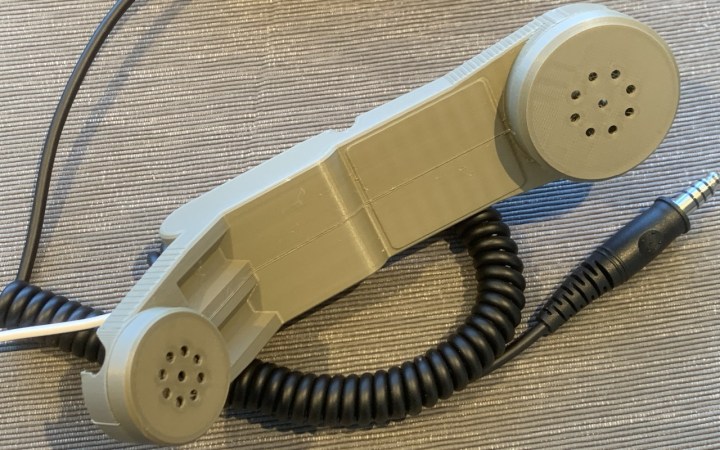
Case in point, the H-250 telephone handset. [Tobias] didn’t actually need a combat-ready phone handset, but loved the way it looked. Technically you can pick these up on eBay for a reasonable price, but then you’ve still got to deal with the weirdo military components inside it. So why not design a look-alike and 3D print it?

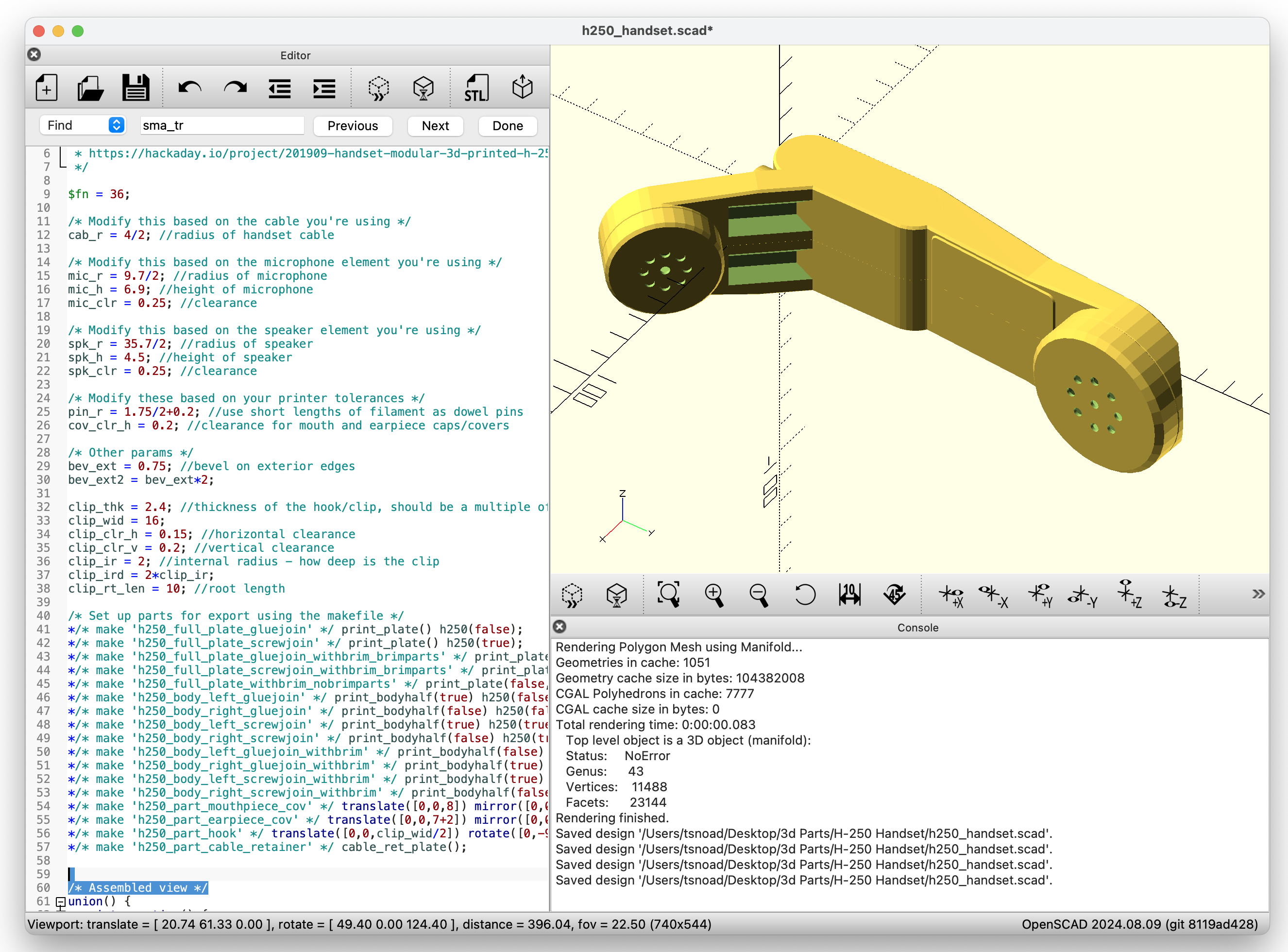
[Tobias] came up with a design in OpenSCAD that has a very close resemblance to its military counterpart. Not only has he made the source code for the 3D model available for others who might want to print their own look-alike handset, but the Hackaday.io page also includes a breakdown of the hardware that needs to be added to the printed parts to make it a functional handset.

If you think the H-250 handset looks familiar, it’s probably because it comes standard issue on the TA-1042 field telephone — another very slick looking piece of military gear that we’ve covered previously.

Hotline Helps Toddler Keep In Touch With Mom And Dad

Even though the age for first carrying a smartphone seems to be decreasing, there’s a practical lower minimum age at which a kid can reliably use one to make a call. So how do you make sure your tot can reach out and touch mommy or daddy? This toddler-friendly Raspberry Pi hotline is a good start.

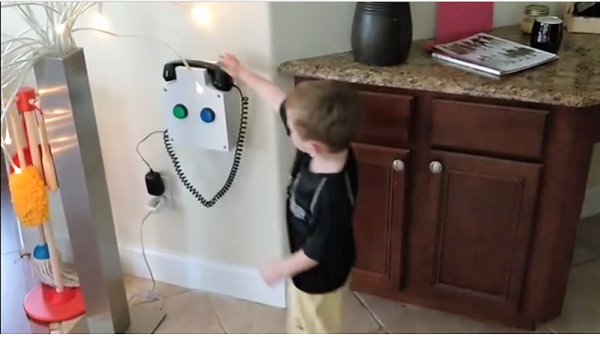
With a long trip to Hawaii pending and a toddler staying behind, [kuhnto] wanted a way to make communication as simple as possible. In the days of pervasive landlines, that would have been as simple as a feature phone with a couple of numbers on speed dial buttons. With nothing but cell phones to rely on, [kuhnto] turned to a Raspberry Pi running PBX software and a command line SIP client for making calls over a Google Voice line. The user interface is as simple as can be – a handset and two lighted buttons on a wall-mounted box. All Junior needs to do is pick up the handset and push green to talk to Daddy, blue for Mommy. Something similar might even be useful for elder care.

Kudos to [kuhnto] for thinking through the interface issues to come up with a successful build. We’ve seen other UIs simplified for kids before, such as this button-free jukebox or this special-needs media player.

[via r/DIY]

Excuse Me, My Pinky Is Ringing

We get a lot of email challenging us to hack things. Sometimes we ignore them, other times we send some words of encouragement. But this time around we thought [Tait] had really come up with a great hack; to build a Bluetooth handset into his prosthetic finger. He hasn’t done much hacking in the past and was wondering if we could put out a challenge to our readers to make this happen. After a bit of back-and-forth brainstorming he decided to take on the challenge himself and was met with great success.

Like other Bluetooth handset hacks [Tait] started with a simple ear-mounted module. He extended the volume button with a piece of plastic and placed it under the battery. A couple of wooden matchsticks space the battery just enough so that it can be squeezed to adjust the volume level. He then extended the speaker with some wire. Next, he used the Oogoo recipe from our previous post to mold a false-finger and a thumb-ring. The PCB and battery fit in the finger, which places the microphone near a hole in the pad of the plastic pinky. The thumb ring houses the speaker to finish the look. Don’t miss the photos [Tait] sent in after the break.

Continue reading “Excuse Me, My Pinky Is Ringing” →

Bluetooth Handset Hacks

Cramming Bluetooth headset circuitry into an analog telephone body has become an extremely popular hack. With declines in the prices of these headsets, and older telephones being seen as storage-room-clutter this hack is just waiting for you to get started. Join us after the break for a look at what others have already accomplished.

Continue reading “Bluetooth Handset Hacks” →