[youtube=http://www.youtube.com/v/exTpD0–BCo]
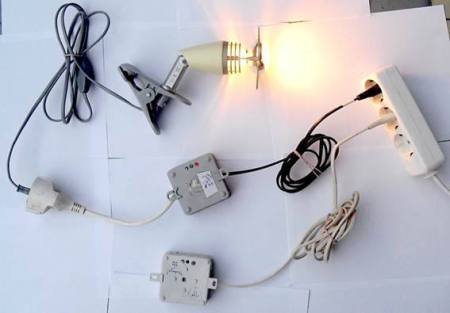
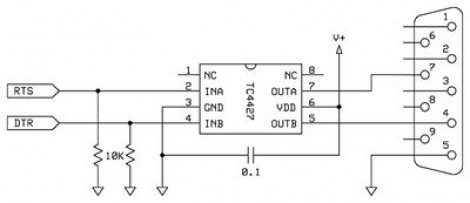
[Tixlegeek] used a Motorola 68HC705J1 development board to remotely control his home through his cellphone. The video above, as well as [Tixlegeek]’s website, is in French, though the video has been captioned. The development board (called the ERMES125) is controlled by a PIC externally. It has an array of LEDs, and apperantly a few high voltage relays. The PIC is connected to a laptop through a serial interface. The laptop is running a small web server, which uses CGI to control the PIC from a webpage. This system allows [Tixlegeek] to log onto the webpage from his web enabled phone, click a few buttons, and have appliances turn on or off through relays controlled by the PIC (via serial signals from the laptop).
home automation302 Articles
XMPP And Home Automation

[Matthias] from Intuity Media Lab put together a nice bit on controlling office lights with XMPP from his Android phone. In the article, he explains the components involved in the project, why he chose XMPP, and lists everything you need to replicate it. The project makes use of a wide variety of tools and libraries, weaving together code from multiple languages to achieve its goal. Overall, his project is a welcome change in a world full of Twitter–based solutions.
Home Automation Via Twitter
[youtube=http://www.youtube.com/watch?v=PVm1VKB43ww]
We’ve seen tons of stuff hooked up to send updates to twitter when something happens. That’s what we expected when we first read this tip from [Matt]. We were pleasantly surprised to see he’s actually doing the opposite. He has rigged several items to an IoBridge module and he can control them by sending tweets to his account. In the video you can see him sound a buzzer and change a display on an LCD. Its nice to see twitter being used as part of the control as opposed to updating us every time someone flushes.
Servo Switch Assemblies
[youtube=http://www.youtube.com/watch?v=P0hBCdMJ96g]
If you are interested in trying out some home automation, but don’t want to get into the potentially dangerous area of hacking your house wiring, consider these servo switches. These allow you to flip a switch, using a servo. They are clean, temporary, and fairly compact. You can purchase them at oomlout.com or download the designs and build your own.
WAP Controlled Home Automation

[Josh] sent in a home automation project he did a little while ago. It has a total of eight switched outlets. The main focus of the project was WAP access for remote control from any cellphone. The control box is based on a design by [Ashley Roll] for controlling eight servos using a PIC microcontroller. A listener app written in Java monitors the control web page and sends signals to the board via serial port. He used opto-isolated 240V solid state relays for each of the outlets. All the pieces are available on the site and he might even do a custom control board design if there is enough interest.
Hack Your Litter Box

Cat poo stinks. We all know it. Those of us who have cats, though frequently amazed at the sheer magnitude of stench our cuddly friends are capable of, do little to remedy the situation. Sure, sometimes we buy the fancier kitty litter or the special food. [agraham999] decided to be a little more proactive. He built an automated exhaust system for the litter box. He wasn’t content to just rig a fan blowing to an exhaust vent either, he hooked it up to an automation system and a motion detector. The total cost for the project was $80, not including the mac mini that serves as the brains.
Be sure to read through the comments for some very in depth discussion about power usage and solar conversions.
[via Boing Boing Gadgets]
Monitoring Home Energy Consumption

Power monitoring and home automation systems are coming to mainstream consumers. The New York Times covers the latest technologies (annoying login required) that improve and monitor energy efficiency in the home. As energy use and costs continue to increase, companies are popping up to offer cheaper solutions that will help consumers monitor energy usage, and decrease it simultaneously. Companies like Zigbee offer wireless protocols to track usage, and “smart metering” systems can communicate with appliances to reduce unnecessary energy usage.
Home automation systems can be set up to control a single system, such as a home theater, or multiple systems throughout a home, like audio, lighting, and temperature. Control4 offers controllers that will allow consumers to regulate their lighting, blinds, and temperature in their homes. Smart meters such as Echelon’s NES system offers users some great features, such as the ability to provide automated reads of electric and gas meters, and enabling load shedding during peak consumption periods, by controlling appliances like air conditioners and water heaters. By allowing the consumers to determine and control how much energy they use, they can successfully reduce their energy consumption levels a significant amount, but whether it’s worth the cost of investment remains to be seen. Although the prices of home automation systems have dropped from over $30,000 to about $5,000, it’s still much more than most consumers can afford.
We’ve covered home automation tools before. We like them because they’re still way more affordable than the offerings available, and the technology is more transparent. If you’ve got a creative and cheap solution to monitoring energy consumption, we’d love to hear it.
[via Waxy]