Ski Lift Removes Mice From Chicken Coop

Getting rid of rodents like squirrels, mice, or groundhogs is a lot like digging a hole on the beach. No matter how much you remove, it’ll always fill back in. So, while [Super Valid Designs] could keep trapping and “removing” the mice in his chicken coop, more will always work their way back in. His theory is that removing them live from the chicken coop and placing them some distance away will be more effective, and with this semi-automated ski lift that traps them and carts them off, it might end up being less work too.

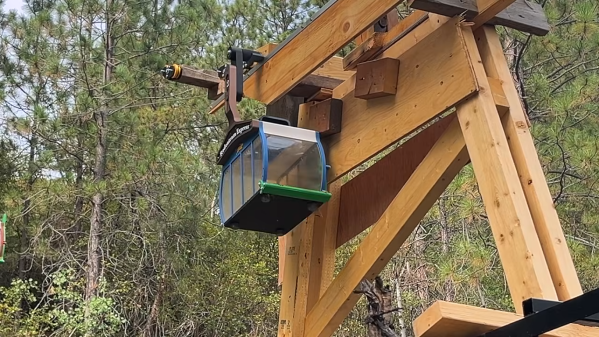
The build comes to us in roughly two parts. The first is the gondolas, which not only cart the mice down the hill to freedom but also double as the mousetrap themselves. They are placed in the chicken coop, and a trap door on the ceiling with bait causes the mice to fall inside. 3D printed with acrylic windows, they are a luxurious way for a mouse to travel. At the bottom, another trap door opens onto a pile of brush, releasing the mice. The second part is the lift, built hastily out of wood and other parts lying around. After much hiking up and down the hill, [Super Valid Designs] eventually got it working properly and reliably toting the mice and automatically releasing them at the bottom of the hill.

It’s a bit too early to tell if this method is more effective than more traditional methods of dealing with mice. But it was at least a fun way to deal with the problem while he also works on more effective methods of preventing the mice from getting into his buildings in the first place. There are some simpler catch-and-release mousetraps out there as well if a ski lift is out of the question for whatever reason.

Continue reading “Ski Lift Removes Mice From Chicken Coop” →

Flopped Humane “AI Pin” Gets An Experimental SDK

The Humane AI Pin was ambitious, expensive, and failed to captivate people between its launch and shutdown shortly after. While the units do contain some interesting elements like the embedded projector, it’s all locked down tight, and the cloud services that tie it all together no longer exist. The devices technically still work, they just can’t do much of anything.

The Humane AI Pin had some bold ideas, like an embedded projector. (Image credit: Humane)

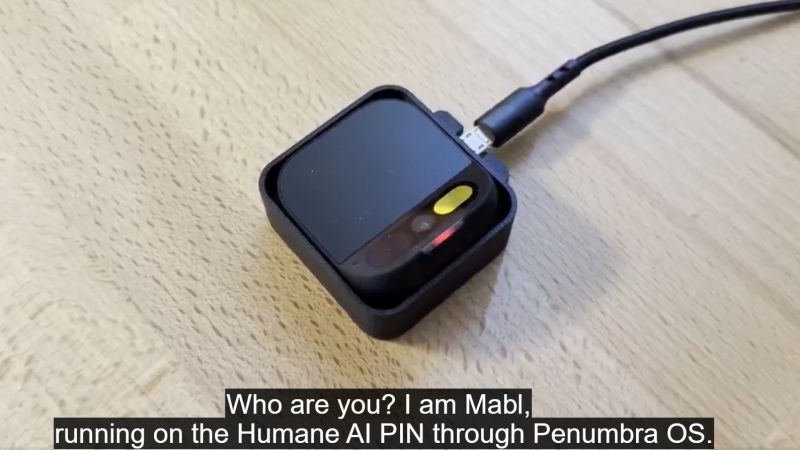
Since then, developers like [Adam Gastineau] have been hard at work turning the device into an experimental development platform: PenumbraOS, which provides a means to allow “untrusted” applications to perform privileged operations.

As announced earlier this month on social media, the experimental SDK lets developers treat the pin as a mostly normal Android device, with the addition of a modular, user-facing assistant app called MABL. [Adam] stresses that this is all highly experimental and has a way to go before it is useful in a user-facing sort of way, but there is absolutely a workable architecture.

When the Humane AI Pin launched, it aimed to compete with smartphones but failed to impress much of anyone. As a result, things folded in record time. Humane’s founders took jobs at HP and buyers were left with expensive paperweights due to the highly restrictive design.

Thankfully, a load of reverse engineering has laid the path to getting some new life out of these ambitious devices. The project could sure use help from anyone willing to pitch in, so if that’s up your alley be sure to join the project; you’ll be in good company.

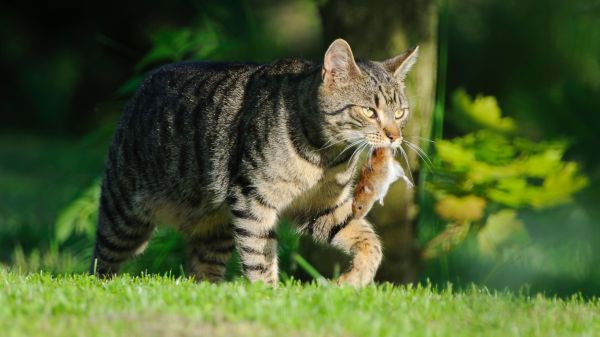
Spaying Cats In One Shot

Feral cats live a rough life, and programs like Trap, Neuter, Release (TNR) attempt to keep their populations from exploding in a humane way. Researchers in Massachusetts have found a non-surgical way to spay cats that will help these efforts.

A single dose of anti-Müllerian hormone (AMH) gene therapy suppresses ovarian follicle formation, essentially turning off the ovulation cycle. After following the test cats for two years, none had kittens, unlike the cats in the control group. Other major hormones like estrogen were unaffected in the cats and they didn’t exhibit any negative side effects. The researchers said it will be some time before the treatment can be widely deployed, but it offers hope for helping our internet overlords and the environs they terrorize inhabit.

For those of you doing TNR work, you might want to try this trap alert system to let you know you’ve caught a cat for spaying or neutering. If you’d rather use a cat treat dispenser to motivate your code monkeys, then check out this hack.