Gear Indicator For Suzuki Motorcycle

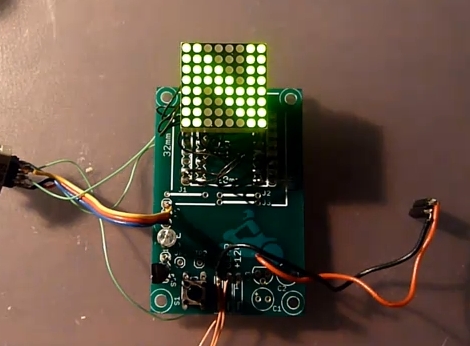
This little board serves as a current gear indicator for a motorcycle. It was designed with the Suzuki V-Storm motorcycles in mind as they have a sensor built into the gearbox. Other gear indicators rely on sensors on the shifters themselves, but reading the voltage level from a gearbox sensor gives much more reliable information.

The voltage measurement is handled by an ATmega88 microcontroller which in turn drives the 8×8 LED display. Also built into the system is a temperature sensor and photoresistor. The firmware takes advantage of both of these inputs, displaying temperature when in sixth gear or at the push of a button, and dimming the display based on ambient light. There are also settings for screen rotation, and user preferences.

We didn’t find schematics or software but this should be pretty easy to replicate. If you need a primer for AVR programming we’ve got you covered.

[Thanks Michal]
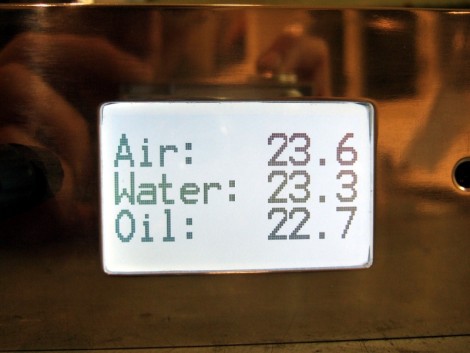
Shiny Motorcycle Computer

We’re rather surprised at how popular it has become to build your own motorcycle computer. [Mario Mauerer] tipped us off about his shiny motorcycle computer (translated) for his Yamaha XTZ 750. It uses an ATmega644 microcontroller to pull a variety of data together and display it on this white LED backlit display. He connected a flow meter to the fuel line to monitor gas consumption. Oil temperature is captured by inserting a brass tube (containing the sensor) through a hole in the oil cap and soldering it in place. Water temperature is gathered by measuring the external temperature of one of the cooling lines. [Mario] uses a rotary encode with a click function as the control interface device, and a battery backed real time clock keeps time.

A quick look at the PCBs tells the tale of good circuit design. But we do wonder about catching the reflection of the sun in that shiny bezel.

Motorcycle Rear-view With In-helmet Display

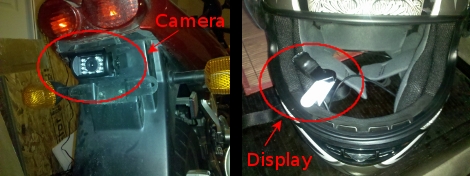
Want to see what’s behind you when riding your sport bike without taking your eyes off the road? They make rear view cameras for that but [Nescioqd] wanted a rear display right in his helmet (PDF). He started by mounting a rear-pointing camera on the back of the bike, powered from the 12V feed for the taillight. On the display side of things he picked up a Myvu Crystal wearable display. This is like a pair of glasses that have small LCD screens were the lenses should be. [Nescioqd] removed one lens and mounted it inside the helmet.

Since the display resides inside the helmet there is some concern about being able to see at night with a bright screen below your eyeball. [Nescioqd] actually ran into the opposite problem at first, bright sunlight makes it difficult to see the image on the LCD screen. He fixed this by picking up a dark tinted helmet visor (the easiest solution) but we’d love to see a photoresistor used to regulate the backlight level.

It would be interesting to see both screens used, with rear-view on one side and an instrument display on the other.

In-dash Motorcycle Display

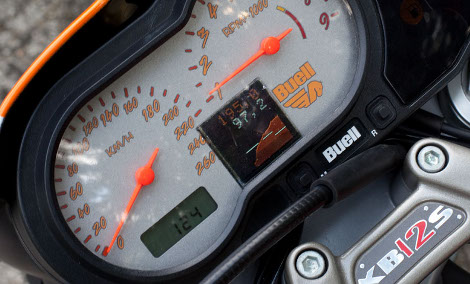
[Muth] added an auxiliary display to his motorcycle instrument panel. He started out prototyping with a PIC 16F877A which he used to access information through the ECM diagnostic connection. Once he had that working he found this tiny display which fits perfectly between the speedometer and tachometer. There’s a short demo after the break where you can see a past-30-minute history of the Adaptive Fuel Value and the engine temperature as well as a secondary information screen.

This is another nice addition to our collection of vehicle displays, scooter controllers, gear indicators, and motorcycle computers.

Continue reading “In-dash Motorcycle Display”

Electric Motorcycle Rocks One Wheel

We had to call it an electric motorcycle in the title because electric unicycle just sounds lame. But the video after the break shows you that this prototype is anything but lame. It takes minimalism to the extreme when you’re talking about powered transportation. The self-balancer is reminiscent of a Segway but the rider sits astride one wheel rather than the standing form-factor that [the Woz] loves so much for gaming. Looks like Ryno Motors is trying to gather capital to put these into production. We’re not going to hold our breath until we see them in the wild, but we’d be surprised if they don’t pop up on the big screen at some point in the near future.

Continue reading “Electric Motorcycle Rocks One Wheel”

Adding Mute To A Bluetooth Headset

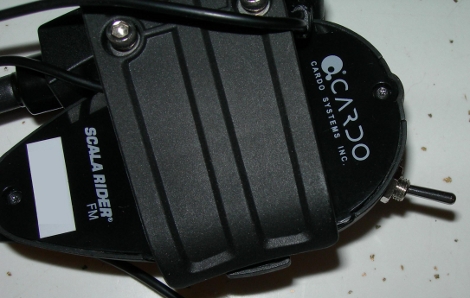
[Jared] often needs to be on conference calls for work during his motorcycle commute. He’s got a bluetooth headset that cancels noise but it didn’t have a mute feature. He cracked open the speaker and microphone portion of the apparatus but there wasn’t enough room for a switch. The base unit which houses the noise cancelling hardware had plenty of room. He added a single pole double throw (SPDT) switch to the positive wire from the microphone, allowing him to disconnect it as a mute function would. He mentions the need to seal the unit with silicone after the hack in order to keep out the elements. We might have opted for a weather-proof switch as well.

This simple hack makes a nice addition to any Bluetooth projects you’re working on.

Sidecar Reminiscent Of Conjoined Twins

Finally, an answer to the problem of sidecar dorkiness. [François Knorreck] spent ten years hand crafting a sidecar with a beautiful design and a luxurious interior for two. The frame is aluminum, the body is mostly carbon fiber, and there are countless details such as automatic chain tension control and steering for the sidecar wheel that make this more than just a pretty paint job.

[Thanks Geekabit]