2025: As The Hardware World Turns

If you’re reading this, that means you’ve successfully made it through 2025! Allow us to be the first to congratulate you — that’s another twelve months of skills learned, projects started, and hacks….hacked. The average Hackaday reader has a thirst for knowledge and an insatiable appetite for new challenges, so we know you’re already eager to take on everything 2026 has to offer.

But before we step too far into the unknown, we’ve found that it helps to take a moment and reflect on where we’ve been. You know how the saying goes: those that don’t learn from history are doomed to repeat it. That whole impending doom bit obviously has a negative connotation, but we like to think the axiom applies for both the lows and highs in life. Sure you should avoid making the same mistake twice, but why not have another go at the stuff that worked? In fact, why not try to make it even better this time?

As such, it’s become a Hackaday tradition to rewind the clock and take a look at some of the most noteworthy stories and trends of the previous year, as seen from our rather unique viewpoint in the maker and hacker world. With a little luck, reviewing the lessons of 2025 can help us prosper in 2026 and beyond.

Continue reading “2025: As The Hardware World Turns”

Breaking: USPS Halts Inbound Packages From China And Hong Kong Posts

Update: The USPS has now resumed acceptance of inbound packages from China. According to the updated Service Alert, they are currently working with Customs and Border Protection to “implement an efficient collection mechanism for the new China tariffs.’


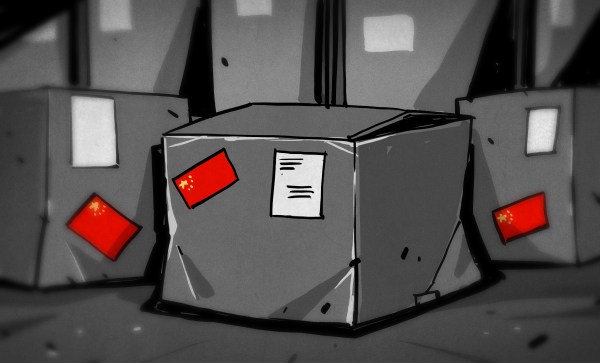
Some troubling news hit overnight as the United States Post Office announced via a terse “Service Alert” that they would suspend acceptance of inbound parcels from China and Hong Kong Posts, effective immediately.

The Alert calls it a temporary suspension, but gives no timeline on when service will be restored. While details are still coming together, it seems likely that this suspension is part of the Trump administration’s Chinese tariff package, which went into effect at midnight.

Specifically, the administration looks to close the “de minimis” exemption — a loophole which allowed packages valued under $800 USD to pass through customs without having to pay any duties or fees. Those packages will now not only be subject to the overall 10% tax imposed by the new tariff package, but will now have to be formally processed through customs, potentially tacking on even more taxes and fees.

The end result is that not only will your next order of parts from AliExpress be more expensive, but it’s likely to take even longer to arrive at your door. Of course, this should come as no surprise. At the end of the day, this is precisely what the administration aims to accomplish with the new tariffs — if purchasing goods from overseas is suddenly a less attractive option than it was previously, it will be a boon to domestic suppliers. That said, some components will be imported from China regardless of who you order them from, so those prices are still going to increase.

Other carriers such as FedEx and UPS will also have to follow these new rules, but at the time of this writing, neither service had released a statement about how they intend to comply.

GoPro Factory Goes Nomad To Dodge Tariff Threat

Despite the fact that the United States and China are currently in the middle of a 90-day “cease fire” in their ongoing trade war, with new tariffs on hold until March 2019 while the two countries try to reach agreement, not everyone is waiting around to see who comes out on top. In a recent press release, action camera manufacturer GoPro has announced their intention to move some production out of China in the face of potential tariff expansions; which many analysts fear will be the result of the current stalemate. That’s right, only some of their production is moving.

“We’re proactively addressing tariff concerns by moving most of our US-bound camera production out of China,” says GoPro CFO Brian McGee. “We believe this diversified approach to production can benefit our business regardless of tariff implications.” Reading his words carefully, the key phrase here is “diversified approach”. GoPro doesn’t intend to move their entire production capability out of China, but only the production of the cameras which are designated for importation into the United States. GoPro models which are to be sold to other parts of the world will still be made in China.

This might seem an extravagant move just to avoid US tariffs, but with better than 40% of GoPro’s revenue for the third quarter of 2018 coming from the Americas, the company stands to be hit hard by the proposed 25% tax. Combined with the fact they shuttered their drone division last year citing “an extremely competitive aerial market”, and the proliferation of “GoPro clones” available for pennies on the dollar, it seems pretty clear that belt-tightening is the name of the game for the company that was once synonymous with action cameras.

Continue reading “GoPro Factory Goes Nomad To Dodge Tariff Threat”

US Announces Withdraw From Postal Treaty; International Shipping Prices Expected To Rise

The United States has announced plans to withdraw from a 144-year postal treaty that sets lower international shipping rates. The US claims this treaty gives countries like China and Singapore an unfair advantage that floods the US market with cheap packages. The BBC reports the withdraw of this treaty will increase shipping costs from China by between 40% and 70%.

The treaty in question is the Universal Postal Union, which established that each country should retain all money it has collected for international postage. The US Chamber of Commerce has said this treaty, ‘leads to the United States essentially paying for Chinese shipping’. This is especially true since 2010, when the US Postal Service entered an agreement with eBay Greater China & Southeast Asia and the China Post Express & Logistics Corporation. This agreement established e-packet delivery where packages weighing up to 2 kg would be delivered at lower prices. If you have ordered inexpensive products shipped from abroad, it is likely the e-packet price that made this possible.

This will affect businesses that capitalize on imports and exports; the storefronts on Amazon and eBay that resell Chinese goods rely on cheap shipping from China. It will also affect companies based outside of the United States that ship to US customers. Small businesses within the US who manufacture at low enough quantities to get their components/raw-materials shipped under the e-packet rates will also see a hit. An increase in shipping costs will mean higher prices for all of these products.

The move is also being justified as a way to even the playing field for US manufacturers who are shipping from within the US and may be paying higher rates to ship to the same customers as foreign-bought goods. It is the latest development in a growing trade war between the US and China which has already seen several rounds of tarrifs on goods like electronics, and even 3D printing filament. It’s hard to see how the compounding effect of these will be anything but higher prices for consumers. Manufacturers seeing the pinch on raw materials and components will pass this on to customers who will also soon see higher shipping prices than they are used to.

The Challenges Of Shipping From China – Life Of A Flailing Tube Man

Last summer was an exercise in developing a completely different kind of product from my normal wheelhouse; a costume. My Halloween costume had been so popular that I decided to have a go at commercializing it, and that took me on a path into manufacturing that I hadn’t yet taken; shipping by boat from China. The short version is it’s a ridiculously difficult mess. Continue reading “The Challenges Of Shipping From China – Life Of A Flailing Tube Man”

Tariff Expansion Set To Hit 3D-Printing Right In The Filament

Mere weeks after tariffs were put into place raising the cost of many Chinese-sourced electronics components by 25%, a second round of tariffs is scheduled to begin that will deal yet another blow to hackers. And this time it hits right at the heart of our community: 3D-printing.

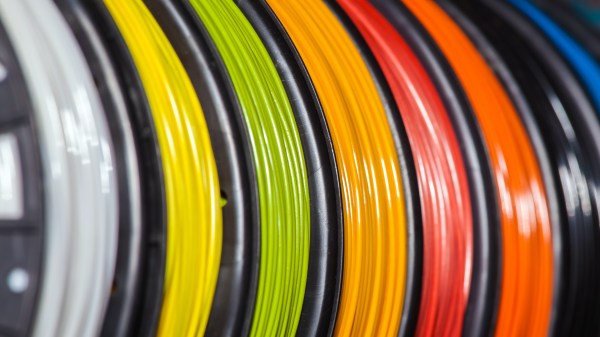
A quick scan down the final tariff list posted by the Office of the US Trade Representative doesn’t reveal an obvious cause for concern. In among the hundreds of specific items listed one will not spot “Filaments for additive manufacturing” or anything else that suggests that 3D-printing supplies are being targeted. But hidden in the second list of tariff items, wedged into what looks like a polymer chemist’s shopping list, are a few entries for “Monofilaments with cross-section dimension over 1 mm.” Uh-oh!

Continue reading “Tariff Expansion Set To Hit 3D-Printing Right In The Filament”

Electronics Manufacturers React To China Trade Tariffs

Mere weeks ago, the United States announced it was set to impose a 25% tariff on over 800 categories of Chinese goods. These tariffs include nearly every component that goes into the manufacture of any piece of electronic hardware, from resistors to capacitors, semiconductors to microcontrollers, and even the raw components that are turned into printed circuit boards. These tariffs will increase the cost of materials for electronics, even if those electronics are ultimately manufactured in the United States because suppliers and subcontractors must source their materials from somewhere, and more often than not, that place is China.

Now, manufacturers are feeling the pinch. An email distributed by Moog Music last Friday has asked their supporters to contact their senators and representatives.

In the world of musical synthesizers, there is no bigger name than Moog. The company was founded in the 1950s manufacturing theremins, and in the 1960s, production moved to synthesizers. The famous Minimoog, launched in 1970, has been featured on tens of thousands of albums. Modern music simply wouldn’t exist without Moog synthesizers. After a buyout, mismanagement, and bankruptcy in the 1980s, the company was reborn in the early 2000s, moved into a beautiful factory in Asheville, North Carolina, and has gone on to produce some of the most popular synthesizers ever made.

The company’s statement says these new tariffs will, ‘immediately and drastically increase the cost of building our instruments, and have the very real potential of forcing us to lay off workers and could.. require us to move some, if not all, of our manufacturing overseas’. In a statement on Twitter, Moog says they source half their PCBs and a majority of other materials domestically, already paying up to 30% more than if the PCBs were sourced from China. However, because the raw materials for PCB manufacture are also sourced from China, board manufacturers for Moog’s synths will be forced to pass along the 25% tariff to their customers.

The threat of Moog being forced to move production of their instruments to China is real. Like cell phones, laptops, and other finished goods, synthesizers are not covered by the new tariff. As noted by Bunnie Huang, these tariffs have the perverse incentive of shifting US manufacturing jobs to China.

These tariffs have been a point of contention for the electronics and engineering communities. Anyone can easily pull up the distributor information from a Mouser or Digikey order and find the country of origin for an entire Bill of Materials. It has already been confirmed that most of the FR4 and other raw components that go into manufacturing PCBs in the United States come from Chinese suppliers. These items can be cross-referenced with the list of items that will be subject to a 25% tariff next week. Manufacturing electronics in the United States, even if you get your PCBs from US manufacturers and parts from US suppliers, will cost more in just a few short days.