Internet Enabled Drip Coffee

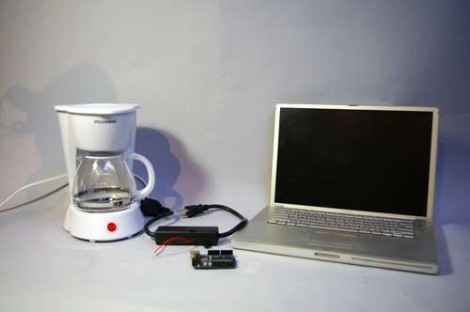
A fresh pot of coffee is never more than a tweet away with the Tweet-a-Pot. It works in much the same way that our Troll Sniffing Rat does. For that build we used a Python script to monitor our comments, and this does the same except that the script read tweets through the Twitter API. It watches for a specific hash tag (#driptwit) and when found it sends a serial command to an Arduino. The microcontroller then writes a digital pin high to actuate a relay, powering up the coffee maker.

Sure, you have to preload the pot with grounds and water, but what do you expect, automatic coffee roasting and brewing? That’s quite a bit more work.

Controlling Real Objects Using Minecraft

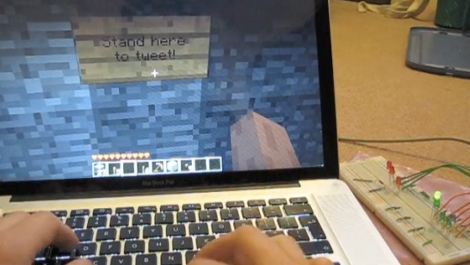
Most augmented reality takes images of the real world and superimposes virtual data on top of them. [Michael Winston Dales] went a different direction, using the virtual world of Minecraft to control objects in the physical world. In the video after the break you can see him use switches that he built inside the game to turn the LEDs pictured above on and off. You’ll also notice that in-game sign instructing a player to stand in one spot to Tweet. Since Minecraft is written in Java there are some mods that allow you to hook onto in-game events. [Michael] does just that, triggering his own scripts to send data to an Arduino, or use a Twitter API. Now this something that should be used with the Minecraft ALU. It takes the sandbox method of gaming to a new place, doesn’t it?

Continue reading “Controlling Real Objects Using Minecraft”

Nixie Tubes Live In A Cool Box

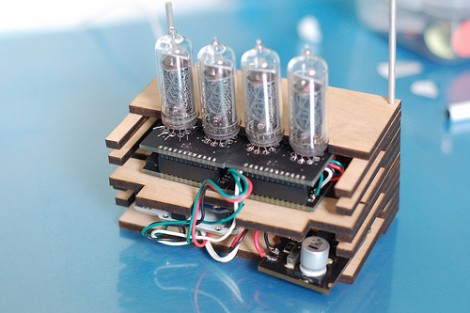
This set of four Nixie tubes display the number of people following bildr on Twitter. That’s neat; it uses an Arduino and some open source driver boards. But what caught out eye is the enclosure. The image above shows only half, but when assembled it’s a nice little cube that keeps the insides safe. This was laser cut using the Ponoko service and kicks off a design contest. Come up with the best idea for using 4 Nixies, their drivers, and $50 worth of Ponoko’s services and they’ll give you the materials to make it happen.

Firesheep: Promoting Privacy In A Scary Way

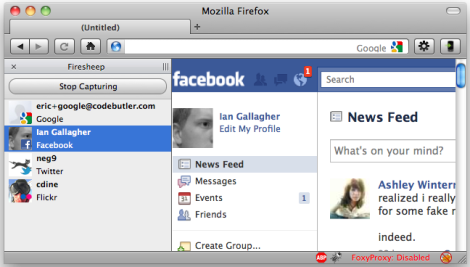
Often, software hackers are the activists that push software giants towards updating vulnerable applications. In todays example, [Eric Butler] is pushing Facebook, Twitter, Flickr, and more all at the same time. By creating a user script-kiddie friendly extension for Firefox, he has allowed just about anyone to sniff unsecured connections on public Wi-Fi access points and log into these unprotected accounts.

Right now the extension is available for Windows and Mac, with a Linux port coming soon. Temporarily, the best way for a user to avoid getting taken advantage of would be to not use these social networking sites on a public connection, or to implement a secure proxy for these connections that would keep your data safe. Hopefully these websites will have a quick rebuttal that allows for security without workarounds. With all of the bad press they are recieving, they certainly have incentive to.

Are there any software or security buffs out there? We would love to see someone port this to an iPhone or Android app that could check and log open Wi-Fi points. We’ll leave the foot work to the experts out there, but do be sure to give us a heads up if anyone manages to make it happen, okay?

NYC Resistor Takes On The Machine

Here we are with Episodes two and three (aka, NYC Resistor part one and two) completing the Take on the Machine Hackerspace challenge we mentioned a while back. For the challenge NYC Resistor took an old style slot machine and converted it into a drink mixing deviant; even making the device post a Tweet for every drink. However, it seems to be lacking refrigeration of some kind, could this be the downfall of a potential winner for the challenge? Up next is the Hackerspace Pumping Station: One: do you think they can compete? Is there a particular Hackerspace you can’t wait to see? Let us know!

[Thanks Deven]

As Promised: More Industrial Robot Goodness

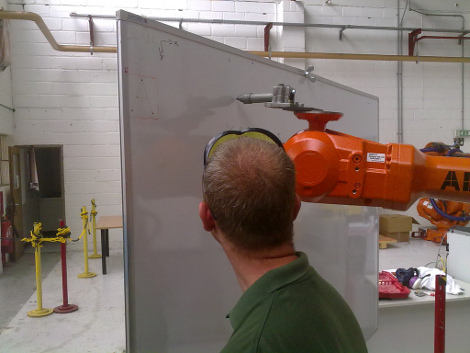
Remember [Mattythorne]? He took a BMW industrial arm and re-purposed it to write twitter messages on a white board. You can read a small excerpt here.

Well [Matt] is back, and as promised includes an entire write up for how he got @scribblebot scribbling twitter messages.  It’s a little light on details and we wish there was some more in-depth how-to magic, but then we remembered with most of the population not having an industrial arm in the first place the extra time spent incorporating the extra info would be far from worth it. Regardless, it doesn’t surprise that the previous commentators were not far off the mark in how difficult programing one of these machines would be. While such arms do have a few built in libraries it looks like a very exhausting process to override the default axis of motion, incorporate a UI, build a pen holder, and more. And in the end, is it worth it? [Matt] tells us the arm is going to be going back to monotonous car building work soon, giving weeks of prep only a day in the limelight.