Ask Hackaday: What Puts This Photo In The Pink?

It’s an exciting time to be a camera hacker, because we are at a moment when even cheap camera hardware is starting to have high resolution sensors, and the awesome camera phones of a few years ago are now in people’s junkboxes. Lens swapping has been a feature of the art for a while now, usually taking the form of a C-mount add-on. So with a bit of 3D printing and glue, you can now make something more interesting from an AliExpress purchase or that old phone. These cameras have all the resolution and sharpness that the sensor can deliver assuming that their software isn’t too awful, but there’s a persistent problem . The photographs invariably have a pinkish tint, as reported in a recent Hackaday-featured project, just to name one. The original lens doesn’t have this problem, so what’s up?
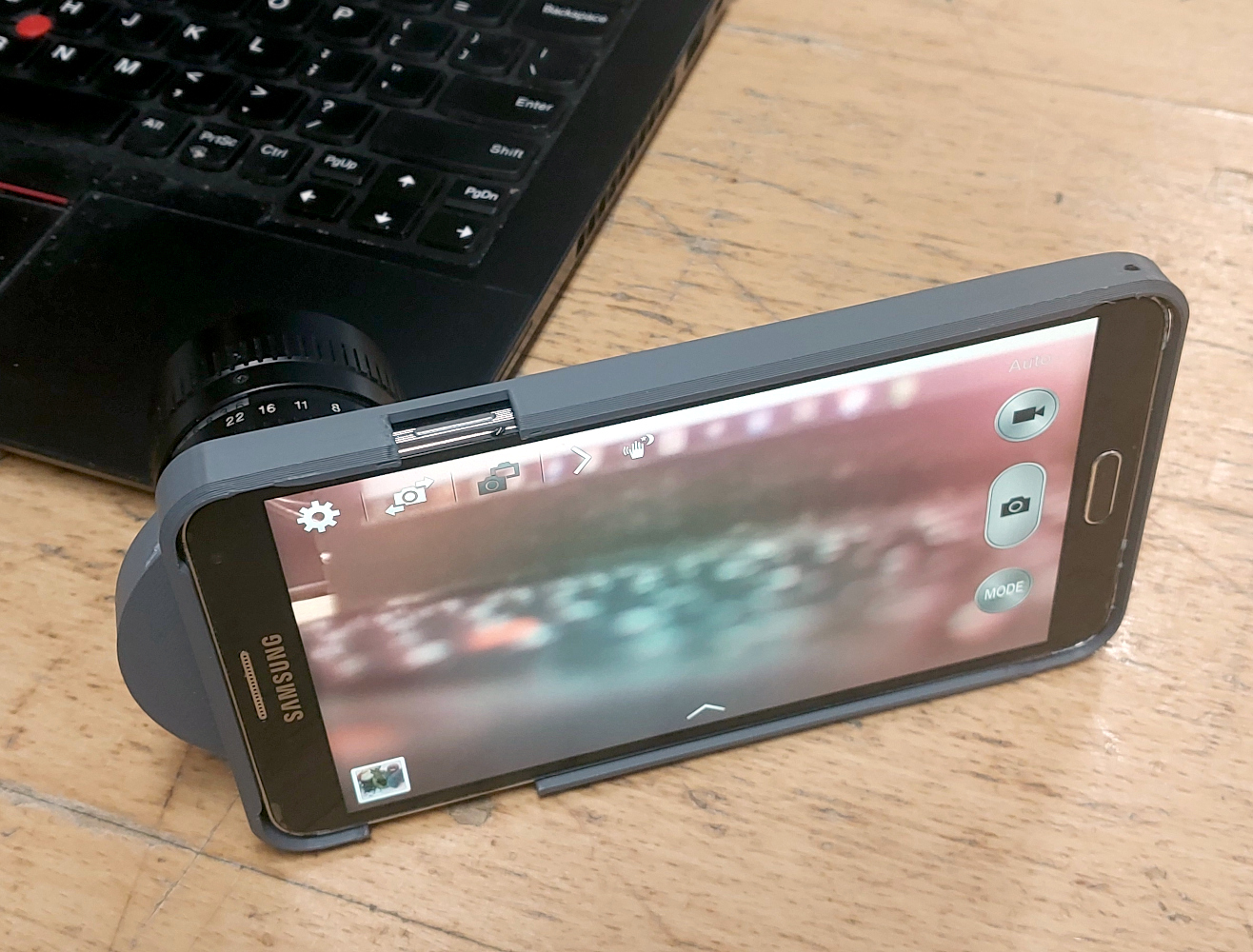
A mobile phone with a C-mount lens attached to its back, propped up on a laptop keyboard with the screen towards us. The screen shows a blurry view of the laptop.
Without the pink stuff, it’s not a bad camera, really.

Of course, the more astute readers are immediately thinking about IR filters. I did too, when one of my on-and-off projects had the pink tint. It’s a Samsung Galaxy Tab 3, an ancient Android 5 phone with a rather useless and gimmicky stylus, and a rather nice camera sensor. I bought a replacement camera module for it on AliExpress so I’d have something to experiment with, removed its lens assembly, and had a phone with a bare sensor peeking from the back of it. A 3D printed adjustable lens mount assembly that I’ll eventually clean up and release so any phone can have the same modification followed.

Faced with the dreaded pink when I started taking pictures, I ineptly glued an IR filter to the back of it, and awaited my perfect shots. Sadly they never came, so rather than admit defeat, I’m hoping one of you lot can help. Are any Hackaday readers in the optics business and can tell me what’s up? Continue reading “Ask Hackaday: What Puts This Photo In The Pink?” →

Ask Hackaday: Do We Need A 21st Century Calculator?

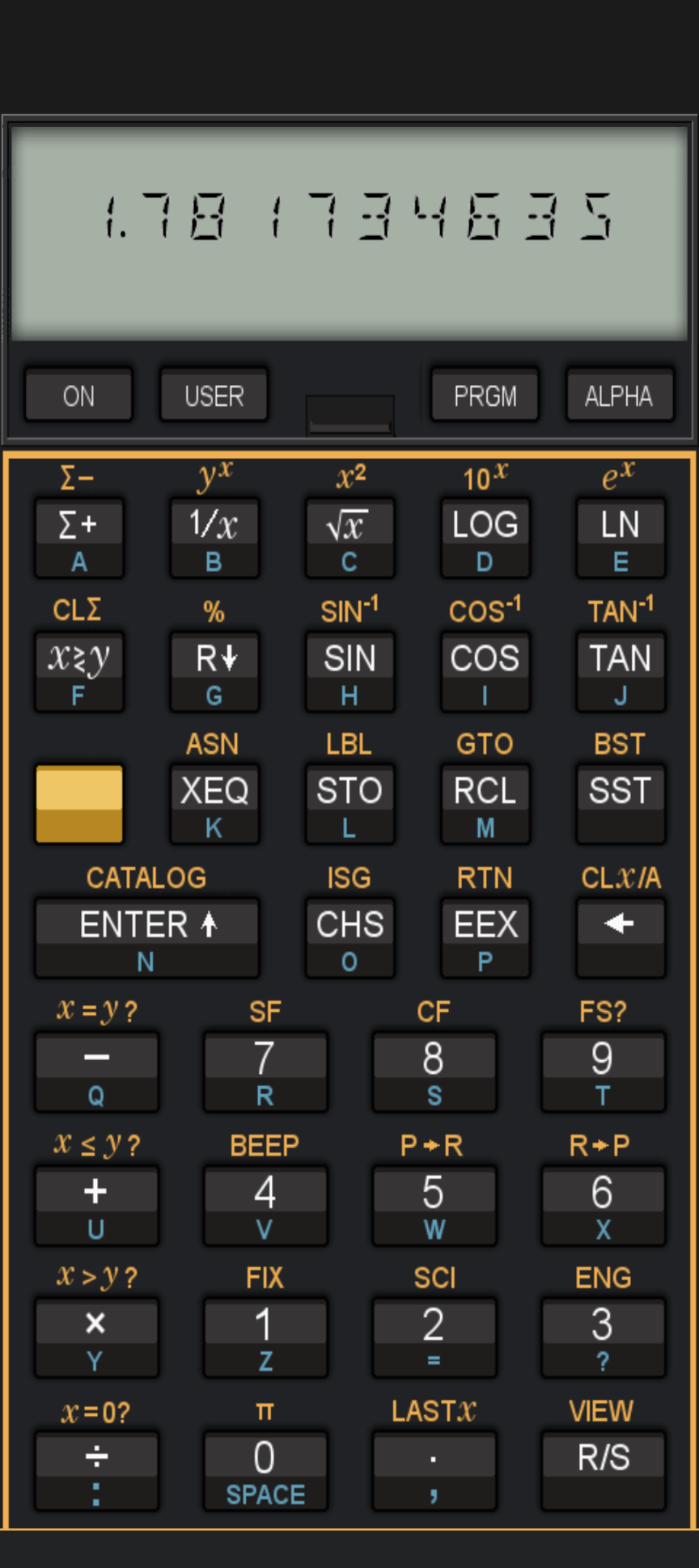
The HP-41C analog on my phone gives the right answer.

Three resistors in parallel: 4.7 k,Ω 22 kΩ, and 3.3 kΩ. Quick! What’s the equivalent value? You can estimate it, of course, but if you want the actual 1.8 kΩ (approximately) answer, you probably reached for some kind of calculating aid. I have two slide rules on my desk, and plenty more a few steps away, but I don’t use them much, honestly. I have a very old HP-41C — arguably the best calculator ever made — but I am usually afraid to use it as it is almost 50 years old and difficult to repair. I also have an HP-28S on my desk, a replica HP-41C, and a few others in desk drawers. There are also dozens of calculators on my desktop computer, my phone –including the official HP Prime app — and the web browser.

I often see newer calculators from HP, like the Prime G2, or “new” HP-like calculators like the ones from SwissMicros, and think I should pick one up. Well, technically, HP licensed their calculators to Moravia, so even a “real” HP calculator isn’t from HP anymore. But, in the end, I always realize that my need for a physical calculator is so diminished that I can’t justify buying anything new, and I can barely even spring for a $10 one at the thrift store unless it is a real collectible.

Mind you, I’m not talking about RPN versus algebraic. I could say the same thing for TI, Casio, or Sharp calculators. I just don’t know why I need one anymore, even though I still, for some strange reason, want them.

The Prime seems impressive, if I could ever find time to finish reading the manual.

For the record, I did use an HP-41C to check the resistor math, but it was in the form of an app on my phone, not a real calculator. On the same computer I’m writing this on, I have HP-41C emulators, the Prime emulator, and a bunch of other calculators. Yet I still pick up my phone and use the familiar key layout of the HP-41C. I don’t know why. The replica 41C, unfortunately, has a landscape-oriented keyboard, so while I like it, it doesn’t satisfy my finger’s muscle memory.

Which leads to this Ask Hackaday. Do you use a calculator? Why? If you don’t, do you use a fake calculator on your phone or computer? Or do you just send your math to Google or Wolfram? I suspect some of the answer will be generational. I was in high school before calculators started showing up in schools, but they took over quickly.

There is something satisfying about having a purpose-built device to do your math. No long boot sequence. No switching apps. No messages coming in while you are typing in numbers. For the ultimate convenience, you could wear it on your wrist. The Apollo mission that docked with a Russian spacecraft carried an HP-65, and nine early Space Shuttle missions used an HP-41C. But even astronauts now don’t have a standard-issue calculator. Pilots sometimes use electronic E6Bs, but many still use the mechanical version.

Of course, I do collect slide rules, so maybe I just need to accept that calculators are yet another tech relic to collect. But someone is still buying them. I’d like to be one of them.

Continue reading “Ask Hackaday: Do We Need A 21st Century Calculator?” →

Ask Hackaday: Wired Or Wireless Headphones?

They say you should never throw out old clothes because they will come back in style one day. Maybe they are right. We noted in a recent BBC post that, apparently, wired headphones are making a comeback. Like many people, we were dismayed when Apple took the headphone jack out of the iPhone and, as [Thomas Germain] notes, even Google eventually ejected the normal headphone jack. (Although, in fairness, most of the Pixel phones we’ve seen come with a pair of USB-C earbuds.)

On the face of it, though, wireless seems to be a good idea. You can get cheap Bluetooth earbuds now, although maybe still not as cheap as wired buds. Sure, they sound terrible, but so do cheap buds. It is a pain to charge them, of course, but not having to untangle wires is a benefit. On the other hand, you never have to charge your wired headphones.

Continue reading “Ask Hackaday: Wired Or Wireless Headphones?” →

Ask Hackaday: What Will An LLM Be Good For In The Plateau Of Productivity?

A friend of mine has been a software developer for most of the last five decades, and has worked with everything from 1960s mainframes to the machines of today. She recently tried AI coding tools to see what all the fuss is about, as a helper to her extensive coding experience rather than as a zero-work vibe coding tool. Her reaction stuck with me; she referenced her grandfather who had been born in rural America in the closing years of the nineteenth century, and recalled him describing the first time he saw an automobile.

Après Nous, Le Krach

The Gartner hype cycle graph. Jeremykemp, CC BY-SA 3.0.

We are living amid a wave of AI slop and unreasonable hype so it’s an easy win to dunk on LLMs, but as the whole thing climbs towards the peak of inflated expectations on the Gartner hype cycle perhaps it’s time to look forward. The current AI hype is inevitably going to crash and burn, but what comes afterwards? The long tail of the plateau of productivity will contain those applications in which LLMs are a success, but what will they be? We have yet to hack together a working crystal ball, but perhaps it’s still time to gaze into the future. Continue reading “Ask Hackaday: What Will An LLM Be Good For In The Plateau Of Productivity?” →

Ask Hackaday: Do You Curb Shop Components?

I’m not proud. When many of us were kids, we were unabashedly excited when trash day came around because sometimes you’d find an old radio or — jackpot — an old TV out by the curb. Then, depending on its size, you rescued it, or you had your friends help, or, in extreme cases, you had to ask your dad. In those days, people were frugal, so the chances of what you found being fixable were slim to none. If it was worth fixing, the people would have probably fixed it.

While TVs and radios were the favorites, you might have found other old stuff, but in those days, no one was throwing out a computer (at least not in a neighborhood), and white goods like refrigerators and washing machines had very little electronics. Maybe a mechanical timer or a relay, but that’s about it.

Continue reading “Ask Hackaday: Do You Curb Shop Components?” →

Ask Hackaday: When Good Lithium Batteries Go Bad

Friends, I’ve gotten myself into a pickle and I need some help.

A few years back, I decided to get into solar power by building a complete PV system inside a mobile trailer. The rationale for this doesn’t matter for the current discussion, but for the curious, I wrote an article outlining the whole design and build process. Briefly, though, the system has two adjustable PV arrays mounted on the roof and side of a small cargo trailer, with an integrated solar inverter-charger and a 10-kWh LiFePO4 battery bank on the inside, along with all the usual switching and circuit protection stuff.

It’s pretty cool, if I do say so myself, and literally every word I’ve written for Hackaday since sometime in 2023 has been on a computer powered by that trailer. I must have built it pretty well, because it’s been largely hands-off since then, requiring very little maintenance. And therein lies the root of my current conundrum.

Continue reading “Ask Hackaday: When Good Lithium Batteries Go Bad” →

Ask Hackaday: How Do You Distro Hop?

If you read “Jenny’s Daily Drivers” or “Linux Fu” here on Hackaday, you know we like Linux. Jenny’s series, especially, always points out things I want to try on different distributions. However, I have a real tendency not to change my distro, especially on my main computer. Yet I know people “distro hop” all the time. My question to you? How do you do it?

The Easy but Often Wrong Answer

Sure, there’s an easy answer. Keep your /home directory on a separate disk and just use it with a new boot image. Sounds easy. But the truth is, it isn’t that easy. I suppose if you don’t do much with your system, that might work. But even if you don’t customize things at the root level, you still have problems if you change desktop environments or even versions of desktop environments. Configuration files change over time. Good luck if you want to switch to and from distros that are philosophically different, like systemd vs old-school init; apparmor vs SELinux. So it isn’t always as simple as just pointing a new distro at your home directory.

One thing I’ve done to try out new things is to use a virtual machine. That’s easy these days. But it isn’t satisfying if your goal is to really switch to a new distro as your daily driver. Continue reading “Ask Hackaday: How Do You Distro Hop?” →