Automated squinting instead of glasses, contacts, or lasik

posted Feb 22nd 2012 3:01pm by
filed under: Medical hacks

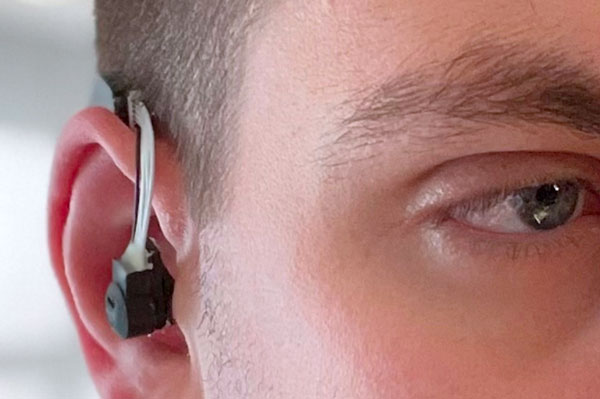
[Lee] is nearsighted and has had it with contacts and glasses. When trying to figure out an alternative, he looked at the core of the problem. The eye is not shaped correctly and therefore cannot focus adequately. The solution is to change the shape of the lens. This is exactly what lasik (laser eye surgery) does, but instead of going under the incredibly bright knife [Lee] built some headgear that pulls on your face to reshape your eye.

The hardware is from an old portable CD player. The sled that moved the laser lens has been repurposed to pull a thread taped to the skin at the corner of his eye. He built a control system that lets him adjust the tension by moving his fingers. Basically when the skin is pulled tight it causes him to squint and possibly reshapes the cornea just a bit. We’re not sold on the idea, but we can’t poo-poo the experiment; who knows what discovery this could lead to? We’re just glad he didn’t use electrical impulses to hack his peepers.

You can find some test video embedded after the break.

Read the rest of this entry »

See in the dark with this bracelet build

posted Feb 13th 2012 7:01am by
filed under: Medical hacks

Even though she’s only in 8th grade, [Hannah Prutchi] is turning into a very respectable builder. She designed SharkVision, a wearable distance sensor that is meant to help the blind find objects they might bump into.

The SharkVision gets its name from shark’s ability to ‘see’ prey in their surroundings by sensing the local magnetic field. Instead of building her own Ampullae of Lorenzini, [Hannah] decided to take the easy route and use a few infrared sensors mounted to a bracelet. Whenever something is picked up by the proximity sensor, a voltage is applied to a pager motor telling the wearer they’re about to run into something.

[Hannah] and her classmates have successfully tested the SharkVision bracelet by walking around their classroom with eyes closed. They didn’t bump into anything, a fact [Hannah] attributes to neuroplasticity. We think it’s a neat build, but we’re wondering if this could be given to a population of blind people.


Replacing a phantom limb with a Kinect

posted Feb 6th 2012 12:49pm by
filed under: Kinect hacks, Medical hacks

Nearly everyone has heard of phantom limb syndrome. It occurs sometimes after a limb is amputated, but the mind of the patient still thinks that the limb is attached. Generally regarded as a mix-up in the wiring of the damaged nerves, a phantom limb can be very painful. [Ben] has been working on a way to alleviate some of the pain and frustration associated with a phantom limb and fortunately for us he went for a Kinect, VR goggles, and gyroscope build.

Today, most therapies for phantom limb syndrome use a Ramachandran Mirror Box. The theory behind the mirror box is pretty simple – if someone recently lost a hand, just insert one hand in one side of the box and the arm stump on the other side. Looking into the box from the side with the good hand will trick the patient’s brain into thinking the amputated hand is still there. It’s a good therapy that has been very successful, but [Ben] thought he could do something that is a little more immersive.

[Ben]‘s project uses a Kinect and VR goggles to put the patient in a virtual environment. With the help of a few gyroscopes, the patient gets a virtual representation of their whole self projected into their goggles. The technique isn’t terribly different from VR phobia treatment, although there’s much more electronics and math involved in [Ben]‘s build. The first test subject said his pain was going down, so it looks like he might have a success on his hand (no pun intended).

Check out the demos of [Ben]‘s treatment plan after the break.

Read the rest of this entry »

Reusing an old pacemaker as a flash timer

posted Jan 19th 2012 5:01am by
filed under: digital cameras hacks, Medical hacks

pacemaker-flash-timer

Most people use pacemakers to, you know, keep their heart pumping at a steady rhythm. [David Prutchi] on the other hand has found a pretty novel use for some of the old pacemakers he has in his collection.

We really had no idea that pacemakers had uses outside the world of medicine, but [David] has taken advantage of their reliability in one of his favorite hobbies – high speed photography. In a darkened room, he set up an infrared barrier which feeds its signal to the atrium input of an old pacemaker. The signal is relayed through the ventricular output, which then fires his camera’s flash.

The pacemaker allows [David] to set an “AV” delay, which is the interval between when the atrium input receives an electrical impulse and when that signal is repeated from the ventricular output. This allows him to finely tune how much time elapses from when a drop of milk breaks the IR barrier to when his flash actuates.

We think this is a pretty cool way to reuse an old pacemaker, but check out the shots he has captured and judge for yourself.

See through everything with a home made x-ray

posted Jan 1st 2012 4:43pm by
filed under: hardware, Medical hacks

[Grenadier] built his very own x-ray machine. He’s no stranger to high voltage – we’ve seen his Jacob’s Ladders and Marx generators. Surely he can handle himself with high voltage and dangerous equipment. With this portable x-ray machine, [Grenadier] has begun overloading Geiger counters. We’re just happy he knows what he’s doing.

The key component of [Grenadier]‘s portable x-ray machine is the Coolidge tube, a simple vacuum tube that produces x-rays with the help of 75 kilovolts of power. The finished build looks awesome. Two meters display the milliamps and kilovolts going to the x-ray tube, and a trio of nixies display the exposure time.

Even though [Grenadier] doesn’t have x-ray film, he can see through things with a scintillation screen that fluoresces when exposed to ionizing radiation. There are two pictures of the x-ray in action – one showing the inside of a pen and the guts of a hard drive (as shown in the title pic).

The output of the x-ray was measured with a Geiger counter. [Grenadier] was able to get a hit every second or so at 50 yards, and very loud white noise at 1 foot. Check out the video of [Grenadier]‘s Buildlounge laser cutter contest submission after the break.

via Buildlounge

Read the rest of this entry »


[Ben Krasnow] sticks LEDs in his contacts just for kicks

posted Dec 20th 2011 3:53pm by
filed under: led hacks, Medical hacks

led-contacts

[Ben Krasnow] wrote in, saying that every so often a news story appears covering a project in which researchers embed a single pixel LED display inside a contact lens. The most recent article he saw featured a contact-wearing rabbit, and not being one to shy away from damaging his own body in the name of science, he decided to try the experiment on himself.

He started out by soldering a tiny 0402 SMD LED to a hand wound coil, laminating the display between a pair of regular contact lenses. After trying to adhere the lenses to one another using water, he opted to tack the edges together with a pair of hot tweezers, making for a more secure but uncomfortable piece of eyewear. The LED is powered by a simple inductive coil he put together, which uses a spark gap transmitter to flash the LED on and off.

If you’re not freaked out by people sticking things in their eyes, be sure to check out the video below to see [Ben’s] augmented contact lens in action. While it might not give him Terminator-like vision, it’s pretty awesome considering he pieced it together in his workshop in his spare time.

Read the rest of this entry »

Learn a new fabrication technique from DIY prosthetics builders

posted Nov 28th 2011 12:01pm by
filed under: Medical hacks

This is a screenshot from a video tutorial on making your own prosthetic parts from 2-liter soda bottles. The opaque white part is a mold made of plaster. It’s a representation of the wearer’s limb, and provides the hard, heat-resistant form necessary for this manufacturing technique. You can see the clear plastic soda bottle which fits over the form after the bottom was removed. A heat gun causes the plastic to shrink to the shape of the plaster model.

Once formed, the threaded neck is split down the middle with a band saw. This will receive a piece of 1/2″ PVC pipe to be held in place by the neck and a pipe clamp. It’s possible to stop there, but a second video details an additional bottle used to make the device more rigid. See both videos after the break.

This manufacturing process is aimed at parts of the world that don’t have access to advanced prosthetics. We think it’s a wonderful demonstration of what can be done to improve the lives of amputees. We also think it’s a technique that can be used in other projects… we just haven’t figured out what those are as of yet.

It’s amazing how versatile this plastic waste can be if you put your mind to it.

Read the rest of this entry »

Dad hacks Cerebral Palsy, upgrades son’s lifestyle

posted Nov 11th 2011 4:01pm by
filed under: Medical hacks

[Jorge]‘s son was born in 2004 after a troubling time in the womb. The son, [Ivo], wasn’t getting enough oxygen and unfortunately developed cerebral palsy. [Jorge] took it upon himself to improve his son’s life, so he got busy building some machinery for physical therapy. Today, [Ivo] is able to walk very well without the need for braces or other aids.

[Ivo] has a form of CP called Spastic quadriplegia. With [Ivo]‘s disorder, his skeletal muscles are always tight meaning he’s nearly unable to walk. This can be treated with muscle relaxants such as Botox (yes, that Botox), but [Jorge] wanted to help out with his son’s physical therapy.

[Jorge] began preparing for [Ivo]‘s physical therapy by building a “tripod” for him. This allows [Ivo] to stand while taking part in physical activities like ping-pong and golf. The second phase of the training was a modification to a cross-country skiing/elliptical trainer that allowed [Ivo] to practice walking. Today, [Ivo] is happily walking very well, a testament to his dad’s wishes that he has somewhat normal life. Some aluminum tubing helped, but we’re pinning this one on his dad.


Hack a Day serves up fresh hacks each day, every day from around the web as well as hacking related news.

Send us your hacks


Hacks

Resources