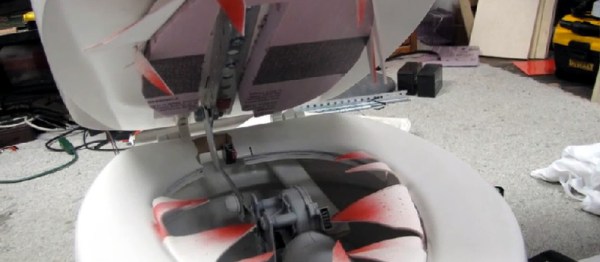
Stairs are one of the most commonly faced mobility challenges for a robot. This robot’s design eliminates the need for a complex drive train or computer, and instead uses a clever mechanical design to climb stairs. Version three of the robot uses five servos modified for continuous rotation, a Picaxe28, sharp IR sensors, and bump sensors.
[Ladyada] has released this tutorial on using pressure sensors. They cover everything from the basics of their construction through how to connect and read data from them. The elegant sensor pictured above is available through the adafruit store, but you could always build your own.
We might have to add a category of “stuff made to twitter”. The latest installment is an office chair that twitters whenever it gets farted on. The author has a smart sounding description as to why he decided to make this, and he has a pretty good point about twittering interrupting the things you’re twittering about, but it all boils down to the fact that he wants to twitter his farts. We can’t say that we didn’t expect something along these lines. He has mounted a natural gas sensor in his chair, along with a squidbee wireless transceiver. You can download all the code as well as see the construction in the instructable. You can also follow his flatulent adventures on the twitter account of the office chair.
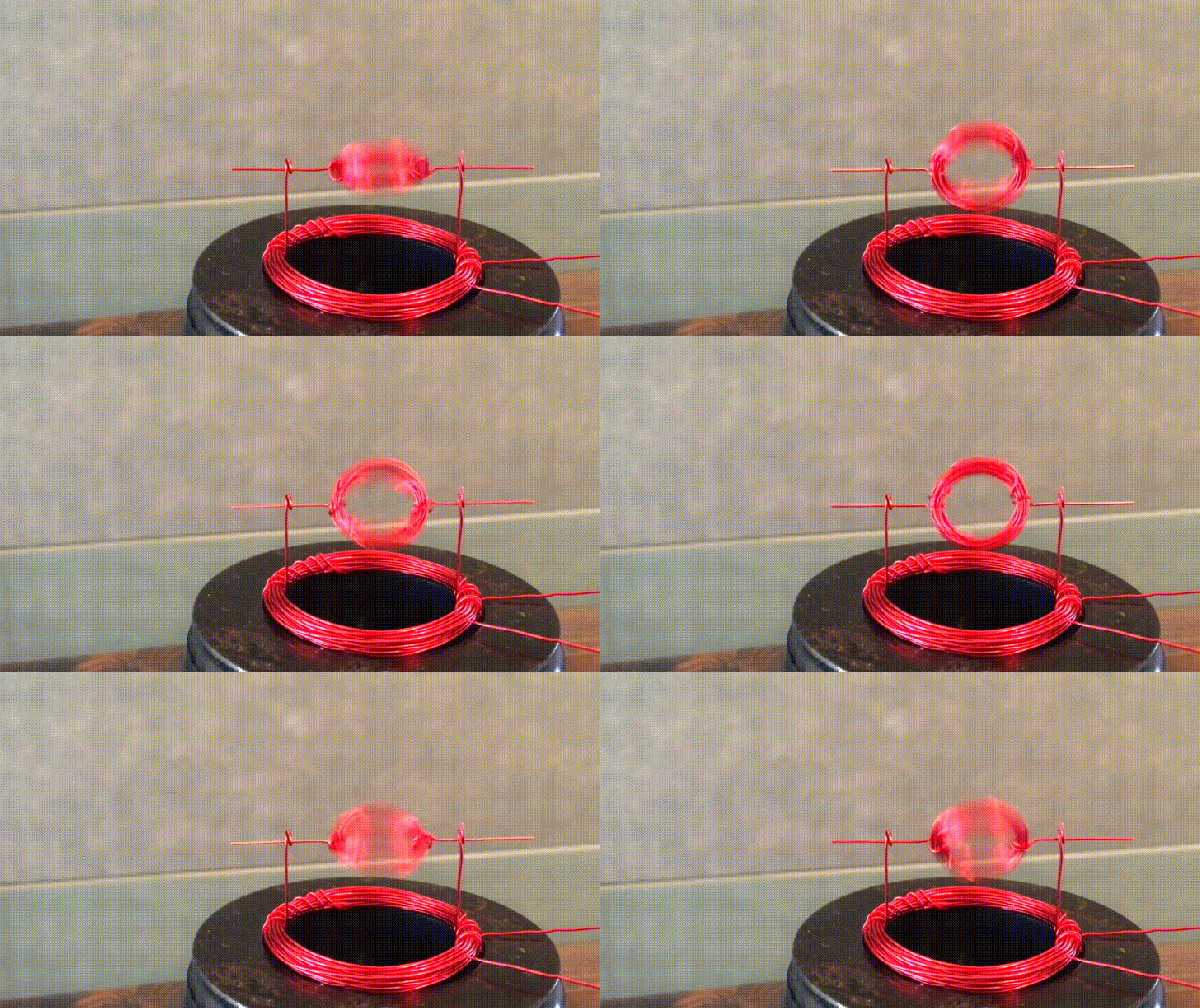
We don’t want your brains to explode, so just trust us that this is a truly one sided circuit. Being a mobius strip means that this circuit has uber geek bragging rights. Beware, your friends who have never heard of a mobius strip will argue until they are blue in the face that there are two sides to it. The circuit they chose was fairly appropriate, an LED “chaser”.
We’ve all seen these on the side of the road and wondered how we could change the message. It turns out that it is actually pretty easy. There’s a keypad inside for programming that is often still set with a default password of “DOTS”. Even if the password has been changed, you can reset it right there pretty quickly. We shouldn’t even need to warn you that it is illegal to tamper with these, so unless there really are zombies ahead, you probably shouldn’t mess with it.
A leyden jar is basically just a simple home made capacitor. We’ve shown you how to make them before. This, however, is how you make a ridiculously large one. [Nickademuss] used a five gallon bucket to make his leyden jar. That’s five whole gallons of lightning. The video, which you can see after the break, shows it light up the entire room when it lets out a fairly formidable spark. This is dangerous folks, be careful.
[Steve] was discussing airsoft with a friend when he came up with this idea. His friend was lamenting the lack of “action” style targets for their airsoft hobby. [Steve] took this as an opportunity to make his own automated target system. The targets themselves are made from Construx, a paper target and a piece of cloth to stop the airsoft pellets. Controlled by an Arduino and an ioBridge module, it has a web interface so he can switch programs from up range. You can see a video example of him shooting some targets after the break. Next,he should make it twitter where each target was hit.
For those who use these little cartridges, you know how quickly the price can add up. [steve] takes us through the process of adding a valve to a spent cartridge so it can be refilled. Over all, it doesn’t seem too difficult, and [steve] offers lots of tips to increase longevity and reliability. It isn’t very often that we show a hack here that doesn’t involve some kind of electronics, so take a break from the resistors and microprocessors for a moment and enjoy.
In [Bre Pettis]’s latest “things” video, he talks with [Adam Mayer] about his geared business cards. [Adam] has designed several versions of these cards that have functional gear systems in them. There appears to be a simple two gear one and a more complicated planetary gear set up. The designs have been uploaded to Thingiverse, so you can download and build your own.
We pretty much don’t know anything about this POV device other than it uses 96 LEDs. We’ve seen POVs with more LEDs, but usually they aren’t packed in so tight. This thing looks almost capable of displaying low res movies. Wouldn’t this thing be cool, and probably dangerous, in a hat?
WEEE Man is an art display that has been roving around England. No, he doesn’t walk or talk. He is here to remind us of how wasteful we can be. Hackers rejoice, we’re part of the solution. It also doesn’t hurt that he is Seven Meters tall and over three tons. WEEE Man looks awesome, but are we the only ones that spotted stuff and thought “ooh, I could have used that for a cool project.”?
[Jordan] sent us his Rocket Camera project. It really isn’t much that we haven’t seen before, but we thought many of you would be feeling the effects of gravity a little harder today. So when your belly is stretched to its limits with Turbaconducken and you don’t think you can stand, take a little flight with [jordan]. Careful you don’t lose your lunch on the way back down though.
Off all the competitions for poorly performing human powered flying machines, the Red Bull Flugtag is one of our favorites. Honestly, it’s the only one we can think of, but that doesn’t mean we’re any less enthusiastic about giving flight to half baked ideas. Today was the Portland round of the international event. Teams have to submit an application for their craft in advance. The vehicle can have a maximum wingspan of 30 feet and a weight with pilot of 450 pounds or less. Power is from muscle or simply gravity. The vehicle also has to be easily retreivable so they can get it out of the water. Judging isn’t just for distance, but for creativity, too.
Embedded below is the video of the current US record holder: a banjo that went 155 feet in Nashville. The next US event will be September 6th in Chicago.