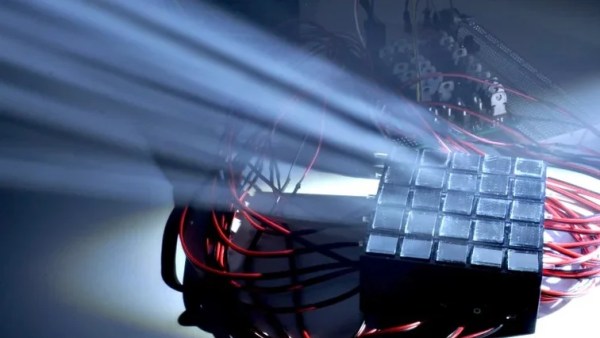
We can not express the childlike glee that we experienced watching this video. We want so badly to have one of these setups. What you are seeing is a half dome projected cockpit with two haptic controllers in the style of a delta robot. This is controlling the Halluc robot which is a hybrid wheeled octopod. The dome can and has been done at home fairly simply, and we suspect that you guys could come up with some similar delta controllers. So who wants to build one and donate it to hackaday?
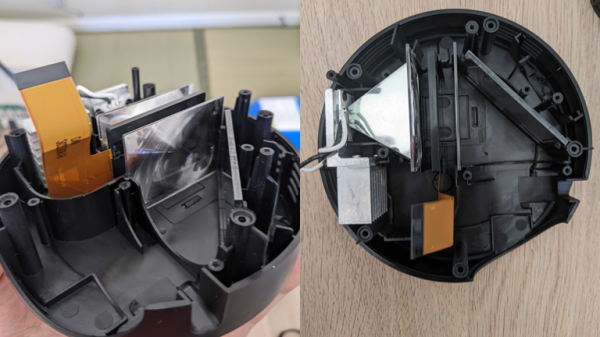
Earlier this year, Nikon released the Coolpix S1000pj, a 12 megapixel point and shoot with the usual features, including image stabilization, face recognition, etc. However, the S1000pj features a built in projector into the usual diminutive point and shoot footprint, and also comes with a remote for controlling the projector in display mode, or for remote shooting. iFixit has gotten a hold of the unit, and detailed the difficult teardown process, which included component desoldering to get the extremely compact system completely apart. It is also interesting to compare this setup to other stand alone pico-projectors we have covered.
[Jon] wanted to have some fun with the Graffiti Research Lab’s LASER Tag. Unfortunately his computer wasn’t quite up for the challenge of detecting the laser pointer with a webcam. Not to be discouraged by this hardware limitation, he purchased a used Wacom tablet and threw together some code to make it work with the GRL display software. Now designs can be scrawled on the pad and the projector displays them with the familiar dripping paint effect. Read the rest of this entry »
[HyPe] over at the Natural User Interface Group developed this concept as part of his Master’s Degree in Industrial Design. This suitcase sized projector and computer allows people to have a 60″ multitouch screen available wherever there is a large enough surface. The current software is designed for ad-hoc meetings about large-scale construction plans. The rolling case includes a short-throw projector and webcam. Just set it on top of your work surface, lift the lid, and it’s ready to go.
Ars Technica writes about three new toys coming out this year: a sub 100$ projector, tv game, and night vision goggles. The projector runs at standard TV resolution, takes standard composite in, and outputs an okay picture. The night vision goggles are monocular but focus both eyes on a single RGB LCD. The goggles uses an array of IR LEDs instead of amplifying ambient light to see in the dark. Lastly, they have a standalone implementation of the arcade game Big Game Hunters. The rifle uses a sensor bar to do the motion tracking and features a 32MB rom to hold the game files.
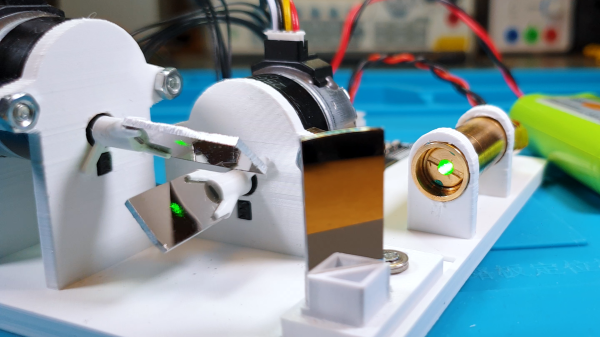
If you’ve ever found yourself thinking, “I wish I had a laser projector hidden in a zippo”, then you’ll really appreciate this project. [Rog8811], who you might remember from the laser lighter, has made a spirograph style green laser projector that fits inside his zippo. This is very compact and you would have no idea it was there until you open it up. Just be careful, this seems perfect for causing eye damage to someone who isn’t expecting a laser to shoot out of your zippo.
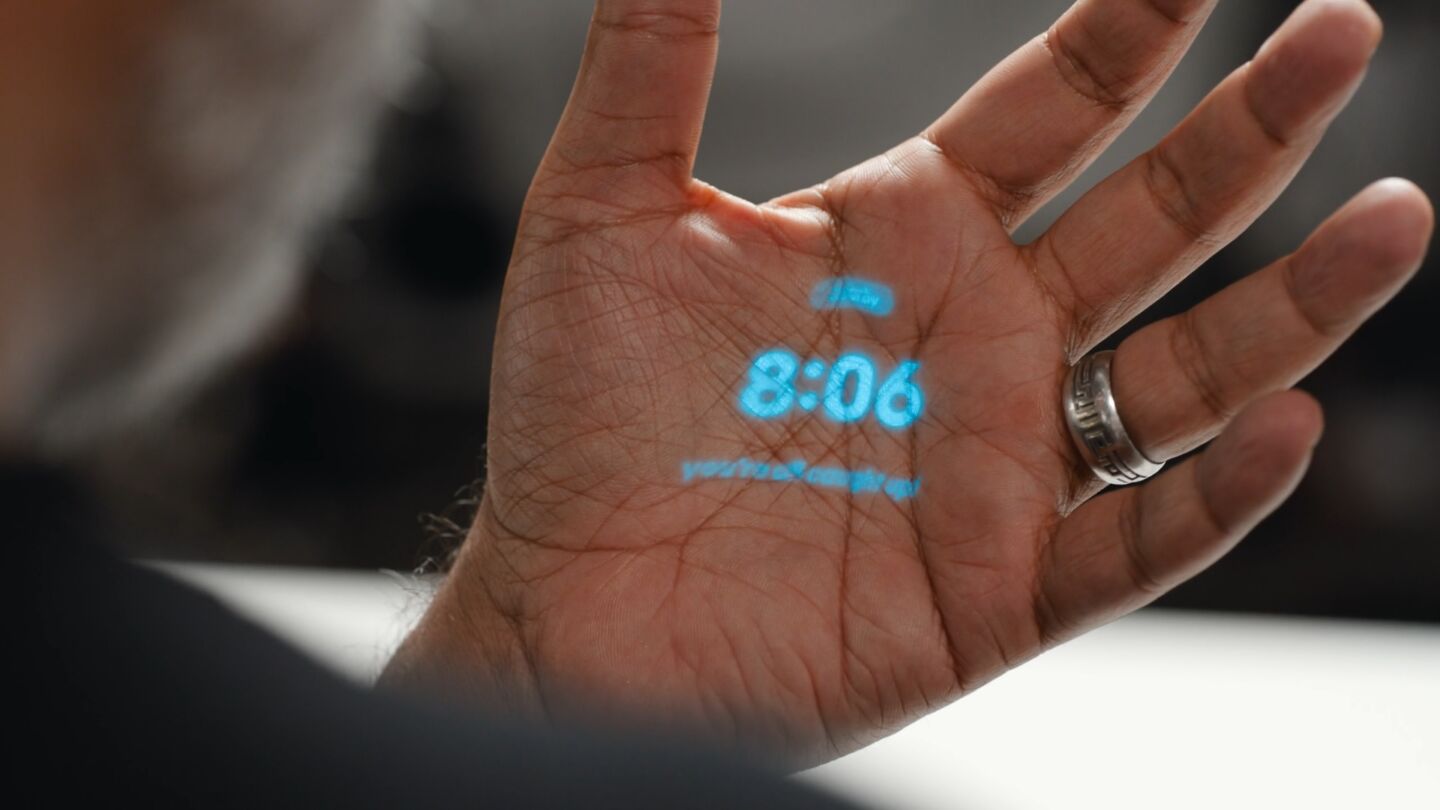
[Pattie Maes] from MIT’s Media Lab showed a really interesting augmented reality demo at TED this year. It’s a wearable projector that lets you interact with any surface. A camera tracks the gestures your fingertips make and performs related actions. She shows several uses: projecting a dial pad on your hand, displaying additional info on a product you’re holding, and taking a picture when you form a frame with your hands. The current equipment cost is $350, but that would be reduced in a dedicated device.
Bug Labs, the company that makes modular electronics that allow you to build your own tech doohickeys quickly and easily, has announced five new modules: BUGprojector, a mini DLP projector developed in conjunction with Texas Instruments, which sounds very much like the tiny DLP projector we posted about last week; BUGsound, an audio processing module with four stereo input/output jacks, a microphone, a speaker, and builtin hardware codecs; BUGbee (802.15.4) and BUGwifi (802.11 and Bluetooth 2.0+EDR), which will let you connect wirelessly with your PAN and WLAN, respectively; and BUG3g GSM, for connecting to (you guessed it) 3G GSM networks. In conjunction with Bug Labs’ existing series of modules, especially the highly versatile BUGvonHippel universal module, you’ll be able to create some pretty kickass gadgets. No word yet on pricing, although Bug Labs expects to ship by the end of Q1 2009.
The team from Tech-On has taken the time to teardown two interesting microprojectors. The first model they tackled was the Optoma PK101. It’s based around a digital micromirror device (DMD) like those used in DLP. Separate high intensity red, green, and blue LEDs provide the light source. A fly-eye style lens reduces variations between images. They noted that both the LEDs and processors were tied directly to the chassis to dissipate heat.
The next projector was the 3M Co MPro110. It uses Liquid Crystal on Silicon (LCoS) technology. The light source is a single bright white LED. The projector seems to have more provisions for getting rid of heat than the previous one. The most interesting part was the resin polarizing beam splitter. It not only reflected specific polarizations, but also adjust the aspect ratio.
[Justin] sent in his Digitally Assisted Billiards project. Using a web cam, a computer and a projector, these guys have set up a system that shows you the trajectories of your current shot. It detects the angle of the cue and displays a glowing blue line showing where each ball would go and where the collisions would be. It is a bit slow right now, and made somewhat less accurate by a low resolution web camera. This could be a fantastic teaching tool if it were to get some more polish. The source code is available on the site, so you could try this one out at home.