Brewing Beer With LEGO

[Matt] sent in a set of YouTube videos walking us through his LEGO Mindstorms controlled brewery.

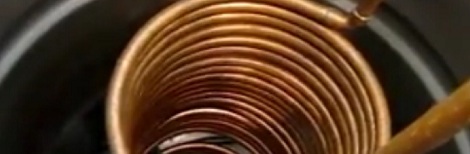
[Matt] is using a RIMS brewing setup that recirculates and heats the mash to extract more starch from the grain. This results in a Maillard reaction in the mash and creates a richer, maltier flavor.

To control his RIMS setup, [Matt] is using a LEGO Mindstorms brick with a few LEGO temperature sensors attached to his plumbing. The LEGO provides all the temperature and pump control for a proper RIMS setup, perfect for the homebrewer who doesn’t want to bother with an Arduino or other microcontroller board.

As a small aside, the astute Hackaday reader will note our beer hacks category is woefully underpopulated. It’s nearly summer now and the perfect time to start brewing. If you’ve got a beer hack, be sure to send it in.

After the break you can see all of [Matt]’s RIMS/LEGO brewery videos, or you can check out his YouTube channel.
Continue reading “Brewing Beer With LEGO”

Edwardian Laptop From A Steampunk Master

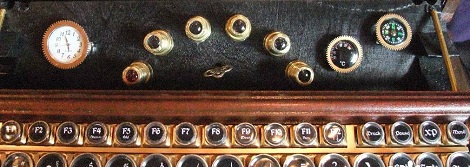
After receiving a Marconi from [Admiral Aaron Ravensdale] informing us of the completion of an exquisite steampunk laptop, we were simply delighted. [The Admiral]’s computational device, or Uhlian Calculator as is the preferred nomenclature, is a remarkable combination of design and function suitable for any remarkable gentleman bent on the domination of the fast approaching electrical frontier.

[Ravensdale]’s new steampunk laptop is built off his first laptop, an old Toshiba Satellite 1100. Not a speed demon by any means, but the quality of this build is phenomenal. The hinged keyboard tilts up into an ergonomic position when the laptop is opened, reveling a set of six LED jewels for the power, battery, and hard drive lights. To the left and right of the screen, a pair of miniature brass horns contain a set of stereo speakers.

The keyboard is an awesome modification of the stock keyboard very reminiscent of [Admiral Ravensdale]’s previous keyboard steampunkification.

[The Admiral] put up an Instructable going through the many hours he put into this fine piece of craftsmanship. There’s also a video showing the keyboard lifting mechanism and skeleton key power switch available after the break.

Continue reading “Edwardian Laptop From A Steampunk Master”

[Ian Lesnet]’s Guide To The Bay Area Maker Faire

[youtube=http://www.youtube.com/watch?v=39xX4xi0Uh8&w=470]

It may be a week after the fact, but former Hackaday alum and inventor of the Bus Pirate [Ian Lesnet] made a great guide to the Bay Area Maker Faire.

The San Francisco-area Maker Faire attracts 100,000 makers, tinkerers, hackers, and general geeks to a bazaar of DIY and generally cool stuff. All the regulars were there, including [Jeri Ellsworth] and her Commodore 64 bass keytar along with a huge assortment of cosplayers including a steampunk Boba Fett and a couple space marines. Outside the building there was a 40-foot steamship and the amazing DeLorean hovercraft of [Matthew Riese].

During his interviews with fellow makers, [Ian]’s most received advice is, “take it slow.” There are thousands of builders in the bay area during Maker Faire, and it’s very easy to get very overwhelmed.

In case you’re wondering, [Ian] also picked up a ton of awesome schwag from all the vendors at the Maker Faire. Radio Shack had a box filled with random components,and [Kenneth] from Texas Instruments gave [Ian] a TI Launchpad, a capacitive test booster pack, and the king of all freebies, a Chronos watch.

After the break you can check out a few of the video project interviews [Ian] put up. Very awesome work from literally thousands of makers.

Continue reading “[Ian Lesnet]’s Guide To The Bay Area Maker Faire”

3d Printing Ice Sculptures

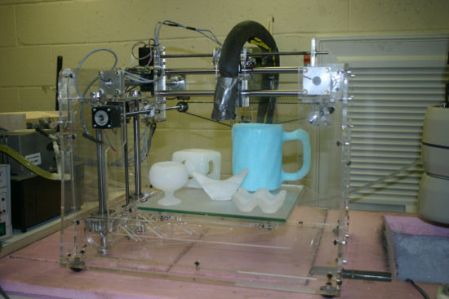
[Jared Kotoff] asked an interesting question on Facebook. He asked if we had ever seen 3d printing in ice before. Though we couldn’t find anything in our archives, he managed to find a project that makes 3d printed ice sculptures. To do this, they actually print two materials inside a chamber that is -8 degrees Fahrenheit. The first material is Shortening Methyl Esther (SME) that is used as a scaffold or mold. The second material is just water, but the tip is heated to 68 degrees to keep it from freezing in the nozzle. They do two passes of water for every layer of SME, and scan with a laser and perform corrections after every five layers.

Once the print is completed, the sculpture has to be scraped clean of SME and then soaked in kerosine to remove the last of it.  There are several pictures at the linked article, but sadly no video.

How Anodization Is Used To Make Pretty IPod Colors

What do those colorful iPod Nano cases have in common with sapphires? In both substances the color is not on the surface, but integrated in the structure of the material. As usually, [Bill Hammack] unveils the interesting concepts behind coloring metal through anodization in his latest Engineer Guy episode.

We’re not strangers to the anodization process. In fact we’ve seen it used at home to change the color of titanium camping utensils. [Bill] explains what is actually going on with the electrochemical process; touching on facts we already knew; like that the voltage range will affect the color of the annodized surface. But he goes on to explain why these surfaces are different colors and then outlines how anodized metals can be dyed. That’s right, those iPod cases are colored with dye that will not wash or scratch off.

Pores are opened when the aluminum goes through anodization. Those pores are filled with dye, then the metal is boiled in water which closes them, sealing in the color. Pretty neat!

Continue reading “How Anodization Is Used To Make Pretty IPod Colors”

Using Spy-Bi-Wire With The MSP430 Launchpad

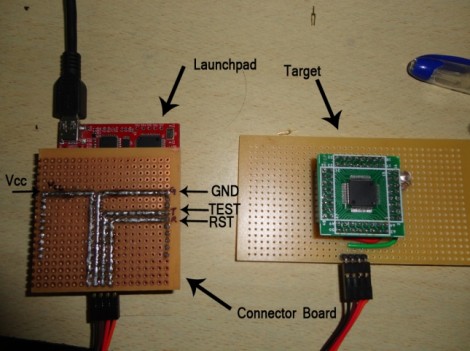
[Suraj] has been working with some larger MSP430 chips with won’t fit on the Launchpad board. But that’s okay because he built a shield and wrote a guide about using the Spy-Bi-Wire protocol for programming the chips.

SBW is a four-wire interface. In the past we’ve used all of the board’s programming connections for in circuit programming, but the chips that support SBW only need a connection to the SBW and TEST pins (of course the other two connections are for voltage and ground). This shield brings the four pins together into one male pin header. In the image above [Suraj] is using the technique to program an MSP430F4152. His guide is Windows-based, but looking back, [Sprite_TM] shows how to use SBW when debugging in Eclipse.

Failed Kayaking Data Logger Is Something We Want To See Succeed

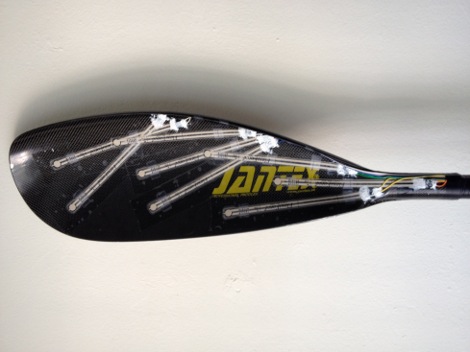
How can your love of hobby electronics and your participation in the Canadian National Kayaking Team be combined? Why not use your technical know-how to provide a performance edge? [Geoff Clarke] decided to rig up a paddle for data capture to see if they could learn anything.

Here you can see that a series of flex sensors were applied to one of the business ends of the paddle. These are connected to a microcontroller which is constantly monitoring them and dumping the data onto an SD card. The design will provide about nine minutes of data before the storage is used up. That sounds like a number that might need improving. We could see this being useful to log a series of practice runs on the same course, but with different athletes. By graphing and comparing the data, you should be able to make observations about how the paddle is being held and when force is applied that could help the rest of the team improve.

But we’re way ahead of ourselves. The rig was given a premature test-run and the flex sensors were destroyed by the salt water. We wish this had worked out and hope that [Geoff] will give it another try after rethinking the water proofing.