
FreeCAD Foray: From Brick To Shell

Over a year ago, we took a look at importing a .step file of a KiCad PCB into FreeCAD, then placing a sketch and extruding it. It was a small step, but I know it’s enough for most of you all, and that brings me joy. Today, we continue building a case for that PCB – the delay is because I stopped my USB-C work for a fair bit, and lost interest in the case accordingly, but I’m reviving it now.

Since then, FreeCAD has seen its v 1.0 release come to fruition, in particular getting a fair bit of work done to alleviate one of major problems for CAD packages, the “topological naming problem”; we will talk about it later on. The good news is, none of my tutorial appears to have been invalidated by version 1.0 changes. Another good news: since version 1.0, FreeCAD has definitely become a fair bit more stable, and that’s not even including some much-needed major features.

High time to pick the work back up, then! Let’s take a look at what’s in store for today: finishing the case in just a few more extrusions, explaining a few FreeCAD failure modes you might encounter, and giving some advice on how to make FreeCAD for you with minimum effort from your side.
Continue reading “FreeCAD Foray: From Brick To Shell”

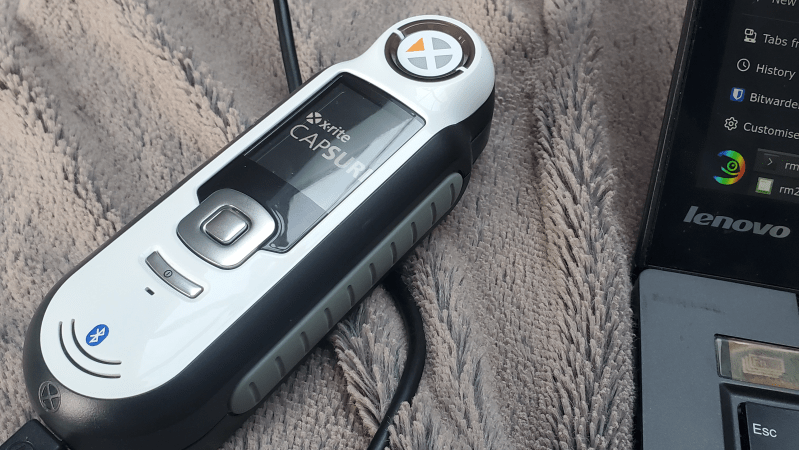
A thick, rectangular device with rounded corners is shown, with a small screen in the upper half, above a set of selection buttons.

Further Adventures In Colorimeter Hacking

One of the great things about sharing hacks is that sometimes one person’s work inspires someone else to take it even further. A case in point is [Ivor]’s colorimeter hacking (parts two and three), which started with some relatively simple request spoofing to install non-stock firmware, and expanded from there until he had complete control over the hardware.

After reading [Adam Zeloof]’s work on replacing the firmware on a cosmetics spectrophotometer with general-purpose firmware, [Ivor] bought two of these colorimeters, one as a backup. He started with [Adam]’s method for updating the firmware by altering the request sent to an update server, but was only able to find the serial number from a quality-control unit. This installed the quality-control firmware, which encountered an error on the device. More searching led [Ivor] to another serial number, which gave him the base firmware, and let him dump and compare the cosmetic, quality-control, and base firmwares.

Continue reading “Further Adventures In Colorimeter Hacking”

Turning A $2 IKEA Lantern Into A Stylish Enclosure

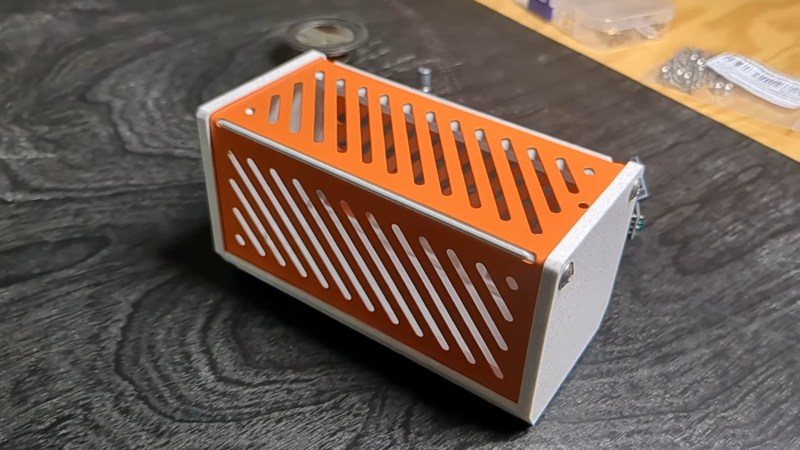
It’s fair to say that the average Hackaday reader enjoys putting together custom electronics. Some of those builds will be spaghetti on a breadboard, but at some point you’ll probably have a project that needs a permanent case. If you’re looking for a small case for your latest creation, check out [Julius Curt’s] modification of an IKEA Vårsyren lantern into a customizable enclosure!

Continue reading “Turning A $2 IKEA Lantern Into A Stylish Enclosure”









