Sending The Internet From An LED Lightbulb

The number of things that can carry Internet traffic is always increasing. Now, you can add LED light bulbs to this list, as engineers in Disney Research have just demonstrated a system that transmits Internet traffic using an LED light bulb. This method of communication isn’t new: Visible Light Communication (VLC) has been demonstrated before by Disney and others, but this project puts it into a standard LED light bulb. This bulb has been modified to include an Atheros AR9331 SoC running OpenWRT and an Atmel ATmega328p that controls the LED elements and sensors that send and receive the data. So, the device is acting as a gateway between a WiFi network and a VLC one.

Disney’s new test system (PDF link) isn’t especially fast: it can only carry about 380 to 400 bits per second, so it won’t be streaming video anytime soon. That is definitely fast enough, though to send control data to a toy, or to send a continual stream of updated data to a device in the room, such as an ebook reader with a continually updated encyclopaedia. This being Disney, the authors coin a new phrase to end their paper: The Internet of Toys.

Deep Sweep: A Home Made SigInt Platform

Signals Intelligence (SigInt) isn’t something that you normally associate with home hackers, but the Deep Sweep project is looking to change that: it is a balloon platform that captures radio signals in the stratosphere, particularly conversations between drones and satellites. Created by three students at the Frank Ratchye Studio for Creative Inquiry at Carnegie-Mellon, Deep Sweep is a platform that is attached to a balloon and which captures signals over a wide range of frequencies, logging them for later analysis. The current version captures data on three frequency bands: LF/HF (10KHz-30KHz), UHF (650 – 1650MHz) and SHF (10-20GHz). The latter are often the bands used for satellite links between drones and satellites. They are difficult to intercept from the ground, as the signals are directed upwards towards the satellite. By creating a platform that can fly several kilometers above the earth, they are hoping to be able to capture some of this elusive traffic.

So far, the team has made two flights in Europe, both of which encountered technical issues. The first had a battery fault and only captured 10 minutes of data, and the second flew further than expected and ended up in Belarus, a country that isn’t likely to welcome this kind of thing. Fortunately, they were able to recover the balloon and are working on future launches in Europe and the USA. It will be interesting to see how the Department of Homeland Security feels about this.

Raspberry Pi Weather Station In Progress

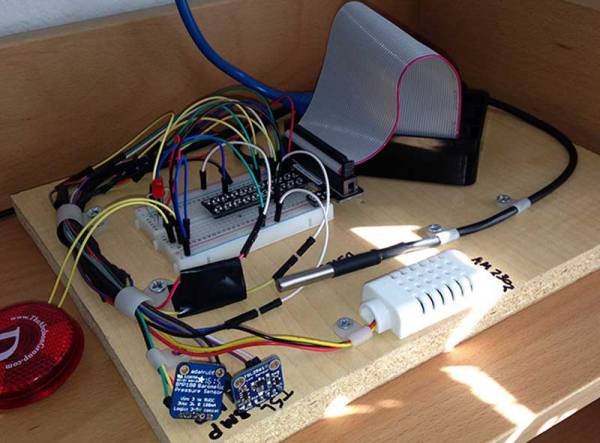
[Jeremy Morgan] is building a weather station from scratch using a Raspberry Pi, and he has put together a nice write up that shows where he is at, and how it works. Currently, his setup is in the breadboard stage and is measuring humidity, temperature, pressure and light level using sensors that connect over one wire and I2C. He also shows how he is using Google Docs to store the data, by getting the Pi to write to a Google Spreadsheet over email: the Pi emails the data to Google every 30 seconds.

There is an analysis portion, with a Microsoft Azure web site that graphs the data over time. It’s a bit of a dogs breakfast (he might have used one interface technology for all of the sensors, for instance), but it is still a nice overview of the overall process.

Automatically channeling data into an easily accessible medium has been the target of many hacks going way back. We’ve seen a ton of companies pop up to help satisfy the need but between those and the hacked together (usually) open source solutions, there doesn’t seem to be a clear winner. What’s your favorite method of gathering and displaying data from projects like this onto the web? Let us know in the comments.

Hackaday Dictionary: The ESP8266

In August of 2014, something new started showing up in the markets of Shenzhen, the hi-tech area of China where the majority of the world’s electronics components are made. This is the ESP8266, a WiFi SoC (System on a Chip) that can connect to 802.11b/g/n networks on the 2.4GHz band. It can be addressed with SPI or a serial connection, and has an AT command set that makes it behave rather like an old-style modem. Basically, it has everything you would need to connect a device to a WiFi network, with the ESP8266 chip itself handling the complicated business of finding, joining and transmitting/receiving over a WiFi network.

That’s nothing particularly new in itself: WiFi connection devices like the TI CC3000 have been around for longer, and do much the same thing. The difference was the price. While the TI solution costs about $10 if you buy several thousand of them, the ESP8266 costs less than $7 for an individual board that can plug straight into an Arduino or similar. Buy the chip in bulk, and you can get it for less than $2.

The ESP8266 is more than just a WiFi dongle, though: it is a fully fledged computer in itself, with a megabyte of flash memory and a 32-bit processor that uses a RISC architecture. This can run applications, turning the ESP8266 into a standalone module that can collect and send data over the Internet. And it can do this while drawing a reasonably low amount of power: while receiving data, it typically uses just 60mA, and sending data over an 802.11n connection uses just 145mA. That means you can drive it from a small battery or other small power source, and it will keep running for a long time.

It wasn’t an easy ship to write applications for in the early days, though: it was poorly documented and required a dedicated toolchain to work with. This made it more of a challenge than many hackers were comfortable with.  That changed earlier this year, though, when the Arduino IDE (Integrated Development Environment) was ported to the chip. This meant that you could use the much easier to write Arduino functions and libraries to write code for the chip, bringing it within reach of even the most casual hacker.

Continue reading “Hackaday Dictionary: The ESP8266”

How Retractable Pens Work

[Bill Hammack], aka the [EngineerGuy] is at it again, this time explaining how retractable ballpoint pens work.

pen-thumbIn this excellent video, he describes the simple (but remarkably sophisticated) engineering of the mechanism that allows a pen to pop the ballpoint mechanism out, then back in again. It is a great example of how to illustrate and explain a complex concept, much like his videos on how the CCD sensor of your camera works.
Perhaps the most interesting part of the video is an off the cuff observation he makes, though. The Parker company, who first developed the retractable mechanism, were worried that this new design might flop. So they didn’t put the distinctive Parker arrow clip onto the pen until a few years later, when the pen was a big seller. It seems that while some engineering problems are easy to solve, short-sighted accountants are a harder problem.

Continue reading “How Retractable Pens Work”

Debug An IKEA Lamp Hack, Win A Lamp Controller

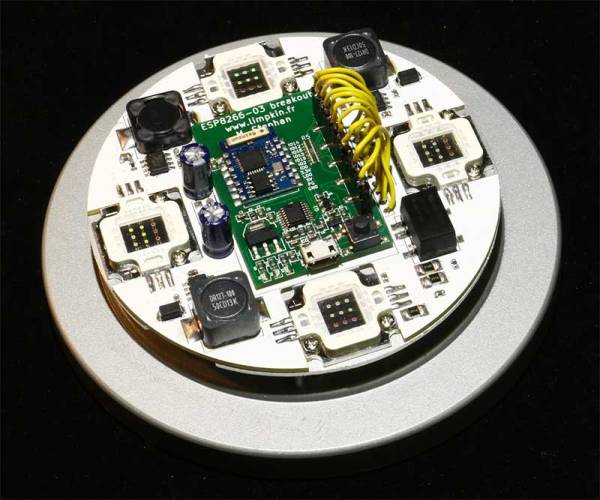
[Limpkin], aka Hackaday alum [Mathieu Stephan], is at it again, converting an IKEA lamp into a visual wake-up light. He wants to build an alarm that can be remotely triggered, He’s basing this project around a combination of an ESP8266 that handles the communication and timing, and a pile of 10-watt RGB LEDs. However, he is having a problem: every time he initializes the PWM (pulse width modulation) signalling that will control the level of the LEDs, his ESP8266 dev board reboots. So, he’s offering an interesting bounty for the person who finds the issue: figure it out and he will send you the lamp. Well, the PCB and components, anyway: you’ll have to add your own IKEA lamp. It’s an interesting approach to debugging a hardware problem, so feel free to take a look. The full hardware and software details are on his GitHub repository.

LED Ring Around The ESP8266

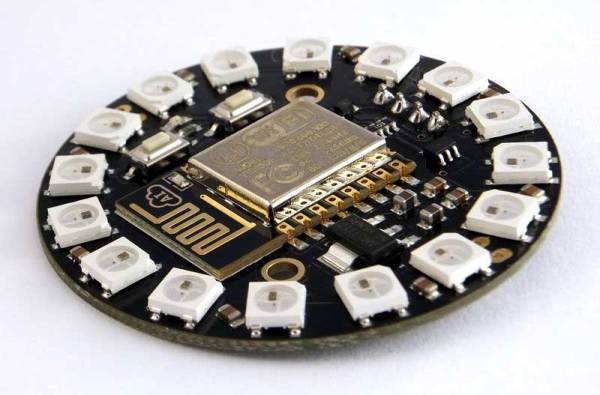
The world needs more blinky lights, and [Bertus Kruger] has created a neat way to make lights blink wirelessly. He has a footprint in the middle of the board for soldering the castellated ESP8266 module, and an LED ring around it to create the WiFi Pixel. It’s an LED ring that can be controlled over a WiFi connection. His design is based on a combination of the ubiquitous ESP8266 WiFi chip and a NeoPixel ring from AdaFruit, so there are already great examples of how to code and control the hardware. The project is still in progress, but he has released all of the details, including the Gerber files for the board and the Arduino code that the ESP8266 is running.

It’s a great start: add in battery support and you could have an awesome way to have portable LED blinky light rings. For those who want to try it out without building your own circuit boards, [Bertus] says that it could be built with an ESP8266 dev board and an Adafruit NeoPixel ring. Currently, he is running the device from USB, but there is no reason why it couldn’t be powered from a battery for some portable USB blinkiness.

Continue reading “LED Ring Around The ESP8266”