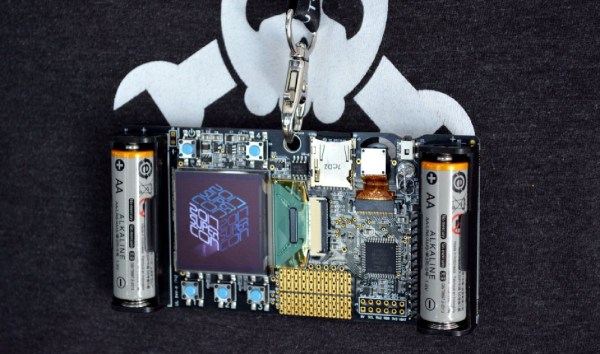
The Perils Of Developing The Hackaday Superconference Badge

In case you haven’t heard, the best hardware conference in the world was last weekend. The Hackaday Superconference was three days of hardware hacking, soldering irons, and an epic hardware badge. Throw in two stages for talk, two workshop areas, the amazing hallwaycon and the best, most chill attendees you can imagine, and you have the ultimate hardware conference.

Already we’ve gone over the gory details of what this badge does, and now it’s time to talk about the perils of building large numbers of an electronic conference badge. This is the hardware demoscene, artisanal manufacturing, badgelife, and an exploration of exactly how far you can push a development schedule to get these badges out the door and into the hands of eager badge hackers and con attendees.

The good news is that we succeeded, and did so in time to put a completed badge in the hand of everyone who attended the conference (and we do have a few available if you didn’t make it to the con). Join me after the break to learn what it took to make it all happen and see the time lapse of the final kitting process.

Continue reading “The Perils Of Developing The Hackaday Superconference Badge”

Friday Hack Chat: High Speed Data Acquisition

For this week’s Hack Chat, we’re going to be talking all about High-Speed Data Acquisition. If you’ve ever needed to shove voltages, currents, logic signals, temperature, pressure, or sound into a computer, you’ve used a DAQ. If you’ve ever needed to acquire a signal at a very high speed, you’ve probably paid a lot of money for that piece of equipment.

Our guest for this week’s Hack Chat will be [Kumar Abhishek], engineering student, Hackaday Prize finalist, and creator of the very, very cool Beaglelogic, a logic analyzer for the BeagleBone. The interesting bit about the Beaglelogic is its utilization of the Programmable Real-Time Units (PRUs) found in every BeagleBone.

These PRUs are basically DMA machines, shuttling bits back and forth between memory and GPIOs. This year, [Kumar] turned the Beaglelogic cape into the Beaglelogic Standalone, a device based on the Octavo Systems OSD3358 (the ‘BeagleBone On A Chip‘) that gives those Saleae logic analyzers a run for their money.

In this Hack Chat, we’ll be discussing the PRUs found in various iterations of the BeagleBoard, how the Beaglelogic performs its data acquisition, and how programming the PRUs is actually accomplished. If you have a question for [Kumar], leave a comment on the Hack Chat page

join-hack-chatOur Hack Chats are live community events on the Hackaday.io Hack Chat group messaging. Usually, our Hack Chats go down at noon, PDT, Friday. This one is different. Because [Kumar] is in India, we’ll be running this Hack Chat at 9:30a PST, Friday, November 17th. What time is that in India, and what time is that where you live? Who cares! Here’s a time zone converter!

Click that speech bubble to the left, and you’ll be taken directly to the Hack Chat group on Hackaday.io.

You don’t have to wait until Friday; join whenever you want and you can see what the community is talking about.

We’re also looking for new Hack Chat guests! If you’ve built something cool, you’re working on an interesting project, or you’re about to introduce a really cool product, hit us up! Email our wonderful community managers, and we’ll see if we can slot you in.

This Weekend: Vintage Computer Festival Zurich

This weekend, November 18th and 19th, the greatest vintage computer conference in Europe is going down. It’s the Vintage Computer Festival Europe, and if you’re around Zurich this weekend, we highly recommend that you check it out.

On deck for this year’s VCF Europe is an incredible amount of amazing retrotechnology. A demonstration of high-resolution graphics without using computer memory will be found in a few Tektronix storage tube terminals (their Wikipedia entry is phenomenal, by the way). There will be a few Olivetti microcomputers on display demonstrating Italy’s contribution to the computer revolution. A PDP 6 will be recreated, and a 1964 IBM 360/30 will be revived. There will be discussions on using logarithms as a basis for computers. [Oscar], creator of the PiDP-8/I will be bringing his latest project, an exquisite miniature recreation of a PDP-11/70, with a molded enclosure and purple toggle switches.

This is a retrocomputer conference where an Apple I is the least interesting computer on display, an extremely difficult feat to pull off. VCFe will be held at Rote Fabrik in Zurich, and tickets are five units of the local currency per day. You can check out the festival on Twitter, Google+, and the main website.

Hackaday Links Column Banner

Hackaday Links: Supercon Sunday

This is not your normal Sunday links post. This is Superconference Sunday, and right now there are dozens of awesome projects floating around our conference in Pasadena. This links post will be mostly the projects from Supercon, but before that there’s some stuff we need to clear out of the queue:

Concerning other conferences, the Sparklecon site is up. Why go to Sparklecon? It’s a blast.

Tindie is worldwide! There were a bunch of Tindie sellers at the Maker Faire Adelaide this weekend. YouTuber MickMake is a friend of Tindie and we’re teaming up to give away a few prizes from Australian Tindie sellers. You can check out the full details here.

There’s an Internet of Things thing from 4D Systems. It’s an ESP8266 and a nice small display.

Well, crap. It might have finally happened. [Maxim Goryachy] and [Mark Ermolov] have obtained fully functional JTAG for Intel CSME via USB DCI. What the hell does that mean? It means you can plug something into the USB port of a computer, and run code on the Intel Management Engine (for certain Intel processors, caveats apply, but still…). This is doom. The Intel ME runs below the operating system and has access to everything in your computer. If this is real — right now we only have a screenshot — computer security is screwed, but as far as anyone can tell, me_cleaner fixes the problemAlso, Intel annoyed [Andy Tanenbaum].

With that out of the way, here’s some stuff from this weekend’s Supercon:

Continue reading “Hackaday Links: Supercon Sunday”

Open Source Underwater Glider Wins 2017 Hackaday Prize

The Open Source Underwater Glider has just been named the Grand Prize winner of the 2017 Hackaday Prize. As the top winner of the Hackaday Prize, the Open Source Underwater Glider will receive $50,000 USD completes the awarding of more than $250,000 in cash prizes during the last eight months of the Hackaday Prize.

More than one thousand entries answered the call to Build Something That Matters during the 2017 Hackaday Prize. Hardware creators around the globe competed in five challenges during the entry rounds: Build Your Concept, Internet of Useful Things, Wings-Wheels-an-Walkers, Assistive Technologies, and Anything Goes. Below you will find the top five finisher, and the winner of the Best Product award of $30,000.

Open Source Underwater Glider

Grand Prize Winner ($50,000 USD): The Open Source Underwater Glider is an AUV (Autonomous Underwater Vehicle) capable of long-term underwater exploration of submarine environments. Where most AUVs are limited in both power and range, the Open Source Underwater Glider does not use active propulsion such as thrusters or propellers. This submersible glides, extending the range and capabilities of whatever task it is performing.

The Open Source Underwater Glider is built from off-the-shelf hardware, allowing anyone to build their own copy of this very capable underwater drone. Extended missions of up to a week are possible, after which the Glider would return home autonomously.
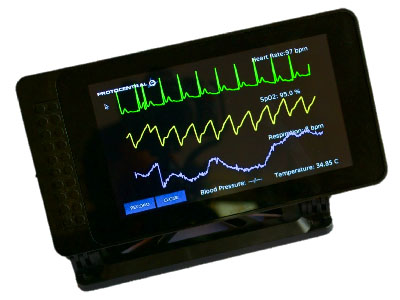
Connected Health: Open source IoT patient monitor

Second Place ($20,000): The Connected Health project aims to bring vital sign monitoring to the masses with a simple, inexpensive unit built around commodity hardware. This monitoring system is connected to the Internet, which enables remote patient monitoring.

Assistance System for Vein Detection

Third Place ($15,000): This Assistance System for Vein Detection uses off-the-shelf components and near-IR imaging to detect veins under the skin. This system uses a Raspberry Pi and camera module or a modified webcam and yet is just as reliable as professional solutions that cost dozens of times more than this team’s prototype.
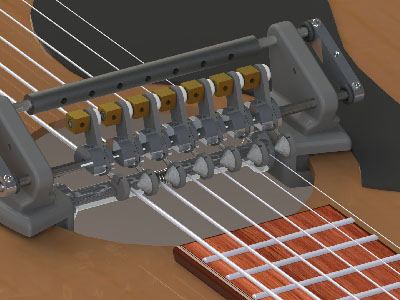
Adaptive Guitar

Fourth Place ($10,000): The Adaptive Guitar is an electromechanical system designed to allow disabled musicians to play the guitar with one hand (and a foot). This system strums the strings of a guitar while the musician frets each string.
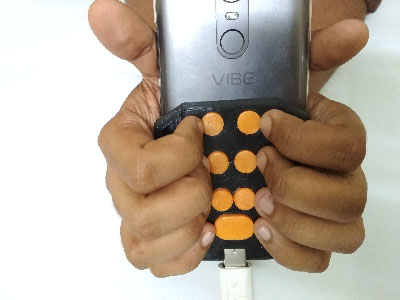
Tipo : Braille Smartphone Keypad

Fifth Place ($5,000): Tipo is effectively a Braille USB keyboard designed for smartphones. The advent of touchscreen-only phones has unfortunately left the visually impaired without a modern phone. Tipo allows for physical interaction with modern smartphones.

Best Product Winner: Tipo : Braille Smartphone Keypad

The winner of the Best Product is Tipo : Braille Smartphone Keypad. Tipo is the solution to the problem of the increasingly buttonless nature of modern smartphones. A phone that is only a touchscreen cannot be used by the visually impaired, and Tipo adds a Braille keypad to the back of any phone. It is effectively a USB keypad, designed for Braille input, that attaches to the back of any phone.

The Best Product competition ran concurrently with the five challenge rounds and asked entrants to go beyond prototype to envision the user’s needs, manufacturing, and all that goes into getting to market. By winning the Best Product competition, the creators of Tipo will refine their design, improve their mechanical build, start looking at injecton molding, and turn their 3D printed prototype into a real product that has the ability to change lives.

Congratulations to all who entered the Hackaday Prize. Taking time to apply your skill and experience to making the world better is a noble pursuit. It doesn’t end with the awarding of a prize. We have the ability to change lives by supporting one another, improving on great ideas, and sharing the calling to Build Something that Matters.

These Are The Top Projects In The 2017 Hackaday Prize

For the last eight months, Hackaday has been running the greatest hardware competition on Earth. The Hackaday Prize is a challenge to Build Something That Matters, make an impact, and create the hardware that will transform the world. These projects range from reliable utensils for the disabled, a way to clean drinking water for rural villages, refreshable Braille displays, and even a few high voltage Tesla coil hats. The Hackaday Prize is the preeminent hardware hackathon with a goal of making the world a better place, and this weekend we’re going to see the fruits of everyone’s labor.

Watch It Live

We will announce the winners of the Hackaday Prize live on stage at the Hackaday Superconference this weekend. Even if you can’t make it to the conference, you can join in by watching the livestream (broadcast on YouTube and Facebook) and by joining the Supercon chat room.

What the Judges Have to Say

Over the last few weeks, our fantastic team of judges have been combing over the finalists in the Hackaday Prize. We’ve put together this video roundup with judges discussing the top ten finishers:

https://www.youtube.com/watch?v=bniJs6i6qZE

These ten projects are the best the Hackaday Prize has to offer, and one of these projects will walk away with the Grand Prize of $50,000 USD. The second, third, fourth, and fifth place winners will take away $20,000, $15,000, $10,000 and $5,000, respectively. The top ten projects in the Hackaday Prize are, in no particular order:


5 Top Finishers for Best Product

The Hackaday Prize isn’t just about finding the best projects. We’re also looking for the best products. For that, the Hackaday Prize includes a Best Product award. This promises to awaken the hardware entrepreneurs to build a manufacturable thing that will shake up an industry. Here’s an overview of the five top finishers in the Best Product Category:

From a field of the twenty best product finalists entered into the Hackaday Prize our fantastic panel of judges have winnowed these down to five incredible finalists. They are, in no particular order:

The winner of the Best Product competition will walk away with $30,000 USD and an opportunity to interview for a residency at the Supplyframe Design Lab. Here, the hackers behind the Best Product will have a materials budget, mentoring, and access to some world-class tools that will enable them to turn their prototype into a real product.

These are the best projects and products the 2017 Hackaday Prize has to offer, and we couldn’t ask for more. Watch live as the Hackaday Prize is awarded tomorrow at 6:30pm Pacific. It’s going to be a blast, and a few lucky projects will take away a pile of prize money and the respect of their peers. It really doesn’t get better than that.

Live Streams And Hack Chat From The Hackaday Superconference

Want to experience the Hackaday Superconference from the comfort of your own workshop? Just follow us on YouTube or on Facebook as two days of live streaming talks begin this Saturday morning.

This weekend is the Hackaday Superconference, the greatest hardware conference on Earth. While the Superconference is the most amazing gatherings of engineers and engineering enthusiasts, we realize that not everyone can make it out to our ultimate hardware conference. This year, we’re doing something special for everyone who can’t make it out — we’re opening up live streams and live chat to those who can’t attend. This is your chance to take part in the Superconference, even if you’re thousands of miles away.

You are invited to the chat room for the event. Join the Superconference chat right now and be part of the culture of the Hacker Village that springs to life during Supercon.