Reviving The Best Keyboard Ever

For the last few decades, the computer keyboard has been seen as just another peripheral. There’s no need to buy a quality keyboard, conventional wisdom goes, because there’s no real difference between the fancy, ‘enthusiast’ keyboards and ubiquitous Dell keyboards that inhabit the IT closets of offices the world over.

Just like the mechanic who will only buy a specific brand of wrenches, the engineer who has a favorite pair of tweezers, or the amateur woodworker who uses a hand plane made 150 years ago, some people who use keyboards eight or twelve hours a day have realized the older tools of the trade are better. Old keyboards, or at least ones with mechanical switches, aren’t gummy, they’re precise, you don’t have to hammer on them to type, and they’re more ergonomic. They sound better. Even if it’s just a placebo effect, it doesn’t matter: there’s an effect.

This realization has led to the proliferation of high-end keyboards and keyboard aficionados hammering away on boards loaded up with Cherry MX, Alps, Gateron, Topre, and other purely ‘mechanical’ key switches. Today, there are more options available to typing enthusiasts than ever before, even though some holdouts are still pecking away at the keyboard that came with the same computer they bought in 1989.

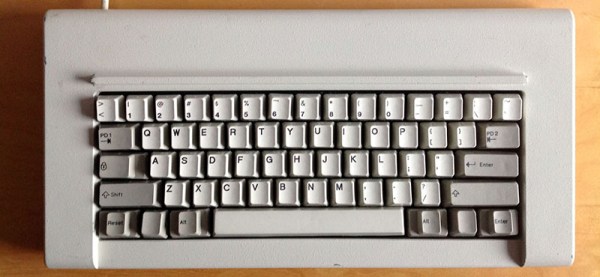
The market is growing, popularity is up, and with that comes a herculean effort to revive what could be considered the greatest keyboard of all time. This is the revival of the IBM 4704 terminal keyboard. Originally sold to banks and other institutions, this 62-key IBM Model F keyboard is rare and coveted. Obtaining one today means finding one behind a shelf in an IT closet, or bidding $500 on an eBay auction and hoping for the best.

Now, this keyboard is coming back from the dead, and unlike the IBM Model M that has been manufactured continuously for 30 years, the 62-key IBM Model F ‘Kishsaver’ keyboard is being brought back to life by building new molds, designing new circuit boards, and remanufacturing everything IBM did in the late 1970s.
Continue reading “Reviving The Best Keyboard Ever”

Google Contest Builds More Efficient Inverters

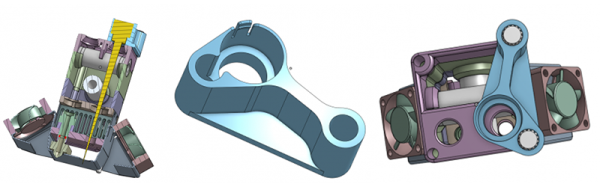
A few summers ago, Google and IEEE announced a one million dollar prize to build the most efficient and compact DC to AC inverter. It was called the Little Box Challenge, with the goal of a 2kW inverter with a power density greater than 50 Watts per cubic inch.

To put this goal into perspective, the DC inverter that would plug into a cigarette lighter in your car has a power density of about 1 or 2 Watts per cubic inch. Very expensive inverters meant for solar installations have a power density of about 5 Watts per cubic inch. This competition aimed to build an inverter with ten times the power density of what is available today.

Now, the results are in, and the results are extremely surprising. The best entry didn’t just meet the goal of 50 W/in³, it blew the goal out of the water.

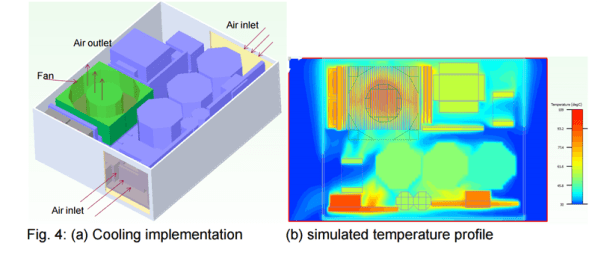
The winning entry (PDF) comes from CE+T Power, and comes in a package with a volume of 13.77 in³. That’s a power density of 143 W/in³ for a unit you can hold in the palm of your hand. The biggest innovations come from the use of GaN transistors and an incredible thermal management solution.

Other finalists for this competition include Schneider Electric Team from France that managed a 100 W/in³ and a Virginia Tech team that managed a power density of 61.2 W/in³.

Thanks [wvdv2002] for the tip.

Hackaday Links: March 6, 2016

There’s the R2 Builders Club, hundreds of people are building BB-8, but there are a few robots that don’t get enough love from the amateur propsmiths. [Kenneth] just finished up his build of Crow from MST3K. He built Tom Servo a year or so ago and K-9 from Doctor Who. The beautiful thing about building MST3K robots and Doctor Who props is that you’re probably working with a larger budget than the prop department had.

Heathkit’s new website is up. The two products we know about so far – an AM radio kit and a slim jim antenna – can only be described as, ‘meh.’ Still, there are a few upgrades for old kits available and the requisite amount of nostalgia.

On today’s issue of, ‘should not be attempted by anyone, ever, under any circumstance’ here’s how to build a table saw at home. Yes, it’s a table saw built from a piece of aluminum, styrofoam, hot glue, and a shoe box. The guy really botched it by not going for the zero clearance insert here, but at least the fence is only a few dozen degrees off parallel with the blade.

[Mathieu] is working on a Mooltipass Mini. It’s tiny and the scroll wheel thingy makes things fun.

March 18th through March 20th is the Midwest RepRap Festival in Goshen, Indiana. This is, by far, the best conference, meetup, or festival we go to year after year. We’ll have a few members of the Hackaday crew at the event, and rumor has it the Internet has made it to Indiana this year.

Adafruit got a writeup in the New Yorker. The article is technically about the art of PCB design, but as with most general interest pieces on electronics it is awash in non sequiturs and simply defining the terminology.

[Oscar] built a miniature replica of a blinkenlight computer last year for the Hackaday Prize. This was the PiDP-8/I. While it looks awesome, the PDP-8/I is inherently limited. [Oscar] has his design methodology down, and now he’s working on a miniature replica of the king of the PDPs. It’s the PiDP-11/27. It’s just a prototype and render now, but the finished project will have custom switches, a handsome bezel, and will be much more capable.

MAME is now FOSS. That’s great news, but think about the amount of work that went into making this happen. MAME is 19 years old, and  that means everyone who has contributed to the project over the years needed to sign off on this initiative.

Bringing Nautical Charts To A Sunlight Readable Display

Road atlases are still published, but you wouldn’t know it if you have a smartphone and Google Maps. Most pilots who got their license a decade ago started on paper maps, but the iPad rules the cockpit today. On a single SD card, you can store maps for every square mile of the Earth’s surface. [Erland] figured it was high time for digital maps to go nautical and built a tablet-like device to display charts while sailing.

The Pi Chart is, of course, powered by a Raspberry Pi running a few dozen lines of JavaScript and HTML. Software wise, there’s not much to this build save for the new OpenGL-based rendering that allows for ultra smooth map rendering.

The hardware is where this build becomes useful, and for that, [Erland] is using a sunlight readable Pixel Qi display. A Li Ion battery provides about 10 hours of runtime, and a Bluetooth enabled GPS dongle tells the Pi exactly where the boat is.

Continue reading “Bringing Nautical Charts To A Sunlight Readable Display”

Etching PCBs With A 3D Printer

With the coming of very cheap blue laser diodes, PCB fabrication has become increasingly interesting. Instead of making a photoresist, placing it over a piece of pre-sensitized copper clad board, and putting the whole assemblage under a blacklight, it’s possible to put a photomask on a board with a tiny bit of very blue light. All you need is a CNC machine. A 3D printer can be a very precise CNC machine, and when you combine these two ideas together, you can make printed circuit boards with an Ultimaker.

[Geggo] had the idea of attaching a blue laser diode to his Ultimaker to burn a few traces into presensitized copper board. With a 3D printed adapter, he was able to mount the diode and associated electronics right on the extruder body. With a small ring to tighten up the aperture, [geggo] was able to put a 50 micrometer wide dot of light on a piece of copper. The laser is powered directly from the PWM fan output on the printer controller board, allowing this entire mish-mash of cheap electronics to be controlled via G-code.

A few experiments were necessary to determine the correct speeds and power settings, with the best results being 1000 mm per minute at 40 mA. The finished board looks fantastic, and a few minutes after [geggo] was done etching a board, he started using his 3D printer as a printer. It’s a result that is so good, so easy to accomplish, and requires so little effort it makes us wonder why we don’t see more of this.

Google Is Building A 100kW Radio Transmitter At A Spaceport And No One Knows Why

You can find the funniest things in public government documents. There’s always ample evidence your local congress critter is working against the interests of their constituency, nation, and industry controlled by the commission they’re chairperson of. Rarely, though, do you find something surprising, and rarer still does it portend some sort of experiments conducted by Google at a spaceport in New Mexico.

In a publication released last week, Google asked the FCC to treat some information relating to radio experiments as confidential. These experiments involve highly directional and therefore high power transmissions at 2.5 GHz, 5.8GHz, 24GHz, 71-76GHz, and 81-86GHz. These experiments will take place at Spaceport America, a 12,000 foot runway in the middle of New Mexico occasionally used by SpaceX, Virgin Galactic, and now Google.

For the most part, this document only tells the FCC that Google won’t be causing harmful interference in their radio experiments. There few other details, save for what bands and transmitters Google will be using and an experimental radio license call sign (WI9XZE) that doesn’t show up in the FCC database.

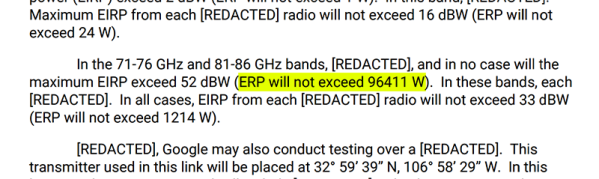
Of the few details listed in the documents, one thing does pop out as exceptionally odd: a 70-80 GHz transmitter with an effective radiated power (ERP) 96,411 W. That’s close enough to 100 kilowatts to call it as such. This is the maximum effective radiated power of the highest power FM stations in the US, but radio stations are omnidirectional, whereas Google is using very high gain antennas with a beam width of less than half a degree. The actual power output of this transmitter is a mere half watt.

The best guess for what Google is doing out in the New Mexico desert is Project Skybender, a project to use millimeter waves to bring faster Internet to everyone. There aren’t many details, but there is a lot of speculation ranging from application in low Earth orbit to something with Google Loon.

Pi 3 Benchmarks: The Marketing Hype Is True

The spec bullet list for the latest Raspberry Pi begins as you’ve already heard: WiFi and Bluetooth, now standard. While this is impressive itself, it doesn’t tell the whole story. The Pi 3, with an ARM Cortex A53, is up to 50% faster than the Pi 2 from last year. That’s an astonishing improvement in just 12 short months.

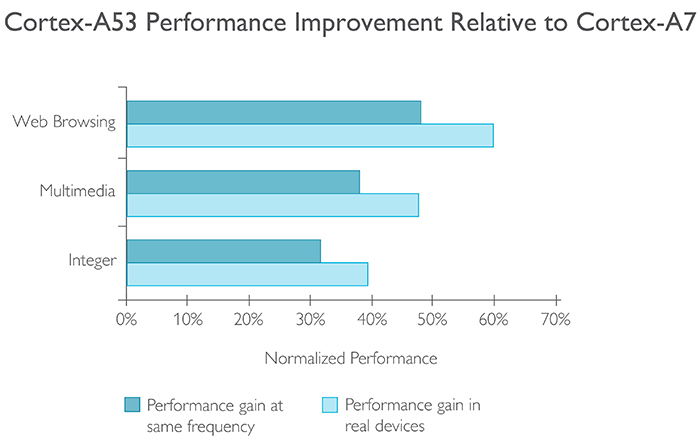
In playing with the Pi 3 for a few hours, it’s apparent the Pi 3 is fast. It passes a threshold of usability. The Raspberry Pi isn’t a computer that just sits on a shelf and runs a few cron jobs and blinks LEDs anymore – this is a computer that’s usable as a computer. But how fast is it? By stroke of luck, the official website for the Cortex A53 gives us a direct comparison between this chip and the CPU in the Raspberry Pi 2:

image credit: arm.com

In real devices, the performance improvement from the Pi 2 to the Pi 3 is somewhere between 40 and 60 percent. At least that’s what ARM and the Raspberry Pi foundation are claiming. Is this true? There are tests we can run, and the marketing speak, for once, isn’t too terribly off the mark.

Continue reading “Pi 3 Benchmarks: The Marketing Hype Is True”