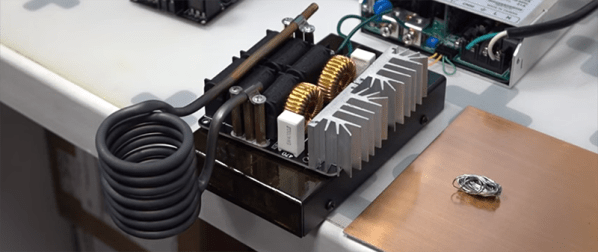
[Proto G] built a small, desktop induction heater that is capable of making small castings, melting small amounts of metal, and functioning as one of the best solder pots we’ve ever seen.
The induction heater is built from a custom Zero Voltage Switching (ZVS) driver and powered by a small 48V, 1000W power supply. While this makes for an exceptionally small induction heater, it’s still very capable. In the video below, it only takes a few seconds to heat a screwdriver up to a temperature that will melt solder.
While an induction heating machine is essentially useless for irons unless you have a few antique, unpowered, blowtorch-powered soldering irons, it does make for a great solder pot. [Proto G] replaced the working coil in his induction heater with litz wire. The actual solder pot is made out of steel conduit wrapped with aerogel-infused fiberglass insulation. Compared to his old solder pot, this machine heats up instantly, and is more than capable of wetting a few wire connections.
The future plan for this inductive heater is to make a few more attachments for different metals, and a [Proto G] has a few aerogel blankets he could use to make some small metal castings.
Earlier this week, the US Department of Transportation announced registration would be required for unmanned aerial systems. Yes, drones will be regulated, and right now representatives from the Academy of Model Aircraft, the Air Line Pilots Association, the Consumer Electronics Association and others are deciding which quadcopters, planes, and other aircraft should be exempt from registration.
Should registration happen at point-of-sale, or after the box is opened?
Should registration be dependant on serial numbers? If so, how will kits be registered?
Should certain drones/UAS be excluded from registration? Should weight, speed, maximum altitude, or flight times be taken into account?
Should registration require a fee?
Are there any additional ways of encouraging accountability of drone/UAS use?
Comments will be taken until November 6, with the task force assembled by the US DOT providing its regulations by November 20. The hope for all involved parties is that this system of regulation will be in place for the holiday season. One million UAS are expected to be sold by Christmas.
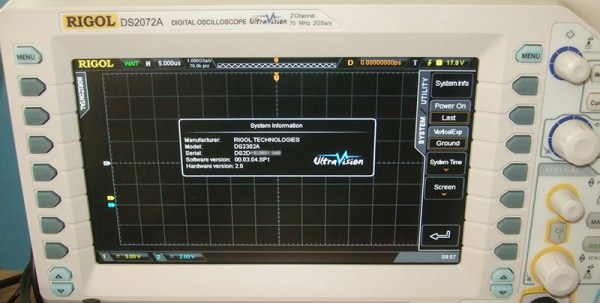
[mosaicmerc] over on hackaday.io has upgraded his Rigol DS2072A oscilloscope to a DS2302A, turning an $800 oscilloscope into one that sells for $2500, with all the bandwidth, storage depth, and options of the more expensive model.
Rigol o-scopes have a long and storied history of unlocking, hacking, and upgrading. The original hack that put Rigol on the map was the DS1052E upgrade that turned a 50MHz scope into a 100MHz scope. The latest low-end Rigol scope, the 1054Z can be unlocked in software to become an 1104Z with 100MHz of bandwidth, SPI, I2C, and RS232 decoders, twice the storage depth, and more triggers. It appears Rigol’s engineers are designing their products to capitalize on the hacker’s proclivity to buy their tools to get the ‘free’ upgrade. This, of course, sounds just slightly insane, but no one seems to mind.
The process of upgrading the Rigol DS2072A scope is documented over on the EEVBlog, and requires only a USB cable and a computer with the Labview Runtime Engine installed. It’s literally as simple as pressing a few buttons; a far cry from the previous keygen method that was also engineered over on the EEVBlog.
On February 25, 1991, during the eve of the of an Iraqi invasion of Saudi Arabia, a Scud missile fired from Iraqi positions hit a US Army barracks in Dhahran, Saudi Arabia. A defense was available – Patriot missiles had intercepted Iraqi Scuds earlier in the year, but not on this day.
The computer controlling the Patriot missile in Dhahran had been operating for over 100 hours when it was launched. The internal clock of this computer was multiplied by 1/10th, and then shoved into a 24-bit register. The binary representation of 1/10th is non-terminating, and after chopping this down to 24 bits, a small error was introduced. This error increased slightly every second, and after 100 hours, the system clock of the Patriot missile system was 0.34 seconds off.
A Scud missile travels at about 1,600 meters per second. In one third of a second, it travels half a kilometer, and well outside the “range gate” that the Patriot tracked. On February 25, 1991, a Patriot missile would fail to intercept a Scud launched at a US Army barracks, killing 28 and wounding 100 others. It was the first time a floating point error had killed a person, and it certainly won’t be the last.
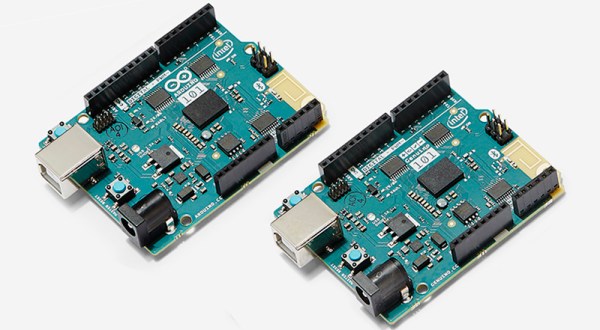
Maker Faire Rome is over, and that means it’s time for the Arduino media blitz. Arduino has already had a big announcement this week with the introduction of the Arduino / Genuino 101 board powered by the Intel Curie module. Team .cc hasn’t forgotten all their Atmel-powered boards though. The latest news is that Arduinos will be manufactured in Germany by Watterott Electronics (.de, Google Translate).
Right now, Arduino.cc boards are manufactured in China by Seeed, and in the US by Adafruit and Sparkfun. Watterott Electronics is one of the premier hobby electronics distributors in Germany.
Boards made by Watterott will carry the Genuino mark; Arduino.cc seems to anticipate a loss in the Arduino vs. Arduino trademark dispute outside the US. All boards produced under license from Arduino.cc sold outside the US will carry the Genuino trademark, whereas boards produced for the US market will carry the Arduino trademark. Interestingly, this Arduino vs. Arduino split began with a former manufacturer, with a maelstrom of pettiness stemming from that trademark dispute. In any case, the licensing for boards manufactured by Watterott is most assuredly worked out by now. The new manufacturing partner guarantees a greater supply of Arduinos for all.
Back in the day, true hackers – the kind that would build VCRs out of 555 chips only to end up in the Hackaday comments section in their twilight years – would steal satellite TV feeds with the help of tiny little microcontrollers embedded in a credit card. This was the wild west, when a parallel port was the equivalent of a six-shooter and Jnco jeans were a ten gallon hat.
The backdoors that enabled these satellite pirates have long been closed, but these devices for stealing HBO have now evolved into stealing €600,000 worth of goods using a most unlikely source: chip and pin card terminals. A gang of criminals in Belgium have successfully broken chip and pin, and although the exploit has now been closed, the researchers behind the investigation have published their war story for one of the most interesting hacks in recent memory.
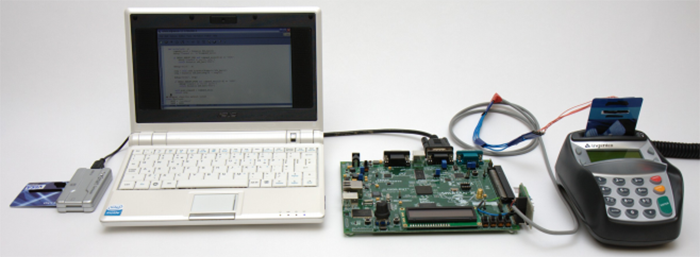
Chip and pin verification for Point of Sale (PoS) transactions are a relatively simple process; during a transaction, the PoS system asks for the user’s PIN and transmits it to the card. The card then simply answers ‘yes’ or ‘no’. In 2010, a vulnerability to this system was discovered, making it a simple matter for anyone to break chip and pin systems. This system used an FPGA with a backpack worth of modified hardware – executing it in a store would raise more than a few eyebrows.
The 2010 exploit hardware
The problem of implementing this system into something that was easily concealable was simply a matter of miniaturization. Thanks to the proliferation of smart cards over the last 20 years, very tiny microcontrollers are available that could manage this man-in-the-middle attack on a chip and pin system. What is a gang of criminals to do? Simply program a smart card with all the smarts required to pull of the hack, of course.
To pull off this exploit, an engineer in the gang of criminals used a FUNcard, a development platform for smart cards loaded up with an Atmel AVR AT90S8515 microcontroller and an EEPROM packaged in a small golden square. By removing the chip from this chipped card and replacing the chip in a stolen credit card, the criminals were able to reproduce the 2010 exploit in the wild, netting them €600,000 in stolen merchandise before they were caught.
How were they caught? The ‘buyer’ of the gang kept shopping at the same place. Rookie mistake, but once security researchers got their hands on this illegal hardware, they were amazed at what they found. Not only did the engineer responsible for this manage to put the code required for the exploit in an off-the-shelf smart card, the gold contact pads from the original credit card were rewired to the new microcontroller in an amazing feat of rework soldering.
Before this exploit was made public, the researchers developed a countermeasure for this attack that was swiftly installed in PoS terminals. They also came up with a few additional countermeasures that can be deployed in the future, just in case. In any event, it’s an amazing bit of reverse engineering, soldering, and craftsmanship that went into this crime spree, and as usual, it only took a massive loss for retailers to do anything about it.
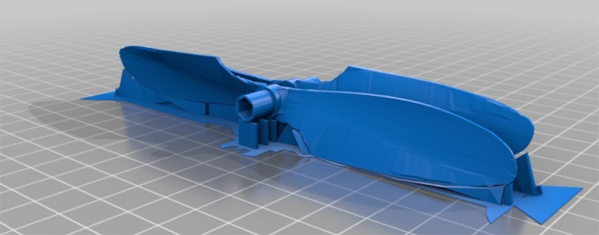
Here’s something that isn’t quite a hack; he’s just using a 3D printer as a 3D printer. It is extremely interesting, though. Over on Hackaday.io [Anton] is creating 3D printable propellers for quadcopters and RC planes. Conventional wisdom says that propellers require exceedingly exacting tolerances, but [Anton] is making it work with the right 3D file and some creative post-processing treatment of his prints.
These 3D printed props are a remix of an earlier project on Thingiverse. In [Anton]’s testing, he didn’t get the expected lift from these original props, so a few small modifications were required. The props fit on his 3D printer bed along their long edge allowing for ease of slicing and removal of support material. For post-processing, [Anton] is using acetone vapor smoothing on his ABS printed design. They come out with a nice glossy sheen, and should be reasonably more aerodynamic than a prop with visible layer lines.
Although [Anton]’s prop is basically a replica of a normal, off-the-shelf quadcopter prop, 3D printing unique, custom props does open up a lot of room for innovation. The most efficient propeller you’ll ever find is actually a single-bladed propeller, and with a lot of experimentation, it’s possible anyone with a well-designed 3D printer could make turn out their own single-blade prop.