USB Stick Hides Large Language Model

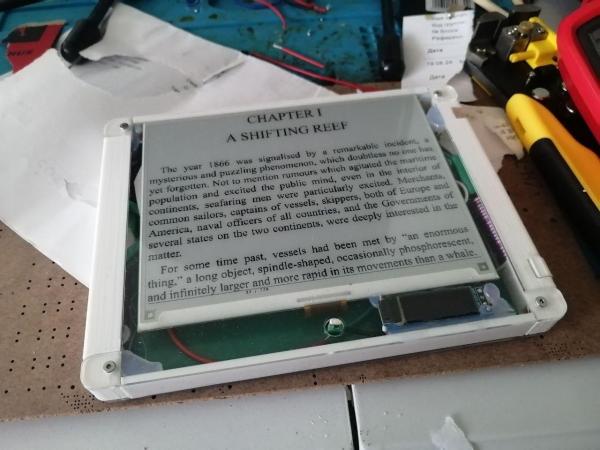
Large language models (LLMs) are all the rage in the generative AI world these days, with the truly large ones like GPT, LLaMA, and others using tens or even hundreds of billions of parameters to churn out their text-based responses. These typically require glacier-melting amounts of computing hardware, but the “large” in “large language models” doesn’t really need to be that big for there to be a functional, useful model. LLMs designed for limited hardware or consumer-grade PCs are available now as well, but [Binh] wanted something even smaller and more portable, so he put an LLM on a USB stick.

This USB stick isn’t just a jump drive with a bit of memory on it, though. Inside the custom 3D printed case is a Raspberry Pi Zero W running llama.cpp, a lightweight, high-performance version of LLaMA. Getting it on this Pi wasn’t straightforward at all, though, as the latest version of llama.cpp is meant for ARMv8 and this particular Pi was running the ARMv6 instruction set. That meant that [Binh] needed to change the source code to remove the optimizations for the more modern ARM machines, but with a week’s worth of effort spent on it he finally got the model on the older Raspberry Pi.

Getting the model to run was just one part of this project. The rest of the build was ensuring that the LLM could run on any computer without drivers and be relatively simple to use. By setting up the USB device as a composite device which presents a filesystem to the host computer, all a user has to do to interact with the LLM is to create an empty text file with a filename, and the LLM will automatically fill the file with generated text. While it’s not blindingly fast, [Binh] believes this is the first plug-and-play USB-based LLM, and we’d have to agree. It’s not the least powerful computer to ever run an LLM, though. That honor goes to this project which is able to cram one on an ESP32.

Continue reading “USB Stick Hides Large Language Model”

Game Bub Plays ROMs And Cartridges

With today’s technology, emulating video game consoles from the 90s or before is trivial. A Raspberry Pi and a controller of some sort is perhaps the easiest and simplest way to go to get this job done, but to really impress the masses some extra effort is required. This handheld from [Eli] called the Game Bub not only nails the appearance and feel of the first three generations of Nintendo handhelds but, thanks to its FPGA, can play not only ROMs but the original game cartridges as well.

As [Eli] notes, the FPGA is not strictly necessary for emulation, but does seem to be better at interfacing with physical hardware like controllers and game cartridges. For this task an Xilinx XC7A100T with integrated memory was chosen, with a custom PCB supporting the built-in controller, speaker, a rechargeable lithium battery, and a 480×320 display (that had to be rotated out of portrait mode). An SD Card reader is included for any ROM files, and there’s also a ESP32-S3 included to give the handheld WiFi and Bluetooth capabilities, with future plans to support the communications protocol used by the Game Boy Advance Wireless Adapter.

There are a few other features with the Game Bub as well, including the ability to use an authentic link cable to communicate with the original Game Boy and Game Boy Color, and a Switch-like dock that allows the Game Bub to be connected to an external monitor. It’s also open source, which makes it an even more impressive build. Presumably it doesn’t include the native ability to dump cartridges to ROM files but you don’t need much more than a link cable to do that if you need to build your ROM library.

Continue reading “Game Bub Plays ROMs And Cartridges”

Satellite Internet On 80s Hardware

Portability has been a goal of a sizable section of the computing world for many decades now. While the obvious products of this are laptops, there are a number of “luggable” PCs that pack more power while ostensibly maintaining their portability. Going back in time past things like the LAN party era of the 90s and 00s takes us to the early era of luggables, with the Commodore SX-64 being one such machine of this era. Its portability is on display in this video where [saveitforparts] is using it to access the Internet over satellite.

The project uses a Glocom Inmarsat modem and antenna to access the internet through a geostationary satellite, but since this computer is about four decades old now this takes a little bit more effort than a modern computer. A Teensy microcontroller is used to emulate a modem so that the Ethernet connection from the satellite modem can be understood by the Commodore. There was a significant amount of setup and troubleshooting required as well, especially regarding IP addresses and networking but eventually [saveitforparts] got the system up and running well enough to chat on a BBS and browse Wikipedia.

One thing he found that might make a system like this relevant for a modern user is that the text-only mode of the Commodore significantly limited data use. For a normal Internet connection this might be a problem, but on a geostationary satellite network where the data is orders of magnitude more expensive, this can be surprisingly helpful. We might not recommend an SX-64 system specifically, but one inspired by similar computers like this text-only cyberdeck might do the trick with the right networking connections.

Continue reading “Satellite Internet On 80s Hardware”

Investigating Electromagnetic Magic In Obsolete Machines

Before the digital age, when transistors were expensive, unreliable, and/or nonexistent, engineers had to use other tricks to do things that we take for granted nowadays. Motor positioning, for example, wasn’t as straightforward as using a rotary encoder and a microcontroller. There are a few other ways of doing this, though, and [Void Electronics] walks us through an older piece of technology called a synchro (or selsyn) which uses a motor with a special set of windings to keep track of its position and even output that position on a second motor without any digital processing or microcontrollers.

Synchros are electromagnetic devices similar to transformers, where a set of windings induces a voltage on another set, but they also have a movable rotor like an electric motor. When the rotor is energized, the output windings generate voltages corresponding to the rotor’s angle, which are then transmitted to another synchro. This second device, if mechanically free to move, will align its rotor to match the first. Both devices must be powered by the same AC source to maintain phase alignment, ensuring their magnetic fields remain synchronized and their rotors stay in step.

While largely obsolete now, there are a few places where these machines are still in use. One is in places where high reliability or ruggedness is needed, such as instrumentation for airplanes or control systems or for the electric grid and its associated control infrastructure. For more information on how they work, [Al Williams] wrote a detailed article about them a few years ago.

Continue reading “Investigating Electromagnetic Magic In Obsolete Machines”

Cyberbass Brings Bass Guitar To Modern Era

For better or worse, the fundamental design of guitars has remained familiar since they electrified around a century ago. A few strings, a fretboard, and a body of some sort will get you most of the way there for an acoustic guitar, with the addition of electromagnetic pickups and wiring for electric variants. However, technology has advanced rapidly in the last 100 years outside the musical world, so if you want to see what possibilities lie ahead for modernizing guitars take a look at the Cyberbass created by [Matteo].

The guitar starts its life as many guitars do: with a block of wood. One of the design goals was to be able to use simple tools to build the guitar, so the shape of the instrument was honed with a Japanese hacksaw and the locations for the pickups and other electronics were carved out with chisels.

The neck of the guitar was outsourced since they take some pretty specialized tools to build, so simply bolting it to the body takes care of that part of the build, but [Matteo] had a few false starts setting the bridge in the exact location it needed to be.

Luckily he was able to repair the body and move the bridge. With the core of the guitar ready, it was on to paint and then to its custom electronics. [Matteo] built in not only a set of pickups and other common electric guitar parts but also integrated a synth pedal into the body as well as including a chromatic tuner.

With everything assembled and a few finishing touches added including a custom-engraved metal signature plate, the Cyberbass is ready to go on tour. [Matteo] learned a lot about guitar building in general, as well as a few things about electronics relating to musical instruments (including how expensive tuners work just as well as cheap ones).

Continue reading “Cyberbass Brings Bass Guitar To Modern Era”

Bicycle Adds Reliability With Second Chain

Ignoring the International Cycling Union‘s mostly arbitrary rules for what a bicycle is “supposed” to look like (at least if you want to race), there are actually reasons that the bicycling world has standardized around a few common parts and designs. Especially regarding the drivetrain, almost all bikes use a chain, a freewheel, and a derailleur if there are gears to shift because these parts are cheap, reliable, and easy to repair. But if you’re off grid in a place like Africa, even the most reliable bikes won’t quite cut it. That’s why a group called World Bicycle Relief designed and built the Buffalo bicycle, and the latest adds a second gear with a unique freewheel.

Bicycling YouTuber [Berm Peak] takes us through the design of this bike in his latest video which is also linked below. The original Buffalo bicycle was extremely rugged and durable, with a rear rack designed to carry up to 200 pounds and everything on the bike able to be repaired with little more than an adjustable wrench. The new freewheel adds a second gear to the bike which makes it easier to use it in hilly terrain, but rather than add a complicated and hard-to-repair derailleur the freewheel adds a second chain instead, and the rider can shift between the two gears by pedaling backwards slightly and then re-engaging the pedals.

Of course a few compromises had to be made here. While the new freewheel is nearly as rugged as the old one, it’s slightly more complex. However, they can be changed quite easily with simple tools and are small, affordable, and easy to ship as well. The bike also had to abandon the original coaster brake, but the new rim brakes are a style that are also easy to repair and also meant that the bike got a wheel upgrade as well. Bicycles like these are incredibly important in places where cars are rare or unaffordable, or where large infrastructure needed to support them is unreliable or nonexistent. We’ve seen other examples of bicycles like these being put to work in places like India as well.

Thanks to [Keith] for the tip!

Continue reading “Bicycle Adds Reliability With Second Chain”

Communicating With Satellites Like It’s 1957

When the first artificial satellite, Sputnik, was put into orbit around Earth, anyone in the path of the satellite could receive the beeps transmitted by the satellite provided they had some simple radio equipment. Of course, there was no two-way communication with this satellite, and it only lasted a few weeks before its batteries died. Here in the future, though, there are many more satellites in orbit and a few are specifically meant for ham radio operators. And, like the ’50s, it doesn’t take too much specialized equipment to communicate with them, although now that communication can be two-way.

The first step in this guide by [W2PAK] is to know where these satellites are in the sky. The simplest way to do that is to use a smartphone app called GoSatWatch and, when configured for a specific location, shows the satellites currently overhead. After that it’s time to break out the radio gear, which can be surprisingly inexpensive. A dual-band handheld is required since satellite uplink and downlink can be on different bands, and the antenna can be made from simple parts as well as [W2PAK] demonstrates in a separate video. Combined, this can easily be done for less than $100. [W2PAK] also goes over the proper format and etiquette for a satellite contact as well, so a new operator can pick it up quickly.

Using satellites as repeaters opens up a lot of capabilities when compared to terrestrial communications. Especially for operators with entry-level licenses who are restricted to mostly VHF and UHF, it adds a challenge as well as significantly increased range compared to ground-based repeaters and line-of-sight communications. There are plenty of activities around satellites that don’t require a license at all, too, like this project which downloads weather imagery from weather satellites.

Continue reading “Communicating With Satellites Like It’s 1957”