Raspberry Pi Floppy Driver Uncovers Fishy Secrets

A forum post by New Zealand electronics enthusiast [zl2wrw] about retreiving waypoints from a mysterious floppy disk caught our eye. The navigation system on his friend’s fishing boat had died and was replaced. But the old waypoints were stored on a 3-1/2 inch floppy disk that was unreadable on a normal PC. Not to be deterred, [zl2wrw] then looked for another solution — apparently a list of hot NZ fishing spots is worth quite the effort.

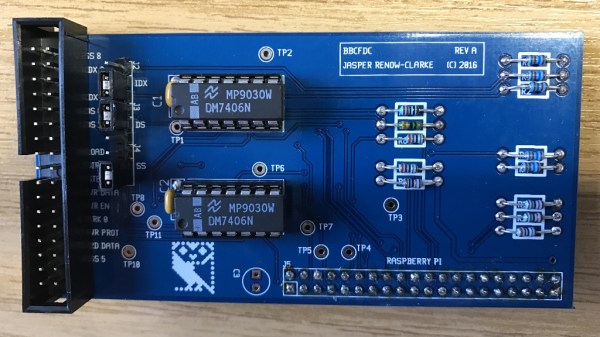
The tool he discovered, and the main point of this story, is the bbc-fdc by [Jasper Renow-Clarke] aka [picosonic]. [Jasper] made this project to read 5-1/4 inch Acorn DFS floppies from his BBC Micro. But bbc-fdc can be used to read a variety of floppy disk formats, such as DOS, C64, Apple II, and others It can also just capture raw magnetic flux transitions on the disk, blissfully unaware of any logical structure to the data. We recently wrote about another Raspberry Pi Floppy Drive Controller project by [Scott Baker]. What sets [picosonic]’s project apart is that he’s not using an FDC controller chip here. The only interface electronics is a couple of open-collector 7406 ICs. Data is read using the SPI peripheral. If you need to archive old floppy disks or do a forensic analysis of unknown disks like [zl2wrw], then one of these two projects will almost certainly do the trick.

Meanwhile back in New Zealand, [zl2wrw] discovered that the floppy format was standard (Modified Frequency Modulation, MFM) by examining the raw flux dump. However, the filesystem was a mystery — it didn’t quite match any of the usual suspects. So [zl2wrw] dug into the hex dump of the data and figured out enough of the structure to manually recover the waypoints. Subsequently, a user on the forum found a document describing the file system used by Furuno GPS units, which proved to be a close match albeit after the fact. Alas, [zl2wrw] hasn’t publish the coordinates of those good fishing spots.

Have you had any successes (or failures) when it comes to reading data from old disks? Or have you encountered peculiar disk formats and/or file systems, where having a tool like this could have been helpful? Let us know in the comments below.
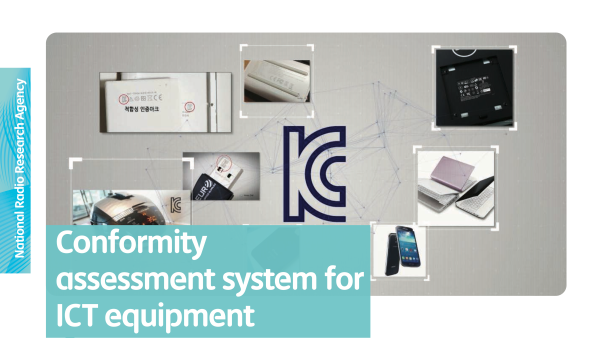

1700 Regulatory Approvals Revoked In South Korea

For the first time since its inception, the Korea Communications Commission this week revoked the regulatory approvals of 1,696 telecommunications devices from 378 companies, both foreign and domestic. Those companies must recall unsold inventory from the shelves, and prove conformity of existing products already sold. In addition, the companies may not submit new applications for these items for one year. It’s not clear what would happen to already-sold equipment if the manufacturer is unable to prove conformity as requested — perhaps a recall? Caught up in this are CCTV products, networking equipment, Bluetooth speakers, and drones from companies like Huawei, DJI, and even Samsung.

The heart of the issue are what’s known as Mutual Recognition Agreements (MRAs) between countries to officially recognize of each other’s certification testing laboratories (or Conformity Assessment Bodies, CAB, in the lingo of the industry). Currently ten countries (USA, Canada, Mexico, UK, Israel, Japan, Korea, Singapore, Vietnam, and Australia), the 27 member states of the EU, Taiwan and Hong Kong all have MRAs with each other. Based on these MRAs, a Korean manufacturer could have a product tested by a laboratory in Israel, for example, and all would be kosher with the KCC.

At the center of attention is the Bay Area Compliance Laboratories (BACL), established in 1996 and headquartered in Sunnyvale, California. BACL has laboratories all over the world (USA, Taiwan, Hong Kong, Vietnam, and mainland China). Except for those in mainland China, all BACL laboratories are acceptable per the MRAs. The KCC received a tip last year that some compliance test reports for some products might be defective.

A six-month investigation in cooperation with the US National Institute of Standards and Technology (NIST) resulted in the announcement this week. Korean companies, 378 of them to be exact, had submitted test reports from BACL Sunnyvale which appeared to be appropriate. But on further investigation, it was learned that the actual testing was done by BACL laboratories in mainland China and only the reports were prepared in Sunnyvale.

It’s not clear whether these companies were knowingly playing fast and loose with the rules, whether BACL was complicit, if it was just a misunderstanding of the intricacies of the regulations and MRAs, or a combination of all three. Regardless, the KCC said that intent doesn’t matter according the their rules. It also has not been suggested that the products themselves are problematic, nor has anyone suggested that BACL’s Chinese laboratories performed slipshod work — rather, the KCC says it has no choice but to proceed with the revocation based on the applicable laws.

Formula 1 TV Broadcasting In 1:87 Scale

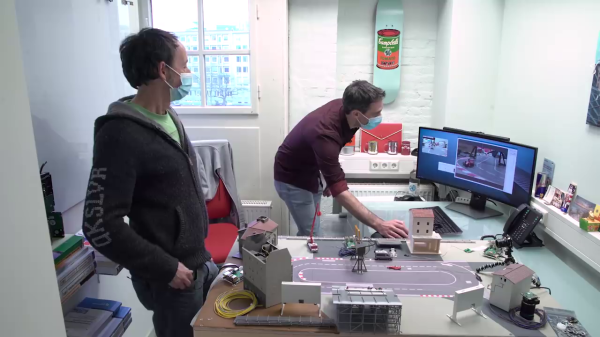
[Gerrit Braun], co-founder of the [Miniatur Wunderland] model railway and miniature airport attraction in Hamburg, takes his model building seriously. For more than five years, he and his team have been meticulously planning, testing, and building a 1:87 scale of Formula 1’s Monaco Grand Prix. Models at the Wunderland are crafted to the Nth detail and all reasonable efforts, and some unreasonable ones, are taken to achieve true-to-life results. In the video down below, part of Gerrit’s diary of the project, he discusses the issues and solutions to simulating realistic television broadcasts (the video is in German, but it has English language subtitles).

The goal is to model the large billboard-sized monitor screens set up at viewing stands. In real life, these displays are fed with images coming in from cameras located all over the circuit, the majority of which are operated by a cameraman. The miniaturization of cameras has come a long way in recent years — the ESP32-CAM module or the Raspberry Pi cameras, for example. But miniaturizing the pan-and-tilt actions of a cameraman, while perhaps possible, would not be reliable over the long time (these exhibits at Wunderland are permanent and operate almost daily). Instead, the team is able to use software to extract a cropped window from high-resolution video, and moving the position of this cropped window simulates the pointing of the camera. More details are in the video.

The skill and creativity of [Gerrit] and his team is incredible. Other videos on this project cover topics like the sound system, PCB techniques used for the roads, and the eye-popping use of an electric standing desk to lift an entire city block so workers can gain access to the area. Fair warning — these are addictive, and the video below is #76 of an unfinished series. We wrote about Wunderland back in 2016 when [Gerrit] and his twin brother [Frank] teamed with Google Maps to make a street view of their replica cities. Thanks to [Conductiveinsulation] who sent us the tip, saying that the discussion about interconnected triangular PCB tiles on this week’s Podcast #122 reminded him of this for some reason. Have any of our readers visited Miniatur Wunderland before? Let us know in the comments below.
Continue reading “Formula 1 TV Broadcasting In 1:87 Scale”

Mistaken Identity — Piezo Actuators Not Test Pads

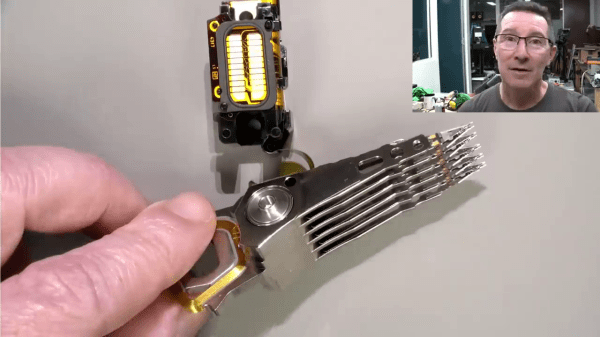
One hard disk recently failed in the EEVBlog laboratory’s NAS. Keeping true to his catch phrase, [Dave “Tear it Apart” Jones] opened it up and gave us an inside tour of a modern hard disk drive. There are so many technological wonders to behold in modern HDDs these days — the mechanical design, electronics and magnetics, and the signal processing itself which is basically an advanced RF receiver — that we can forgive [Dave] for glossing over a system of piezo actuators thinking they were manufacturing test points. Even knowing they are actuators, you have to stare at them and think for a bit before your brain accepts it.

Later realizing the mistake, he made a follow-up video (down below) focusing on just the disk head actuator arms and this micro-actuation system (or perhaps they are milli-actuators). The basic concept is a pair of piezoelectric transducers mounted on either side of the short arm holding the read head. Presumably they are driven out of phase to flex the arm left or right, but the motion is imperceptible to the eye — even under magnification, [Dave] was not able to discern any motion when he pulsed the transducers. When you consider that these micro-actuators are mounted on the main actuator arm, which itself is also in motion, the nested control loop arrangement to maintain nanometers of accuracy is truly amazing. Check out this 45 second explanatory video by Western Digital which has a good animation of the concept.

If you want to see your HDD in operation without taking it apart, check out the transparent drive we wrote about last month. And to read more about esoteric actuators, check out this article from 2015 which contains one of the longest words to appear in our pages — magnetorheological. If you’ve experience a hard disk failure, which thankfully is becoming rarer these days, do you chunk it or tear it apart?

Continue reading “Mistaken Identity — Piezo Actuators Not Test Pads”

The Other First Computer: Konrad Zuse And The Z3

Bavarian Alps, Dec. 1945:

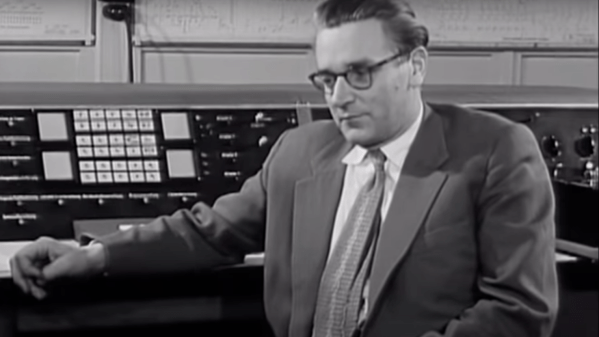
Since 1935, Berlin engineer Konrad Zuse has spent his entire career developing a series of automatic calculators, the first of their kind in the world: the Z1, Z2, Z3, S1, S2, and Z4. He accomplished this with a motley group of engineers, technicians, and mathematicians who were operating against all odds. With all the hardships and shortages of war and the indifference of their peers, the fact that they succeeded at all is a testament to their dedication and resourcefulness. And with the end of the war, more hardships have been piling on.

Two years ago, during the Battle of Berlin, bombers completely destroyed the Zuse family home and adjacent workshops on the Methfesselstraße, where they performed research and fabrication. All of the calculators, engineering drawings, and notes were lost in the rubble, save for the new Z4 nearing completion across the canal in another workshop on Oranienstraße. In the midst of all this, Zuse married in January of this year, but was immediately plunged into another crisis when the largest Allied air raid of the war destroyed the Oranienstraße workshop in February. They managed to rescue the Z4 from the basement, and miraculously arranged for it to be shipped out of the Berlin. Zuse, his family, and colleagues followed soon thereafter. Here and there along the escape route, they managed to complete the final assembly and testing of the Z4 — even giving a demonstration to the Aerodynamics Research Institute in Göttingen.

On arrival here in the Bavarian Alps, Zuse found a ragtag collection of refugees, including Dr Werner Von Braun and a team of 100 rocket scientists from Peenemünde. While everyone here is struggling just to stay alive and find food and shelter, Zuse is further worried with keeping his invention safe from prying eyes. Tensions have risen further upon circulation of a rumor that an SS leader, after three bottles of Cognac, let slip that his troops aren’t here to protect the scientists but to kill them all if the Americans or French approach.

In the midst of all this madness, Zuse and his wife Gisela welcomed a baby boy, and have taken up residence in a Hinterstein farmhouse. Zuse spends his time working on something called a Plankalkül, explaining that it is a mathematical language to allow people to communicate with these new machines. His other hobby is making woodblocks of the local scenery, and he plans to start a company to sell his devices once the economy recovers. There is no doubt that Konrad Zuse will soon be famous and known around the world as the father of automatic computers. Continue reading “The Other First Computer: Konrad Zuse And The Z3”

Z80 Family Reunion Discovered In Old PoS Card Swiper

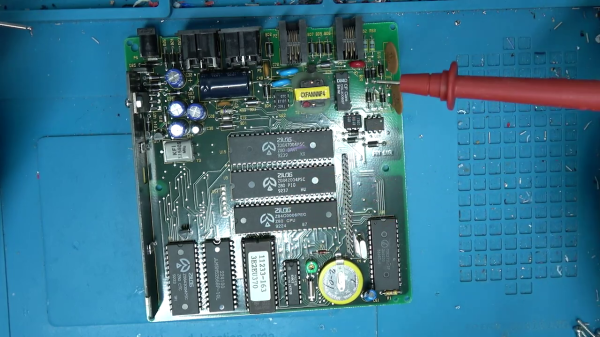
[Ben Heck] found an old card-swipe point-of-sale box at the Goodwill store, took it home, and tore it down to see what was inside. He found a completely serviceable single board computer based on the Z80. In fact, there’s a whole family of four Z80 chips: the CPU itself, the DART chip (dual UART), the PIO chip (parallel input/output interface), and the CTC chip (counter/timer circuit). That’s not all — there’s a landline telephone modem, a real time clock, 32K of RAM and UV-EPROM. The second PCB of this assembly holds a hefty sixteen-key keypad and a sixteen-character vacuum fluorescent alphanumeric display. All this for the bargain price of $2.99.

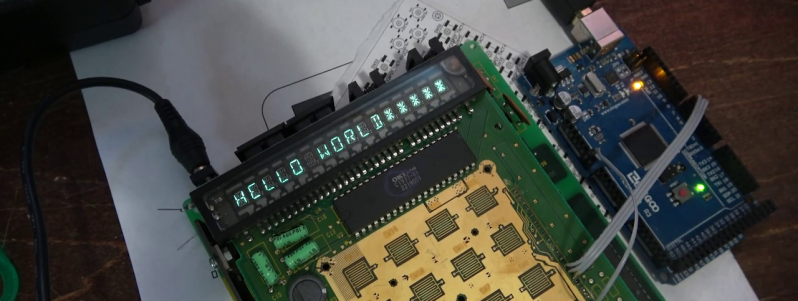
Surely [Ben] will dig into the Z80 system in the future, but in this video he tries to make the display work. An OKI Semiconductor controller drives the VFD. After tracking down the data sheet, [Ben] wires it up to an Arduino and writes a quick program. Only a few YouTube minutes later, he conquers the display, drawing sample text anywhere he wants on the screen with any brightness he desires.

You never know what you may find lurking inside old equipment like this. You might find a proprietary ASIC with no documentation, or like [Ben] did here, you could find a fully functioning embedded computer. If [Ben] can whip up a RAM-based emulator to replace the 32K UV-EPROM, he’ll have a perfect evaluation board for Z80 projects.

Let us know in the comments if you have found any treasures like this. Also, how would you use this board if you had found it? Thanks to reader [Nikša Barlović] for sending in the tip.

Continue reading “Z80 Family Reunion Discovered In Old PoS Card Swiper”

Recore Hacks The Hidden Microcontroller For 3D Printing

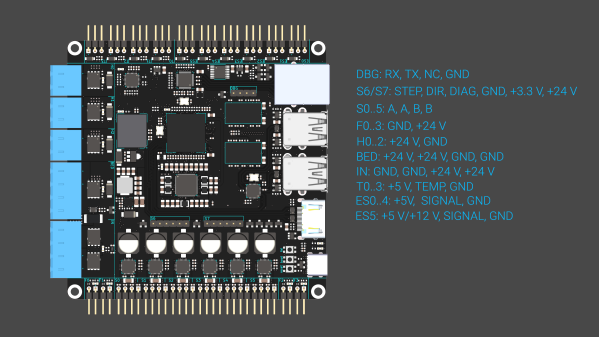
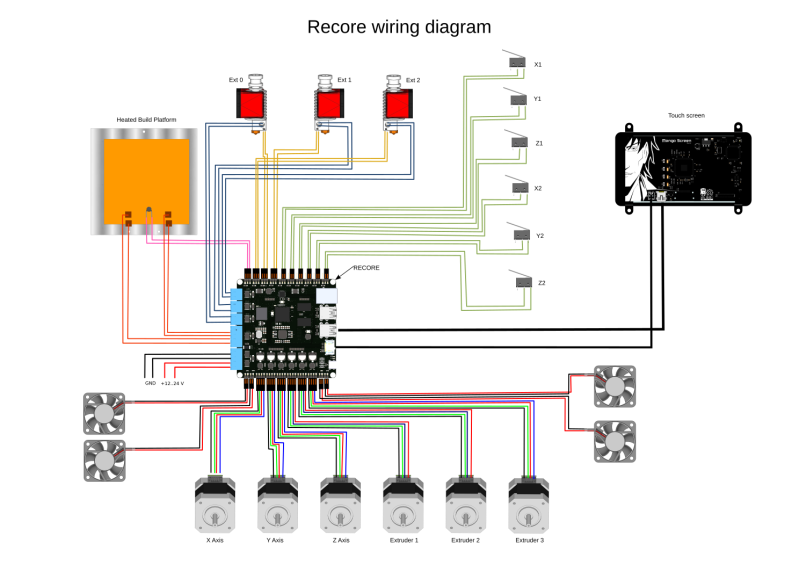
No stranger to the world of 3D printers, [Elias Bakken] from the [Intelligent Agent] workshop has released a new controller board called Recore. The typical 3D printer has a dedicated controller which handles the real-time aspects of driving stepper motors. Many setups also have a second computer, often Linux-based, which is dedicated to supporting tasks like running an Octoprint server and interfacing to a digital camera to monitor print progress remotely. [Elias]’s design merges these together into one compact 12 x 12 x 4 cm package.

The Recore board is powered by an AllWinner A64 system on chip (SoC) which packs four ARM Cortex-A53 AArch64 cores running Debian Linux. The applications include Klipper, a project we wrote about when it was first introduced, and the OctoPrint print server. “But Linux is not a real-time operating system”, we hear you cry, “and controlling stepper motor drivers from an A64 SoC is just asking for trouble”. [Elias] could have addressed this problem by putting a secondary microcontroller on the board, but he found an even more elegant solution instead.

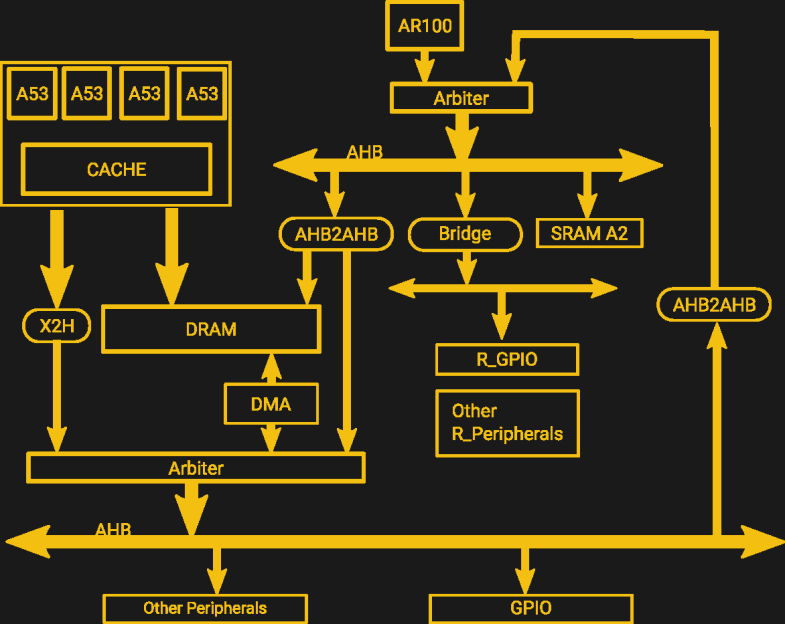
It turns out that there is already a secondary microcontroller hidden in plain sight, integrated into the A64 itself. See that small box labeled AR100 at the top of the block diagram? Meet the AR100, a controller originally intended to manage low-power operations of the A64. It is an OpenRISC 32-bit OR1k processor. But the AR100 is extremely underutilized, and [Elias] takes good advantage of this by repurposing it to those real-time tasks associated with a 3D printer controller. Watch the short video down below to learn how he solves a few of the nitty-gritty implementation details such as timers and communicating with the Linux processors. You might learn some tips from the other short videos in the series featuring some interesting debugging and problem solving sessions. There is a project GitHub repository and a Wiki full of good information and testing results.

[Elias] has a long history of building printer controllers. While his last one had to be abandoned because of manufacturing issues, he learned from that experience. Manufacturability was a top priority in the design of the Recore. We’re jealous of the well-appointed [Intelligent Agent] facility in Norway, but even more so of the nomadic lifestyle that [Elias] appears to enjoy — in his videos, he can be seen working from far-flung locales such as a tropical island resort and a laboratory floating in high Earth orbit. We’ve featured [Elias]’s projects in the past, including the Replicate 3D printer controller, a semi-automatic liquor cabinet, and the dog-operated treat dispenser.

Continue reading “Recore Hacks The Hidden Microcontroller For 3D Printing”