Cricket Scoreboard Is A Big Win For Novice Hackers

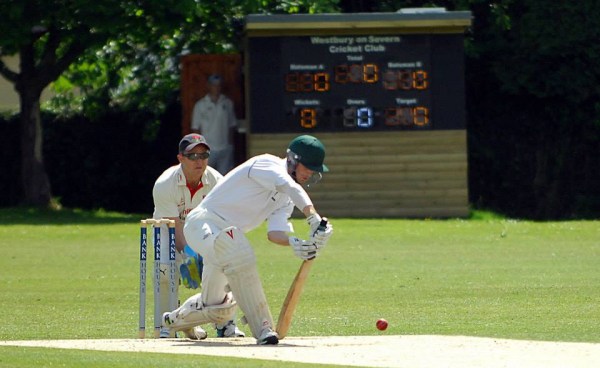
The game of cricket boggles most Americans in the same way our football perplexes the rest of the world. We won’t even pretend to understand what a “wicket” or an “over” is, but apparently it’s important enough to keep track of that so an English cricket club decided to build their own electronic scoreboard for their – pitch? Field? Help us out here.

This scoreboard build was undertaken by what team member [Ian] refers to as some “middle-aged blokes from Gloucestershire” with no previous electronics experience. That’s tough enough to deal with, but add to it virtually no budget, a huge physical size for the board, exposure to the elements, and a publicly visible project where failure would be embarrassingly obvious, and this was indeed an intimidating project to even consider. Yet despite the handicaps, they came up with a great rig, with a laser-cut acrylic cover for a professional look. A Raspberry Pi runs the LED segments and allows WiFi connections from a laptop or phone in the stands. They’ve even recently upgraded to solar power for the system.

And we’ll toot our own horn here, since this build was inspired at least in part by a Hackaday post. The builders have a long list of other links that inspired or instructed them, and we think that says something powerful about the hacker community that we’ve all been building – a group with no previous experience manages a major build with the guidance of seasoned hackers. That’s something to feel good about.
Finally, A Power Meter Without Nixies

We’ve had quite a spate of home-brew energy meters on the tip line these days, and that probably reflects a deep inner desire that hackers seem to have to quantify their worlds. Functionally, these meters have all differed, but we’ve noticed a distinct stylistic trend toward the “Nixies and wood” look. Ironically, it is refreshing to see an energy meter with nothing but a spartan web interface for a change.

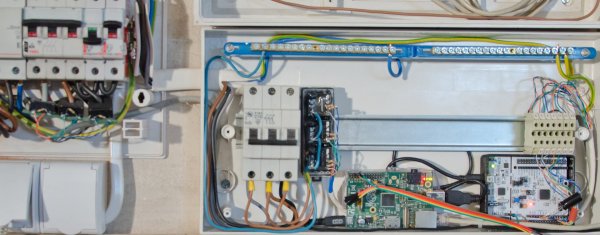
Clearly, [Tomasz Salwach] had raw data in mind as a design goal, and his Raspberry Pi-based meter delivers. After harvesting current sensing transformers from a bucket of defunct power meter PC boards, [Tomasz] calibrated them with a DIY oscilloscope and wired them and the voltage sensors up to an STM32 Nucleo development board. Data from the MCU goes to the Pi for processing and display as snazzy charts and GUI elements served internally. [Tomasz] was kind enough to include a link to his meter in his tip line post, but asked that we not share it publicly lest HaD readers love the Pi to death. But we can assure you that it works, and it’s kind of fun to peek in on the power usage of a house in Poland in real time.

It’s a nice project that does exactly what it set out to do. But if you missed the recent spate of Nixie-based displays, check out this front hallway meter or this one for a solar-power company CEO’s desk.

Track Satellites With A 2-axis Antenna Positioner

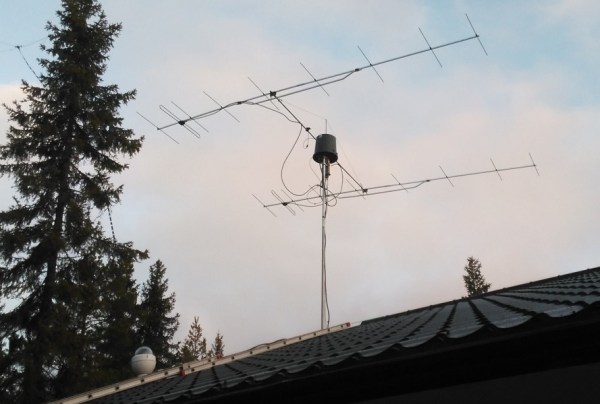
Ham radio operators are curious beasts. They’ll go to great lengths to make that critical contact, and making sure their directional antennas are pointing the right way can be a big part of punching through. Of course there are commercial antenna rotators out there, but hams also like to build their own gear, like this Raspberry Pi-controlled 2-axis rotator.

[wilho]’s main motivation for this build seems to have been the sad state of the art in commercial 2-axis rotators, which seems firmly mired in the 90s. Eschewing the analog pot sensors on DC brushed motors that seem to dominate the COTS market, [wilho] went with steppers and stout gearboxes for the moving gear. Feedback on the axes comes from 10-bit absolute encoders, and an MPU9250 9-axis IMU makes sure he knows exactly where the antenna is pointing with respect to both compass heading and elevation. A mast-mounted Rasp Pi controls everything and talks through a REST API to custom software that can return the antenna to custom set-points or track the moon, satellites, or the ISS. It’s a very impressive bit of kit that’s sure to drive your home-owners association bonkers.

For another 2-axis antenna positioner, check out 2015 Hackaday Prize finalist SATNOGS.

Continue reading “Track Satellites With A 2-axis Antenna Positioner”

J.C. Bose And The Invention Of Radio

The early days of electricity appear to have been a cutthroat time. While academics were busy uncovering the mysteries of electromagnetism, bands of entrepreneurs were waiting to pounce on the pure science and engineer solutions to problems that didn’t even exist yet, but could no doubt turn into profitable ventures. We’ve all heard of the epic battles between Edison and Tesla and Westinghouse, and even with the benefit of more than a century of hindsight it’s hard to tell who did what to whom. But another conflict was brewing at the turn of 19th century, this time between an Indian polymath and an Italian nobleman, and it would determine who got credit for laying the foundations for the key technology of the 20th century – radio.

Continue reading “J.C. Bose And The Invention Of Radio”

Up Your Tiny House Game With Stone Age Hacks

Bare feet, bare hands, and bare chest – if it weren’t for the cargo shorts and the brief sound of a plane overhead, we’d swear the video below was footage that slipped through a time warp. No Arduinos, no CNC or 3D anything, but if you doubt that our Stone Age ancestors were hackers, watch what [PrimitiveTechnology] goes through while building a tile-roofed hut with no modern tools.

The first thing we’ll point out is that [PrimitiveTechnology] is not attempting to be (pre-)historically accurate. He borrows technology from different epochs in human history for his build – tiled roofs didn’t show up until about 5,000 years ago, by which time his stone celt axe would have been obsolete. But the point of the primitive technology hobby is to build something without using any modern technology. If you need a fire, you use a fire bow; if you need an axe, shape a rock. And his 102 day build log details every step of the way. It’s fascinating to watch logs, mud, saplings, rocks and clay come together into a surprisingly cozy structure. Especially awesome if a bit anachronistic is the underfloor central heating system, which could turn the hut into a lovely sauna.

Primitive technology looks like a fascinating hobby with a lot to teach us about how we got to now. But if you’re not into grubbing in the mud, you could always 3D print a clay hut. We’re not sure building an enormous delta-bot is any easier, though.
Continue reading “Up Your Tiny House Game With Stone Age Hacks”

Edible Art From A Robot Pancake Printer

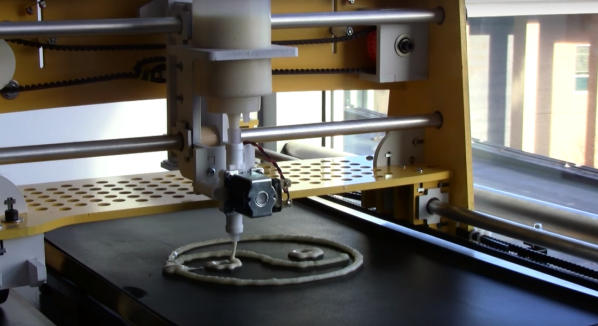
In case you didn’t know it, pancake art is a thing. People are turning out incredible edible artwork using squeeze bottles and pancake batter. But even if you’re not terribly artistic, you can still amaze your breakfast buddies with this robotic pancake printer.

At its simplest – and in our opinion its most impressive – pancake art involves making patterns with thin batter on a hot griddle. The longer the batter is cooked, the darker it becomes, and art happens. To capitalize on this, [Trent], [Kevin], [Sunny] and [Isaac] built a 2-axis gantry with a working area the size of an electric griddle. A bottle is pressurized with a small air pump and controlled by a solenoid valve to serve as a batter extruder, and an Arduino controls everything. Custom pancake design software lets you plan your next masterpiece before committing it to batter.

Sadly, the video below shows us that the team didn’t include an automatic flipper for the pancake, but no matter – that’ll make a great feature for the next version. Maybe something like this?

Continue reading “Edible Art From A Robot Pancake Printer”

Hams In Space: Project OSCAR

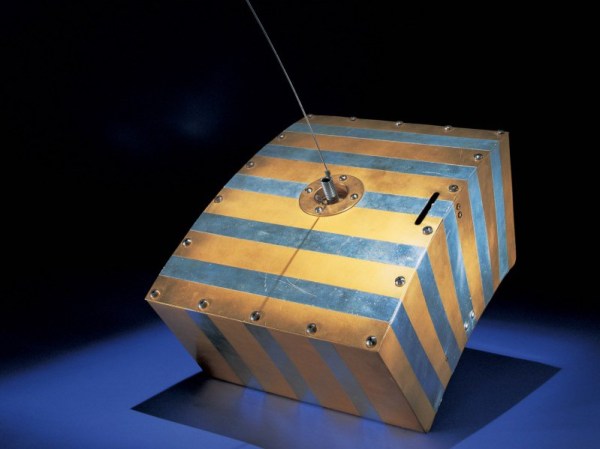
In early December 1961, a United States Air Force rocket took off from Vandenberg Air Force Base in California carrying a special payload. The main payload was a Corona surveillance satellite, but tucked just aft of that spacecraft was a tiny package of homebrew electronics stuffed into something the looked like a slice of cake. What was in that package and how it came to tag along on a top-secret military mission is the story of OSCAR 1, the world’s first amateur radio satellite.

Continue reading “Hams In Space: Project OSCAR”