The Pi 400 As A PC Peripheral

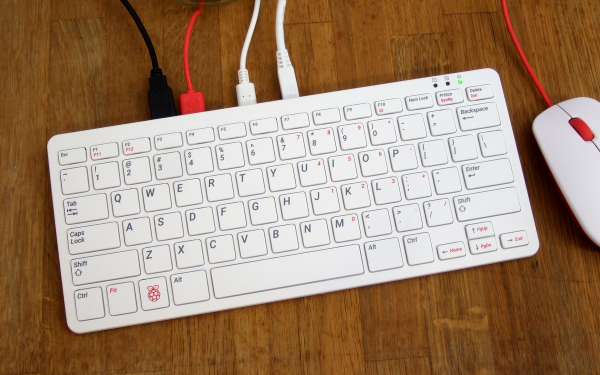
The Raspberry Pi 400 all-in-one computer is a neat little unit that is powerful enough to take on most humdrum computing tasks while doing an excellent job of freeing up valuable desktop space. But what about those moments when both the Pi and a PC are needed on the same desktop? How can the Pi and the bulky PC keyboard share the same space?

[Gadgetoid] may have the answer, with a clever bit of software that presents the Pi’s mouse and keyboard as peripherals on its USB-C power port. If your PC has a high-power USB socket that can run the Pi then it can use the small computer’s input devices just as well as the Pi itself can. It’s fair to say that the Pi 400’s keyboard is not it’s strongest point, but we can see some utility in the idea.

Running it is simply a case of running an executable from the Pi. Control can be wrested back to Raspberry Pi OS with a simple keystroke. Perhaps it’s not the ultimate desktop experience, but if you’re a die-hard Pi-head there’s plenty of appeal.

Within a few weeks, it’s a year since the launch of the Pi 400. We’ve not seen as many of them as the other Pi models, but you might find our original review to be of interest.

Thanks [Itay] for the tip.

Why Wait For Apple? Upgrade Your IPhone With USB-C Today!

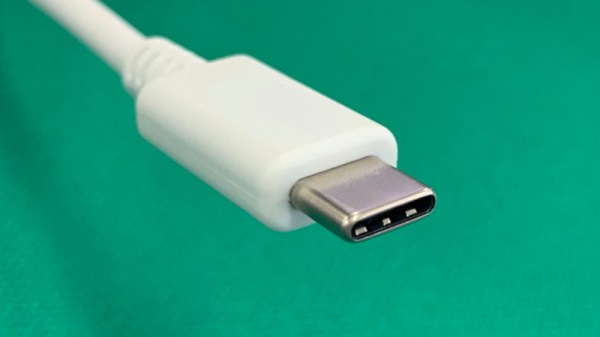
Apple iPhones ship with the company’s Lightning cable, a capable and robust connector, but one that’s not cheap and is only useful for the company’s products. When the competition had only micro-USB it might have made sense, but now that basically all new non-fruity phones ship with USB-C, that’s probably the right way to go.

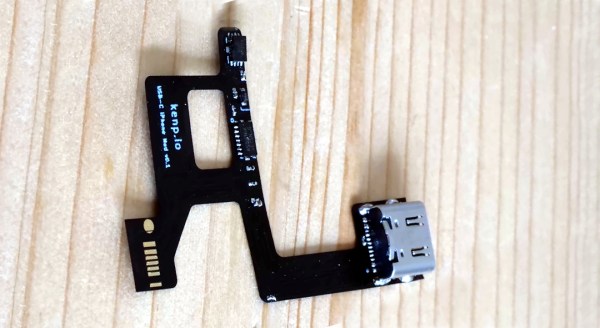
[Ken Pilonell] has addressed this by modifying his iPhone to sport a USB connector. The blog post and the first video below the break show us the proof of concept, but an update in the works and a teaser video show that he made it.

We’re a bit hazy on the individual iPhone model involves, but the essence of the work involves taking the internals of a Lightning-to-USB-C cable and hooking it up to the phone’s internal Lightning port. The proof-of-concept does it by putting the Apple flexible PCB outside the phone and plugging the cable part in directly, but it seems his final work involves a custom flexible board on which the reverse-engineered USB-C converter parts are mounted along with the USB-C socket itself. We see a glimpse of machining the slot in the phone’s case to USB-C dimensions, and we can’t wait for the full second installment.

It’s purely coincidental, but this comes against a backdrop of the European Union preparing to mandate USB-C on all applicable devices.

Continue reading “Why Wait For Apple? Upgrade Your IPhone With USB-C Today!”

Thingiverse Data Leaked — Check Your Passwords

Every week seems to bring another set of high-profile data leaks, and this time it’s the turn of a service that should be of concern to many in our community. A database backup from the popular 3D model sharing website Thingiverse has leaked online, containing 228,000 email addresses, full names, addresses, and passwords stored as unsalted SHA-1 or bcrypt hashes. If you have an account with Thingiverse it is probably worth your while to head over to Have I Been Pwned to search on your email address, and just to be sure you should also change your password on the site. Our informal testing suggests that not all accounts appear to be contained in the leak, which appears to relate to comments left on the site.

Aside from the seriousness of a leak in itself, the choice of encryption should raise a few eyebrows. Both SHA-1 and bcrypt can be considered broken or at best vulnerable to attack here in 2021, so much so that for any website to have avoided migration to a stronger algorithm indicates a very poor attention to website security on the part of Thingiverse. We’d like to think that it would serve as a salutary warning to other website operators in our field, to review and upgrade their encryption, but we suspect readers will agree that this won’t be the last time we report on such a leak and nervously check our own login details.

The Compute Module Comes Of Age: Say Hello To The Real Cutting Edge Of Raspberry Pi

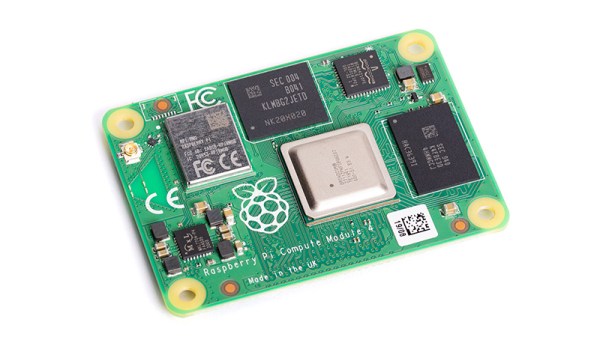
If we wanted to point to an epoch-making moment for our community, we’d take you back to February 29th, 2012. It was that day on which a small outfit in Cambridge put on the market the first batch of their new product. That outfit was what would become the Raspberry Pi Foundation, and the product was a run of 10,000 Chinese made versions of their very first single board computer, the Raspberry Pi Model B. With its BCM2835 SoC and 512 megabytes of memory it might not have been the first board that could run a Linux distribution from an SD card, but it was certainly the first that did so for pocket money prices. On that morning back in 2012 the unforseen demand for the new board brought down the websites of both the electronics distributors putting it on sale, and a now-legendary product was born. We’re now on version 4 of the Model B with specs upgraded in almost every sense, and something closer to the original can still be bought in the form of its svelte stablemate, the Pi Zero.

How Do You Evolve Without Casualties?

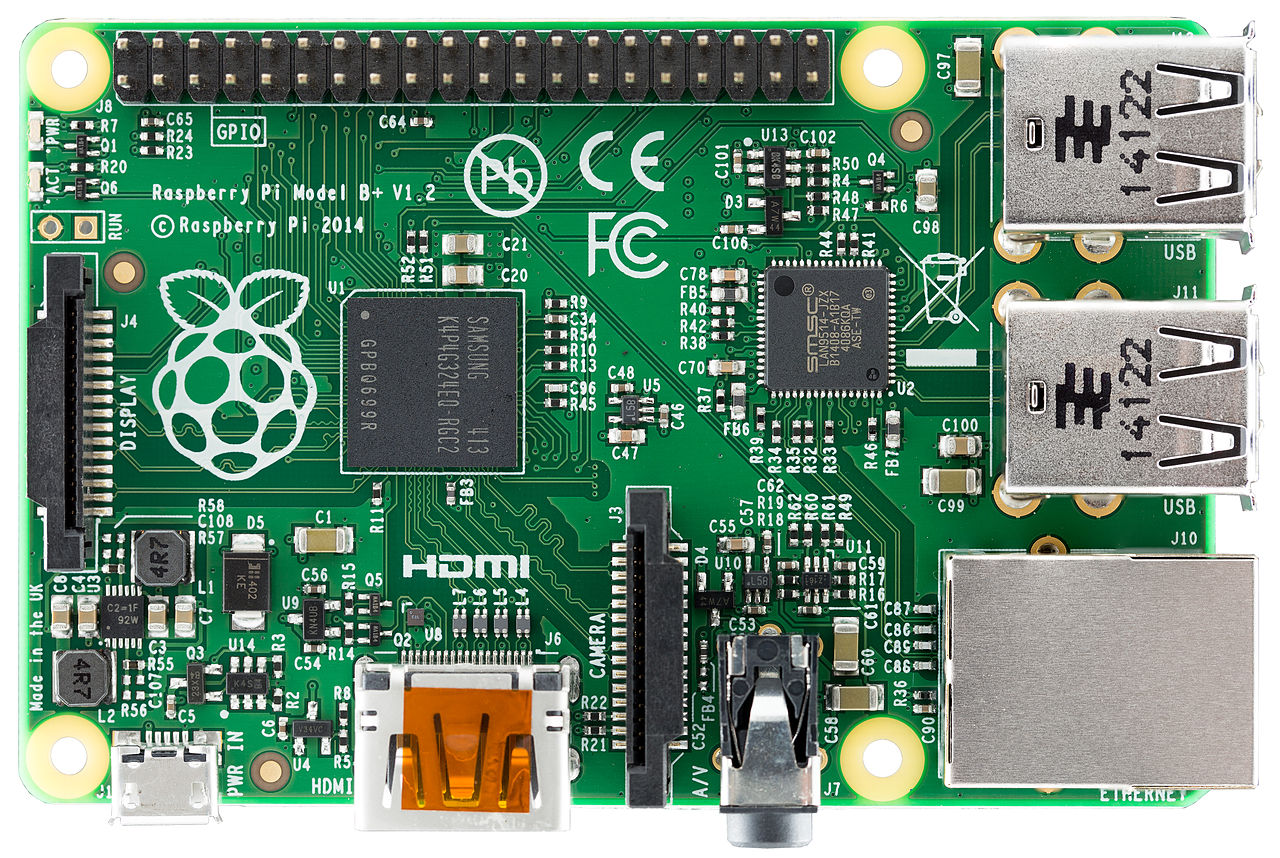
The original Pi Model B+ from 2014.
The original Pi Model B+ from 2014. The form factor has had a few minor changes, but hardware-wise the Pi 4 follows this pretty closely. Lucasbosch, CC BY-SA 3.0.

The problem with having spawned such a successful product line is this: with so many competitors and copies snapping at your heels, how do you improve upon it? It’s fair to say that sometimes its competitors have produced more capable hardware than the Pi of the moment, but they do so without the board from Cambridge’s ace in the hole: its uniquely well-supported Linux distribution, Raspberry Pi OS. It’s that combination of a powerful board and an operating system with the minimum of shocks and surprises that still makes the Pi the one to go for after all these years.

Continue reading “The Compute Module Comes Of Age: Say Hello To The Real Cutting Edge Of Raspberry Pi”

A Deep Dive Into The Sound Of An Apple II

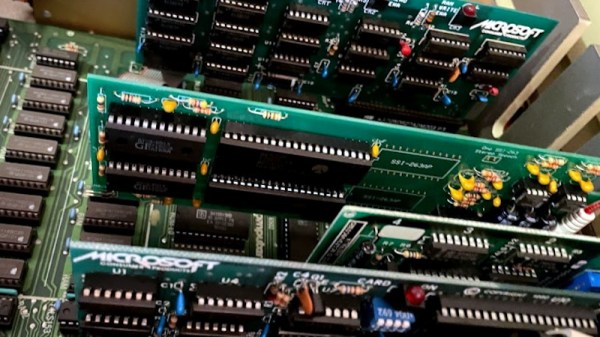
A major part of the retrocomputing scene for many of us lies in the world of chiptunes, music created either using original retrocomputing hardware or in the style of those early synthesiser chips. There’s one machine we don’t hear much about among all this though, and that’s the Apple II. Though probably one of the most expandable of all the 8-bit home computers, it lacked a sound channel beyond a speaker hooked up to a memory location port so any complex sound work had to be done via an add-on card. It’s something [Nicole Branagan] has investigated in depth, as she demonstrates first the buzz from the speaker and then what must have been an object of extreme desire back in the day, a Mockingboard sound card.

Her card is not an original but a modern recreation using the same hardware, which is to say a pair of 6522 VIA port chips, each driving an AY-3-8910 audio chip. This is already a familiar device to those who have heard an Amstrad CPC, a later Sinclair Spectrum or, an MSX, and in the Apple it delivers an impressive stereo sound thanks to both channels being present. Interestingly though, it delivers a far smoother output than an MSX playing the same music, probably because of a superior filtering circuit.

She wraps up with a discussion of coding on the Apple for the AY, and how to best accommodate the card on the later Apple IIgs. If the AY chip catches your interest, it’s also easy to drive from a microcontroller.

Showdown Time For Non-Standard Chargers In Europe

It seems that few features of a consumer electronic product will generate as much rancour as a mobile phone charger socket. For those of us with Android phones, the world has slowly been moving over the last few years from micro-USB to USB-C, while iPhone users regard their Lightning connector as the ultimate in connectivity. Get a set of different phone owners together and this can become a full-on feud, as micro-USB owners complain that nobody has a handy charging cable any more, USB-C owners become smug bores, and Apple owners do what they’ve always done and pretend that Steve Jobs invented USB. Throwing a flaming torch into this incendiary mix is the European Union, which is proposing to mandate the use of USB-C on all phones sold in its 27 member nations with the aim of reducing considerably the quantity of e-waste generated.

Minor annoyances over having to carry an extra micro-USB cable for an oddball device aside, we can’t find any reason not to applaud this move, because USB-C is a connector born of several decades of USB evolution and brings with it not only the reversible plug but also the enhanced power delivery standards that enable fast charging no matter whose USB-PD charger you are using. Mandating USB-C will put an end to needlessly overpriced proprietary cables, and bring eventual unity to a fractured world. Continue reading “Showdown Time For Non-Standard Chargers In Europe”

GPS? With Starlink, We Don’t Need It Any More!

To find your position on the earth’s surface there are a variety of satellite-based navigation systems in orbit above us, and many receiver chipsets found in mobile phones and the like can use more than one of them. Should you not wish to be tied to a system produced by a national government though, there’s now an alternative. It comes not from an official source though, but as a side-effect of something else. Researchers at Ohio State University have used the Starlink satellite broadband constellation to derive positional fixing, achieving a claimed 8-metre accuracy.

The press release is light on information about the algorithm used, but since it mentions that it relies on having advance knowledge of the position and speed of each satellite we’re guessing that it measures the Doppler shift of each satellite’s signal during a pass to determine a relative position which can be refined by subsequent observations of other Starlink craft.

The most interesting takeaway is that while this technique leverages the Starlink network, it doesn’t have any connection to the service itself. Instead it’s an entirely passive use of the satellites, and though its accuracy is around an order of magnitude less than that achievable under GPS it delivers a position fix still useful enough to fit the purposes of plenty of users.

Earlier in the year there was some amusement when the British government bought a satellite broadband company under the reported impression it could plug the gap left by their withdrawal from the European Galileo project. Given this revelation, maybe they were onto something after all!

Thanks [Renze] for the tip.