Radiochat Is A Simple LoRa Interface Over WiFi

LoRa is often talked about as a potentially useful solution for emergency communication. The problem is, few of us are running around with LoRa hardware on a day-to-day basis. Student [William Barkoff] designed the Radiochat device as a simple tool that could pair with virtually anything over WiFi, and allow it to send and receive LoRa messages.

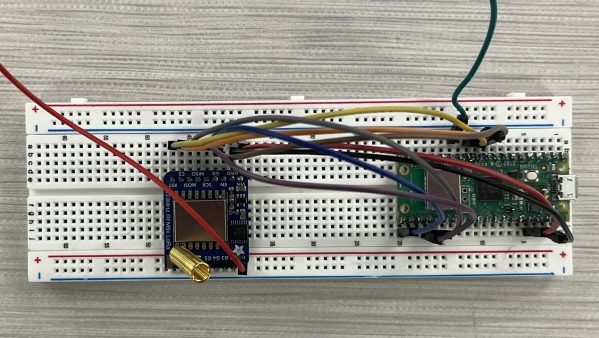
Radiochat is based on the Raspberry Pi Pico W, and uses the microcontroller’s wireless hardware to communicate with other devices. It provides a WiFi network that devices like laptops or smartphones can connect to. The Pico serves up a simple web page which accepts text input. Type in a message and hitting enter and the Pico will command a LoRa radio module over SPI to send that message out over the airwaves. It can then be picked up by another Radiochat module which displays the message on its own webpage.

It’s in an early state of development, and the demo video shows there are still some bugs to work out. Ultimately, though, it could be a cheap battery-powered device that lets smartphones and laptops chat over LoRa in remote areas. Indeed, [William’s] trips to New Mexico on model rocketry expeditions were a big inspiration for the project.

Continue reading “Radiochat Is A Simple LoRa Interface Over WiFi”

Hidden Wall-Mount Table Looks Like Hanging Art

If you live in a compact space, sometimes you have to get creative with your furniture to make the most of it. This wall-hanging table design from [diyhuntress] is perfect for those situations where you need a table, but you don’t want it taking up the whole room when it’s not in use. Plus, it’s kinda stealthy, which makes it even more fun!

The table is a folding design, with a flat wooden top, and an equally-sized supporting leg that goes down to the ground. The other end of the table is supported by a frame on the wall, which also contains several shelves for small objects. The trick is that the table top and support are hinged together, so that they can fold up and sit in front of the shelves, essentially hanging the whole assembly from the wall. Even better, by painting a simple artwork on the support, the whole thing just looks like a decor piece with no clue as to its hidden functionality.

It’s a fun build, and one that you could easily knock out in a weekend with some basic woodworking skills. We’ve featured some other nifty shelf designs before, too. Just remember, too – a neat and tidy space is a boost to your hacker productivity, so don’t rule this out for your own use!

Continue reading “Hidden Wall-Mount Table Looks Like Hanging Art”

DIY Cleats Give You Traction In Ice And Snow

It’s getting into the cold and snowy season for much of the world, and that means it can be slippy when you go walking outside. If you need more traction, but your shoes don’t have spikes, fear not. You can build yourself a set of these nifty strap-on cleats designed by [Zero To Infinity].

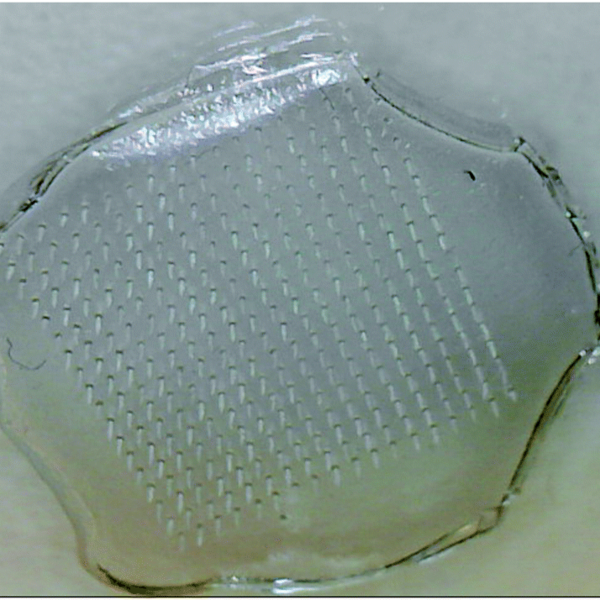
The cleats are a 3D printed design, which [Zero To Infinity] modeled in Fusion 360 to match their own shoes. Obviously, everybody’s shoes differ, so they’ve provided simple instructions on how to design your own similar cleats to suit your personal footwear. They’re then printed in a stiff TPU to give them the right amount of flex for bending to conform to the shoe. The cleats themselves are simply M4 bolts, nuts, and washers screwed through the cleats, pointy-side down. They can then be strapped to a shoe, and you’re done!

We’d love to see a set of snow shoes that are fully printed and ready to accept cleats. Indeed, we’ve seen some neat printed sneaker designs before. They haven’t really caught on yet, but there’s nothing to stop you printing the hottest kicks of 2024 right in your own home. When you do, don’t hesitate to hit up the tipsline!

Talking Ohmmeter Also Spits Out Color Bands For You

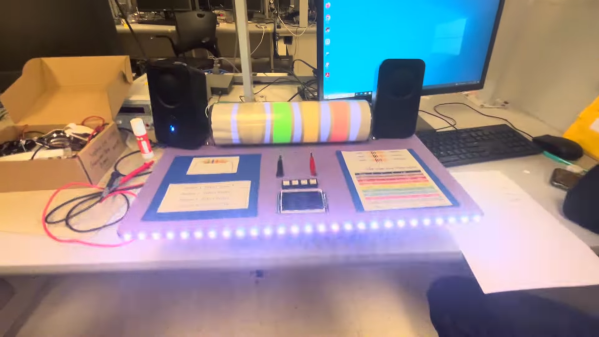
If you’ve got a resistor and you can’t read the color bands (or they’re not present), you can always just grab a multimeter and figure out its value that way. [Giacomo Yong Cuomo] and [Sophia Lin] have built an altogether different kind of ohmmeter, that can actually spit out color values for you, and even read the resistance aloud. It’s all a part of their final project for their ECE 4760 class.

The build is based around a Raspberry Pi Pico. It determines the value of a resistor by placing it in a resistor divider, with the other reference resistor having a value of 10 kΩ. The resistor under test is connected between the reference resistor and ground, while the other leg of the reference resistor is connected to 3.3 V. The node between the two resistors is connected to the Pi Pico’s analog-to-digital converter pin. This allows the Pico to determine the voltage at this point, and thus calculate the test resistor’s value based on the reference resistor’s value and the voltages involved.

A large fake resistor provides user feedback. It’s filled with addressable LEDs, which light up the appropriate color bands depending on the test resistor’s value. It’s capable of displaying both 3-band, 4-band, and 5-band color configurations. While six-band resistors do exist, the extra band is typically used for denoting temperature coefficients which can’t readily be determined by this simple test. It can also play audio files to announce the resistance value over a speaker.

It’s a neat project that surely taught the duo many useful skills for working with microcontrollers. Plus, it’s kinda fun — we love the big glowing resistor. We’ve featured some other fancy resistors before, too!

Continue reading “Talking Ohmmeter Also Spits Out Color Bands For You”

Mailblocks Makes Your Phone Work More Like The Post, Kinda?

Phones can be distracting, with notifications popping up all the time to snare our attention and maybe even ruin our lives. [Guy Dupont] wishes to be no slave to the machine, and thus built a solution. Enter Mailblocks.

The concept is simple. It’s a physical mailbox which [Guy] can put his phone in. All notifications on the phone are blocked unless he puts his phone into the box. When the phone is inside and the box is closed, the little red flag goes up, indicating “DOPAMINE” is available, and [Guy] can check his notifications.

To achieve this, [Guy] is running a custom DNS server. It redirects all the lookups for push notifications on Android so they go nowhere. Placing the phone in the mailbox turns the re-directions off, so the phone can contact the usual servers and get its notifications as normal.

It’s a novel way of fighting against the constant attention suck of modern smartphones. Rather than being bombarded by notifications in real time, [Guy] instead has to take a significant intentional physical action to check the notifications. It cuts the willpower required and the interruptions to his work in a fell swoop.

We’ve featured [Guy’s] innovative and outside-the-box projects before, too. His smart pants were an absolute tour de force, I might add.

Continue reading “Mailblocks Makes Your Phone Work More Like The Post, Kinda?”

DIY Pneumatic Actuator Does Great In Action

Pneumatic actuators can be powerful and fast, making them very useful for all kinds of mechanical jobs. [Michael Rechtin] decided that while he could buy them off-the-shelf, he preferred to see if he could make his own via 3D printing. Despite the challenges, he succeeded!

Part of his success is because he knew when to take advantage of the strengths of 3D printed parts, and where they wouldn’t perform so well. To that end, the main body of the cylinder is actually a piece of PVC pipe. That’s because manufactured PVC pipe is far smoother and more regular than what you could reasonably achieve with a most 3D printers. The end caps, however, were printed and tapped to take standard air fittings. The piston was printed too, fitted with a steel cylinder rod and O-rings for sealing.

The double-acting cylinder performed remarkably well in testing, easily skewering an orange. The initial version did leak a touch, but later revisions performed better. Springs were also fitted for damping hits at either end which improved longevity, with a test rig racking up over 10,000 cycles without failure.

We love a design that is both easy to build at home and capable of great performance. We’ve featured some neat open-source pneumatic builds before, too.

Continue reading “DIY Pneumatic Actuator Does Great In Action”

Infrared Following Robot Built As Proof-of-Concept For Autonomous Luggage

Once upon a time, the poor humans of the past had to lug around suitcases and trunks with their own arms. Then, some genius figured out that you could just put wheels on and make everyone’s life a million times easier. Now, what if you didn’t even have push, because your luggage could just follow you instead? Well, students [Yuqiang Ge] and [Yiyang Zhao] have figured out a proof of concept for how that could work.

Their build is a small robotic platform that they assembled for their ECE5730 final project. The tiny wheeled robot is programmed to rotate on the spot until its infrared sensors pick up a signal. In turn, the user is intended to carry an infared beacon for it to lock onto. A pair of sensors are used on the robot platform, separated by a board to serve as a blind. The robot determines the relative signal strength from each sensor, and uses that to vary PWM signals to the two DC drive motors to steer the robot platform to seek and follow the infrared beacon.

It’s a neat idea, and looks to work pretty well in a university corridor. It even has an ultrasonic range sensor to (ideally) stop when it gets too close to the user. Whether it would survive the tumult of a crowded airport is another thing entirely, but that’s what the engineering process is about. Indeed, the very concept has been commercialized already!

Following-robots are a common student project, and one well worth exploring if you’re new to the robotic field.

Continue reading “Infrared Following Robot Built As Proof-of-Concept For Autonomous Luggage”