Making A UNIX Clock While Making A Few Mistakes Along The Way

unixclock

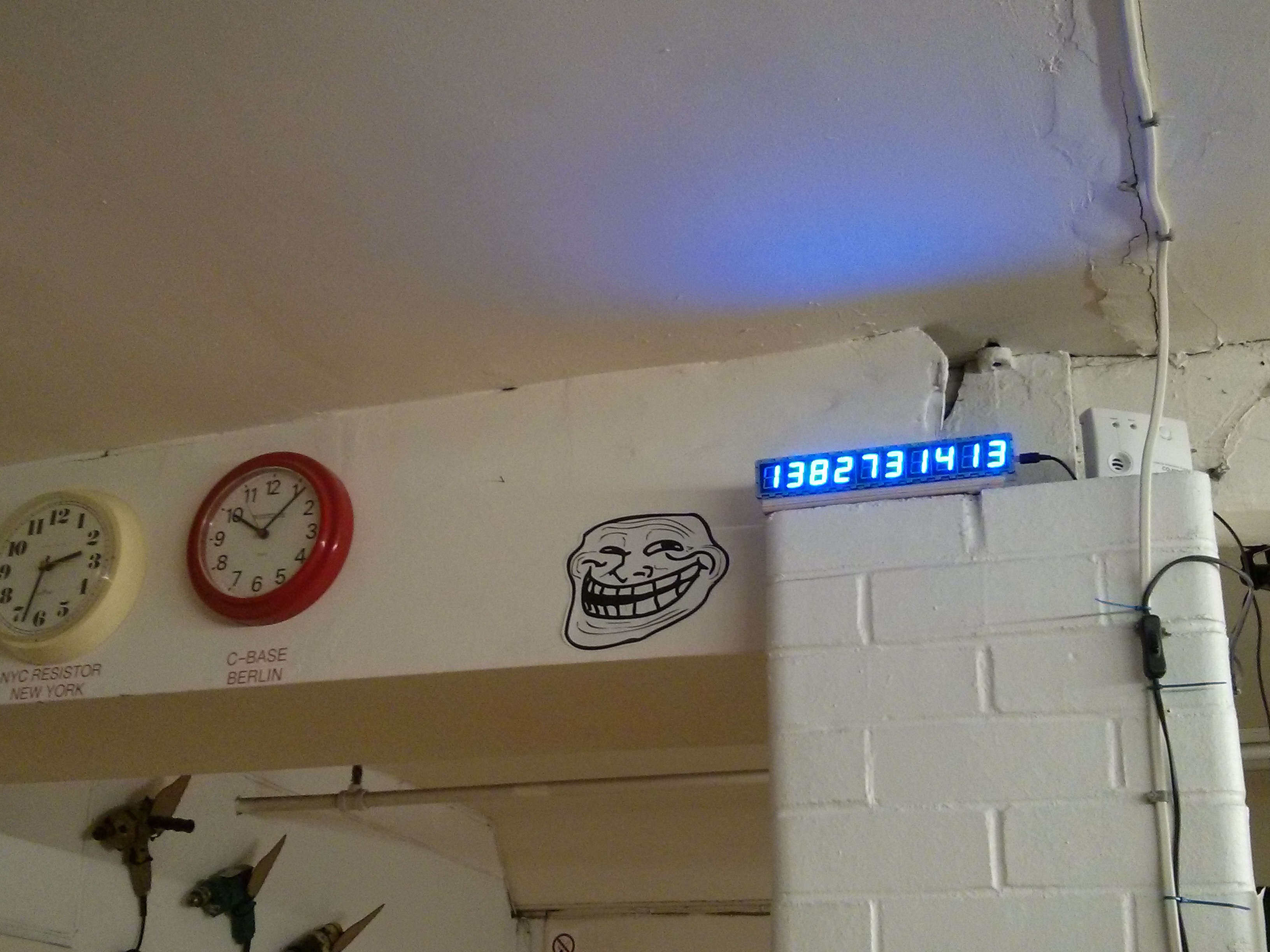
Sometimes the projects we think are easy to design are the ones on which we end up making the most mistakes. The UNIX clock that you see in the picture above is one of these projects. For our readers that don’t know it, UNIX time is the number of seconds since 00:00 on January 1st 1970. The clock that [James] designed is based on an Arduino Pro Mini board, an RTC chip to store the time, a custom made display board and two buttons to set the date/time.

One of the mistakes that [James] made was designing the boards on which will be soldered the seven-segment displays before actually choosing the ones he’ll use, as he was thinking they’d be all the same. The displays he ended up with had a different pitch and needed a different anode voltage, so he had to cut several traces on the PCBs and add another power supply. It also took [James] quite a while to remove the bits that his hackerspace’s laser didn’t cut through. We strongly advise a good look at his very detailed write-up if you are starting in the electronics world.

If you find this Unix time display too easy to read here’s one that’s a bit more of a challenge.

Fail Of The Week: How A Cheap USB AC Adapter Might Indirectly Burn Your House Down

This Fail of the Week will remind our readers that every project they make, no matter how small they might be, may have big consequences if something goes wrong. Shown in the picture above is an oven that [Kevin] tweaked to perform reflow soldering. The story is he had just moved into a new place a few weeks ago and needed to make a new batch of boards. As he had cycled this oven many times, he was confident enough to leave the room to answer a few emails. A few minutes later, he had the unfortunate experience of smelling something burning as well as discovering white smoke invading his place.

Continue reading “Fail Of The Week: How A Cheap USB AC Adapter Might Indirectly Burn Your House Down”

Interview With [Damien George], Creator Of The Micro Python Project

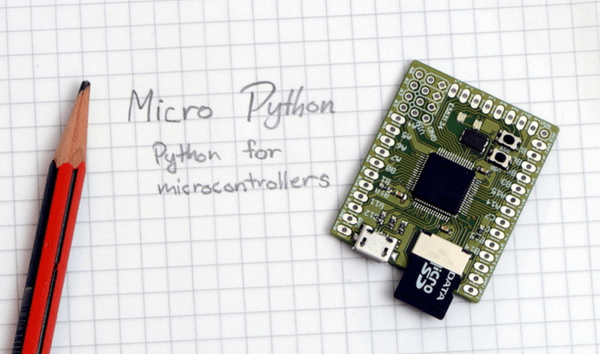
[Damien George] just created Micro Python (Kickstarter alert!), a lean and fast implementation of the Python scripting language that is optimized to run on a microcontroller. It includes a complete parser, compiler, virtual machine, runtime system, garbage collector and was written from scratch. Micro Python currently supports 32-bit ARM processors like the STM32F405 (168MHz Cortex-M4, 1MB flash, 192KB ram) shown in the picture above and will be open source once the already successful campaign finishes. Running your python program is as simple as copying your file to the platform (detected as a mass storage device) and rebooting it. The official micro python board includes a micro SD card slot, 4 LEDs, a switch, a real-time clock, an accelerometer and has plenty of I/O pins to interface many peripherals. A nice video can be found on the campaign page and an interview with the project creator is embedded after the break.

Continue reading “Interview With [Damien George], Creator Of The Micro Python Project”

Sniffing Data From Radio-Controlled Bus Stop Displays

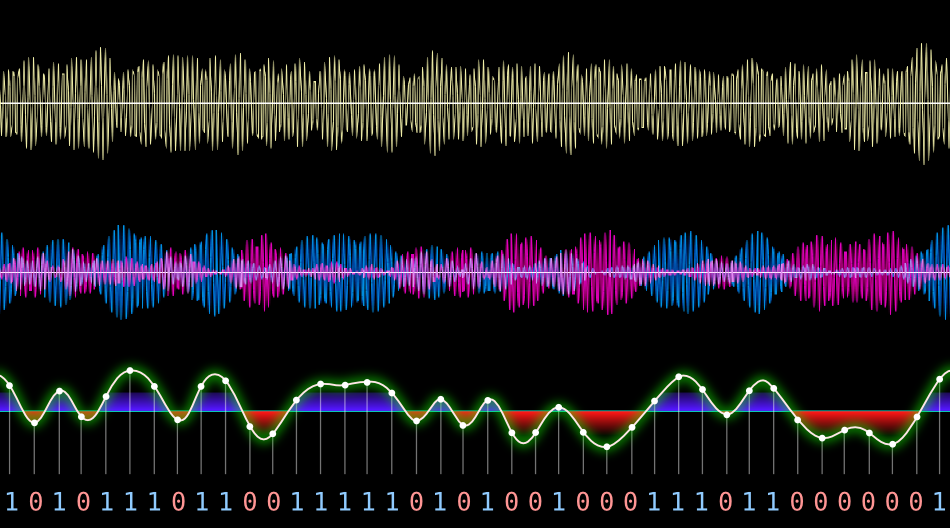
A few weeks ago in Finland [Oona] discovered a radio data stream centered around 76KHz in a FM broadcast and she recently managed to decode it. This 16,000bps stream uses level-controlled minimum-shift keying (L-MSK) which detection can be quite tricky to implement. She therefore decoded the stream by treating the received signal as non-coherent binary FSK, which as a side effect increased the bit error probability. [Oona] then understood that the stream she was getting was the data broadcast by Helsinky buses to the nearby bus stop timetable displays. She even got lucky when she observed a display stuck in the middle of its bootup sequence, displaying a version string. This revealed that the system is called IBus and made by the Swedish company Axentia. However their website didn’t provide the specs for their proprietary protocol. After many hours of sniffing and coding, [Oona] successfully implemented the five layer protocol stack in Perl and can now read the arrival times of the nearby buses from her apartment.

A Low-Cost Modular High Altitude Balloon Tracker With Mesh Networked Sensors

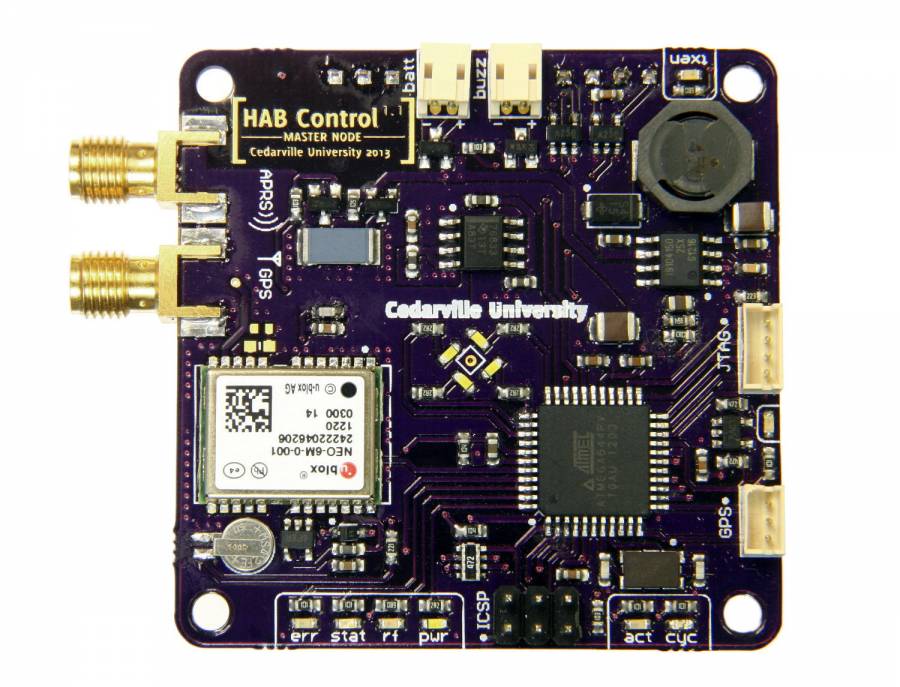
[Ethan] just tipped us about a project he and a few colleagues worked on last year for their senior design project. It’s a low-cost open hardware/software high altitude balloon tracker with sensors that form a mesh network with a master node. The latter (shown above) includes an ATmega644, an onboard GPS module (NEO-6M), a micro SD card slot, a 300mW APRS (144.39MHz) transmitter and finally headers to plug an XBee radio. This platform is therefore in charge of getting wireless data from the slave platforms, storing it in the uSD card while transmitting the balloon position via APRS along with other data. It’s interesting to note that to keep the design low-cost, they chose a relatively cheap analog radio module ($~40) and hacked together AFSK modulation of their output signal with hardware PWM outputs and a sine-wave lookup table.

The slave nodes are composed of ‘slave motherboards’ on which can be plugged several daughter-boards: geiger counters, atmospheric sensors, camera control/accelerometer boards. If you want to build your own system, be sure to check out this page which includes all the necessary instructions and resources.

Ask Hackaday: (How) Should We Control Kickstarter Campaigns?

Kickstarter campaigns helped bring new and innovative products to the market during these last years. However there often are failures that can happen at several stages. We’d like to hear your opinion about them and discover what you think could be done to foresee/prevent these kinds of bad experiences that damage the trust between individuals and funding platforms.

Post-funding failures

There are a few project teams that give up a few months after receiving the funds, like the people behind the iControlPad 2 recently (disclaimer: we’re not backers). Even if [Craig] stated that he would document the entire production process on film and be open about all the project life steps, that didn’t prevent the project from being dropped (oddly enough) exactly one year after they received the funds. The more the project was headed towards failure, less was the frequency of updates regarding the project’s current state. The official reasons for this decision were difficulties that arose with the chosen LEDs, we’ll let you make your own opinion by having a look at the updates section. Thanks [Nikropht] for the tipping us about it.

Pre-funding failures

What is happening even more often on kickstarter is (usually successful) campaigns being canceled by the website itself after a few people rang the alarm bell. This may be due to an unfeasible project idea, a fake demonstration video/photos or even an attempt to resell an existing item under a new name.

The best examples for the first category undeniably are free energy generators. Here is an indiegogo campaign which actually succeeded. The creators announced one month ago that the project is running a bit behind schedule (aha), that the machine will cost around $5000 and that they’ll “need the funds before they make the units”. What can be done to educate the public that such energy is not created out of thin air?

The second category includes the recently canceled LUCI advanced lucid dream inducer (thanks [Michael] for the tip), which ended 2 days before the deadline. Technical guys got skeptical when they saw that the electrode signals were amplified several feet from the brain with an audio amplifier. At first glance, this was the only sign that this project may have been a scam (let’s give them the benefit of the doubt). Further research indicated that GXP (the company behind the campaign) didn’t exist, and most of their pictures were photoshopped. Here is a link to a quick summary of the situation and if you want to be entertained we advise you to make some pop-corn and head to the comments section of the project. What’s terrible here is that backers started to turn against each other, as the company always had a ‘good’ explanation for all the backers’ questions.

At last, there are some persons that just make funding campaigns with already existing products. This is the case of the eye3 flying robot and the vybe vibrating bracelet (don’t order!). Note that all of them were successfully funded. The eye3 was created by the same persons that made LumenLab, a company that created the microcnc. You’ll find more details here. The vibrating bracelet was just this one, which would be made in different colors. We just discovered this website that covered both project in greater lengths as well as many others.

Kickstarter fraudsters

Scams can also happen on the backers’ side. Recently, a Kickstarter backer named “Encik Farhan” attempted to rip off many Kickstarter projects. A ‘credit card chargeback’ technique was used, were the backer would contribute to the campaign, receive his perk and later cancel his credit card transaction using diverse reasons. The money would later be taken from the campaign funding by the payment processor.

What can be done?

The examples cited in this article set precedents which may turn people away from crowdfunding. In your opinion, what could be done to prevent this? Another reason we ask is because Hackaday may launch a sponsored product soon, thanks to the new overlords. This hypothetical product would be designed with the Hackaday community in a completely transparent process.

In the meantime, if you find any perpetual motion machines on kicstarter or indiegogo, be sure to send them in. You may also want to checkout this website predicting the success probability of a given kickstarter campaign.

Reverse Engineering The Sony Ericsson Vivaz High Resolution 640 X 360 Cellphone LCD

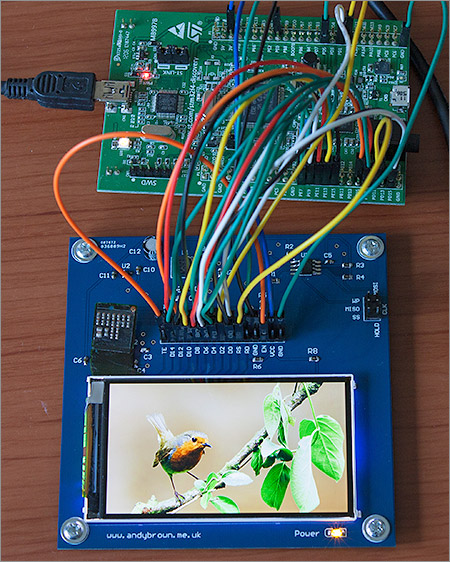
In our opinion, reverse engineering may be one of the best ways to tease your brain. [Andy] just did that by reverse engineering the Sony Ericsson Vivaz high resolution LCD (cached copy here). In his (very) nicely written article, [Andy] explains all the steps that led him to the result shown in the picture above. He started by finding the repair manual of the Vivaz, to discover that the display could be interfaced with 8080 type parallel signals. That meant that he could use a standard microcontroller without high speed buses to interface with it, in this case the STM32F4. Next in his adventure, [Andy] ordered the appropriate connector and took a more educated guess for the onboard microcontroller. A long Google search brought up the R61523 from Renesas. So he designed his breakout board, got it produced and a few hours later a nice picture was being shown on the LCD. He even took the time to compare the original display with the clone he found on the webs, and modified his graphics library to support this display.