Making Big Dry Ice Blocks With Low Pressure CO2

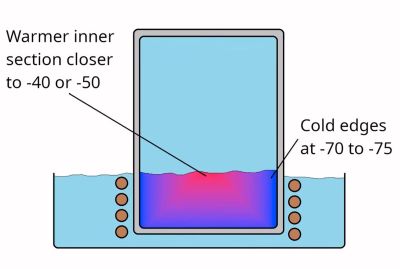
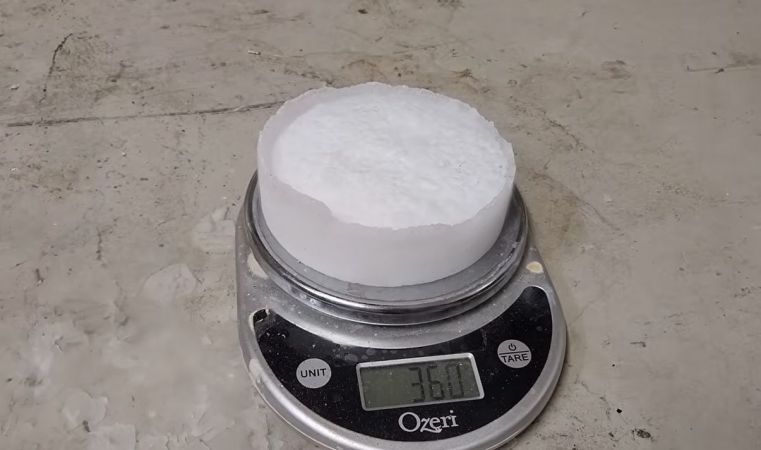
Although the term ‘dry ice’ is generally used for solid CO2, it’s much more accurate to call this ‘dry snow’, as, rather than being actual solid blocks, they are effectively snow that’s been compressed really tightly. While not really necessary for most applications of dry ice, it is possible to make blocks of actual CO2 ice, and thus [Hyperspace Pirate], as someone with a healthy obsession with cold things had to make some of his own.

Continue reading “Making Big Dry Ice Blocks With Low Pressure CO2”

Why Using Cardboard For A PC Case Is A Chore

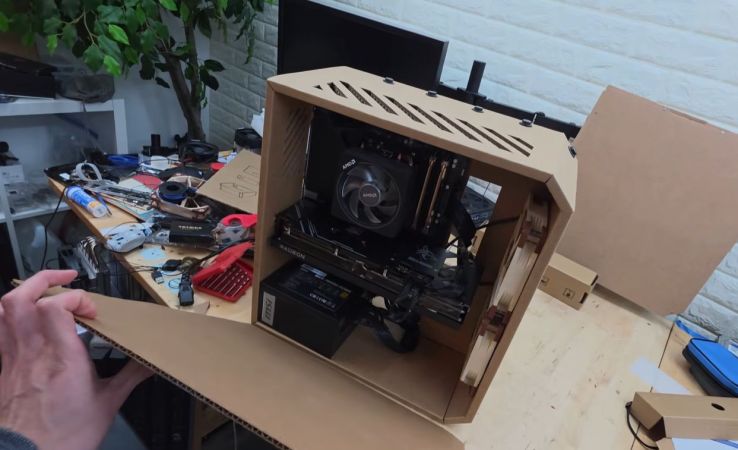
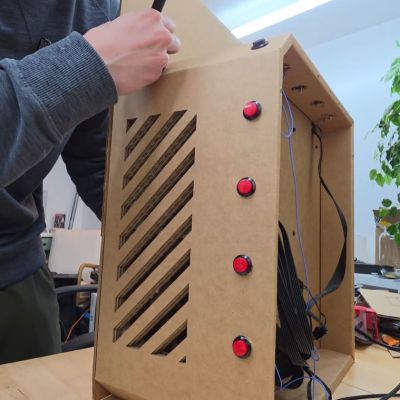
The idea of using cardboard for a sloppy PC case isn’t new; it’s a time-honored tradition dating back to at least the 1990s. That said, with today’s CNC cutters and other advanced tooling available to hobbyists, you might be curious to see how far you can push the concept. As demonstrated in a recent video by [mryeester], the answer appears to be that good planning and a solid understanding of cardboard’s limitations are as essential as ever.

After having the PC case drawn up in CAD and cut on a professional CNC cutter by a buddy who makes commercial cardboard displays, the installation procedure for the PC components showed where a bit of foresight could have saved a lot of time and effort.

Continue reading “Why Using Cardboard For A PC Case Is A Chore”

Why You Probably Shouldn’t DIY A Car Airbag

Car airbags are both a very simple concept and a marvel of engineering, replacing the bone-shattering impact of unforgiving plastic and steel with a relatively soft landing in a funky-smelling air cushion. This deceptively simple concept requires that the gas generator activates only when there is a crash and finishes filling the airbag in the milliseconds before the squishy human’s cranium with its soft filling attempts to occupy the same space as said airbag. This makes mad Aussie bloke [Turnah81]’s attempt at DIY-ing a car airbag a most daring proposition.

Rather than messing about with an IMU and microprocessors, he went low-tech with an inertial fuel cut-off switch. These are mechanical switches that hold a steel ball in place with a magnet until a sufficiently large force — like a crash — dislodges the ball and triggers an event. Usually, a switch like this cuts off the fuel pump.

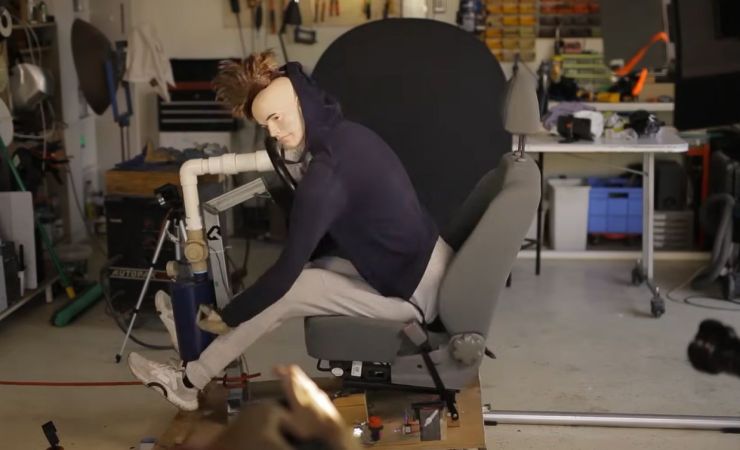
After a bit of fun with a crash-test rig and the airbag of a salvaged steering wheel, a DIY airbag was assembled using a compressed-gas cylinder instead of the fancy gas generator, along with an electrically triggered valve. Here, you can already see why modern airbags use a gas generator, as it is simply far more compact.

For the bag itself, a pillow case was adapted, with the subsequent crash test — as pictured above — going about as well as you can imagine. After this, he tried a few improvements, like using a bin liner and detonating some fuel, but it seems that the gas generator is very hard to beat for producing a large amount of gas in very little time.

Meanwhile, the inertial cut-off switch turned out to be more than sufficient for this purpose, and it was also used to trigger the original airbag. Of course, with how cheap those off-the-shelf airbag units are and are tested to be fit for purpose, you’d never DIY them for actual use in a car unless you were stark raving mad.

Airbags have a checkered history. There are some places you shouldn’t try to save costs.

Continue reading “Why You Probably Shouldn’t DIY A Car Airbag”

Tracing Olfactory Receptor Mapping Between The Nose And Brain

The way that the sense of smell works is that olfactory sensory neurons (OSNs) are wired up to olfactory receptors (ORs) in the nasal epithelium, from which they send signals to the brain. Once arrived there, a hierarchy of processing results in us experiencing the sensation of ‘smelling’. Exactly how the olfactory receptor-to-brain mapping works during development, and whether its physical pattern in the nasal epithelium is replicated in the brain, remained major questions until now. In a study published in Cell by [David H. Brann] and others, many of these questions have now been answered, at least for mice.

As it turns out, the mapping between OSNs and ORs isn’t performed by a random selection process, but instead creates a receptor map that’s closely matched between the nasal epithelium and the brain. What has complicated answering this question up till now is that the nasal epithelium isn’t a flat surface, but a convoluted labyrinth that maximizes surface area to smell better.

The second issue was linking the physical location of OSNs and gene expression in the nasal epithelium. Using a new approach, the researchers showed an intricate patterning in this epithelium, with the basal stem cells from which it regenerates maintaining this patterning. This makes for a system very similar to, for example, the auditory system, where the detection of frequencies in the inner ear, as a linear system, is found to be replicated in the brain.

Although it does not provide us with all the answers yet about how this genetic patterning works, it offers a glimpse at a fascinating system that would seem to be used repeatedly across sensory systems. It may also provide potential treatments for medical conditions affecting the olfactory system, whereby the sense of smell is missing, reduced, or oddly miswired, for example, after a SARS-CoV-2 infection of the olfactory nerve that leads to symptoms such as a constant sensation of a burning smell.

You have to wonder if a better understanding of the nose will revive interest in digitally creating and sending smells?

The Noctua Fan Files And The Limits Of 3D Printing PC Fans

After Noctua recently released CAD files for a range of their computer fans, one of the first thoughts that popped up for most people was: Can you just to 3D print their fans? Even though Noctua begs you not to 3D print the files and even says they changed the design slightly so it wouldn’t be the same anyway, the question persists. Fortunately, [Steve] of Gamers Nexus is here to help us answer the question of whether it makes sense to 3D print a computer fan.

Unsurprisingly, the answer is mostly a resounding ‘no’. After reworking the original CAD models to be both printable on a Bambu Lab FDM printer and printing the parts in PLA, the arguably most important part, the motor, still had to be sourced from an original Noctua fan. Although you could source a cheaper motor, that could change the fan’s characteristics.

The other issue is materials. The special polymer that Noctua uses for its fans is designed not to change shape significantly when the fan blades are spinning, whereas PLA and basically every other thermoplastic will likely deform enough to hit the inside of the fan with the blades. For this reason, a 3 mm gap was used in the PLA print compared with the approximately 0.5 mm gap of the original Noctua fan.

Using the professional fan tester and semi-anechoic chamber over at Gamers Nexus, the original and replica fans were compared, showing that the 3D-printed fan had a similar noise profile but produced only about half the airflow. This is likely due to the blade shape and angle, the increased gap, and probably a dozen other details that presumably justify putting a cool $40 down for the original fan.

In short, you’re probably best off using these Noctua fan CAD models for fit testing in a larger CAD model, or 3D printing it for a similar purpose, rather than for a functional fan design. At least now we know. Thanks, [Steve].

Continue reading “The Noctua Fan Files And The Limits Of 3D Printing PC Fans”

Machining A Two-Stroke Engine Out Of Aluminium

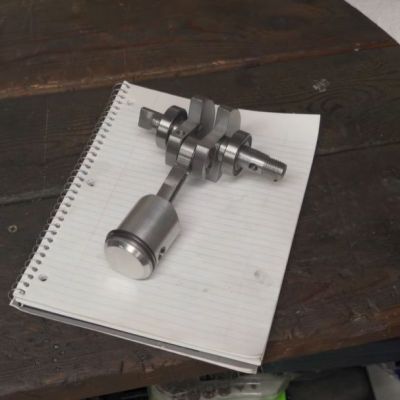
Recently [Camden Bowen] took a swing at machining a two-stroke engine out of billet aluminium, following adventures in 3D printing such an engine, as well as building one out of parts largely sourced from a hardware store. The sketchiest part here is probably the use of only a basic mill and lathe, making the milling of certain shapes a definite OSHA violation.

Two-stroke internal combustion engines are pretty simple from a mechanical point of view, with designs readily available. Add in a suitable material to machine and a modicum of machining and welding skills, and presto, you got yourself a not too shabby looking engine.

Of course, back in reality things are a bit more hairy. Not only are there many different ways to produce the parts – with some coming with a time penalty, monetary penalty, or both – but there are also myriad ways to hurt yourself and/or others. Fortunately [Camden] scraped by with just some (expensive) lessons learned and a major ruined part.

The final design features a single cylinder, with an initial pressure test showing a solid 150 PSI (10 bar) of compression. With that encouraging sign, a coil pack and contactor were added for some spark and a test run with the usual premixed gasoline-oil fuel.

Boringly, the engine mostly just runs and work as it should. This is of course not unexpected, much like how following the recipe for a pie produces said pie. But it does demonstrate how easy things are when you do not stray off the beaten path. The only significant issue was the flywheel wobbling slightly, likely due to a small manufacturing glitch, but this should not cause too many issues.

Continue reading “Machining A Two-Stroke Engine Out Of Aluminium”

Reverse-engineering The 1998 Ultima Online Demo Server

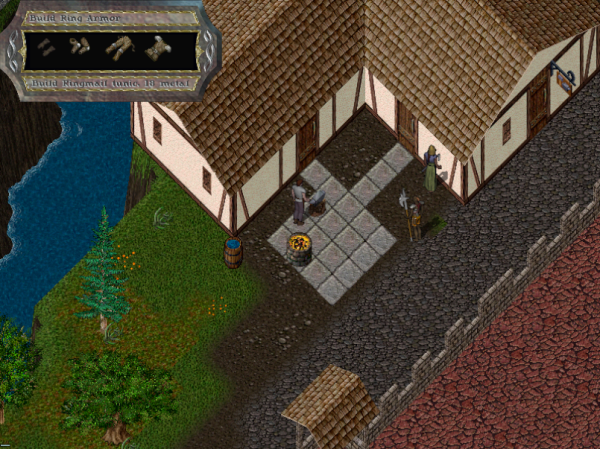
In any MMORPG, the average user will generally only encounter the client side of the system. This makes building a compatible open source version of the proprietary server into a bit of a chore. Of course, sometimes you get a bit of a break, such as with the – still active – MMORPG Ultima Online, when the disc for the 1998 The Second Age expansion contained a stand-alone demo. This also meant a (stripped-down) server which has been gratefully reverse-engineered by the community, with [draxinar] now claiming to have made the most complete server based on this demo server.

To make things extra challenging, the originally written in C++ server binary was reverse-engineered into C99 code, meaning that the use of classes and associated vtables had to be left intact, just without the critter comforts provided by C++.

The total process took about a decade with occasional progress, with the current server binary being mostly identical to a 1998-era Ultima Online server. Some features that were stubbed out or disabled in the demo server had to be re-enabled or reimplemented, including the user account system.

Features that were left out of the final release like the ecology system were also enabled in so far as they were implemented. Although there is probably still a lot more work to be done on the code, [draxinar] reckons that this is a good point for the community to get involved to do some testing and provide feedback. There are also some missing server-related resource files that may still be saved somewhere.

Thanks to [adistuder] for the tip.