Simulating Driven-Dissipative Quantum Spin Dynamics On Consumer Hardware

Physics simulations using classical mechanics is something that’s fairly easily done on regular consumer hardware, with real-time approximations a common feature in video games. Moving things to the quantum realm gets more complex, though with equilibrium many-body systems still quite solvable. Where things get interesting is with nonequilibrium quantum systems.

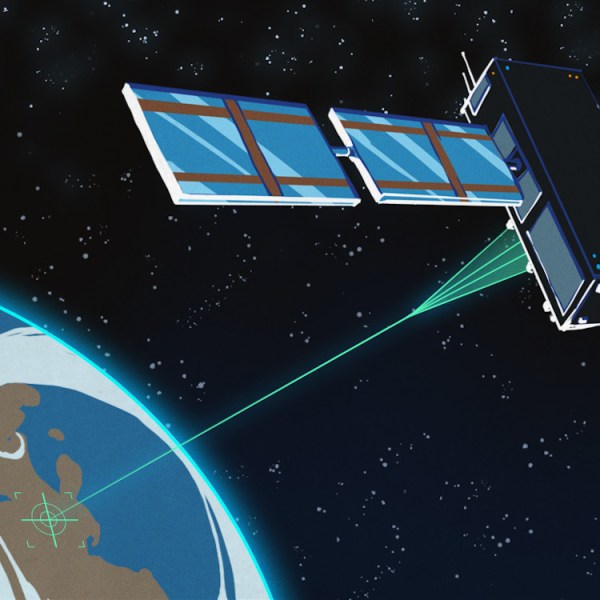
These open systems are subject to energy gains and losses that disrupt its equilibrium. The truncated Wigner approximation (TWA) is used as a semi-classical method to solve these, but dissipative spin systems proved tricky. Now however [Hosseinabadi] et al. have put forward a TWA framework (PR article) for driven-dissipative many-body dynamics that works on consumer hardware.

Naturally, even with such optimizations there is still the issue that the TWA is only an approximation. This raises questions such as about how many interactions are required to get a sufficient level of accuracy.

Using classical computers to do these kind of quantum physics simulations has often been claimed to the ideal use of qubit-based quantum computers, but as has been proven repeatedly, you can get by with a regular tensor network or even a Commodore 64 if you’re in a pinch.

Mini Battery-Powered Vapor-Compression Air Conditioner

The brushless DC-powered compressor. (Credit: Hyperspace Pirate, YouTube)

When you think of air conditioners, you tend to think of rather bulky units, with the window-mounted appliances probably among the most compact. There’s however no real minimum size limit to these AC units, as long as you can get an appropriate compressor. If you also manage to pick up a small, DC-powered compressor like [Hyperspace Pirate] did, then you might be tempted to make a hand-portable, battery-powered AC unit.

At their core vapor-compression AC units are very simple, featuring the aforementioned compressor, a condensing coil, expansion valve and the evaporator coil. Or in other words, some radiators looted out of other devices, various plumbing supplies and the refrigerant gas to charge the AC unit with.

Since the compressor uses a BLDC motor, it has three terminals that a typical ESC connects to, along with two 2200 mAh Li-on battery packs that can keep the portable AC unit running for a while.

As for the refrigerant gas, although the compressor lists R134a, this is both quite expensive and illegal in parts of the world like the EU. Alternatives are butane (R600) as well as isobutane (R600a), but due to unfortunate circumstances the use of propane (R290) was forced. Fortunately this worked fine, and after some testing and running of numbers it was found that it had about 42 Watt cooling power, with a coefficient of performance (COP) of around 1.

Considering that most AC units have a COP of 3.5 – 5, this shows that there’s still some room for increased efficiency, but at the very least this portable, battery-powered AC unit provides cold air on one side, and hot air on the other while completely blowing Peltier thermocouples out of the water in terms of efficiency.

Continue reading “Mini Battery-Powered Vapor-Compression Air Conditioner”

Retrotechtacular: IBM’s The World Of OCR

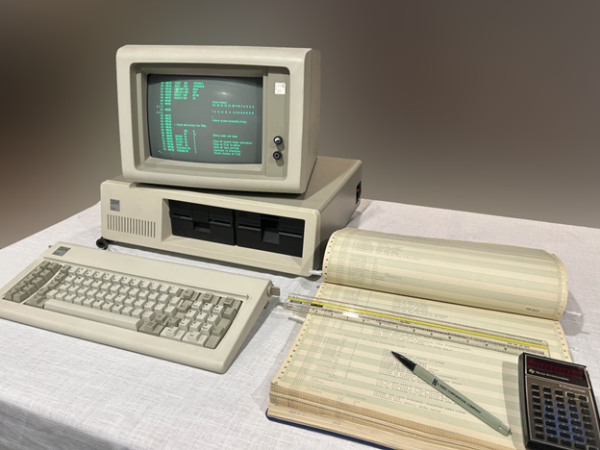
Optical Character Recognition (OCR) forms the bridge between the analog world of paper and the world of machines. The modern-day expectation is that when we point a smartphone camera at some characters it will flawlessly recognize and read them, but OCR technology predates such consumer technology by a considerable amount, with IBM producing OCR systems as early as the 1950s. In a 1960s promotional video on the always delightful Periscope Film channel on YouTube we can get an idea of how this worked back then, in particular the challenge of variable quality input.

What drove OCR was the need to process more paper-based data faster, as the amount of such data increased and computers got more capable. This led to the design of paper forms that made the recognition much easier, as can still be seen today on for example tax forms and on archaic paper payment methods like checks in countries that still use it. This means a paper form optimized for reflectivity, with clearly designated sections and lines, thus limiting the variability of the input forms to be OCR-ed. After that it’s just a matter of writing with clear block letters into the marked boxes, or using a typewriter with a nice fresh ink ribbon.

These days optical scanners are a lot more capable, of course, making many of such considerations no longer as relevant, even if human handwriting remains a challenge for OCR and human brains alike.

Continue reading “Retrotechtacular: IBM’s The World Of OCR”

NVIDIA Drops Pascal Support On Linux, Causing Chaos On Arch Linux

It’s no surprise that NVIDIA is gradually dropping support for older videocards, with the Pascal (GTX 10xx) GPUs most recently getting axed. What’s more surprising is the terrible way that this is being handled by certain Linux distributions, with Arch Linux currently a prime example.

On these systems, updating the OS with a Pascal, Maxwell or similarly unsupported GPU will result in the new driver failing to load and thus the user getting kicked back to the CLI to try and sort things back out there. This issue is summarized by [Brodie Robertson] in a recent video.

Here the ‘solution’ is to switch to a legacy option that comes from the Arch User Repository (AUR), which feels somewhat sketchy. Worse is that using this legacy option breaks Steam as it relies on official NVIDIA dependencies, which requires an additional series of hacks to hopefully restore this functionality. Fortunately the Arch Wiki provides a starting point on what to do.

It’s also worth noting that this legacy driver on the AUR is being maintained by [ventureo] of the CachyOS project, whose efforts are the sole reason why these older NVIDIA cards are still supported at all on Linux with the official drivers. While there’s also the Nouveau driver, this is effectively a reverse-engineering project with all of the problems that come with such an effort, even if it may be ‘good enough’ for older GPUs.

Continue reading “NVIDIA Drops Pascal Support On Linux, Causing Chaos On Arch Linux”

Treating Functions As Vectors In Hilbert Space

Perhaps the most beautiful aspect of mathematics is that it applies to literally everything, even things that do not exist in this Universe. In addition to this there are a number of alternative ways to represent reality, with Fourier space and its related transforms being one of the most well-known examples. An alternative to Euclidian vector space is called Hilbert space, as a real or complex inner product space, which is used in e.g. mathematical proofs. In relation to this, [Eli Bendersky] came up with the idea of treating programming language functions as vectors of a sort, so that linear algebra methods can be applied to them.

Of course, to get really nitpicky, by the time you take a function with its arguments and produce an output, it is no longer a vector, but a scalar of some description. Using real numbers as indices also somewhat defeats the whole point and claim of working in a vector space, never mind Hilbert space.

As with anything that touches upon mathematics there are sure to be many highly divisive views, so we’ll leave it at this and allow our esteemed readers to flex their intellectual muscles on this topic. Do you think that the claims made hold water? Does applying linear algebra to every day functions make sense in this manner, perhaps even hold some kind of benefit?

FibreSeeker 3: Continuous Carbon Fiber Vs Chopped CF

Although you can purchase many types of FDM filaments containing ‘carbon fiber’ these days, they are in no way related to the carbon fiber (CF) composite materials used for rocket hulls and light-weight bicycles. This is because the latter use continuous fibers, often in weaved CF mats, whereas the FDM filaments just use small, chopped, fragments of CF. Obviously this will not result in the same outcome, which makes it interesting that a company called Fibre Seek is now running a KickStarter for a very affordable co-extrusion FDM printer that can add continuous CF to any part. They also sent a few test parts to [Dr. Igor Gaspar] for testing against regular FDM CF prints.

It should be noted here that continuous CF with FDM is not new, as Markforged already does something similar, though at a ‘Contact us for a price quote’ level. The advantage of the Fibre Seek solution is then the co-extrusion that would make printing with continuous CF much more flexible and affordable. Based on the (sponsored) [CNC Kitchen] video of a few weeks ago at a tradeshow, the FibreSeeker 3 printer is effectively a standard CoreXY FDM printer, with the special co-extrusion dual print head that allows for CF to be coated with the target thermoplastic before being printed as normal.

Continue reading “FibreSeeker 3: Continuous Carbon Fiber Vs Chopped CF”

Born To Burn: The Battle Born LFP Battery

Would you feel confident in buying US-made LiFePO4 (LFP) batteries? While the answer here is generally expected to be ‘yes’, especially compared to getting an unbranded LFP battery off eBay from a random seller, the outcome may not be that different. Case in point the 100 Ah, 12 VDC LFP Battle Born battery that [Will Prowse] took a look at to see why its positive terminal gets positively crispy.

Battle Born battery positive terminal. (Credit: Will Prowse, YouTube)

Once the lid was cut off, it’s easy to see what the problem is: the positive terminal is only loosely attached to the bus bar, leading to extremely poor contact. It also appears that there’s a plastic spacer which has properly melted already in this well-used battery that [Will] obtained from a viewer.

This overheating issue with Battle Born batteries has been reported for years now, which makes it a great idea to take a good look at any Battle Born LFP batteries you may have kicking around, as they may be plagued by the same design flaw. Trying to make use of the manufacturer’s warranty could be complicated based on the commentators in the DIY Solar Forum thread, as Battle Born likes to claim that the overheating issue is an external problem and not a design flaw.

Either way, it looks like an incredibly sketchy way to design a battery terminal on an LFP battery that is supposed to surge 100+A. [Will] is requesting that anyone affected posts details in the forum or similar to get all information together, as he looks to push Battle Born on this issue.

What makes this issue worse is that shortly after releasing that first video, Battle Born responded to some concerned customers with a response that claims that their terminal design is a ‘thermal fail-safe’, but as can be seen in [Will]’s follow-up video, it absolutely doesn’t look like one.

Continue reading “Born To Burn: The Battle Born LFP Battery”