A Solar-Powered Wristwatch With An ATtiny13

Wristwatches come in many shapes, sizes, and types, but most still have at least one thing in common: they feature a battery that needs to be swapped or recharged somewhere been every other day and every few years. A rare few integrate a solar panel that keeps the internal battery at least somewhat topped up, as environmental light permits.

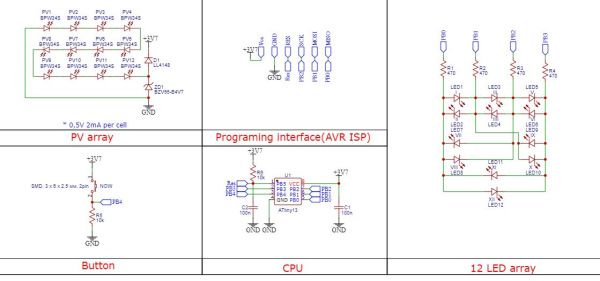
This “Perpetual” wristwatch designed by [Serhii Trush] aims to keep digitally ticking along using nothing but the integrated photodiodes, a rechargeable LIR2430 cell, and a power-sipping face that uses one LED for each hour of the day.
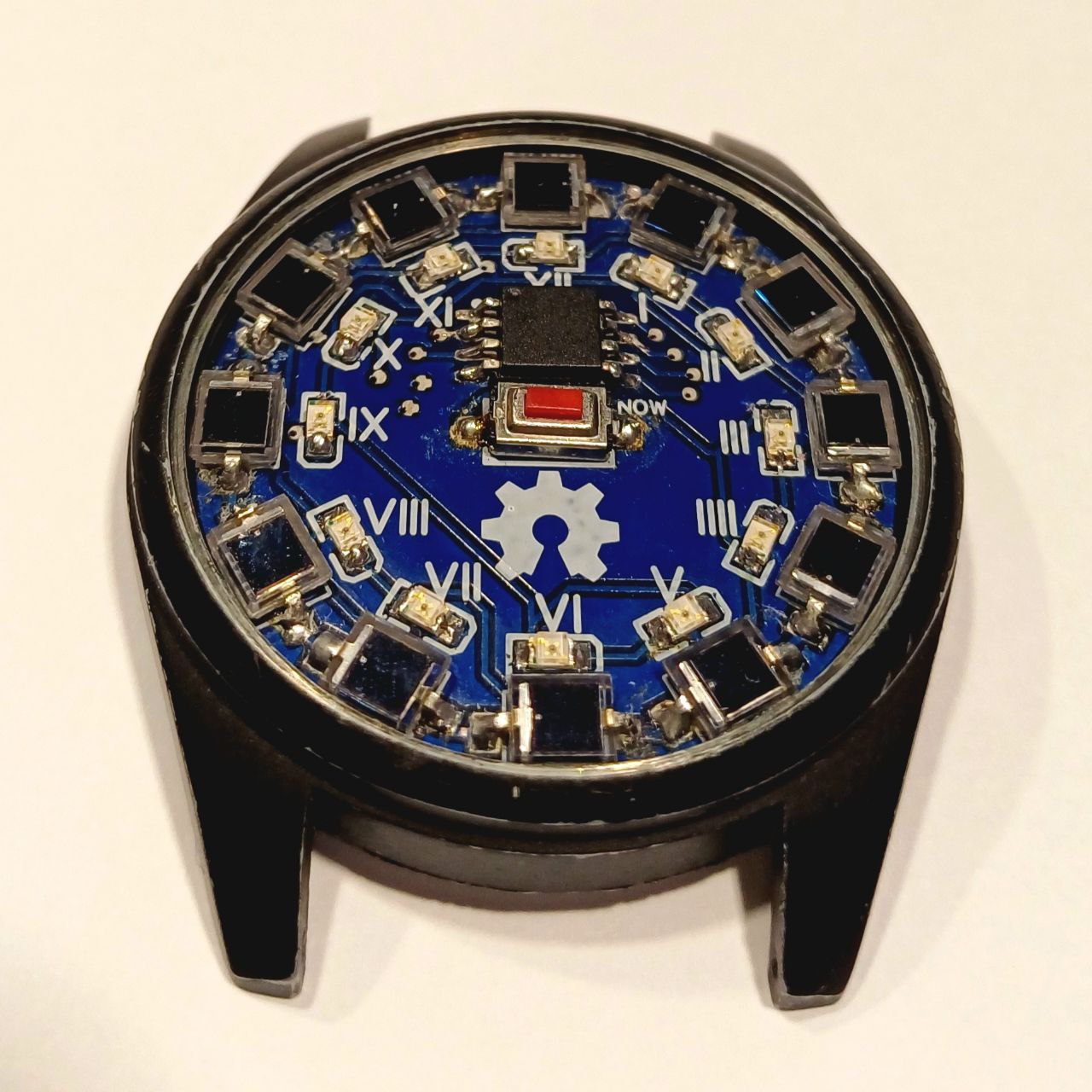
The face of the perpetual wristwatch. (Credit: Serhii Trush)

The wristwatch’s operation is demonstrated in the linked video (in Ukrainian, auto-generated subtitles available): to read out the current time, the button in the center is pressed, which first shows the hour, then the minutes (in 5 minute intervals).

After this the ATtiny13 MCU goes back to sleep, briefly waking up every 0.5 seconds to update the time, which explains why there’s no RTC crystal. The 12 BPW34S photodiodes are enough to provide 2 mA at 0.5 V in full sunlight, which together keep the LIR2430 cell charged via a Zener diode.

As far as minimalistic yet practical designs go, this one is pretty hard to beat. If you wish to make your own, all of the design files and firmware are provided on the GitHub page.

Although we certainly do like the exposed components, it would be interesting to see this technique paired with the PCB watch face we covered recently.

Continue reading “A Solar-Powered Wristwatch With An ATtiny13”
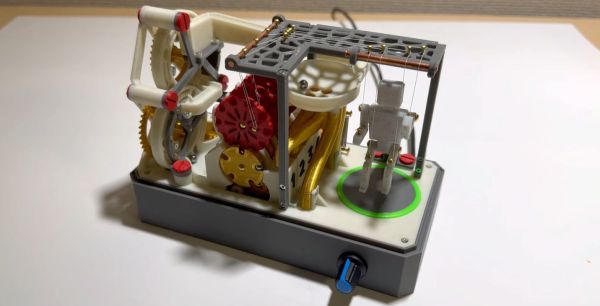
Randomly Move Marionette With Steel Balls And Geneva Drives

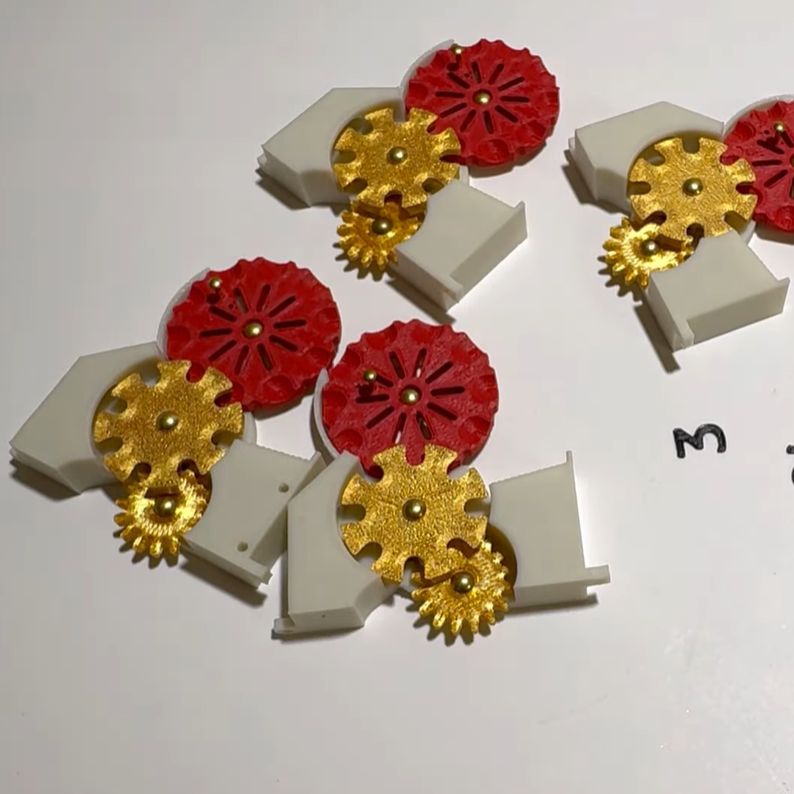
The ball driven Geneva drives that move the marrionette. (Credit: Karakuri channel, YouTube)

Over the years we have seen many marble machines, but this one on the [Karakuri channel] (hit CC for subtitles) on YouTube is somewhat special, as it uses Geneva drives to turn the motion of the steel balls going around the circuit into random movement of a marionette. The Geneva drive type of gear mechanism normally converts a constant rotary motion into intermittent rotary motion by having a singular pin on the first wheel drive the second wheel. In the demonstrated mechanism, however, the pin is replaced by the steel balls, which are only intermittently and randomly present because of how each steel ball picks one of four paths, one towards each Geneva drive.

As a result of this, the motion of the marionette’s appendages – attached to the red wheel – is random. The only powered element of the (mostly 3D printed) system is the drive mechanism that carries the steel balls up again and keeps the primary wheels on the Geneva drives rotating. We have to give the creator pops for what is both an interesting art piece and a demonstration of how to creatively use this somewhat unusual gear mechanism to introduce randomness without a lot of complexity.

Thanks to [MrTrick] for the tip.

Continue reading “Randomly Move Marionette With Steel Balls And Geneva Drives”

Unusual Port Combines DisplayPort And HDMI

Everyone knows you can’t plug an HDMI cable into a DisplayPort… port, and yet a recent video from [Jon Bringus] challenges that seemingly obvious assumption. The hardware in question is a variant of the 2013-era Xi3 X7A mini PC, code-named ‘Piston’ and also known as a ‘Steambox’, from back when that was still something that Valve was working on. Although the physical format here is definitely quaint, it might be implementing DisplayPort Dual-Mode (DP++), which was introduced around the same time.

With DP++ the DP port can detect when a DVI or HDMI adapter is connected and then transmit DVI/HDMI TMDS signals rather than DP signals. Since DP and HDMI/DVI use a different signaling scheme, normally an active adapter would be required. One disadvantage of DP++ is that the HDMI signal will be limited to e.g. 1920×1080 @ 120 Hz and 4K only at 30 Hz.

Normally a DP++ port is marked as such, and requires an adapter that works with the DP++ port. What Xi3 did in this case to make regular DP and HDMI connectors work seems to be somewhat of a mystery, with any information on this type of port being rather scarce. [Jon] thinks he may have found the part itself listed on Mouser, but isn’t completely sure.

Feel free to leave your thoughts and any information you have on this oddity in the comments.

Continue reading “Unusual Port Combines DisplayPort And HDMI”

Playing ZX Spectrum’s Manic Miner On The Arduino Uno

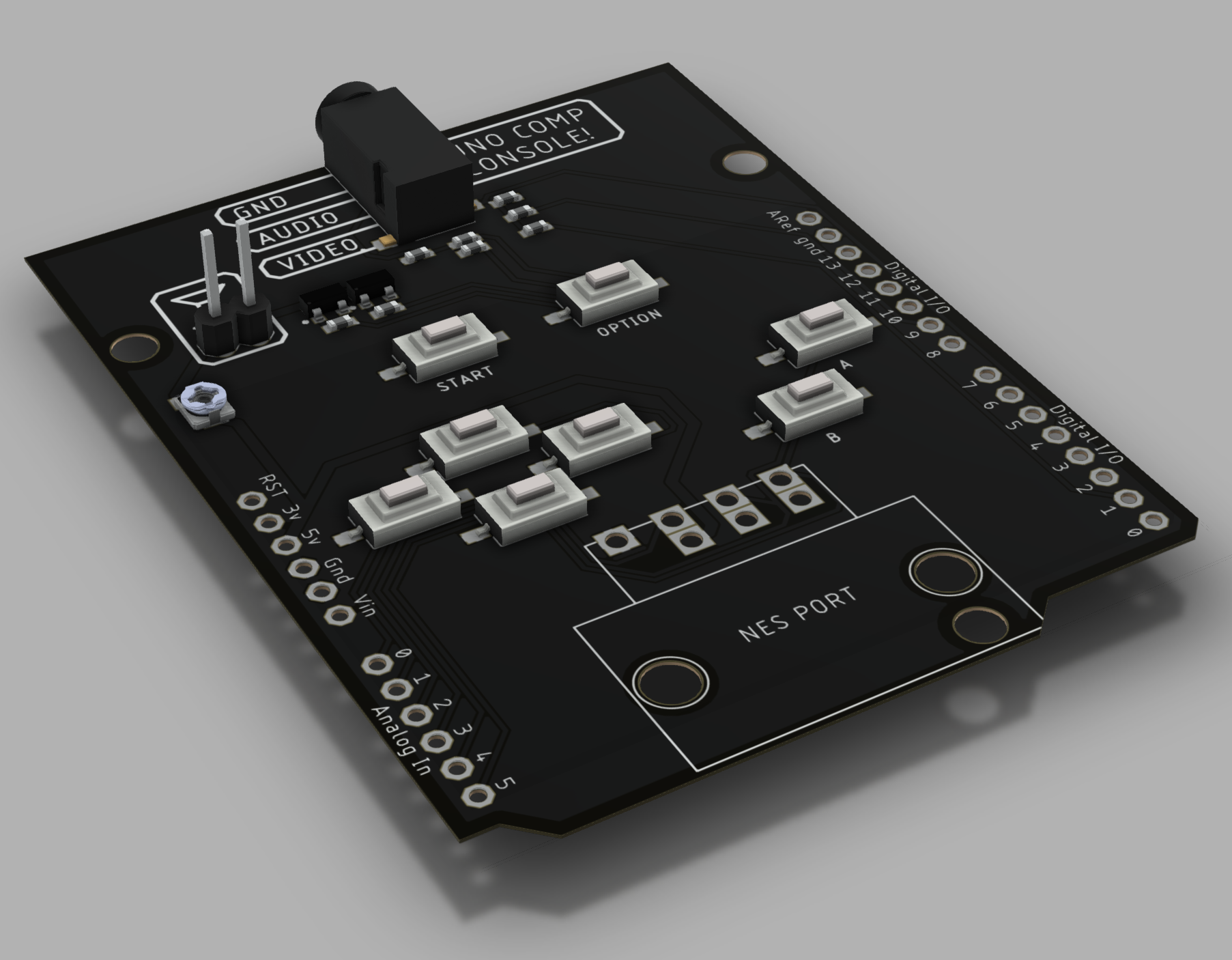
Composite output shield with audio driver and controller inputs for Arduino Uno (Credit: Scott Porter)

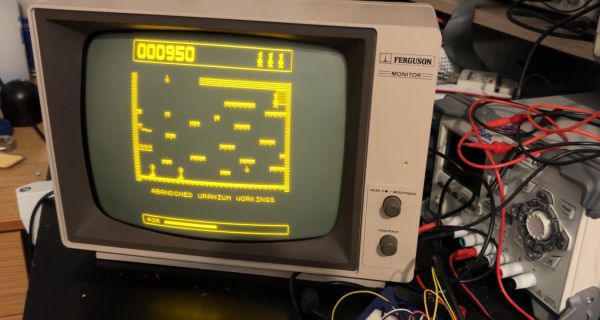
Although it seems many have moved on to 32-bit MCUs these days for projects, there is still a lot of fun to be had in the 8-bit AVR world, as [Scott Porter] demonstrates with a recent Arduino Uno project featuring his game engine running a port of the Manic Miner game that was originally released in 1983 for the ZX Spectrum. For the video and audio output he created an add-on board for the Uno that creates a composite signal using two resistors, along with an audio driver circuit and control inputs either from the onboard buttons or from a NES controller. Audio can be sent either over the composite output or via the audio jack.

A demonstration of the game is provided in a number of videos on [Scott]’s YouTube account, which shows off a few levels, at 256×256 resolution. It contains all 20 original levels, with a few quality of life upgrades with animation. It also features original music, which may or may not work for you, but music can be turned on or off in the main menu. Compared to the 3.5 MHz Z80 MPU in the ZX Spectrum, the 16 MHz AVR of the Uno is a lot beefier, which raises the hope that a color version like the ZX Spectrum one is also in the future, even if it may require an add-on board with a framebuffer. As [Scott] notes, the weakness of the Uno is that the ZX Spectrum has significantly more RAM, which limits what can be done.

Thanks to [256byteram] for the tip.

Continue reading “Playing ZX Spectrum’s Manic Miner On The Arduino Uno”

Reducing Seams In FDM Prints With Scarf Joint Seams

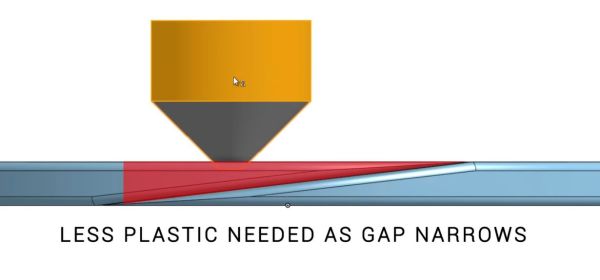
One unavoidable aspect of FDM 3D printing is that each layer consists out of one or more lines that have a beginning and an end. Where these join up, a seam is formed, which can be very noticeable if the same joint exists on successive layers. Taking a hint from woodworking, a possible solution is now being worked on that involves scarf joints. This research is covered by [Michael Laws] in a recent Teaching Tech video on YouTube, where he also details his own printing attempts with a custom 3D model, and a guide by [psiberfunk/Adam L].

The idea for a scarf joint was pitched practically simultaneously by [vgdh] on the PrusaSlicer GitHub, and [Noisyfox] on the OrcaSlicer GitHub. The basic idea follows the woodworking and metalworking version of a scarf joint, with the overlap between two discrete parts across two heavily tapered ends. As with the woodworking version, the FDM scarf joint is not a silver bullet, and with the under development OrcaSlicer builds a lot of the parameters are still being tweaked to optimize the result.

If it can be made to work, it could mean that scarf joints will soon be coming to an OrcaSlicer and PrusaSlicer release near you. Theoretically it should mean faster prints than with randomized seams as fewer print head adjustments are needed, and it may provide a smoother result. Definitely an interesting development that we hope to see come to fruition.

Continue reading “Reducing Seams In FDM Prints With Scarf Joint Seams”

μRepRap: Taking RepRap Down To Micrometer-Level Manufacturing

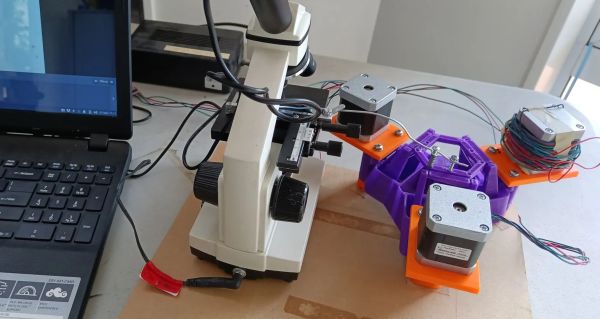
When the RepRap project was started in 2005 by [Dr Adrian Bowyer], the goal was to develop low-cost 3D printers, capable of printing most of their own components. The project slipped into a bit of a lull by 2016 due to the market being increasingly flooded with affordable FDM printers from a growing assortment of manufacturers. Now it seems that the RepRap project may have found a new impetus, in the form of sub-millimeter level fabrication system called the μRepRap as announced by [Vik Olliver] on the RepRap project blog, with accompanying project page.

The basic technology is based around the OpenFlexure project’s Delta Stage, which allows for very precise positioning of an imaging element, or conceivably a fabrication tool. As a first step, [Vik] upgrade the original delta stage to a much reinforced one that can accept larger NEMA17 stepper motors. This also allows for standard 3D printer electronics to control the system much like an FDM printer, only at much smaller scales and with new types of materials. The current prototype [Vik] made has a claimed step accuracy of 3 µm, with a range of tools and deposition materials being considered, including photosensitive resins.

It should be noted here that although this is a project in its infancy, it has solid foundations due to projects like OpenFlexure. Will μRepRap kickstart micrometer-level manufacturing like FDM 3D printing before? As an R&D project it doesn’t come with guarantees, but color us excited.

Thanks to [Tequin] for the tip.

Fastest FPV drone, pending official confirmation. (Credit: Luke Maximo Bell)

Got To Go Fast: The Rise Of Super-Fast FPV Drones

Generally when one considers quadcopter drones, the term ‘fast’ doesn’t come to mind, but with the rise of FPV  (First Person View) drones, they have increasingly been designed to go as fast as possible. This can be for competitive reasons, to dodge enemy fire on a battlefield, or in the case of [Luke Maximo Bell] to break the world speed record. Over the course of months he set out to design the fastest FPV drone, involving multiple prototypes, many test runs and one failed official speed run.

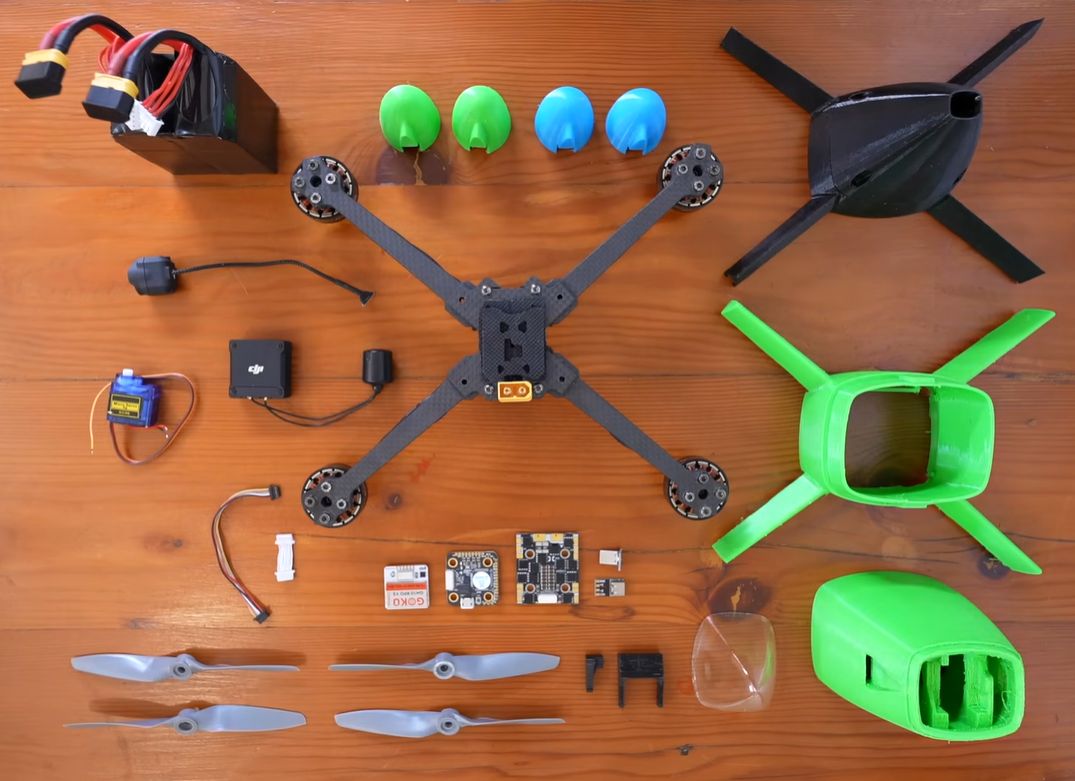
The components of the third FPV drone attempt, as used with the world record attempt. (Credit: Luke Maximo Bell)

The basic design of these designed-for-speed FPV drones is more reminiscent of a rocket than a quadcopter, with the upside-down propellers  requiring the operator first lifting the drone into the air from an elevated position. After this the drone transitions into a level flight profile by rotating with the propellers pointing to the back. This gives the maximum thrust, while the body provides lift.

Although this seems simple, flying this type of drone is very hard, as it’s hard to tell what is happening, even when landing. [Luke] ended up installing a camera in the nose which can rotate to provide him with different angles. Tweaking the flight computer to deal with the control issues that occur at speeds above 300 km/h.

Continue reading “Got To Go Fast: The Rise Of Super-Fast FPV Drones”