Realtime Shadows On N64 Hardware

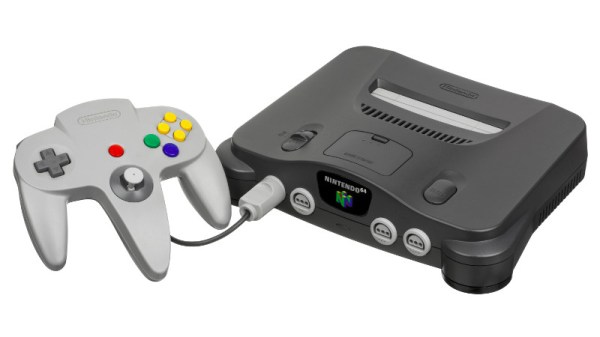
Although the Nintendo 64 console has in the minds of many been relegated to the era of ‘firmly obsolete graphics’, since its graphic processor’s (GPU’s) lineage traces directly to the best which SGI had to offer in the 1990s, it too supports a range of modern features, including dynamic shadows. In a simple demo, [lambertjamesd] demonstrates how this feature is used.

As can be seen in the demonstration video (linked after the break), this demo features a single dynamic light, which casts a shadow below the central object in the scene, with a monkey object floating around that casts its own shadow (rendered into an auxiliary frame buffer). This auxiliary buffer is then blended into the main buffer, as explained by [ItzWarty] over at /r/programming on Reddit.

This effectively means that the main scene uses a shadow volume, which was used extensively with Doom 3. The primary reasons for why the N64 didn’t use shadow volumes all over the place was due to the limitations this places on the shadow caster (objects) in the scene, such as the need to be convex, and overlap is likely to lead to artifacts and glitches.

Doom 3 would fix this with the use of a stencil buffer that would further refine the basic dynamic lighting support on the N64, which ultimately would lead to the fancy video game graphics we have today. And which no doubt will look properly obsolete in another decade again, as usual.

Continue reading “Realtime Shadows On N64 Hardware”

FlyBrainLab: Google Earth But For A Drosophila Fly’s Brain

In biology there are a couple of truly crucial model animals and insects. Not that they’re particularly good students, or pick up their own trash, but in the sense that they have become standard model organisms for research. Aside from genetic research, the FlyEM project seeks to fully map a little fly’s brain’s neural connections. This common fly, called drosophila melanogaster (or ‘lesser fruit fly’) has been the subject of a lot of genetic studies, but this study of its brain structure may provide insights in how our brain works as well.

Based on electron microscope images of thin slices of a drosophila brain, the three-dimensional structure of this tiny brain is reconstructed to not only determine the location of each neuron, but also their connections with other neurons. We know that about two-thirds of their brain is dedicated to processing the visual information from their relatively advanced compound eyes, but a lot is still unknown about how this is done, or how the brain’s structure develops.

If it’s always been your dream to tinker with a little fruit fly’s brain, you can do so yourself using the open source FlyBrainLab tool provided, along with the freely available data sources. This tool does not just allow one to visualize the drosophila brain in great detail, but also to create executable circuits and study their functionality. With neurobiology still a largely unexplored territory, this makes for an amazing tool to make this research accessible to anyone.

(Thanks for the tip, [Hernandi Krammes])

Fixing A Freezer Design Flaw With A Little Bit Of Heat

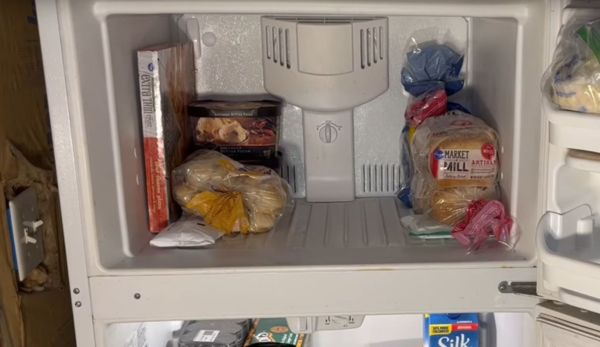
As a shining example of the law of unintended consequences, [Lou] demonstrates how certain types of freezer/refrigerator combinations fail to work in a cold environment, such as a garage during the winter. As [Lou] points out in his video (also linked after the break) – using the freezer unit in his own garage – the problem lies with devices that put the temperature sensor in the refrigerator section, but circulate cold air starting in the freezer section.

This works great in a home environment with a room temperature comfortable for humans, as the refrigerator will constantly warm up slightly due to heat from the outside, triggering the cooling cycle and ensuring the freezer section will stay nice and cold. When placed in, say, a garage when it’s around freezing, the refrigerator section will not warm up, and thus no more cooling cycle gets triggered.

As obviously the freezer section is supposed to stay significantly colder than roughly around 0°C, the freezer section can warm up enough to allow frozen goods to thaw out. The easy fix here as [Lou] demonstrates, is to add a constant source of warmth inside the refrigerator section, such as by keeping the refrigerator light on constantly.

Obvious complaints about the lack of energy efficiency and this combo unit’s optimistically broken sensor design aside, it is a fairly simple and effective fix. Even so, perhaps trading such a combo unit for one with a dedicated temperature sensor in the freezer section would prevent headaches like these.

Continue reading “Fixing A Freezer Design Flaw With A Little Bit Of Heat”

Orbital Safety: The Challenges Of Surviving Space Junk

Hanging around in earth orbit is like walking into the middle of a Wild West gunfight — bullets are flying around everywhere, and even though none are purposefully aimed at you, one might have your name on it. Many of these bullets are artificial satellites that are actively controlled and monitored, but we also find dead satellites, remnants of satellites, discarded rocket stages, tools lost during spacewalks, and even flecks of paint and rust, much of it zipping around at multiple kilometers per second without any guidance.

While removing this space debris directly would be ideal, the reality is that any spacecraft and any spacesuit that has to spend time in orbit needs to be capable of sustaining at least some hits by space debris impacting it.

Orbital Mechanics

That it’s easy to create new debris should come as no surprise to anyone. What may take a bit more imagination is just how long it can take for this debris to make its way towards earth’s atmosphere, where it will uneventfully burn up. Everything in orbit is falling toward the earth, but its tangential velocity keeps it from hitting — like a marble spinning around the hole in a funnel. Drag from the planet’s atmosphere is the friction that eventually slows the object down, and where it orbits in the planet’s atmosphere determines how long this descent will take. Continue reading “Orbital Safety: The Challenges Of Surviving Space Junk”

Mixing synthetic blood

The Challenges Of Finding A Substitute For Human Blood

Throughout history, the human body has been the subject of endless scrutiny and wonder. Many puzzled over the function of all these organs and fluids found inside. This included the purpose of blood, which saw itself alternately disregarded as being merely for ‘cooling the body’, to being responsible for regulating the body’s humors, leading to the practice of bloodletting and other questionable remedies. As medical science progressed, however, we came to quite a different perspective.

Simply put, our circulatory system and the blood inside it, is what allows us large, multi-celled organisms to exist. It carries oxygen and nutrients to cells, while enabling the removal of waste products as well as an easy path for the cells that make up our immune system. Our blood and the tissues involved with it are crucial to a healthy existence. This is something which becomes painfully clear when we talk about injuries and surgeries that involve severe blood loss.

While the practice of blood transfusions from donated blood has made a tremendous difference here, it’s not always easy to keep every single type of blood stocked, especially not in remote hospitals, in an ambulance, or in the midst of a war zone. Here the use of artificial blood — free from complicated storage requirements and the need to balance blood types — could be revolutionary and save countless lives, including those whose religion forbids the transfusion of human blood.

Although a lot of progress has been made in this field, with a limited number of practical products, it’s nevertheless proving to be a challenge to hit upon a replacement that ticks all of the boxes needed to make it generic and safe.

Continue reading “The Challenges Of Finding A Substitute For Human Blood”

TTL And CMOS Logic ICs: The Building Blocks Of A Revolution

When starting a new electronics project today, one of the first things that we tend to do is pick the integrated circuits that make up the core of the design. This can be anything from a microcontroller and various controller ICs to a sprinkling of MOSFETs, opamps, and possibly some 7400- or 4000-series logic ICs to tie things together. Yet it hasn’t been that long since this level of high integration and miniaturization was firmly in the realm of science-fiction, with even NORBIT modules seeming futuristic.

Starting with the construction of the first point-contact transistor in 1947 and the bipolar junction transistor (BJT) in 1948 at Bell Labs, the electronics world would soon see the beginning of its biggest transformation to that point. Yet due to the interesting geopolitical circumstances of the 20th century, this led to a fascinating situation of parallel development, blatant copying of designs, and one of the most fascinating stories in technology history on both sides of the Iron Curtain. Continue reading “TTL And CMOS Logic ICs: The Building Blocks Of A Revolution”

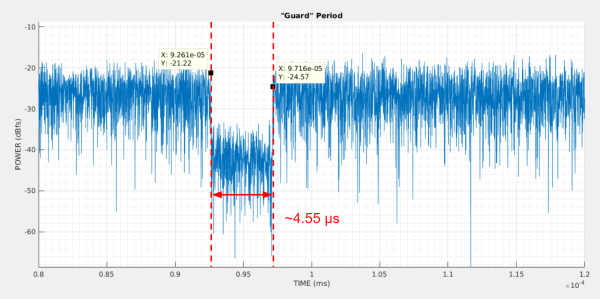
Christian Hahn Starlink capture showing guard region.

Analyzing Starlink Satellite Downlink Communications With Software Defined Radio

Often, mere curiosity is sufficient to do something. This is also the case with people trying to analyze the communication setup and protocol which SpaceX is using with their Ku-band based Starlink satellites.  One of these fine folk is [Christian Hahn], who has recently posted some early findings to r/StarlinkEngineering over at Reddit. Some of the captured data seems to include the satellite ID system that ground-based user stations would presumably use to keep track of overhead Starlink satellites.

For the capturing itself, [Christian] is using a second-hand dish for capture and a DIY SDR using KC705 FPGA-based hardware – which may have begun its life as crypto mining hardware – along with the usual assortment of filters and other common components with this kind of capture. Even at this early time, some features of the Starlink protocol seem quite obvious, such as the division into channels and the use of guard periods. Nothing too earth-shattering, but as a fun SDR hobby it definitely checks all the boxes.

[Christian] has also announced that at some point he’ll set up a website and publish the findings and code that should make Starlink signal analysis easy for anyone with a readily available SDR receiver.