Fusion Ignition: What Does The NIF’s 1.3 MJ Yield Mean For Fusion Research?

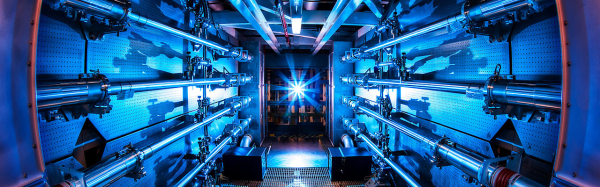
Earlier this month, Lawrence Livermore National Laboratory (LLNL) announced to the world that they had achieved a record 1.3 MJ yield from a fusion experiment at their National Ignition Facility (NIF). Yet what does this mean, exactly? As their press release notes, the main advancement of these results will go towards the US’s nuclear weapons arsenal.

This pertains specifically to the US’s nuclear fusion weapons, which LLNL along with Los Alamos National Laboratory (LANL) and other facilities are involved in the research and maintenance of. This traces back to the NIF’s roots in the 1990s, when the stockpile stewardship program was set up as an alternative to nuclear weapons testing. Much of this research involves examining how today’s nuclear weapons degrade over time, and ways to modernize the existing arsenal.

In light of this, one may wonder what the impact of these experimental findings from the NIF are beyond merely ensuring that the principle of MAD remains intact. To answer that question, we have to take a look at inertial confinement fusion (ICF), which is the technology at the core of the NIF’s experiments.

Continue reading “Fusion Ignition: What Does The NIF’s 1.3 MJ Yield Mean For Fusion Research?”

Golden Rice’s Appearance On Philippine Store Shelves And The Rise Of Biofortification

After decades in development, the Philippines became the first country on July 21st of this year to formally approve the commercial propagation of so-called golden rice. This is a rice strain that has been genetically engineered to produce beta-carotene in its grains. This is the same compound that has made carrots so famous, and is a significant source of vitamin A.

Getting enough vitamin A is essential for not only children and newborns, but also for pregnant and lactating women. Currently, vitamin A deficiency (VAD) is the primary cause of preventable childhood blindness and an important cause of infant mortality. While VAD is hardly the only major form of world-wide malnutrition, biofortification efforts like golden rice stand to dramatically improve the lives of millions of people around the globe by reducing the impact of VAD.

This raises questions of how effective initiatives like golden rice are likely to be, and whether biofortification of staple foods may become more common in the future, including in the US where fortification of foods has already become commonplace. Continue reading “Golden Rice’s Appearance On Philippine Store Shelves And The Rise Of Biofortification”

Figuring Out Earth’s Past Climate Through Paleoclimatology And Its Lessons For Today

Roughly 4.6 billion years ago, Earth would gain its first atmosphere, yet this was an atmosphere that was completely unlike the atmosphere we know today. Today’s oxygen-rich atmosphere we’re familiar with didn’t form until the Proterozoic, between 2,500 and 541 million years ago, when oxygen-producing bacteria killed off much of the previously thriving life from the preceding Archean.

This, along with studies of massive insects such as the 75 cm wingspan Meganeuropsis permiana dragonflies from the Permian, and reconstructed temperature, oxygen, and carbon dioxide levels via paleoclimatology show periods during which Earth’s atmosphere and accompanying climate would be unrecognizable to us humans.

Human history covers only a minuscule fraction of Earth’s history during arguably one of the latter’s coolest, least eventful periods, and yet anthropogenic (man-made) climate change now threatens to rapidly change this. But wait, how do we know what the climate was like over such vast time scales?  Let’s take a look into how we managed to reconstruct the Earth’s ancient climate, and what these findings mean for our prospects as a species today.

Continue reading “Figuring Out Earth’s Past Climate Through Paleoclimatology And Its Lessons For Today”

GitHub Copilot And The Unfulfilled Promises Of An Artificial Intelligence Future

In late June of 2021, GitHub launched a ‘technical preview’ of what they termed GitHub Copilot, described as an ‘AI pair programmer which helps you write better code’. Quite predictably, responses to this announcement varied from glee at the glorious arrival of our code-generating AI overlords, to dismay and predictions of doom and gloom as before long companies would be firing software developers en-masse.

As is usually the case with such controversial topics, neither of these extremes are even remotely close to the truth. In fact, the OpenAI Codex machine learning model which underlies GitHub’s Copilot is derived from OpenAI’s GPT-3 natural language model,  and features many of the same stumbles and gaffes which GTP-3 has. So if Codex and with it Copilot isn’t everything it’s cracked up to be, what is the big deal, and why show it at all?

Continue reading “GitHub Copilot And The Unfulfilled Promises Of An Artificial Intelligence Future”

More Than Just Hubble: The Space Observatories Filling The Skies Today And Tomorrow

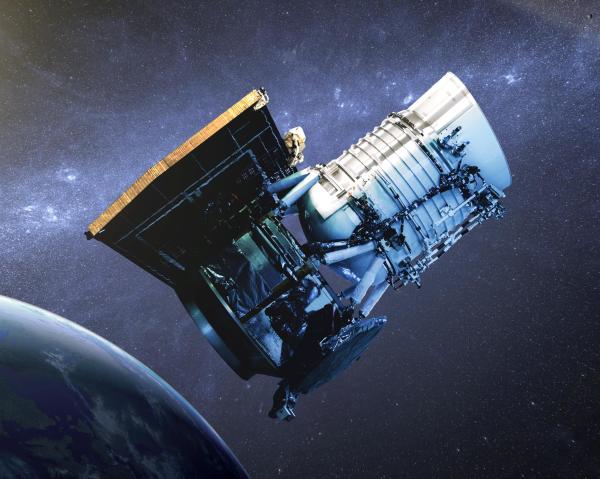
Amidst the recent news about the Hubble Space Telescope’s troubles (and triumphant resurrection), it is sometimes easy to forget that although Hubble is a pretty unique telescope, it is just one of many space-based observatories that are currently zipping overhead right now or perched in a heliocentric orbit. So what is it that makes these observatories less known than the iconic Hubble telescope?

Hubble is one of the longest-lived space telescopes so far, and it is also the only space telescope that was both launched and serviced by the Space Shuttle. None of the other telescopes have this legacy, the high-profile, or troubled history of Hubble’s intended successor: the James Web Space Telescope (JWST).

Even so, the mission profiles of these myriad other observatories are no less interesting, least of the many firsts accomplished recently such as a long-term moon-based telescope (Chang’e 3’s LUT) and those of the many upcoming and proposed missions. Let’s take a look at the space observatories many of us have never heard of.

Continue reading “More Than Just Hubble: The Space Observatories Filling The Skies Today And Tomorrow”

RNA Therapeutics And Fighting Diseases By Working With The Immune System

Before the SARS-CoV-2 pandemic took hold, few people were aware of the existence of mRNA vaccines. Yet after months of vaccinations from Moderna and BioNTech and clear indications of robust protection to millions of people, it now seems hard to imagine a world without mRNA vaccine technology, especially as more traditional vaccines seem to falter against the new COVID-19 variants and the ravages of so-called ‘Long COVID’ become more apparent.

Yet, it wasn’t that long ago that Moderna and BioNTech were merely a bunch of start-ups, trying to develop profitable therapies for a variety of diseases, using the brand-new and largely unproven field of RNA therapeutics. Although the use of mRNA in particular for treatments has been investigated since 1989, even as recently as 2017 there were still many questions about safe and effective ways to deliver mRNA into cells, as per Khalid A. Hajj et al.

Clearly those issues have been resolved now in 2021, which makes one wonder about the other exciting possibilities that mRNA delivery offers, from vaccines for malaria, cancer, HIV, as well as curing autoimmune diseases. How did the field of mRNA vaccines develop so quickly, and what can we expect to see the coming years?

Continue reading “RNA Therapeutics And Fighting Diseases By Working With The Immune System”

The Newlib Embedded C Standard Library And How To Use It

When writing code for a new hardware platform, the last thing you want to do is bother with the minutiae of I/O routines, string handling and other similarly tedious details that have nothing to do with the actual project. On bigger systems, this is where the C standard library would traditionally come into play.

For small embedded platforms like microcontrollers, resources are often tight enough that a full-blown stdlib won’t fit, which is why Newlib exists: to bring the portability benefits of a standard library to microcontrollers.

Whether you use C, C++ or MicroPython to program an MCU, Newlib is likely there under the hood. Yet how exactly does it integrate with the hardware, and how are system calls (syscalls) for e.g. file and input/output handling implemented? Continue reading “The Newlib Embedded C Standard Library And How To Use It”