Running A Desktop PC Off AA Alkaline Cells

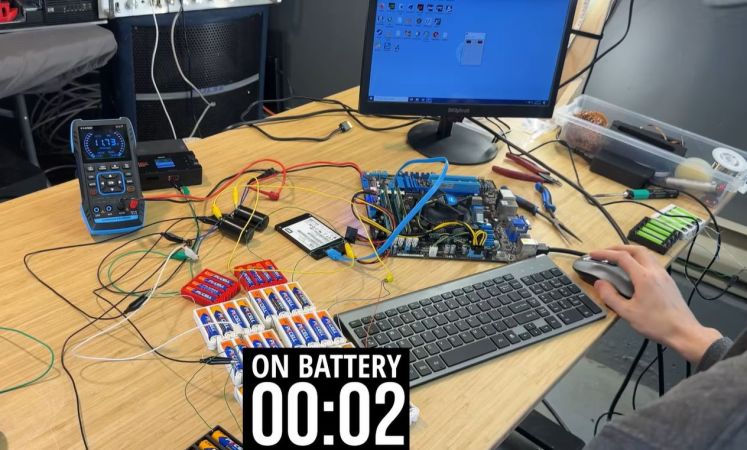
Everyone is probably familiar with the concept of battery-powered devices, but generally, this involves a laptop with a beefy battery pack and hardware optimized for low power draw. You could also do the complete opposite and try to run a desktop PC off alkaline AA cells, as [ScuffedBits] recently did out of morbid curiosity. Exactly how many alkaline cells does it take to run a desktop PC for any reasonable amount of time?

One nice thing about using batteries with a desktop PC is that you can ditch the entire AC-DC power conversion step and instead use a DC-DC adapter like the well-known PicoATX and its many clones. These just take in 12 VDC and tend to have a fairly wide input voltage range, which is useful when your batteries begin to run out of juice. In this case, just above 10 VDC seemed to be the cut-off point for the used DC-DC adapter.

In the end, [ScuffedBits] used what looks like 56 alkaline AA cells connected in both parallel and series, along with two series-connected 6,800 µF, 40V electrolytic capacitors to buffer the spikes in power demand, after early experiments showed that the cells just cannot provide power that quickly. Although admittedly, the initial thin wiring didn’t help either. With alkaline rather than carbon AA cells, improved wiring, and some buffer capacitors, it turns out that you can indeed run a desktop PC off AA cells, if only just about long enough for a small game of Minesweeper.

Amusingly, the small LCD monitor used in the experiment drew so little power that it happily ran on eight NiMH cells for much longer, highlighting just how important power conservation is for battery-powered devices. We wonder if you could marry this project to a battery project we saw and end up with something practically portable?

Continue reading “Running A Desktop PC Off AA Alkaline Cells”
Video Game Archive Myrient To Shut Down On March 31

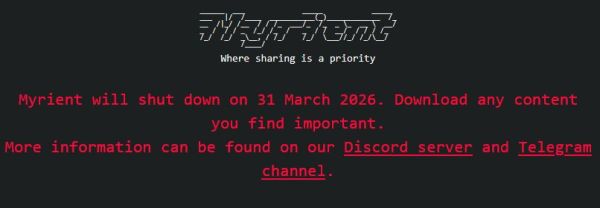
Recently the Myrient game video archive announced that they’re shutting down on March 31st of this year, for a couple of reasons, but primarily the skyrocketing financial costs of hosting the archive. One advantage of Myrient over e.g. Archive.org is that – per the FAQ – every game on the site is curated and checked against a checksum of a known good copy. The site also focuses on fast downloads, making it a good resource if you’re trying to find ROMs of some more obscure old gaming system.

Amidst the mourning it seems also pertinent to address the reasons behind this shutdown. Although finances are the main reason for this hobby project to be shut down, it’s due to (paywalled) download managers that  have recently appeared, and which completely bypass the donation requests and similar on the website. Despite use of Myrient for commercial, for-profit purposes having always been explicitly forbidden, this has been ignored to the point where the owner of Myrient had to shell out over $6,000 per month to cover the difference after donations.

Along with the rising costs of hosting due to rising storage and RAM prices courtesy of AI datacenter buildouts, this has meant that a hobby archive like this has become completely unsustainable. Barring good ways to block illegal traffic like these download tools and/or a surge in donations, it would seem that all archives like this are at risk of shutting down, along with other sites that contain commercially interesting content.

Why Peeling Adhesive Tape Is So Unreasonably Noisy

Although not as reviled as the sound of nails on chalkboard, the sound of adhesive tape being peeled is quite probably at least as distinctive. With every millimeter of the tape’s removal from the roll sounding like it’s screaming in protest, it has led some to wonder just why this process is noisy enough to be heard from across an open-plan office. Recently [Er Qiang Li] et al. had their paper on a likely theory published in Physical Review E, in which they examine the supersonic air pulses at the core of this phenomenon.

The shockwaves produced by peeling tape, captured on Schlieren imaging. (Credit: Er Qiang Li et al., 2026)

Using rolls of adhesive tape and two microphones synchronized with two high-speed cameras in a Schlieren imaging setup, they gathered experimental data of this stick-slip mechanism. Incidentally, in addition to this auditory effect, adhesive tape is also known for the triboluminescence effect, as well as the generating of X-rays, making them quite the source of scientific demonstrations, even when they’re not also being used to create graphene with.

What they deduced from the recorded data was that the transverse fractures that suddenly appear after the extended stick phase hold a vacuum until they reach the end of the fracture during the brief slip phase, at which point the vacuum collapses very suddenly. This produces a pressure of 9600 Pa and clearly visible shock fronts on the Schlieren images.

Now that we know why peeling adhesive tape from its roll is so noisy, it won’t make it any more quiet, but at least we can add another fascinating science fact to its roll of achievements.

Fixing The Damage Of A Botched SNES SuperCIC Mod

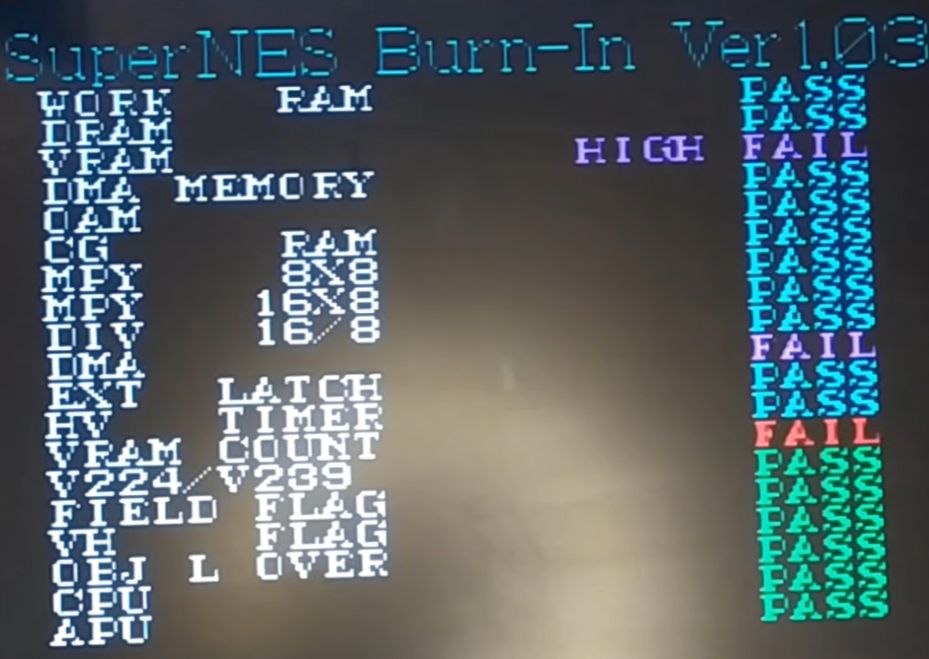
Not what you want to see when testing that 'repaired' SNES. (Credit: Skawo, YouTube)
Not what you want to see when testing that ‘repaired’ SNES. (Credit: Skawo, YouTube)

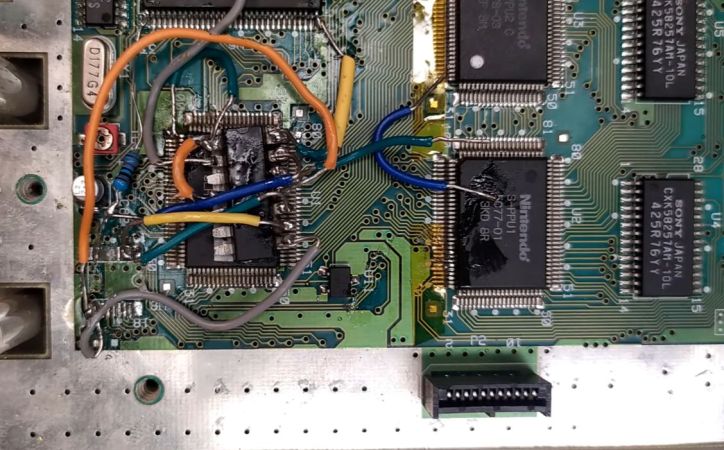
The good part about older game consoles like the Super Nintendo is that they have rather rudimentary region locks, but unfortunately this also gives some people the idea that installing something like the SuperCIC mod chip to make a SNES region-free is easy. The patient that arrived on [Skawo]’s surgery table was one such victim, with the patient requiring immediate surgery to remove the botched installation before assessing the damage.

Here the good news was that the patient features the revision B CPU, making it a good console to rescue. The bad news was that the pads of the old CIC chip had been ripped up, there was a solder bridge on S-PPU1 between two pins and both the installed wiring and soldering were atrocious, requiring plenty of touch-ups.

With the CIC pads already a loss, finishing the SuperCIC mod seemed like a good plan, also since this would make for a nice region-free console. This mod involves a PIC16F630 with special firmware that works with the corresponding CIC IC in each cartridge, while also switching between 50/60 Hz mode to fit the cartridge’s region. After an initial test with PAL and NTSC cartridges everything seemed all right. Then [Skawo] ran the SuperNES Burn-In test from its cartridge, which gave dire news.

Continue reading “Fixing The Damage Of A Botched SNES SuperCIC Mod”

The Curse Of The Everything Device

In theory having a single device that combines the features of multiple dedicated devices is a great idea, saving a lot of space, time and money. However, in reality it mostly means that these features now conflict with each other, force us to deal with more complex devices that don’t last nearly as long, and become veritable vampires for your precious attention.

Whereas in the olden days a phone was just used for phone calls, now it’s also a video and photo camera, multimedia computer, pager, and more, but at any point an incoming phone call can interrupt what you are doing. There’s also always the temptation of doom scrolling on one of the infinite ‘social media’ apps. Even appliances like televisions and refrigerators are like that now, adding ‘smarts’ that also vie for your attention, whether it’s with advertisements, notifications, or worse.

Meanwhile trying to simply do some writing work on your PC is a battle against easy distractions, leading people to flee to the digital equivalent of typewriters out of sheer desperation. Similarly, we increasingly see ‘dumb’ phones, and other single-task devices making a comeback, both as commercial options and as DIY projects by the community.

Are we seeing the end of the ‘everything device’ and the return to a more simple time?

Continue reading “The Curse Of The Everything Device”

Restoring A Yamaha DX7 Synthesizer

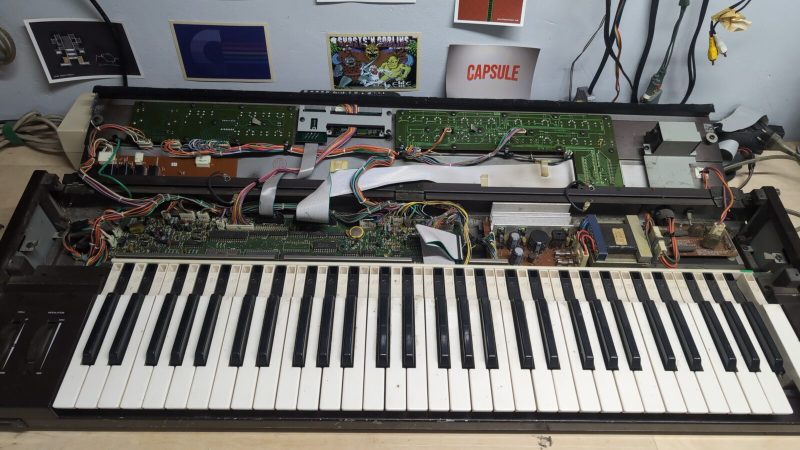
The Yamaha DX7 is one of the most iconic synthesizers that emerged in the early 1980s, and is still very popular today. That said, with even the newest of these having left the factory back in 1989, the average DX7 can use a bit of tender love and care. In particular the battered DX7 that [Drygol] recently got handed to ‘just fix the PSU voltage switch’. As it turned out, this poor DX7 had a few more issues than just a busted voltage selector.

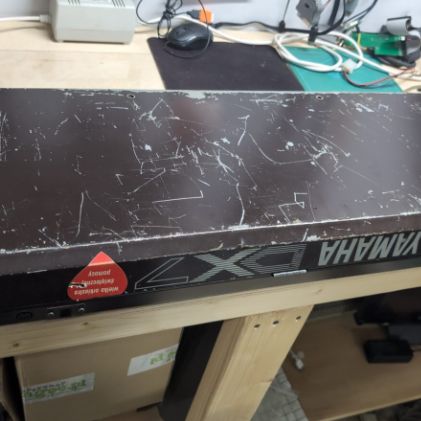
Just a hint of cosmetic damage on this Yamaha DX7. (Credit: Drygol)
Just a hint of cosmetic damage on this Yamaha DX7.

In addition to missing slider caps and a vanished key, the paint of the case also had clearly lost a fight with various hard surfaces in addition to a thick coating of unidentifiable dust and grime inside the synthesizer. Feeling a pang of sympathy, [Drygol] thus decided to give the old girl a complete restoration.

After taking the synthesizer apart for a good scrub-down, the parts were assessed for further damage. This turned out to include the plastic stubs on some keys to hold a spring for which a replacement was modelled and 3D printed, along with replacements for the missing slider caps.

Next the case was painted, with a brand new Yamaha DX7 vinyl logo rather than trying to fix up the old paint and logo. With the outside fixed up, the broken and dodgy controls, audio jacks and potentiometers were addressed, followed by the busted onboard battery, leaving just the original voltage selector. This one got replaced by an IEC 60320 C13 jack, with the transformer hardwired for 230 VAC input, out of convenience grounds.

We’re always excited when [Drygol] sends in another restoration project — from a glowing Amiga 500 to vacuum-formed keycap covers, they’re always remarkable displays of ingenuity.

Railguns: Making Metal Go Fast Using The Lorentz Force

In science fiction, the use of gunpowder-based weapons is generally portrayed as something from a savage past, with technology having long since moved on to more civilized types of destructive weaponry, involving lasers, microwaves, and electromagnetism. Instead of messy detonating powder, energy-weapons are used to near-instantly deposit significant amounts of energy into the target, and railguns enable the delivery of projectiles at many times the speed of sound using nothing but the raw power of electricity and some creative physics.

Of course, the reason that we don’t see sci-fi weapons deployed everywhere has arguably less to do with today’s levels of savagery in geopolitics and more with the fact that physical reality is a very harsh mistress, who strongly frowns upon such flights of fancy.

Similarly, the Lorentz force that underlies railguns is extremely simple and effective, but scaled up to weapons-grade dimensions results in highly destructive forces that demolish the metal rails and other components of the railgun after only a few firings. Will we ever be able to fix these problems, or are railguns and similar sci-fi weapons forever beyond our grasp?

Continue reading “Railguns: Making Metal Go Fast Using The Lorentz Force”