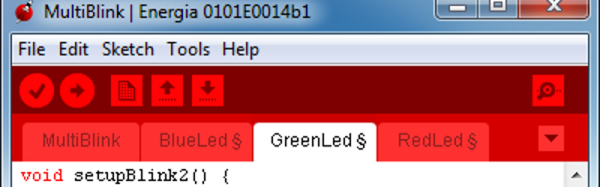
We keep wondering where the Arduino world is headed with the hardware getting more and more powerful. If the IDE doesn’t keep up what’s the point? Now we have at least one answer to that problem. Energia is the Arduino-like-framework for Texas Instruments based boards. They just came out with a multitasking system built into Energia targeted at the ARM Cortex-M4F based MSP432 Launchpad which we covered a few weeks back.
The announcement post gives a couple of examples of uses for multitasking. The simplest is blinking LEDs at different rates. If you wanted to do this closer to the metal you’re talking about multiple timers, or multiple compares on a single timer, perhaps a interrupt-driven-system-tick that has a high enough resolution for a wide range of your blinking needs. But these are not always easy to set up unless you are intimately comfortable with this particular architecture. The Energia multitasking will handle this for you. It’s upon the TI Real Time Operating System (TI-RTOS) but wraped in the familiar IDE.
The UI divorces you from thinking about the hardware at all. You simply launch a new tab and start coding as if you’re using a completely separate piece of hardware. The announcement post linked above mentions that these Sketches are running “in parallel”. Well… we know it’s not a multi-core system like the Propeller but we’ll let it slide. It is certainly easier than building your own scheduler for this type of hardware.
[Thanks MycoWx]
 The vacuum part of these tools
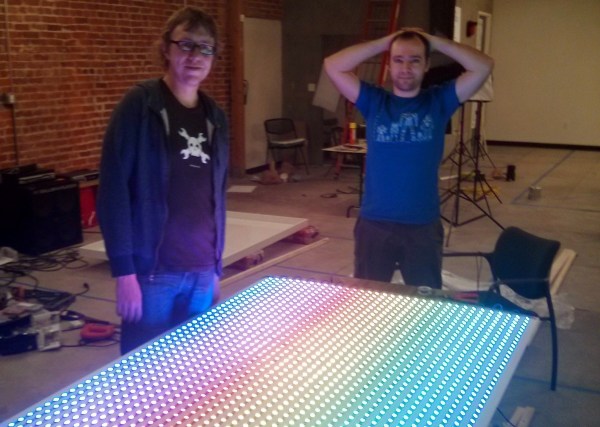
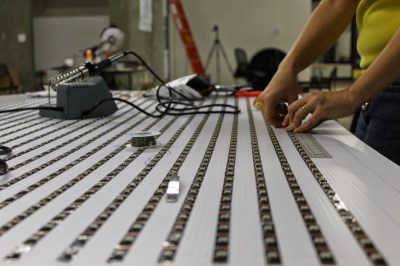 To make FLED more reliable [Ben] sourced strips of the new APA102 LEDs which

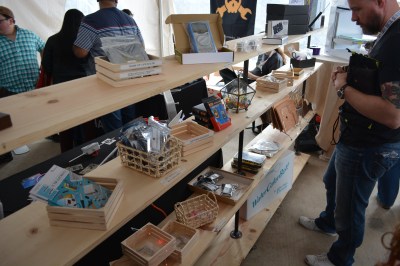 At SXSW Create in March the Hackaday booth was right next door one such establishment. [Martin Bogomolni] is hard at work launching his brick and mortar store called
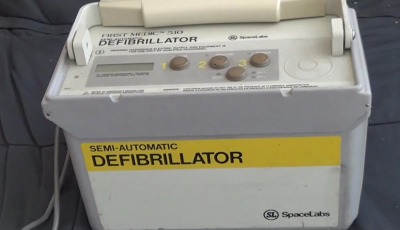 It’s safe to say we’ve all seen engineering solve part of this problem already. Over the last decade, Automatic External Defibrillators have become ubiquitous. The life-saving hardware is designed to be used by non-doctors to save someone whose heart rhythms have become irregular. [Chris Nefcy] helped develop AEDs and