Surface Mount Breakout Boards

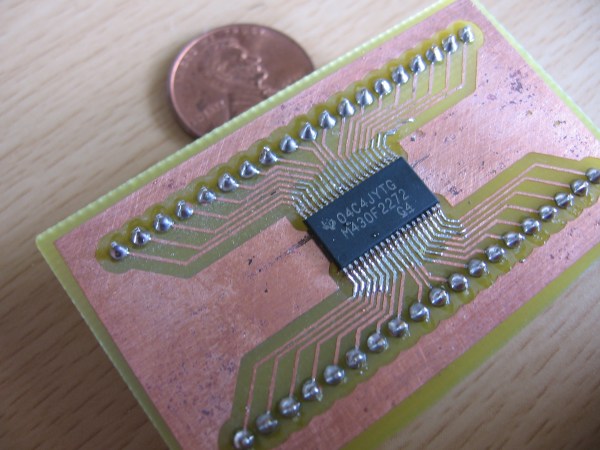
We got a hold of some DS3232 RTC chips in a 20-pin SOIC package. We’d like to have one that is breadboard compatible for easy prototyping but when we searched for SOIC20W breakout board artwork we found none. We used Eagle to design our own and you can see the finished product above which we made using the toner transfer method and cupric chloride.

You’ll find the artwork after the break in case you need to make your own breakout board some day. If you know of surface mount breakout board artwork that is freely available please leave the link in the comments for future use, or send it to us on our tips line and we’ll add it to the post.

Incidentally, the DS3232 is the same as the DS3231 used in the ChronoDot but with the addition of some SRAM. We’ll let you know if we come up with an interesting project for it.

Update: We added 28 SSOP to DIP artwork submitted by [Paul Dekker]

Continue reading “Surface Mount Breakout Boards”

Aerial Photography platforms

[Eric Austin] is using a Canon 7D with this RC helicopter to capture some amazing HD video. His success has manifested itself in a company that is now manufacturing these platforms ready-to-use. Take a look at their blog to see some of the hardware they’re working on, such as a tricopter and hexacopter photo platforms. We’ve also embedded a video after the break of the unit seen above and the stunning shots it’s able to grab.

Continue reading “Aerial Photography platforms”

Printable mecanum wheel

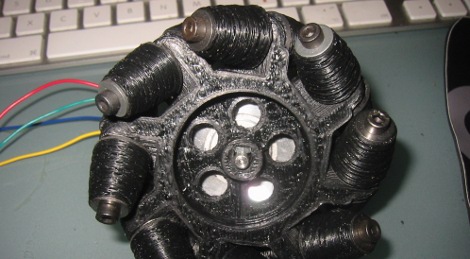
[Zaggo] developed a printable mecanum wheel. These are designed to allow a wheeled vehicle to move in any direction. He uses parts printed with a Makerbot along with commonly available bearings, bolts, washers, and nuts. Download the STL files need for printing and watch the assembly video after the break. We’ve also included a clip of an unrelated robot project using mecanum wheels so you can see what [Zaggo] will have once he fabricates the rest of the of the wheels. Continue reading “Printable mecanum wheel”

Learn console hacking

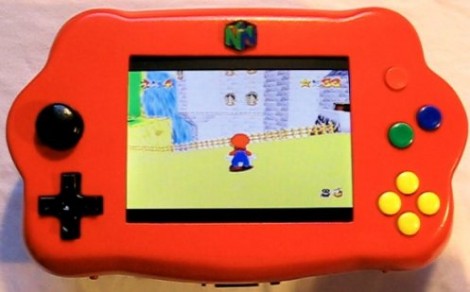
This bright red handheld is [Bacteria’s] portable N64 console. We’re beginning to feel a bit saturated with N64 portable hacks, having seen one that looks like a Game Boy, another in a shiny black case, and yet another in a white case. This time around it’s not just the end product, but [Bacteria] has posted a saga discussing the build progress. Check out the 20 videos on his worklog page. If you’re looking to take existing hardware and put it into a different enclosure you should pour over this resource for ideas you can use.

Bonfire – Interactivity Using Pico Projectors And Cameras

[youtube=http://www.youtube.com/watch?v=O3MZYRAZJNk]

This video shows a demonstration of Bonfire, an additional interface for computers. It consists of a pico projector and camera hang on the back of either side of a laptop. The projector displays information on the table top and the camera monitors the area for interaction. It can recognize your hand or objects such as a smartphone or headphones and react accordingly. An accelerometer in the laptop picks up tapping (we’d guess you have to tap pretty hard) and there is also support for gestures. This was presented at 2009 UIST and unfortunately the published article is not available for free [Thanks for the link Ciflet].

We hope to see this kind of thing, as well as skin based input, come to the market some day. Until then, you’ll have to build your own.

[via Procrastineering]

Multiple Buttons And A Pot On one pin

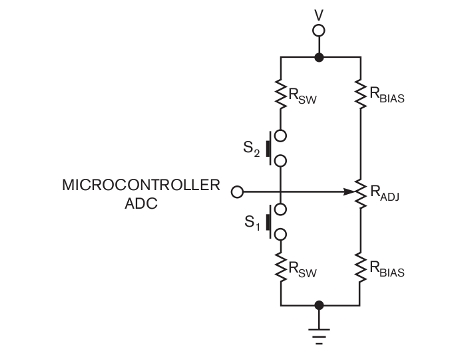
[Kevin Fodor] shares his method of reading multiple inputs on one pin of a microcontroller. The analog to digital convert function of the microcontroller is used to read a potentiometer but with some careful calculations a resistor network can be built into the circuit that provides a unique voltage value for each button pushed. The only real drawback is that the system cannot read multiple button presses at the same time. Theoretically up to ten momentary push buttons can be used but [Kevin] estimates that only four plus the potentiometer will work reliably.

[Thanks Charper]

Hackaday Links: April 28, 2010

Cell phone chopper control

Control your tiny inexpensive helicopter with a Nokia N900. The chopper uses an infrared remote control, just like a television. Getting this to work was just a matter of figuring out the IR commands and writing an app for the phone to spit them out.

Fade to black; inconspicuously

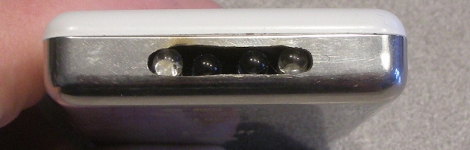
Lost interest in your TV-B-Gone? Give it one last whirl by throwing it inside of an old iPod case. The dock connector hole is just about the right size for the LEDs and the kit fits nicely in the old 3G type iPods. With this kind of disguise it should be a lot harder to spot who’s messing with those TVs.

Surf your way to a cleaner house

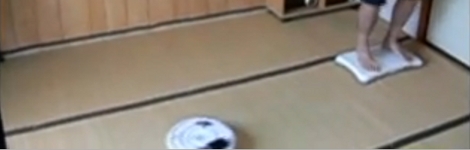
This guy uses a roomba to clean his floors. The Wii balance board lets him lean forward and back to surf the little bot around the room. This seems a little more exciting than the exercise programs the board was originally designed for. [Thanks DXR]

G1 gamepad

[Tobias Weber] built a gamepad for the G1 Android phone. He used an old Atari control, cut out two buttons and the d-pad, and glued them in a housing to fit the G1 keyboard. Each presses a button on the phone’s keyboard which can be mapped through the emulator software.

Social power monitoring

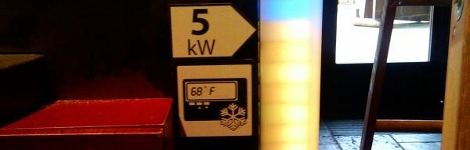
Here you see a very small portion of the power meter installed in a Cafe at UC Berkeley. It shows the energy usage for the building, separated into categories such as lights, power outlets, and coffee machines. This lets students know how much juice they’re draining by plugging in their gadgets. The color bar uses 93 ShiftBrite modules controlled by an Arduino.